Introduction
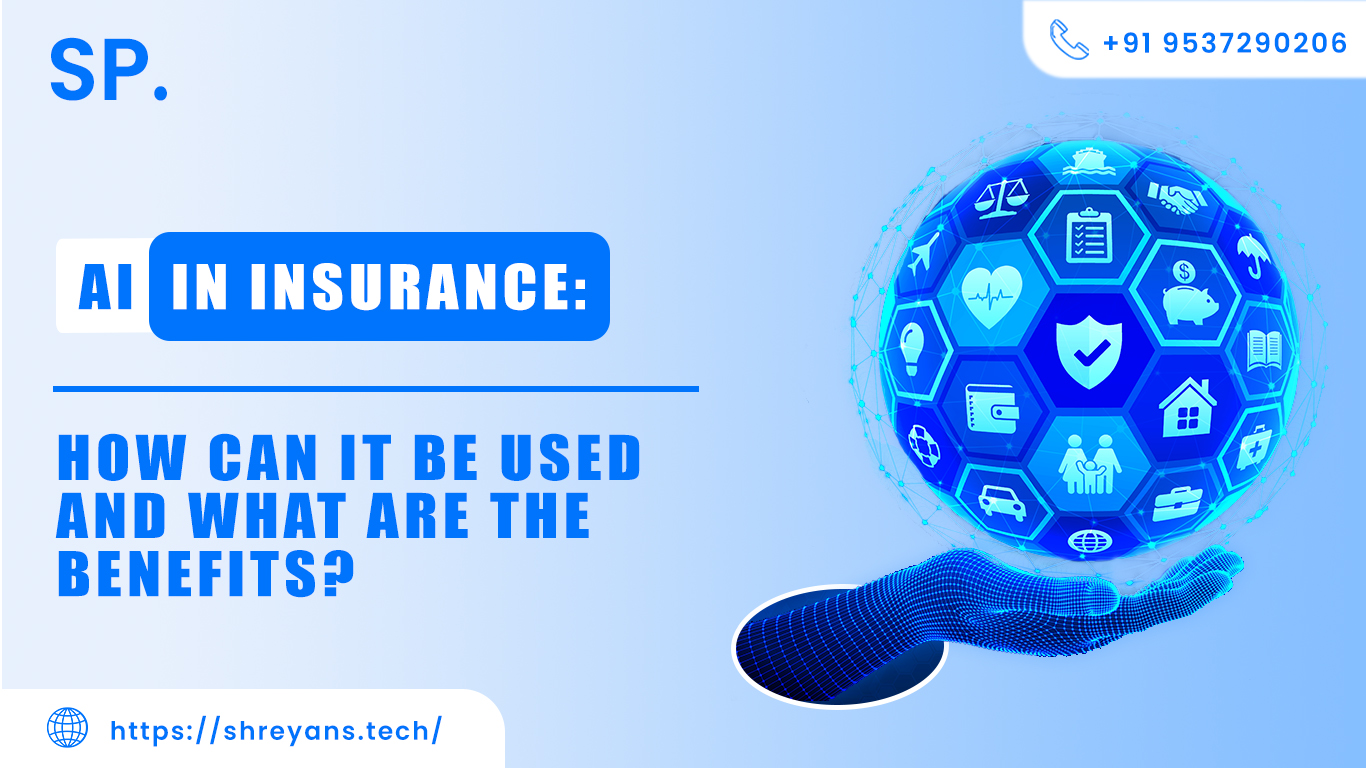
The insurance industry is undergoing a major transformation, driven by the rapid adoption of Artificial Intelligence (AI). Traditionally, insurance processes such as underwriting, claims handling, and customer service were time-consuming and heavily dependent on manual work. Today, AI is changing that landscape by introducing automation, data-driven decision-making, and improved customer experiences.
AI in insurance refers to the use of advanced technologies like machine learning, natural language processing (NLP), and predictive analytics to analyze data, automate workflows, and generate insights. These technologies help insurers improve efficiency, reduce operational costs, and deliver faster and more accurate services.
In this blog, we will explore how AI is used in insurance, its key benefits, and why it is becoming essential for modern insurance companies.
What is AI in Insurance?
AI in insurance involves using intelligent algorithms to process large volumes of structured and unstructured data. These systems can identify patterns, predict risks, and automate repetitive tasks, enabling insurers to make smarter and faster decisions.
Instead of relying solely on human judgment, insurers now use AI to enhance decision-making, improve accuracy, and personalize services for customers.
How AI is Used in the Insurance Industry
AI is applied across multiple areas of the insurance value chain. Below are the most important use cases:
1. Automated Claims Processing
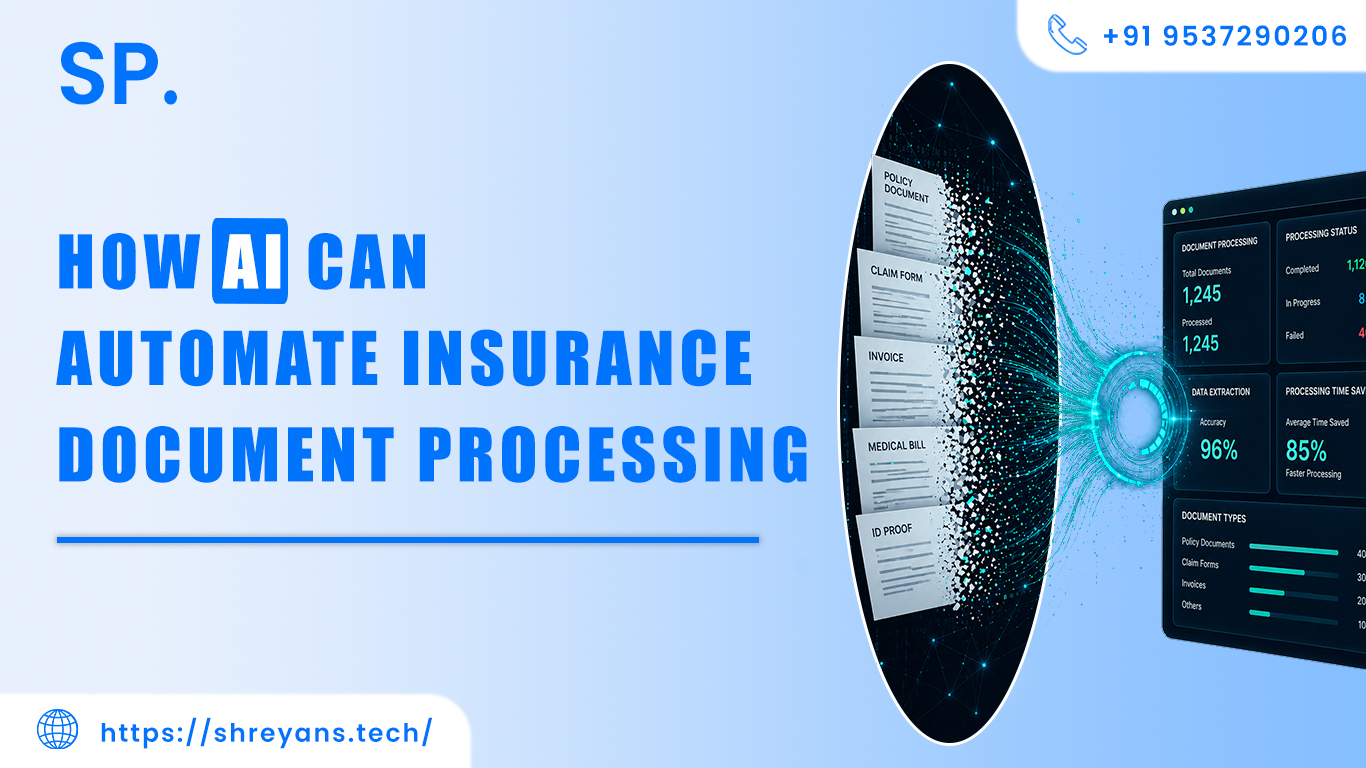
AI helps insurers process claims quickly by analyzing documents, images, and customer data. It can automatically verify claims, detect missing information, and even approve simple claims without human intervention.
-
Faster claim settlements
-
Reduced paperwork
-
Improved customer satisfaction
AI-powered systems can interpret documents and decide whether to approve a claim, significantly speeding up the process.
2. Fraud Detection
Insurance fraud is a major challenge. AI can detect unusual patterns and flag suspicious claims in real time.
-
Identifies fraudulent activities
-
Reduces financial losses
-
Improves risk management
By analyzing historical data and behavioral patterns, AI can detect fraud more accurately than traditional methods.
3. Risk Assessment and Underwriting
AI enhances underwriting by analyzing vast datasets, including customer behavior, demographics, and historical claims.
-
More accurate risk evaluation
-
Faster policy approvals
-
Better pricing strategies
AI can identify patterns that human underwriters might miss, enabling insurers to offer more personalized and competitive policies.
4. Customer Service and Chatbots
AI-powered chatbots and virtual assistants are transforming customer support.
-
24/7 customer assistance
-
Instant query resolution
-
Personalized interactions
These tools improve customer experience while reducing the workload on human agents.
5. Predictive Analytics
AI uses predictive analytics to forecast future risks and customer behavior.
-
Predict claim likelihood
-
Improve product offerings
-
Enhance decision-making
This helps insurers proactively manage risks and design better insurance products
6. Policy Personalization
AI enables insurers to create customized policies based on individual customer needs.
-
Tailored insurance plans
-
Better customer engagement
-
Higher retention rates
AI-driven personalization is becoming a key competitive advantage in the industry.
Benefits of AI in Insurance
AI offers several advantages that are transforming the insurance sector:
1. Improved Efficiency and Speed
AI automates repetitive tasks such as data entry and claims processing, reducing processing time and increasing productivity.
2. Enhanced Accuracy
AI minimizes human errors by analyzing large datasets with precision, leading to better decision-making and fair pricing.
3. Cost Reduction
Automation reduces operational costs by eliminating manual processes and improving resource utilization.
4. Better Customer Experience
AI enables faster responses, personalized services, and seamless communication, leading to higher customer satisfaction.
5. Advanced Risk Management
AI improves risk assessment by identifying patterns and predicting future risks, helping insurers make proactive decisions.
6. Scalability and Innovation
AI allows insurers to scale operations and introduce innovative products, staying competitive in a rapidly evolving market.
Challenges of AI in Insurance
While AI offers many benefits, there are also some challenges:
-
Data privacy and security concerns
-
Integration with legacy systems
-
High implementation costs
-
Need for skilled professionals
Despite these challenges, the long-term benefits outweigh the limitations.
Future of AI in Insurance
The future of AI in insurance looks promising. With advancements in generative AI and automation, insurers will be able to:
-
Deliver hyper-personalized services
-
Fully automate claims and underwriting
-
Improve customer engagement
-
Increase operational efficiency
AI is expected to become a core part of insurance business models, not just a supporting tool.
FAQs
1. What is AI in insurance?
AI in insurance refers to the use of technologies like machine learning and predictive analytics to automate processes, analyze data, and improve decision-making.
2. How is AI used in insurance companies?
AI is used for claims processing, fraud detection, underwriting, customer service, and predictive analytics.
3. What are the main benefits of AI in insurance?
The key benefits include improved efficiency, better accuracy, cost reduction, enhanced customer experience, and advanced risk management.
4. Can AI replace human jobs in insurance?
AI does not completely replace humans but automates repetitive tasks, allowing employees to focus on complex and strategic work.
5. Is AI safe for the insurance industry?
Yes, but insurers must ensure proper data security, transparency, and compliance with regulations.
Conclusion
Artificial intelligence is steadily changing how the insurance industry works. Tasks that once required long processing times, such as claims handling and risk evaluation, are now becoming faster and more accurate with the help of smart systems. This allows insurance providers to serve customers more efficiently while managing costs more carefully.
Looking ahead, companies that adopt AI thoughtfully are likely to respond better to shifting customer needs and market changes. Rather than simply supporting daily operations, AI is expected to play a central role in shaping how insurance services are delivered in the years to come.



Shreyans Padmani
Shreyans Padmani has 5+ years of experience leading innovative software solutions, specializing in AI, LLMs, RAG, and strategic application development. He transforms emerging technologies into scalable, high-performance systems, combining strong technical expertise with business-focused execution to deliver impactful digital solutions.