Introduction
In today’s fast-paced digital economy, businesses generate massive volumes of financial data every day. Managing, auditing, and reporting this data using traditional methods has become increasingly complex, time-consuming, and prone to errors. This is where Artificial Intelligence (AI) is making a significant impact.
AI is transforming auditing and financial reporting by introducing automation, accuracy, and real-time insights. Instead of relying on manual processes and limited data samples, organizations can now analyze complete datasets instantly, detect anomalies, and generate reports with greater efficiency.
From reducing operational costs to improving compliance and decision-making, AI is becoming an essential tool for modern auditing. In this blog, we will explore how AI improves audit and reporting efficiency, its key benefits, real-world applications, challenges, and future trends.
What is AI in Auditing and Reporting?
AI in auditing refers to the use of advanced technologies such as:
Machine Learning (ML)
-
Machine Learning (ML) is a powerful branch of AI that allows systems to learn from data and improve over time without being manually programmed. In auditing, ML analyzes large volumes of financial data to identify patterns, detect anomalies, and predict potential risks. It helps auditors find errors and fraud faster and with greater accuracy. As businesses generate more data, ML becomes essential for making smarter and faster financial decisions.
Natural Language Processing (NLP)
-
Natural Language Processing (NLP) enables computers to understand and process human language. In auditing and reporting, NLP helps analyze documents, emails, contracts, and financial statements automatically. It can extract important information, summarize reports, and even generate human-like audit reports. This reduces manual effort and improves efficiency in handling large amounts of unstructured data.
Robotic Process Automation (RPA)
-
Robotic Process Automation (RPA) uses software bots to automate repetitive and rule-based tasks. In auditing, RPA can handle data entry, transaction processing, and report generation without human intervention. This not only saves time but also reduces errors caused by manual work. By automating routine tasks, RPA allows auditors to focus on more important activities like analysis and decision-making.
Data Analytics
-
Data Analytics involves examining large datasets to uncover meaningful insights and trends. In auditing, it helps organizations analyze complete financial data instead of just samples. This improves accuracy, identifies risks, and supports better decision-making. With advanced analytics tools, businesses can gain real-time insights, improve reporting quality, and enhance overall audit efficiency.
These technologies help automate repetitive tasks, analyze large datasets, and provide intelligent insights.
In traditional auditing:
Auditors Review Only a Sample of Transactions
-
In traditional auditing, auditors usually examine only a limited sample of transactions rather than the entire dataset. While this approach saves time, it increases the chances of missing errors or fraudulent activities. Important discrepancies may go undetected, which can affect the overall accuracy and reliability of the audit process.
Processes Are Manual and Time-Consuming
-
Traditional auditing relies heavily on manual tasks such as data entry, verification, and document review. These processes require significant time and effort, especially when dealing with large volumes of financial data. As a result, the audit process becomes slower and less efficient.
Risk Detection Is Slower
-
In traditional auditing, risks and errors are often identified at a later stage because audits are conducted periodically. This delay can lead to financial losses or compliance issues. Slow risk detection makes it difficult for organizations to take timely corrective actions.
With AI:
Entire Datasets Are Analyzed
-
With AI-powered auditing, systems can analyze complete datasets instead of relying on small samples. This ensures that every transaction is reviewed, improving the accuracy and reliability of the audit process. By examining all available data, businesses can identify hidden patterns, detect anomalies, and gain deeper financial insights.
Processes Are Automated
-
AI automates repetitive and time-consuming tasks such as data entry, validation, and reconciliation. This reduces manual effort and minimizes human errors, leading to faster and more efficient audit processes. Automation also allows auditors to focus on strategic analysis and decision-making rather than routine work.
Risks and Fraud Are Detected in Real-Time
-
AI enables continuous monitoring of financial data, allowing risks and fraudulent activities to be detected instantly. Instead of waiting for periodic audits, organizations can identify suspicious transactions as they occur. This real-time detection helps prevent financial losses and improves overall risk management.
Key Ways AI Improves Audit and Reporting Efficiency
1. Faster Audit Processes
AI significantly reduces the time required to complete audits.
-
Processes Millions of Transactions in Seconds
-
AI-powered systems can handle and analyze massive volumes of financial transactions within seconds. This capability allows auditors to review complete datasets quickly and efficiently. As a result, businesses can gain faster insights and improve the overall speed of the audit process.
-
Automates Repetitive Tasks Like Data Entry and Reconciliation
-
AI automates routine and repetitive tasks such as data entry, matching records, and reconciliation. This reduces the need for manual effort and minimizes the chances of human errors. By handling these tasks automatically, AI improves accuracy and allows auditors to focus on more important analytical work.
-
Speeds Up Audit Cycles
-
By combining fast data processing and automation, AI significantly shortens audit cycles. Tasks that previously took weeks can now be completed in a much shorter time. This enables organizations to complete audits faster and make timely business decisions.
Result: What once took weeks can now be completed in days or even hours.
2. Real-Time Data Analysis
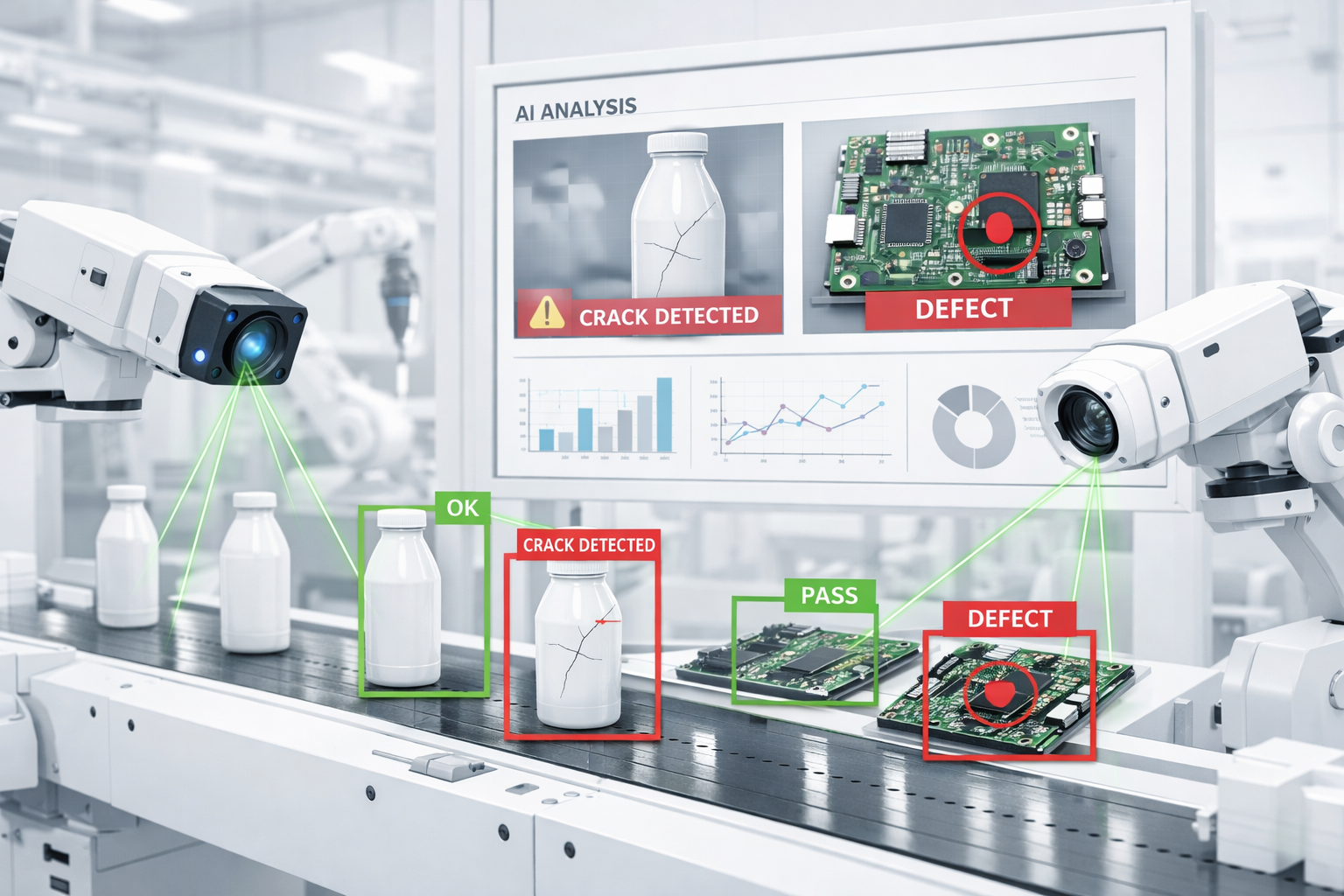
Traditional audits are periodic, usually conducted quarterly or annually. AI enables continuous auditing.
-
Monitors Financial Data in Real-Time
-
AI systems continuously monitor financial data as it is generated, instead of waiting for periodic reviews. This real-time monitoring allows organizations to track transactions and financial activities at all times. It improves transparency and ensures that any unusual activity is observed immediately.
-
Identifies Discrepancies Instantly
-
AI can quickly detect inconsistencies, errors, or unusual patterns in financial data. Instead of relying on manual checks, the system automatically flags discrepancies as soon as they occur. This helps auditors take immediate action and maintain data accuracy.
-
Provides Up-to-Date Insights
-
AI delivers the latest financial insights by analyzing data continuously. Businesses can access current reports and performance metrics at any time. This enables better decision-making based on real-time information rather than outdated data.
Benefit: Businesses can take immediate action instead of waiting for end-of-period reports.
3. Advanced Fraud Detection
AI systems are highly effective in identifying fraud patterns.
-
Detects Unusual Transactions and Anomalies
-
AI systems can analyze financial data to identify unusual transactions and patterns that do not match normal behavior. These anomalies may indicate errors, fraud, or potential risks. By detecting such irregularities early, organizations can take quick action to prevent financial issues.
-
Learns from Past Fraud Cases
-
AI uses machine learning to study historical fraud data and recognize similar patterns in new transactions. Over time, the system becomes more accurate in identifying potential threats. This continuous learning helps improve fraud detection and strengthens overall audit efficiency.
-
Flags Suspicious Activities Automatically
-
AI can automatically highlight or flag transactions that appear suspicious based on predefined rules and learned patterns. This reduces the need for manual monitoring and ensures that no critical issue is overlooked. Auditors can then focus on investigating flagged activities more effectively.
Example:
If a transaction deviates from normal behavior, AI alerts auditors instantly.
4. Improved Accuracy and Reduced Errors
Manual auditing often leads to human errors such as:
-
Miscalculations
-
In manual auditing, calculations are often performed by humans, which increases the risk of errors. Even small miscalculations can lead to incorrect financial statements and impact decision-making. These errors may go unnoticed and affect the overall accuracy of the audit process.
-
Data Entry Mistakes
-
Manual data entry is one of the most common sources of errors in traditional auditing. Incorrect input of figures, duplication of data, or missing entries can create inconsistencies in financial records. Such mistakes reduce data reliability and require additional time for correction.
-
Missed Discrepancies
-
When auditors review large volumes of data manually, there is a high chance of overlooking discrepancies. Important differences or irregularities may not be detected, especially when only a sample of data is checked. This can lead to incomplete audits and increased financial risk.
AI eliminates these issues by:
-
Automating Calculations
-
AI systems can perform complex calculations automatically with high accuracy. This eliminates the risk of human errors and ensures that financial data is processed correctly. Automated calculations also save time and improve the overall efficiency of the audit process.
-
Validating Data Consistently
-
AI ensures that data is checked and validated using predefined rules and standards. It can quickly identify incorrect or missing information and maintain consistency across all records. This improves the reliability and quality of financial reporting.
-
Analyzing Complete Datasets
-
Instead of reviewing only a sample of data, AI analyzes entire datasets to provide a comprehensive view of financial activities. This helps in identifying hidden patterns, detecting risks, and improving audit accuracy. Complete data analysis leads to more informed and reliable decision-making.
Outcome: More reliable and accurate financial reports.
5. Automated Report Generation
AI can generate audit reports automatically using structured data.
-
Converts Raw Data into Meaningful Insights
-
AI analyzes large volumes of raw financial data and transforms it into clear, actionable insights. It identifies patterns, trends, and key information that may not be easily visible through manual analysis. This helps businesses understand their financial performance and make informed decisions.
-
Generates Reports in Minutes
-
AI can quickly create detailed audit and financial reports by processing data automatically. Tasks that previously required hours or days can now be completed within minutes. This improves efficiency and allows organizations to access reports whenever needed.
-
Maintains Consistency in Format
-
AI ensures that all reports are generated using a consistent format and structure. This standardization improves clarity, reduces confusion, and maintains professional reporting quality. It also helps organizations follow uniform reporting standards across all departments.
Benefit: Saves time and ensures professional-quality reporting.
6. Enhanced Data Visualization
AI-powered tools present data in a visually appealing and understandable format.
-
Interactive Dashboards
-
AI-powered dashboards provide a centralized view of financial data in an interactive format. Users can easily filter, sort, and explore data based on their needs. This improves accessibility and allows auditors and stakeholders to quickly understand key financial information.
-
Charts and Graphs
-
AI presents complex financial data using visual elements such as charts and graphs. These visuals make it easier to identify trends, patterns, and comparisons. As a result, users can interpret data more quickly and make informed decisions.
-
Easy-to-Read Summaries
-
AI generates clear and concise summaries of financial reports, highlighting the most important information. These summaries reduce the need to go through lengthy reports and help stakeholders understand key insights quickly. This improves communication and decision-making efficiency.
Result: Stakeholders can quickly understand financial performance.
7. Better Compliance and Regulatory Support
Compliance is a major challenge for businesses. AI simplifies it by:
-
Monitoring Regulatory Changes
-
AI systems can continuously track updates in financial regulations and compliance requirements. They stay updated with changes in laws, policies, and industry standards, ensuring that organizations are always aware of the latest rules. This helps businesses avoid non-compliance and adapt quickly to new regulations.
-
Ensuring Adherence to Standards
-
AI helps organizations follow established accounting and auditing standards by automatically checking processes and data against predefined rules. It ensures that all financial activities align with regulatory requirements and internal policies. This improves accuracy and reduces the risk of compliance violations.
-
Maintaining Audit Trails
-
AI maintains detailed and secure records of all financial transactions and audit activities. These audit trails provide a clear history of changes, making it easier to track and verify data. This enhances transparency, accountability, and simplifies the auditing process.
Benefit: Reduces risk of penalties and legal issues.
8. Increased Productivity
AI automates routine tasks such as:
-
Data Collection
-
AI systems can automatically gather financial data from multiple sources such as databases, invoices, and transaction records. This eliminates the need for manual data collection and ensures that all relevant information is captured accurately. Automated data collection also saves time and improves overall efficiency.
-
Sorting and Classification
-
AI can organize large volumes of financial data by sorting and classifying it into relevant categories. It can group transactions based on type, date, or other criteria, making the data easier to manage and analyze. This structured organization helps auditors quickly access the information they need.
-
Basic Analysis
-
AI performs basic data analysis by identifying patterns, trends, and relationships within financial data. It can quickly highlight key insights and detect potential issues. This reduces the workload for auditors and supports faster and more informed decision-making.
This allows auditors to focus on:
-
Strategic Decision-Making
-
AI provides accurate data insights that help auditors and management make better strategic decisions. By analyzing financial trends and performance, it supports long-term planning and business growth. This enables organizations to make informed choices based on reliable data.
-
Risk Assessment
-
AI helps in identifying potential risks by analyzing patterns and detecting unusual activities in financial data. It allows auditors to evaluate risks more effectively and take preventive actions. This improves overall risk management and reduces the chances of financial losses.
-
Advisory Roles
-
With routine tasks automated, auditors can focus more on advisory roles. They can provide valuable insights, recommendations, and guidance to improve business performance. This shift enhances their role from data checking to strategic business support.
9. Continuous Auditing
AI enables continuous monitoring instead of periodic audits.
-
Tracks Transactions 24/7
-
AI systems continuously monitor financial transactions at all times without interruption. This round-the-clock tracking ensures that every transaction is recorded and analyzed as it happens. It provides complete visibility into financial activities and reduces the chances of missing important information.
-
Identifies Issues Instantly
-
AI can quickly detect errors, inconsistencies, or suspicious activities in real-time. Instead of waiting for periodic audits, issues are identified as soon as they occur. This allows organizations to take immediate corrective action and prevent further complications.
-
Improves Financial Transparency
-
AI enhances transparency by providing clear and accurate financial data. All transactions and processes are recorded and easily accessible for review. This builds trust among stakeholders and ensures better accountability within the organization.
10. Cost Reduction
Although AI requires initial investment, it reduces long-term costs by:
-
Minimizing Manual Labor
-
AI reduces the need for manual work by automating repetitive and time-consuming tasks. This allows organizations to handle large volumes of data with fewer human resources. As a result, employees can focus on more important and value-driven activities.
-
Reducing Errors and Rework
-
By automating processes and calculations, AI minimizes the chances of human errors. Accurate data processing reduces the need for corrections and rework, saving both time and effort. This leads to more reliable audit results and better data quality.
-
Improving Efficiency
-
AI streamlines audit and reporting processes by completing tasks faster and more accurately. It optimizes workflows and reduces delays caused by manual operations. Overall, this improves productivity and helps organizations achieve better results in less time.
Real-World Applications of AI in Auditing
🔹 Financial Institutions
-
Detect Fraud and Money Laundering
-
AI systems can analyze large volumes of financial transactions to identify suspicious patterns linked to fraud and money laundering. By using advanced algorithms, AI can detect unusual activities that may not be visible through manual checks. This helps organizations prevent financial crimes and maintain regulatory compliance.
-
Monitor Transactions in Real-Time
AI enables continuous monitoring of financial transactions as they occur. It provides instant visibility into all activities, allowing organizations to detect issues or irregularities immediately. Real-time monitoring improves security, reduces risks, and supports faster decision-making.
🔹 Corporate Businesses
-
Automate Internal Audits
-
AI enables organizations to automate internal audit processes by handling tasks such as data collection, validation, and analysis. This reduces manual effort and ensures that audits are conducted more frequently and efficiently. Automated internal audits improve accuracy, consistency, and overall audit quality.
-
Generate Financial Reports Quickly
AI can process large volumes of financial data and generate detailed reports in a short amount of time. This eliminates delays associated with manual reporting and ensures timely access to important financial information. Faster report generation helps businesses make quick and informed decisions.
🔹 Accounting Firms
-
Improve Client Service
-
AI helps organizations deliver better client service by providing faster, more accurate, and data-driven insights. With quick access to financial reports and real-time information, auditors can respond to client queries efficiently. This improves client satisfaction and builds stronger professional relationships.
-
Reduce Workload
AI automates repetitive and time-consuming tasks, significantly reducing the workload for auditors and finance teams. By handling routine processes, it allows professionals to focus on more important tasks such as analysis and decision-making. This leads to better productivity and work efficiency.
🔹 Government Organizations
-
Ensure Transparency
-
AI enhances transparency by providing clear, accurate, and real-time access to financial data. All transactions and audit activities are properly recorded and can be easily reviewed when needed. This openness builds trust among stakeholders and ensures accountability within the organization.
-
Detect Financial Irregularities
-
AI can analyze large datasets to identify unusual patterns or inconsistencies in financial records. It quickly highlights irregular activities that may indicate errors, fraud, or compliance issues. This helps organizations take timely action and maintain financial integrity.
Challenges of Using AI in Auditing
While AI offers many benefits, there are some challenges:
1. Initial Implementation Cost
AI tools can be expensive to set up.
2. Data Privacy Concerns
Handling sensitive financial data requires strong security measures.
3. Lack of Skilled Professionals
Organizations need trained experts to manage AI systems.
4. Dependence on Data Quality
AI works best with clean and accurate data.
Future of AI in Audit and Reporting
The future of auditing is highly automated and intelligent. AI will continue to evolve and bring new capabilities:
Predictive Risk Analysis
-
AI uses historical data and advanced algorithms to predict potential financial risks before they occur. By analyzing patterns and trends, it helps organizations identify possible threats and take preventive actions. This proactive approach improves risk management and reduces unexpected losses.
Fully Automated Audits
-
AI is enabling the development of fully automated audit systems that can perform end-to-end audit processes with minimal human intervention. From data collection to report generation, everything can be handled automatically. This increases efficiency, accuracy, and consistency in auditing.
Integration with Blockchain
-
AI combined with blockchain technology enhances transparency and security in financial systems. Blockchain provides a secure and tamper-proof record of transactions, while AI analyzes this data for insights and anomalies. This integration improves trust, data integrity, and audit reliability.
Smarter Financial Forecasting
-
AI improves financial forecasting by analyzing past data and current trends to predict future outcomes. It provides accurate projections for revenue, expenses, and risks. This helps businesses plan better, make informed decisions, and achieve long-term growth.
In the coming years, AI will not replace auditors but will enhance their role, making them more strategic and value-driven.
Benefits Summary
|
Feature |
Traditional Auditing |
AI-Powered Auditing |
|
Speed |
Slow |
Fast |
|
Accuracy |
Moderate |
High |
|
Data Analysis |
Sample-based |
Full dataset |
|
Fraud Detection |
Reactive |
Proactive |
|
Reporting |
Manual |
Automated |
FAQ (Frequently Asked Questions)
Q1: How does AI improve audit efficiency?
Ans: AI automates repetitive tasks, analyzes large datasets quickly, and detects errors or fraud in real-time, making audits faster and more efficient.
Q2: Can AI completely replace human auditors?
Ans: No, AI cannot replace auditors. It supports them by handling routine tasks, while humans focus on analysis and decision-making.
Q3: Is AI auditing reliable?
Ans: Yes, AI auditing is highly reliable as it reduces human errors and provides consistent and accurate results.
Q4: What industries benefit from AI in auditing?
Ans: Banking, finance, healthcare, government, and corporate sectors benefit the most from AI-powered auditing.
Q5: What are the main advantages of AI in reporting?
Ans: Faster reporting, improved accuracy, real-time insights, and automated report generation.
Q6: Is AI difficult to implement in auditing systems?
Ans: It may require initial investment and training, but the long-term benefits outweigh the challenges.
Conclusion
Artificial Intelligence is revolutionizing audit and reporting by making processes faster, more accurate, and highly efficient. From real-time data analysis and fraud detection to automated reporting and compliance management, AI is transforming how organizations handle financial operations.
Businesses that adopt AI in auditing gain a competitive advantage by improving transparency, reducing risks, and enhancing decision-making. As technology continues to advance, AI will become an integral part of every organization’s audit and reporting strategy.



Shreyans Padmani
Shreyans Padmani has 5+ years of experience leading innovative software solutions, specializing in AI, LLMs, RAG, and strategic application development. He transforms emerging technologies into scalable, high-performance systems, combining strong technical expertise with business-focused execution to deliver impactful digital solutions.