Introduction
The real estate industry has traditionally relied on manual valuation methods, historical comparisons, and expert judgment to determine property prices. While these approaches have been effective to some extent, they often lack precision and scalability in today’s fast-changing market.
With the rise of machine learning (ML), real estate price prediction has become more accurate, efficient, and data-driven. Machine learning models analyze vast amounts of structured and unstructured data to identify patterns and predict property values with greater reliability.
As the demand for intelligent decision-making grows, ML-based solutions are becoming essential for real estate professionals, investors, and buyers seeking competitive advantages.
Understanding Machine Learning in Real Estate
Machine learning in real estate refers to the application of advanced algorithms that learn from historical data and continuously improve predictions over time.
These systems process various factors such as location, infrastructure, market trends, and property features to estimate prices and identify investment opportunities. Unlike traditional models, ML systems adapt dynamically, making them more effective in complex and evolving markets.
Key Factors Influencing Price Prediction
Machine learning models consider multiple variables when predicting real estate prices, including:
Geographic Location and Neighborhood Characteristics
-
The geographic location and neighborhood characteristics play a crucial role in real estate price prediction. Factors such as proximity to schools, hospitals, transportation, and commercial areas significantly impact property value and demand.
Property Size, Layout, and Amenities
-
Machine learning models consider property size, layout, and available amenities such as parking, security, and modern facilities. Larger spaces, better design, and premium amenities generally lead to higher property prices.
Historical Pricing Trends
-
Analyzing historical pricing trends helps AI models understand how property values have changed over time. This allows for more accurate predictions of future prices based on past market behavior.
Market Demand and Supply Conditions
-
The balance between market demand and supply directly influences property prices. High demand with limited supply increases prices, while oversupply can lead to lower valuations.
Economic Indicators such as Interest Rates and Inflation
-
Economic factors like interest rates and inflation affect the affordability and investment potential of properties. Machine learning incorporates these indicators to provide more realistic and data-driven price predictions.
Core Machine Learning Solutions in Real Estate
Predictive Analytics
Predictive analytics uses historical and real-time data to forecast future property prices. This enables investors and developers to identify profitable opportunities and make informed decisions.
Automated Valuation Models (AVMs)
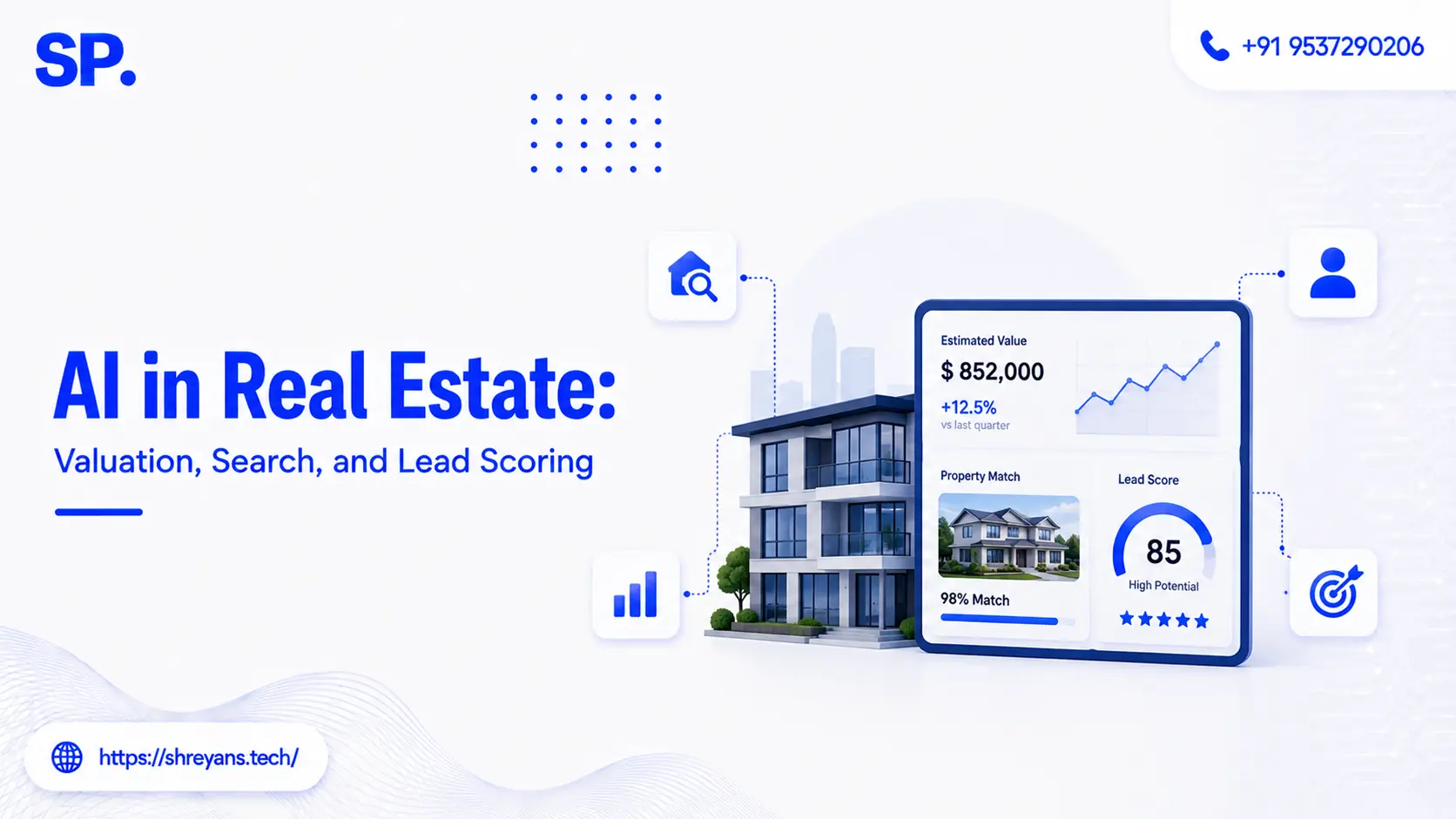
Automated Valuation Models provide instant property valuations using machine learning algorithms. These models eliminate manual effort and deliver consistent and scalable pricing results.
Market Trend Analysis
Machine learning tools analyze large datasets to detect patterns in pricing, demand, and buyer behavior. This helps stakeholders understand market dynamics and anticipate changes.
Image and Feature Analysis
Advanced ML models can process property images to assess quality, design, and condition. These insights contribute to more accurate pricing by incorporating visual data.
Recommendation Systems
Machine learning enables personalized property recommendations based on user preferences, search behavior, and budget. This enhances the user experience and simplifies property discovery.
Benefits of Machine Learning in Real Estate
Improved Accuracy
Machine learning models analyze multiple data points simultaneously, leading to highly accurate property price predictions.
Faster Processing
Automated systems provide instant insights, reducing the time required for property evaluation and decision-making.
Risk Reduction
By identifying market trends and anomalies, ML helps minimize investment risks and supports better planning.
Cost Efficiency
Automation reduces reliance on manual processes, lowering operational costs for real estate businesses.
Enhanced Customer Experience
Personalized recommendations and data-driven insights improve the overall experience for buyers and investors.
Practical Applications
Machine learning is being widely implemented across the real estate sector for:
Property Valuation and Price Prediction
-
Machine learning models provide accurate property valuation and price prediction by analyzing historical data, location factors, and market trends. This helps buyers, sellers, and real estate professionals make informed decisions with confidence.
Investment and Portfolio Analysis
-
AI-powered tools enable smart investment and portfolio analysis by evaluating property performance, return on investment (ROI), and market risks. This allows investors to optimize their portfolios and choose the most profitable opportunities.
Market Forecasting
-
Machine learning helps in real estate market forecasting by identifying patterns in demand, pricing, and economic indicators. This enables businesses and investors to anticipate market changes and plan strategies accordingly.
Risk Assessment
AI systems improve risk assessment in real estate by detecting potential risks such as market fluctuations, property devaluation, or investment losses. This ensures safer and more secure investment decisions.
Customer Engagement and Recommendation Systems
-
Machine learning enhances customer engagement by offering personalized property recommendations based on user preferences, search history, and budget. This improves user experience and increases conversion rates for real estate platforms.
Challenges and Limitations
Despite its advantages, machine learning adoption in real estate presents certain challenges:
Dependence on High-Quality and Comprehensive Data
-
Machine learning models rely heavily on high-quality and comprehensive data to deliver accurate predictions. Incomplete, outdated, or incorrect data can significantly affect the reliability of real estate price predictions and insights.
High Initial Implementation Costs
-
Implementing machine learning solutions involves high initial costs, including infrastructure setup, data collection, and hiring skilled professionals. This can be a challenge, especially for small and medium-sized real estate businesses.
Complexity in Model Development and Maintenance
-
Developing and maintaining ML models requires technical expertise and continuous monitoring. Models need regular updates and improvements to ensure accuracy, making the process complex and resource-intensive.
Data Privacy and Security Concerns
Handling large volumes of user and property data raises data privacy and security concerns. Businesses must ensure proper data protection measures to prevent breaches and maintain user trust.
Future Outlook
The future of real estate lies in intelligent and automated systems powered by machine learning. As technology advances, ML solutions will become more accessible and sophisticated.
Key developments expected in the near future include:
Real-Time Property Valuation
Machine learning enables real-time property valuation, allowing users to get instant and accurate price estimates based on the latest market data. This helps buyers and investors make quick decisions without waiting for manual assessments.
Integration with Smart City Data
AI systems can integrate with smart city data, including infrastructure, traffic, and urban development insights. This provides a deeper understanding of location value and helps improve the accuracy of real estate price predictions.
Advanced Predictive Investment Tools
-
Machine learning powers advanced predictive investment tools that analyze trends, risks, and returns. These tools help investors identify high-growth opportunities and make smarter, data-driven investment decisions.
Fully Automated Real Estate Platforms
-
The future of real estate includes fully automated platforms where AI manages everything from property search to pricing and transactions. This streamlines operations, reduces manual effort, and creates a seamless experience for users.
Frequently Asked Questions (FAQs)
1. What is machine learning in real estate?
Machine learning in real estate involves using algorithms to analyze data and predict property prices, trends, and investment opportunities.
2. How accurate are ML-based price predictions?
Accuracy depends on the quality and volume of data used. With reliable data, ML models can achieve high levels of precision.
3. What is an Automated Valuation Model?
An Automated Valuation Model is a system that uses machine learning to estimate property values instantly based on available data.
4. Who benefits from machine learning in real estate?
Buyers, sellers, investors, developers, and real estate agencies all benefit from improved insights and decision-making capabilities.
5. What are the main challenges of using ML in real estate?
Key challenges include data availability, implementation costs, technical complexity, and privacy concerns.
Conclusion
Machine learning is transforming real estate price prediction by introducing accuracy, speed, and efficiency into the valuation process. It enables stakeholders to make informed decisions based on data rather than assumptions.
As the industry becomes increasingly competitive, adopting machine learning solutions is essential for staying ahead. Organizations that leverage these technologies will be better positioned to optimize operations, reduce risks, and deliver superior value to customers.
In the years ahead, machine learning will continue to play a critical role in shaping a smarter and more transparent real estate ecosystem.



Shreyans Padmani
Shreyans Padmani has 5+ years of experience leading innovative software solutions, specializing in AI, LLMs, RAG, and strategic application development. He transforms emerging technologies into scalable, high-performance systems, combining strong technical expertise with business-focused execution to deliver impactful digital solutions.