Introduction
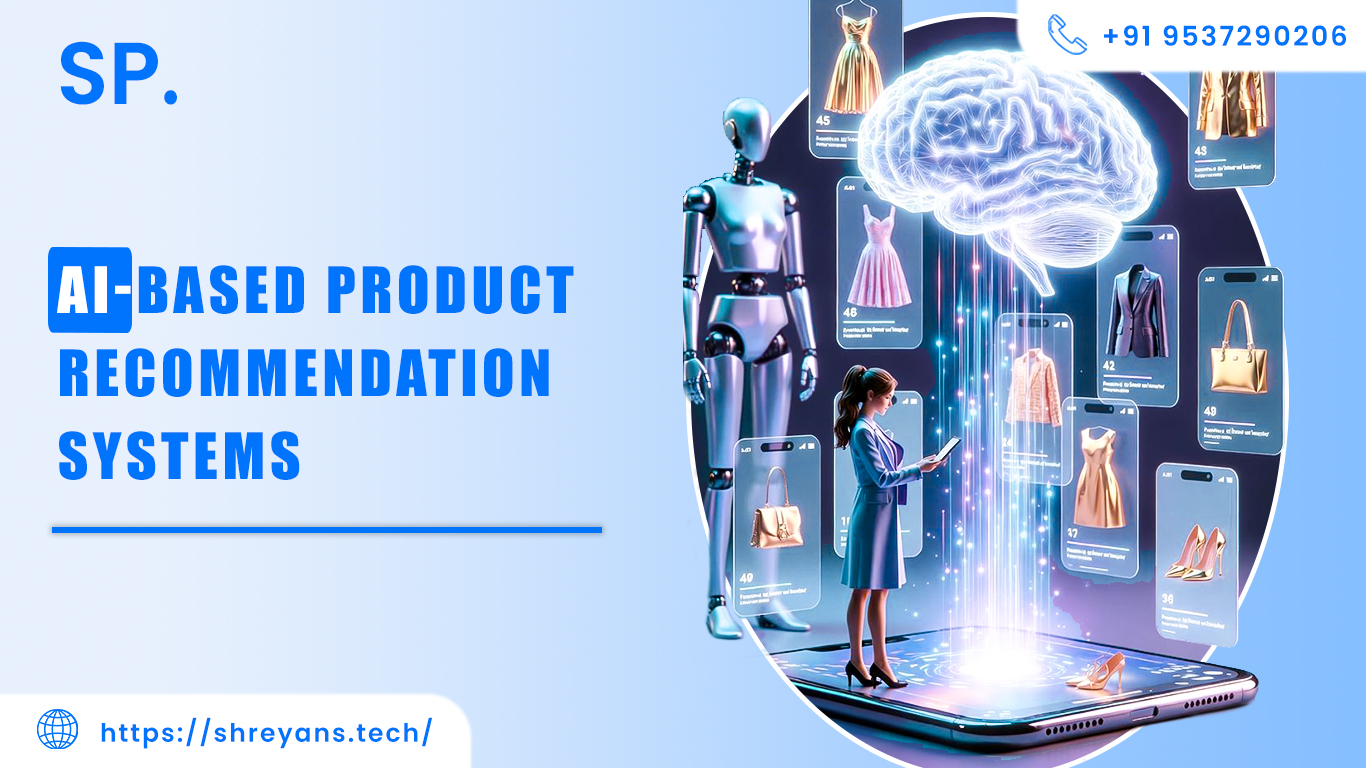
Look, we've all been there. You glance at a pair of boots online for thirty seconds, and somehow every corner of the internet spends the next two weeks whispering about leather soles and lace styles. That is not a coincidence. That is an AI recommendation engine doing exactly what it was designed to do, and doing it well. These systems are no longer a science-fair experiment tucked inside a startup's backend. They are the living infrastructure behind Amazon, Netflix, Spotify, and just about any digital platform worth using. (Yes, they are also the reason you ended up three episodes deep into that strange 80s wildlife documentary at 2 AM.)
Here is the thing most people miss: the core concept is actually not complicated. Peel back the math, and you get something deceptively simple. The system watches your behavior, builds a quiet model of who you are as a shopper or a viewer, and takes its best shot at what you want next. It is pattern recognition at industrial scale. The complexity lives in the engineering underneath, not the idea on top.
This guide exists because too many explanations of recommendation systems either drown you in academic notation or wave their hands at the interesting parts. Neither is useful. What follows is a ground-level walk through how these systems actually work, which types matter, how to build one without losing your mind, and where the real headaches hide. No padding. No buzzword soup. Just the stuff that actually matters when you sit down to build or buy one of these things.
What Are AI-Based Product Recommendation Systems?
Short answer: smart systems that watch what you do and use that data to guess what you might want next. They track every click, every purchase, every product you hovered over for three seconds before moving on. And the guess they make is not random. It is driven by machine learning models trained on enormous volumes of behavioral data.
Here is what they are actually chewing through:
-
Browsing History: Every page you scroll, every product thumbnail you click. The system builds a quiet mental map of your interests, one micro-interaction at a time. It is watching, learning, and updating that model constantly.
-
Purchase Behavior: Not just what you bought once. Frequency matters. Spending patterns matter. That stretch where you bought four phone cases in a single month? The algorithm clocked it and filed it away.
-
User Preferences: The categories you keep gravitating toward, the brands you return to, the price band you almost never leave. Every pattern becomes a signal worth learning from.
-
Interaction Patterns: How long you stare at a product image before scrolling past. Whether you drop something in your cart and abandon it. Even your exits teach the system something.
The goal is pushing the right product in front of the right person at the exact right moment. When it works, and it genuinely does work, it stops feeling like advertising and starts feeling like a friend who just gets your taste.
How AI Recommendation Systems Work
There is a structured process running under every recommendation you see. Most guides skip over these steps or vague them up into uselessness, which is exactly why so many implementations end up a mess. Here is what is actually happening:
Step 1 Data Collection:
The system pulls from everywhere at once. Your website. Your mobile app. Your CRM. Your purchase logs go back years. The rule nobody tells you until you have already made the mistake: garbage data in, garbage recommendations out. More sources mean richer signals. Richer signals mean better guesses.
Step 2 Data Analysis:
Machine learning models tear through those usage patterns and spot correlations no human analyst could find at scale. This is where things get genuinely interesting, where the system starts noticing things you never explicitly told it.
Step 3 Similarity Matching:
Products get clustered by shared characteristics. Users get grouped by overlapping behavior. The system figures out what goes with what, and sometimes the groupings surprise even the engineers who built the thing.
Step 4 Ranking and Prediction:
Of all the products that could theoretically be shown to you right now, which ones are most likely to actually convert? The model ranks them. That ranked list is what shows up on your screen.
Step 5 Real-Time Recommendations:
Here is the kicker: it does not just run once and call it done. Every click you make updates the system on the fly. The recommendations you see at 9:00 AM might be meaningfully different from what you see at 9:05 AM after a bit of browsing. It is live, it is dynamic, and that combination of speed and responsiveness is exactly what makes it powerful and genuinely hard to build right.
Types of AI Recommendation Systems
1. Collaborative Filtering
This is the "people like you also bought" approach. Honestly, it is the one that trips people up, because it does not care about the product at all. It only cares about users. The logic is this: if User A and User B have nearly identical purchase histories, and User A just grabbed Product X, there is a solid bet that User B wants it too. The system hunts for those behavioral twins and uses them to drive suggestions.
You have seen this working thousands of times. "Customers who bought this also bought..." is collaborative filtering doing its job. It builds trust fast when the suggestions land right, and it converts well because the social proof is baked in.
2. Content-Based Filtering
This one shifts focus from the person to the product. It looks at what you have previously liked, identifies the shared DNA across those items, such as category, price range, material, style, and then hunts for more products carrying those same traits. Bought a standing desk? The system analyzes its attributes and surfaces other ergonomic office pieces in your usual price band. It is clean, it is logical, and it does not need a massive user base to start working, which is why it tends to be the smart starting point for newer or smaller stores.
3. Hybrid Recommendation Systems
This is where serious teams usually land after a few months of experimenting. You layer collaborative and content-based filtering together, and their individual weaknesses start canceling each other out. The cold-start problem gets smaller. Over-specialization gets handled. Accuracy goes up noticeably. Most of the recommendation engines you actually interact with day to day are hybrid. They just do not advertise it.
Benefits of AI-Based Recommendation Systems
Personalized User Experience: Nobody wants to feel like a generic customer. When a product feed actually reflects your history and taste, the whole experience shifts. It feels curated. It feels like the platform is paying attention. That shift is real, it is measurable, and users stick around for it in ways they do not stick around for generic listings.
Increased Sales and Revenue: The numbers here are not subtle. Recommendation engines consistently lift average order value. They surface products people did not know they wanted until they saw them sitting right there. That is not manipulation. It is genuinely useful. And yes, it moves the product.
Better Customer Retention: Acquiring a new customer costs real money. Keeping one costs far less. When someone feels understood by a platform, they come back. Good recommendations build that feeling slowly and consistently. Bad ones erode it fast and permanently.
Real-Time Decision Making: Static recommendation lists are largely useless now. What matters is live responsiveness: the system reading your behavior as it unfolds and adjusting instantly. That immediacy is the line between a suggestion that feels relevant and one that feels stale.
Improved Marketing Efficiency: I have noticed that teams with solid recommendation data run dramatically tighter ad campaigns. You stop spending budget on everyone and start targeting people who already want what you are selling. Less waste. Better return. Simpler math.
How to Implement AI-Based Recommendation Systems
Most guides go vague here. I am going to be specific.
Step 1 Define Your Goals:
Do not skip this. "We want better recommendations" is not a goal. "We want to increase the average order value by 15% in Q3" is a goal. That specificity shapes every downstream decision: which algorithm you pick, which data you prioritize, how you measure whether any of it worked.
Step 2 Collect and Prepare Data:
This part is unglamorous, and it is about 70% of the actual work. Pull data from your site, your app, your purchase database. Then clean it obsessively. Duplicates, null values, and stale records will quietly destroy your model's accuracy, and you will not understand why for months. (Which is, honestly, where most developers lose their minds.)
Step 3 Choose the Right Algorithm:
New to this with limited data? Start content-based. Large, active user base? Collaborative filtering opens up. Scaling toward production with the resources to maintain it properly? Go hybrid. There is no universally correct answer here, only contextually correct ones.
Step 4 Build and Train the Model:
Feed it historical data. Let it learn the patterns. Validate against a holdout set. Tune. Repeat. This phase takes longer than people expect the first time through and shorter than they fear the second time.
Step 5 Integrate the System:
Drop the engine into your front end, your app, your email flows. API endpoints, usually. Keep latency under 200ms if you can manage it, and make sure the fallback behavior when there is no user data actually makes sense to a real human.
Step 6 Monitor and Optimize:
You are not done at launch. You are never done. Track click-through rates, conversion rates, and diversity metrics. A system that only ever recommends the same five bestsellers is not smart. It is lazy. Keep refining it or it goes stale.
Real-World Examples
E-commerce
Amazon is the obvious one, and for good reason. A meaningful chunk of its revenue growth has been built directly on recommendation infrastructure. When you browse hiking boots and immediately see trekking poles and wool socks sitting right below them, that is the machine working. It turns passive browsing into active discovery, which is a completely different psychological experience for the shopper.
Streaming Platforms
Netflix, Spotify, YouTube. Their recommendation systems are not just features. They are arguably the core product. What you watch next, which playlist auto-queues, which video surfaces after your last one ends: all of it is the algorithm making calculated bets on your behavior, getting smarter with every session you give it.
Social Media
Every feed you scroll is a recommendation engine wearing a social network costume. The post at the top of your feed is not random. The ad that lands a little too close to a conversation you had yesterday is not a coincidence. It is content-based and collaborative signals running in real time, optimizing quietly for your continued attention.
Challenges of AI Recommendation Systems
Data Privacy Issues: This is the biggest one, and it is only getting harder to navigate. GDPR, CCPA, and a growing pile of regional privacy laws all have strong opinions about how user data gets collected, stored, and used. Ignoring compliance is not just an ethics problem. It is a legal and reputational liability that can show up fast and hurt badly. Build your data layer to be compliant from day one or spend a lot of painful months retrofitting it later.
Algorithm Bias: Garbage in, garbage out, but sometimes the garbage is subtle enough to miss at first. If your training data skews toward certain demographics, certain price tiers, or certain product categories, your recommendations will reflect those skews without announcing themselves. Catching this requires intentional auditing. Blind trust in the model is how these problems stay hidden.
Cold Start Problem: New user, no history. New product, no interactions. The system has nothing to anchor a recommendation to, and the fix is never clean. Onboarding surveys help. Demographic proxies help. Content-based fallbacks help. But there is no perfect solution, and every team that builds one of these things eventually has to make peace with that.
Maintaining User Trust: A recommendation that feels creepy kills the experience dead. If users sense they are being profiled too aggressively, they disengage and do not come back. Being transparent about why a suggestion appeared, without being annoying or clinical about it, is increasingly a genuine product differentiator rather than a legal checkbox.
Future Trends in AI Recommendation Systems
Real-Time Personalization: The gap between a click and a response recommendation is shrinking toward milliseconds. Streaming data pipelines and edge computing are making truly live recommendations possible at real production scale, not just in demos or whitepapers.
Cross-Platform Recommendations: You browsed on your phone, checked out on your laptop, got a follow-up email on your tablet. Connecting those separate touchpoints into one coherent user model is where the next significant wins live. Companies that crack cross-device identity without creeping people out will have a serious edge over those that cannot.
AI and Generative Model Integration: This is where things get genuinely exciting. Pairing recommendation systems with generative AI means you can do more than push a product. You can generate a personalized product description, a custom landing page, a comparison guide tailored specifically to this user's decision context. The line between recommendation and content creation is dissolving, and what comes next is interesting.
Explainable AI (XAI): Users are starting to ask, "Why was I shown this?" They deserve a real answer. Explainable AI surfaces the reasoning behind a recommendation in plain, honest language. It is not just a trust exercise. It is genuinely good product design. Users who understand why something was suggested engage with it more often and more deliberately.
Frequently Asked Questions
Q1. What is an AI-based recommendation system?
Software that watches what you click, buy, and skip, then predicts what you want next. Pattern recognition at scale. Simple concept, serious engineering underneath.
Q2. Where are recommendation systems used?
Amazon, Netflix, Spotify, TikTok, Instagram. Basically any app that shows you things it thinks you will like. That is a recommendation engine running quietly behind everything you see.
Q3. Which algorithms are most commonly used?
Three main types: collaborative filtering (people like you bought this), content-based filtering (products similar to what you liked), and hybrid (both at once). Most real-world production systems run hybrid.
Q4. How do recommendation systems actually increase sales?
They kill the friction of the hunt. Right product, right moment, no extra steps. Average order values go up. Session time goes up. Revenue follows, usually pretty quickly.
Q5. What are the main challenges?
Data privacy regulations, bias baked into training data, and the cold start problem when a new user or product has zero history to learn from. All three are real headaches. None of them have perfect fixes.
Conclusion
AI-based recommendation systems are not optional anymore for any digital business that is serious about growth. They are infrastructure. The companies winning on personalization are not doing it through good intuition or clever marketing copy. They built systems that learn, adapt, and get sharper with every user interaction they process.
The foundation is always the same: the right algorithm choice for your context, clean and trustworthy data, and a commitment to continuous optimization after launch. Build that foundation properly and you are not just showing people products. You are building something closer to a relationship with each user, scaled across millions of interactions.
Here is what you are actually working toward when you get this right:
-
Increased Sales: Not through pushing harder or shouting louder, but through showing people what they actually want at the moment they want it. Relevant suggestions convert. Irrelevant ones annoy and push people away.
-
Improved Customer Satisfaction: When a platform feels like it genuinely understands you, the whole experience gets better in ways users can feel but rarely articulate. That feeling is not accidental. It is engineered, deliberately and carefully.
-
Long-Term User Relationships: Consistent, smart recommendations build trust slowly and compound over time. Trust turns one-time buyers into loyal customers. That is the real win, not the single transaction but the relationship behind it.
AI keeps moving fast, and recommendation systems will keep getting smarter, more contextual, more real-time, and better at reading intent rather than just behavior. The businesses that invest seriously in this now will not just keep pace with what comes next. They will set it.



Shreyans Padmani
Shreyans Padmani has 5+ years of experience leading innovative software solutions, specializing in AI, LLMs, RAG, and strategic application development. He transforms emerging technologies into scalable, high-performance systems, combining strong technical expertise with business-focused execution to deliver impactful digital solutions.