Introduction
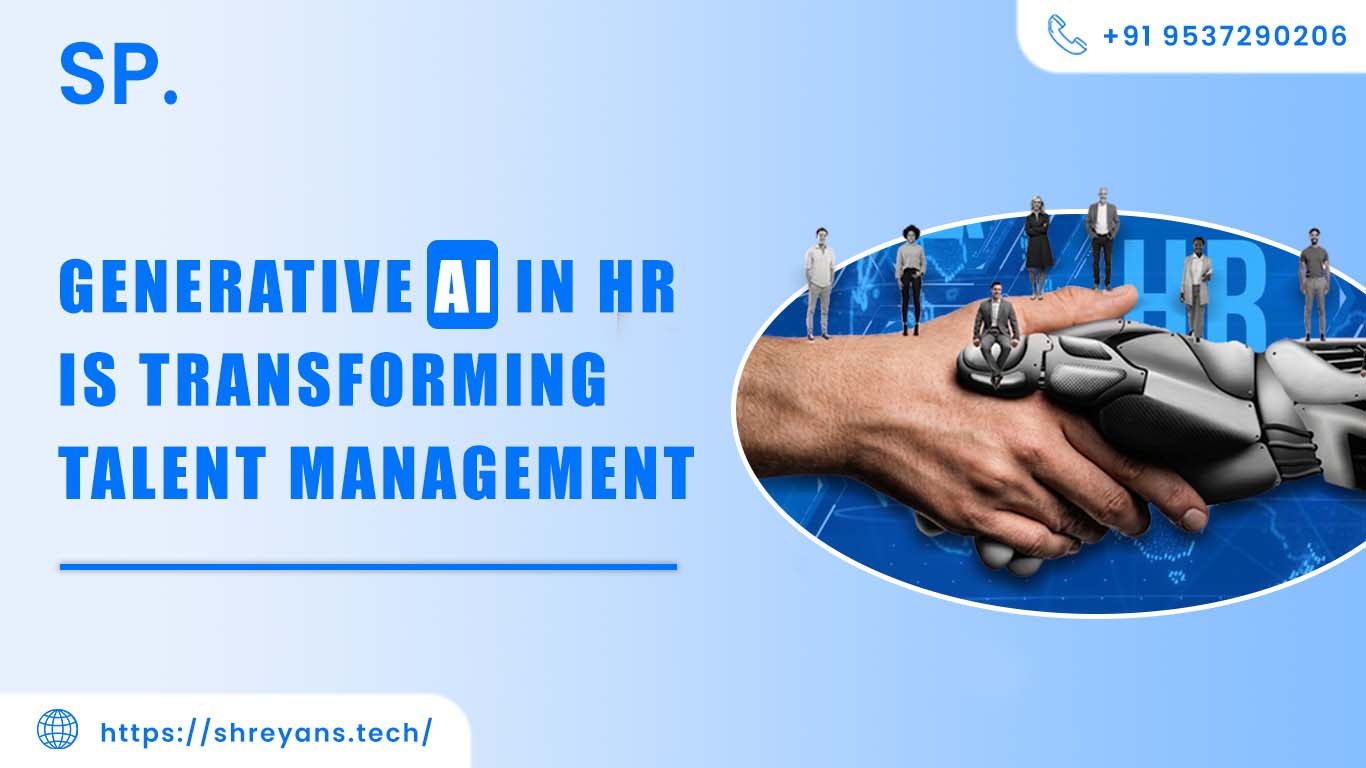
Generative AI is moving fast, and honestly, HR departments are feeling it more than almost anyone. The old ways of managing people, hiring talent, and planning your workforce are getting flipped on their head in ways I don't think most organizations saw coming. HR teams are no longer stuck grinding through everything by hand.
What I've noticed over the past few years is a genuine shift happening on the ground. Companies are picking up AI-powered tools to speed up recruitment, cut out the soul-destroying admin pile, and actually build smarter systems for finding and holding onto good people. From putting together job descriptions to figuring out where employee engagement is quietly falling apart, AI has turned into a surprisingly capable partner for HR professionals who bother to learn how to use it properly.
This isn't just automation for automation's sake, though. That framing misses the point entirely. The real story is about making HR more strategic, more grounded in actual data, and far more focused on the human beings sitting inside the organization rather than the paperwork that surrounds them. I think once you see it that way, the whole thing clicks differently.
What is Generative AI in HR?
At its core, generative AI in HR means AI systems that can create content, dig through data, and actually support the calls HR teams have to make every single day. And it's broader than most people assume when they first hear the term. Here's what it looks like in practice, not in theory:
AI-powered job description writing helps HR teams put together clear, detailed, and well-targeted job postings fast, without staring at a blank page and recycling the same tired template from three years ago. Smart resume screening uses AI to filter and shortlist candidates by actually matching skills, experience, and job fit, which trims hiring time down in a way that's hard to argue with once you've seen it work. Automated onboarding content creation builds out welcome guides, training materials, and policy documents so new hires don't walk in on day one to complete silence and a laptop with no instructions (and yes, I've seen that happen more than once). AI-driven employee query handling gives people instant answers through chatbots and virtual assistants, which means HR stops fielding the same basic question seventeen times a week from seventeen different people. Predictive workforce planning reads the data and helps HR get out in front of future hiring needs, skill gaps, and workforce shifts before they quietly become someone's emergency.
What actually separates generative AI from the old HR software stack, though, is this: it doesn't just run a fixed workflow and call it done. It generates human-like responses, surfaces real insights, and adapts in ways that older tools simply can't. That's where things stop being incremental and start getting genuinely interesting.
How Generative AI is Transforming Talent Management
1. Smarter Recruitment Process
Generative AI helps HR teams quickly cut through mountains of resumes and surface the best candidates based on actual skills and requirements, not just keyword matches. I've seen hiring timelines shrink by weeks at organizations that made this switch. Manual effort drops, the process gets faster, and the people you're inviting to interview are actually worth your time.
2. Improved Candidate Experience
AI-powered chatbots can handle candidate questions at midnight, sort out interview scheduling without the painful three-email chain that somehow always ends in a calendar conflict, and keep applicants in the loop so nobody's sitting there wondering if their resume just fell into a black hole. I've talked to candidates who said the communication alone, just knowing where they stood in the process, changed how they felt about the company before they'd even met anyone. That experience shapes perception fast. And most hiring managers are so deep in the process on their end that they genuinely don't see how it feels from the other side. That gap is costing companies good candidates more often than they'd like to admit.
3. Efficient Workforce Planning
HR teams can now use AI to actually get ahead of things: forecast future hiring needs, spot skill gaps before they hurt a project, and build workforce strategies with something more solid than gut feeling and last year's spreadsheet. That shift from reactive to proactive planning is probably the biggest operational win I've seen.
4. Enhanced Employee Engagement
Generative AI allows organizations to personalize how they communicate with employees, shape training programs around actual needs, and build feedback systems that feel less like corporate theater. When people feel seen and supported, they tend to stick around. That's not a theory, it's just how people work.
5. Automated HR Operations
Routine tasks like policy writing, onboarding documents, and performance summaries can be handed off to AI, which frees HR professionals to focus on work that actually requires a human in the room: strategy, culture, and difficult conversations. That's the trade worth making.
Benefits of Generative AI in HR
Generative AI brings some real, concrete advantages to modern HR departments, and I think it's worth going through them honestly rather than just rattling off a list of things that sound good in a slide deck.
Faster recruitment and hiring cycles mean companies can actually find and bring in the right people without the weeks of delay that used to just be accepted as normal. Nobody questioned it. It was just how long hiring took. Reduced administrative workload gives HR teams something genuinely valuable back, which is time, so they can focus on the work that actually shifts things rather than updating spreadsheets nobody reads. Better decision-making through data insights means HR professionals are working from real-time analytics and actual trends rather than whatever half-remembered figures came up in last Tuesday's meeting. That difference matters more than people give it credit for.
Improved employee experience builds a more engaging workplace through personalized communication and faster response times, and employees do notice, even if they never say it out loud. Higher productivity in HR operations comes from offloading the routine stuff to AI tools so the team stops burning energy on admin and starts spending it on strategy. And reduced bias in candidate screening is the one I'd argue deserves the most attention, because it quietly pushes hiring decisions toward skills and real qualifications, away from the kind of unconscious bias that creeps in when people are overworked, rushed, and just trying to get through the day.
Taken together, these benefits move HR departments toward something that's actually built for what's coming, not just dressed up to look current.
Real-World Impact on HR
Organizations that have actually deployed generative AI in their HR functions are reporting improvements that go beyond what most pilot programs promised. Here's where the real gains are showing up:
-
Improved hiring speed lets organizations find and bring in the right candidates without the delays that used to drag out recruitment for months.
-
Better talent quality means companies are selecting people who are genuinely skilled and qualified, which shows up in team performance pretty quickly.
-
Higher employee retention comes from keeping people engaged and satisfied, which directly cuts turnover and all the hidden costs that come with it.
-
Stronger internal communication improves how teams actually work together, through faster and more useful channels that don't require a meeting to answer a simple question.
-
Better training and development programs support real, continuous learning and help employees build the skills they need rather than sitting through generic sessions.
The pattern here is clear: AI is pulling HR out of its reactive mode and positioning it as a proactive, strategic function. That's a meaningful shift for organizations willing to commit to it.
Challenges of Using Generative AI in HR
Look, I'd be doing you a disservice if I only talked about the wins. Generative AI in HR comes with real challenges, and some of them are the kind that can bite you hard if you're not paying attention:
-
Data privacy and security concerns are serious. Sensitive employee and candidate information needs real protection from unauthorized access, and most organizations aren't starting from a strong position here.
-
The risk of biased AI models is something nobody wants to talk about, but if the system was trained on incomplete or skewed data, the hiring decisions it supports will reflect that. This is where I'd spend serious time before going live.
-
Dependence on technology creates fragility. If the system goes down, or someone doesn't know how to manage it properly, things can fall apart in ways that catch teams completely off guard.
-
The need for employee upskilling is real and often underestimated. HR professionals need actual training to use these tools well, not just a one-hour onboarding session.
-
Ethical use of AI in hiring decisions requires transparency and genuine accountability. Fairness and responsible use aren't nice-to-haves when you're making decisions about people's careers.
HR teams that take these challenges seriously and build guardrails from the beginning will be in a much better position than those who bolt on compliance after the fact.
Future of Generative AI in HR
Here's what I think is actually coming, and I'd encourage you to take it seriously rather than file it under "future hype." HR and AI are going to be deeply intertwined from here on. HR professionals aren't going anywhere, though. What's changing is the job. Repetitive tasks will be handled by AI. Humans will own the things that matter most: leadership, judgment, relationships, and navigating the situations where no algorithm is going to give you the right answer.
In terms of what's on the horizon, here's what you can realistically expect:
-
AI-driven hiring systems will automate recruitment processes end-to-end and help teams select the right candidates faster and with a lot more precision than today's tools allow.
-
Predictive workforce analytics will take historical and real-time data and actually tell you where your hiring gaps are going to be before they show up on a team's quarterly review.
-
Personalized employee learning paths will deliver training programs tailored to individual skills, career goals, and roles, rather than the one-size-fits-all approach that most people tune out.
-
Fully automated HR workflows will handle the operational side of things: onboarding, payroll coordination, employee management, all running through AI-powered systems that don't need someone to babysit them.
The combination of human judgment and artificial intelligence is going to define the next era of talent management. That's not a prediction I'd bet against.
FAQ (Frequently Asked Questions)
1. What is GenAI in HR?
It’s basically the tech that lets you move beyond just "reading" data to actually building things like drafting emails or summarizing meeting notes. (honestly, it’s like having a ghostwriter for all that repetitive admin work that usually kills your productivity). Instead of manually handling every tiny task, you’re using these models to ship content and manage data loops across the entire employee lifecycle.
2. How does it help talent management?
The thing is, it shows up everywhere from rewriting job posts that actually sound human to figuring out who’s likely to quit before they even know it themselves. I once saw a team save ten hours a week just by letting an AI handle the initial "is this person even qualified?" resume pass. (and yes, I’ve made the mistake of doing that manually for far too long). It deals with the mess of workforce planning so you can focus on the people.
3. What are the main wins?
Look, the big ones are faster hiring and a massive reduction in the "boring stuff" that fills up your calendar. You get better data for making hard choices, and your employees don't have to wait three days for a simple answer from the help desk. (trust me on this, a fast response is the difference between a happy hire and a ghosted candidate). It’s a win for everyone's sanity.
4. Is my job safe?
yes. AI is great at patterns but pretty terrible at the "human" part of Human Resources like empathy, conflict, or company culture. It handles the logic so you can handle the feelings and strategy. (which, let's be real, is the part a machine will never truly figure out).
5. What’s next?
I’d guess we’re headed toward ultra-personalized career paths and recruitment systems that basically run themselves until the final handshake. Real talk, the companies that grab this tech now are going to leave everyone else in the dust. (it’s a bit scary, I know, but it’s where things are going). Expect things to get much more predictive very soon.
Conclusion
Generative AI is changing how organizations manage talent in ways that are real, measurable, and accelerating fast. Recruitment gets faster. Employee engagement gets smarter. Workforce planning goes from reactive guesswork to something you can actually build a strategy around.
Yes, the challenges are real too: bias risks, privacy concerns, and the very human problem of getting people to actually adopt new tools. But if I had to bet, the organizations that take generative AI seriously in their HR functions right now are building an advantage that's going to be hard to close later.
The future of HR is not just digital. It is intelligent, thoughtful, and built on the combination of human judgment and AI capability working together rather than against each other.



Shreyans Padmani
Shreyans Padmani has 5+ years of experience leading innovative software solutions, specializing in AI, LLMs, RAG, and strategic application development. He transforms emerging technologies into scalable, high-performance systems, combining strong technical expertise with business-focused execution to deliver impactful digital solutions.