Introduction
Let me be upfront with you. AI isn't some distant, futuristic thing anymore it's already inside the tools your competitors use every single day, right now, quietly eating your lunch. I've watched companies of all sizes scramble to catch up, and honestly? The ones who move fast, and hire smart, are the ones who stop bleeding market share.
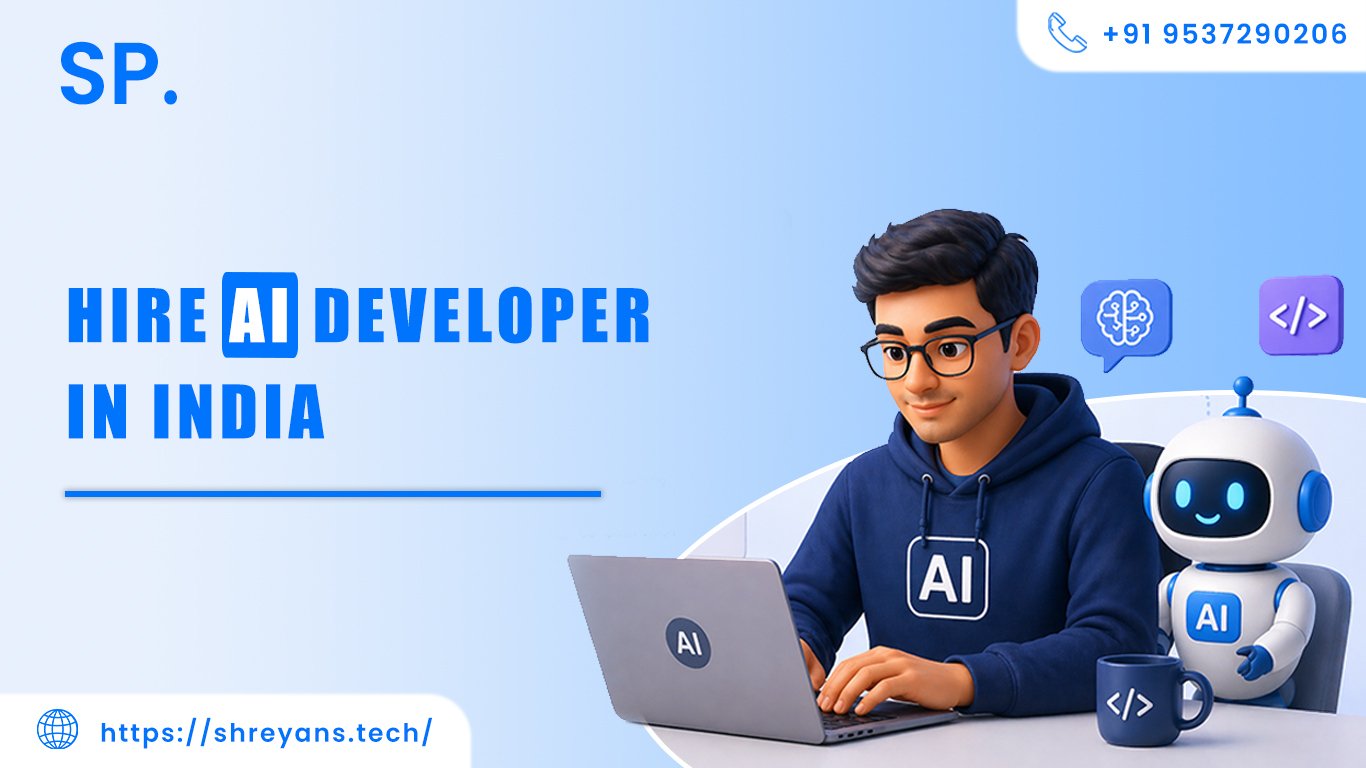
India keeps coming up in every serious conversation about AI talent. And look there's a reason for that. It's not hype. It's not some outsourcing cliché from 2005. The country quietly built one of the most formidable technical workforces on the planet, and the AI developer community there is deep, sharp, and here's the part that matters affordable in ways that will genuinely shock you if you've only ever hired domestically.
This isn't a puff piece. I'm going to walk you through what skills actually matter, what traps to dodge, what things cost, and why the time-zone thing which sounds like a headache can actually flip into a genuine advantage if you set it up right.
Why India? Here's the Real Answer.
1. The Cost Gap Is Jarring In a Good Way
I'm not going to sugarcoat this cost is probably why you're reading this in the first place, and that's completely fine. A senior AI developer in the US or UK can run you $120–$200 per hour. The same caliber of talent out of Bengaluru or Hyderabad? You're looking at $60–$120, often less. For startups running lean, that gap isn't a footnote, it's the difference between building the thing and not building it. Full stop.
2. The Talent Pool Is Genuinely Massive
India produces an enormous number of engineering graduates every year hundreds of thousands and a growing chunk of them are going deep into machine learning, data science, and AI. Not shallow "I completed a Coursera course" deep. I mean actual, build-a-model-from-scratch, debug-it-at-2am deep. The talent density in cities like Pune, Chennai, and Bengaluru has to be experienced firsthand to really sink in. You're not fishing in a small pond here.
3. The Technical Stack Is Dead Serious
Python, TensorFlow, PyTorch, AWS, Azure, GCP these aren't buzzwords on a resume over there, they're the daily toolkit. I've interviewed Indian AI developers who had a more nuanced grasp of transformer architectures than engineers I've met at Silicon Valley meetups. (Which, honestly, is where a lot of Western hiring managers quietly get humbled.) The global project exposure many of them carry is real and it shows.
4. Flexible Hiring That Actually Bends to Your Budget
Do you need one developer for three months? Done. Do you need a small dedicated team long-term? Also done. A quick freelance fix to untangle one gnarly ML pipeline? Absolutely done. The market there is structured in a way that lets you match your hiring model to your actual situation, not force your situation to fit some rigid hiring model. That flexibility matters more than people realize when you're scaling unpredictably.
5. The Time Zone Thing (It's Not What You Think)
Everyone panics about the IST offset. Here's the kicker if you set up your handoffs properly, that gap becomes a feature, not a bug. Your team wraps up, drops work-in-progress, your India-based developer picks it up. You wake up to progress. Some companies I know run nearly around the clock this way, without anyone working night shifts. It takes a bit of discipline to set up the async rhythm, but once it clicks, it really clicks.
Key Skills to Actually Look For (Don't Get Fooled by Buzzwords)
Resumes in this space are... noisy. Everyone claims everything. Here's what I'd actually dig into:
1. Machine Learning Fundamentals The Real Kind
Can they explain gradient descent without using slides? Do they actually understand why a model overfits, and what they'd do about it, not just recite the textbook answer? A solid ML foundation isn't glamorous, but it's what separates developers who ship working systems from ones who paste together tutorials and hope for the best.
2. Programming Python First, Always
Python is the language of AI. Full stop. R is fine for statistical work. Java shows up in enterprise pipelines. But if your candidate isn't fluent in Python, not "comfortable with," but genuinely fluent, that's a red flag worth taking seriously. Watch how they write code, not just what they say about it.
3. Deep Learning and Neural Networks Real Experience Matters
Anyone can take a course and slap "CNNs and RNNs" on their LinkedIn. What you're hunting for is someone who has actually debugged a training loop at 3 AM, who knows what vanishing gradients feel like in practice, and who can tell you when NOT to use a neural network. That last part knowing when not to is rarer than you'd think.
4. Data Analysis and Visualization The Unsexy Backbone
AI is downstream of good data. Every single time. A developer who can wrangle messy datasets, spot anomalies before they blow up a model, and communicate findings visually to non-technical stakeholders that's a developer who saves projects, not just codes them.
5. Frameworks: TensorFlow, Keras, PyTorch
These are the workhorses. No debate. Familiarity with all three is ideal; deep mastery in at least one is non-negotiable. Ask them which they prefer and why the answer tells you a lot about how they actually think.
6. NLP or Computer Vision Domain Depth
If you need chatbots, document parsing, or language tools, NLP expertise is the thing. If you're building anything visual defect detection, medical imaging, surveillance systems you want computer vision chops. Very few developers are world-class at both, and that's fine. Know which one your project actually needs before you start interviewing.
The Stuff You Can Actually Build
Get a good AI developer in your corner and here's what becomes possible:
1. AI Chatbots for Customer Support
Not the clunky "press 1 for billing" kind. Real conversational bots that handle complex queries, escalate gracefully when they hit their limits, and actually make your customers feel heard. Done well, they slash support costs and free your human agents for the problems that genuinely need a human. The ROI on this one tends to land fast.
2. Recommendation Systems
Netflix built an empire on this. You can too scaled to your size. Whether you're suggesting products, content, services, or job listings, a recommendation engine quietly turns passive browsing into active buying. I've seen modest e-commerce platforms see 20–30% lifts in average order value just from decent recommendations. That's not small.
3. Predictive Analytics
Stop guessing. Seriously. Predictive tools built on your own historical data can tell you what inventory to stock, which customers are about to churn, what your next quarter looks like with actual statistical backbone behind it, not gut feel. It's one of those things that sounds abstract until you see it working, and then you wonder how you ran the business without it.
4. Fraud Detection Systems
If you're in fintech, e-commerce, or any business where money moves you need this. AI-based fraud detection catches patterns that no human analyst would ever spot in time, flagging suspicious behavior in real-time before the damage is done. The difference between catching fraud at transaction time versus discovering it three days later is massive, and AI closes that gap.
5. Image and Speech Recognition
Security, healthcare, quality control in manufacturing these systems are no longer sci-fi. A well-built image recognition pipeline can inspect products on a conveyor belt faster and more accurately than any human team. Speech recognition opens doors for voice interfaces, transcription, and accessibility tools that your users will actually use.
6. AI-Powered Automation Tools
I'll be blunt, there are tasks in your business right now that a human is doing by hand that a well-built automation tool could handle in milliseconds. Data entry. Invoice matching. Email triage. Report generation. The list is usually longer than people expect. Automating even a fraction of that is where a lot of companies find their first real AI win.
How to Actually Hire Without Getting Burned
Step 1: Get Brutally Clear on What You Need
"I want to use AI" is not a project brief. It's a wish. Before you post a job or reach out to an agency, sit down and write out the problem you're actually trying to solve, what success looks like in concrete terms, what your budget ceiling is, and what the timeline looks like. Vague briefs attract vague proposals, and vague proposals waste everyone's time, especially yours.
Step 2: Pick the Right Hiring Model
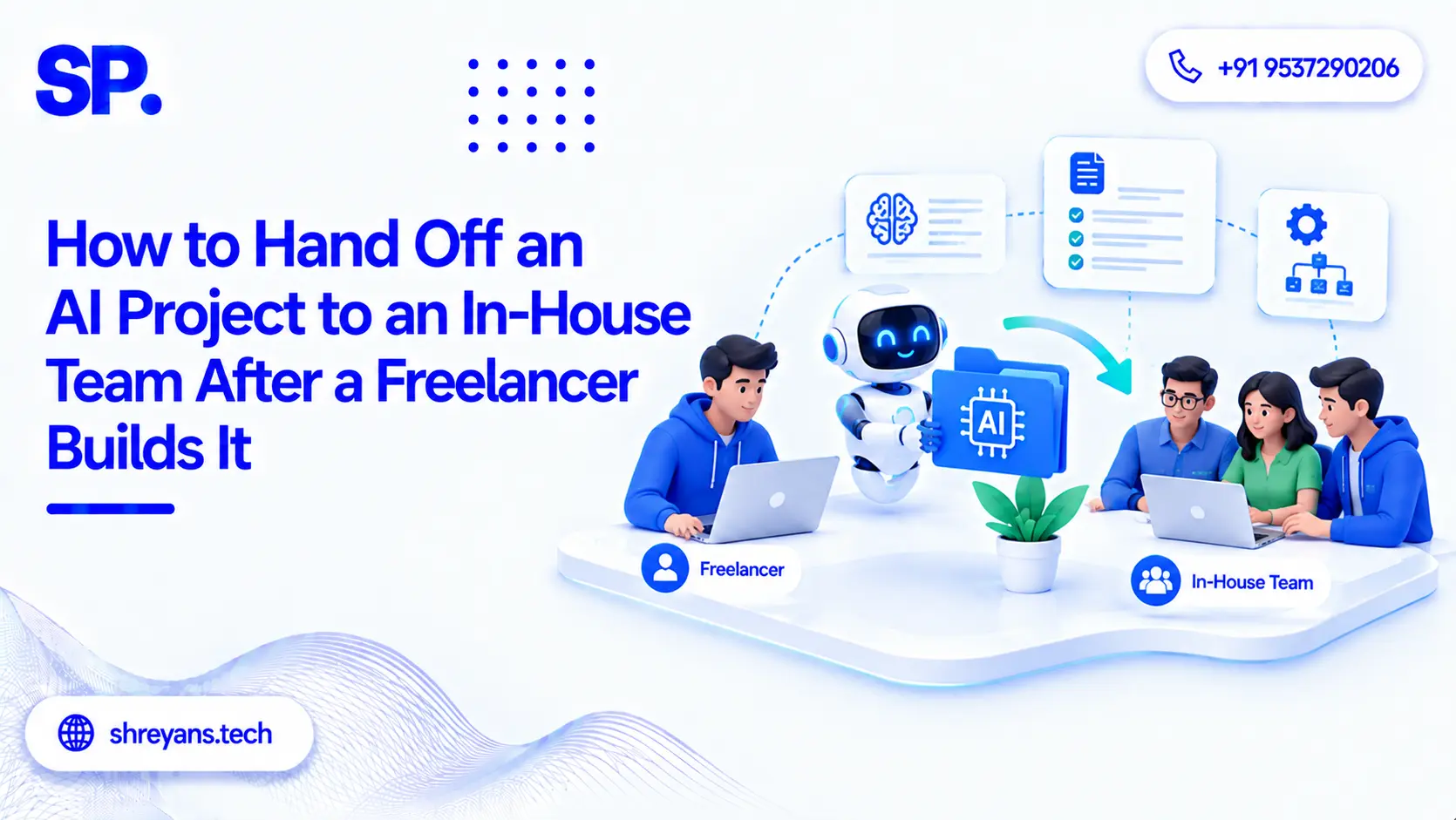
Freelancers For Lean, Focused Work
Small scope, short timeline, specific deliverable freelancers are your fastest path. No onboarding drag, no long-term commitment, no overhead. Just find a good one, agree on the scope, and move. Upwork, Toptal, and Fiverr (for smaller stuff) all have genuine AI talent if you know how to filter. (Tip: look at their portfolio projects, not just their star ratings.)
Dedicated Developers For Long Haul Projects
If your project is going to run for months and evolve significantly over that time, you want someone who's actually invested in it who learns your codebase, understands your domain, and doesn't have to be re-briefed every two weeks. A dedicated developer does that. The cost is higher than a freelancer, but the context retention is worth it.
AI Development Agencies For the Full Stack Play
Complex system, multiple moving parts, tight deadline? An agency brings you a whole bench of ML engineers, data scientists, frontend developers, QA under one roof. More expensive than hiring individuals, yes, but you're paying for coordination that you don't have to do yourself. For enterprise-scale AI builds, this is often the smarter call.
Step 3: Evaluate Technical Skills Don't Just Read the Resume
Portfolio first. GitHub activity second. Actual conversation about technical decisions third. Anyone can write impressive things on a resume. What you want to see is real work, real models, real projects, real trade-off reasoning. Ask about a project that failed and what they learned. That answer will tell you more than any skills test.
Step 4: Do a Proper Technical Interview
Skip the generic coding puzzles. Those test puzzle-solving, not AI development. Instead: give them a real problem from your domain and see how they think through it, what questions they ask, what assumptions they surface, what they'd try first and why. Communication matters here too. If they can't explain a complex concept clearly, they're going to struggle when it's time to present findings to your non-technical stakeholders.
Step 5: Start With a Paid Trial
I cannot overstate how much grief a paid trial project will save you. Two to four weeks, real task, real deliverable, real feedback loop. You'll see how they handle ambiguity, how they communicate when stuck, what their code actually looks like under time pressure. Spend a little upfront to avoid a very expensive mistake later. Every single time.
What It Actually Costs No Vague Ranges
The pricing structure in India is roughly tiered by experience. Here's an honest breakdown:
Junior AI Developer ($15–$30/hour)
Good for support tasks, data preprocessing, building out simpler components under supervision. Don't hand them your entire AI strategy and expect magic but for well-defined, scoped work with clear requirements? They can absolutely get it done. Startups with tight budgets often start here and scale up as the project grows.
Mid-Level AI Developer ($30–$60/hour)
This is the sweet spot for most businesses. They can own features end-to-end, make sensible architectural decisions, work with limited oversight, and communicate trade-offs clearly. Three to six years of real AI experience typically lands here. For most mid-market projects, this tier hits the best balance of cost versus output quality.
Senior AI Developer ($60–$120/hour)
Large-scale systems, high-stakes accuracy requirements, complex architectures this is where seniors earn their rate. They've seen the failure modes, they design for scale from day one, and they can mentor the rest of your team. Worth every dollar for the right project. Not necessary if you're just building a basic recommendation engine.
To put it in context, a senior AI developer in India at $120/hour is still substantially cheaper than a mid-level developer in the Bay Area. That's not a knock on anyone; it's just a geographic reality that you can use to your advantage.
The Actual Business Benefits Beyond the Obvious Ones
Faster Delivery If You Set It Up Right
Speed doesn't come automatically just because you hired a developer in India. It comes from clear requirements, tight feedback loops, and a good async communication setup. Get those three things right, and yes you can move noticeably faster than domestic-only teams, especially once the time zone advantage starts working for you.
Legitimate Global-Grade Quality
Many Indian AI developers have shipped real products for clients in North America, Europe, and Southeast Asia. They're not working in a vacuum; they know the standards, the tools, the expectations. Don't make the mistake of treating international hiring as a compromise. Done right, it's an upgrade.
Scale Without the Overhead Mess
Hiring full-time domestically means benefits, desk space, HR overhead, severance risk if things go sideways. Hiring a dedicated team in India through the right agency or platform gives you genuine scale without all that operational drag. When the project wraps, you're not managing layoffs. That's not a small thing.
Lower Costs But I Mean Significantly Lower
I keep coming back to this because it matters. The savings on a mid-to-large AI project infrastructure, developer time, maintenance can be significant enough to fund an entirely separate product initiative. That's not hypothetical. I've seen it happen. The budget math genuinely shifts when you factor in a full year of development costs at Indian market rates versus Western rates.
Quality That Holds Up Over Time
The best Indian AI teams don't just build something that works in the demo, they build something that still works six months later when your data has doubled and your edge cases have multiplied. Long-term reliability is where the real value compounds. Look for developers with production experience, not just prototype experience. That distinction matters enormously.
FAQs
1. Is the cost difference actually real, or are there hidden costs?
The cost difference is real. The hidden costs, poor communication, misaligned expectations, rework from vague briefs are avoidable. They're not an India-specific problem; they happen with domestic hires too when the process is sloppy. Hire carefully, communicate clearly, and the savings hold.
2. What tools and technologies do they typically use?
Python is the core. TensorFlow, PyTorch, and Scikit-learn are the ML workhorses. AWS, Azure, and GCP handle the cloud layer. More specialized developers might also work with Hugging Face, LangChain, or custom CUDA implementations depending on the domain. The stack is modern and the tooling is current.
3. Will language or communication be a problem?
No and I say this without reservation. Most Indian AI developers working with international clients are fluent in English. Many studied through English-medium curricula and have years of experience on global projects. You might notice an accent in calls, but that's about it. Written communication is consistently sharp.
4. Can I hire someone just for a short-term project?
Absolutely. Freelance and contract-based AI developers are easy to find and genuinely flexible. Platforms like Toptal or even direct Upwork searches surface strong candidates quickly. Be specific about scope and deliverables upfront, and short engagements work great.
5. How long does an AI project actually take?
Honest answer: it depends heavily on scope and data quality. A focused chatbot on clean data? A few weeks. A production-grade fraud detection system with custom model training, integration work, and monitoring? Closer to four to six months, sometimes longer. Anyone quoting you a precise timeline without seeing your data and requirements first is guessing. Push back and get a breakdown.
Conclusion
Look, you don't need a perfect setup to start. You need a clear problem, the right person to work on it, and a process that keeps communication from falling apart. India has the talent pool, the technical depth, and the pricing structure to make this work for almost any business that's serious about AI.
Whether you're trying to gut a painful support backlog with a chatbot, fix a forecasting mess with predictive analytics, or build something genuinely novel from the ground up the developers exist, the rates make sense, and the work gets done. I've seen it happen too many times to be skeptical.
Define the problem clearly. Hire deliberately. Start with a small win. Then build from there.
That's the whole playbook, honestly.



Shreyans Padmani
Shreyans Padmani has 5+ years of experience leading innovative software solutions, specializing in AI, LLMs, RAG, and strategic application development. He transforms emerging technologies into scalable, high-performance systems, combining strong technical expertise with business-focused execution to deliver impactful digital solutions.