Introduction
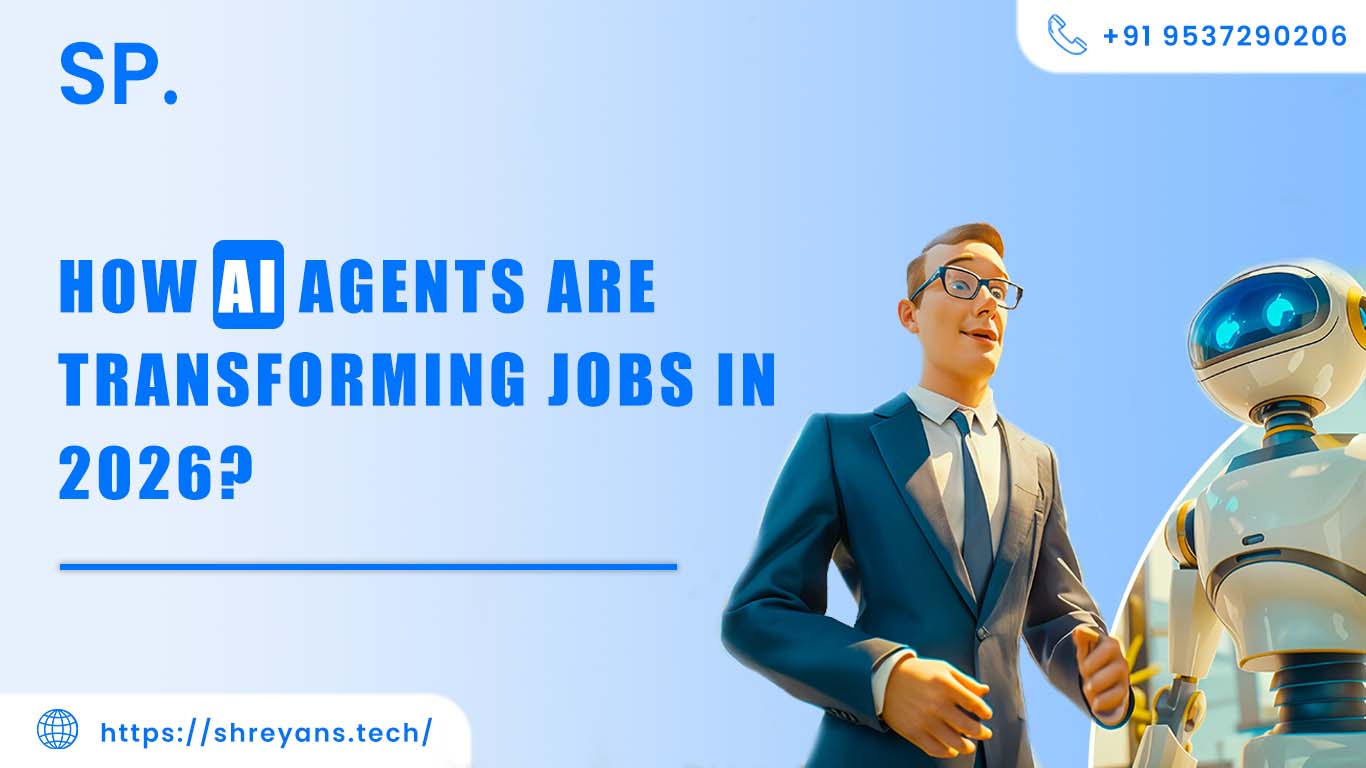
Artificial Intelligence stopped being a chatbot trick a long time ago. In 2026, AI agents are functioning more like digital coworkers than software tools (which, honestly, changes everything about how you think about your own job). They perform tasks, make real-time decisions, automate full workflows, and work alongside human teams in ways that would have sounded like science fiction just four years ago. Customer support, healthcare, software development, marketing the wave is hitting all of them.
Companies everywhere are plugging AI agents into their operations to cut repetitive work, boost output, and help their people focus on things that actually require a human brain. It is creating real opportunity. And real pressure. Both at the same time, for professionals in every field.
What Are AI Agents?
AI agents are advanced systems that can independently handle tasks, dig through information, interact with other software, and work alongside humans or even other AI systems. That last part is what makes them different from the automation tools people have been using for the past decade. They are not just running scripts. They are reasoning.
Unlike traditional automation tools, AI agents can:
-
Understand Goals: AI agents figure out what you actually want, not just what you typed. They read the objective, parse the business context, and work toward outcomes with surprisingly little hand-holding. I have seen this save entire back-and-forth email threads.
-
Plan Multiple Steps: Modern AI agents break complex problems into smaller, sequenced actions and chip away at them one by one. This is where real productivity wins lives. Your workflows run while you are focused on something else entirely.
-
Learn from Interactions: These systems get better over time by processing past interactions and data patterns. Not "better" in a vague marketing sense. Concretely better, in ways you can measure (nobody talks about this enough, but it actually shows up in the response quality).
-
Make Decisions: Advanced AI agents analyze available information, weigh the options, and make calls in real-time. Businesses are using this to handle customer service scenarios, triage operations issues, and run automated approval flows all without a manager in the loop.
-
Execute Tasks with Minimal Human Input: Repetitive work gets done automatically. Scheduling. Reporting. Query handling. Things that used to drain hours every week now just happen. If I had to guess, this is the capability that will drive the most restructuring inside companies over the next two years.
A practical example: a single AI agent can schedule your meetings, handle customer questions, pull together a business report, draft content, and flag issues in a developer's pull request all before lunch.
Why AI Agents Are Growing Rapidly in 2026
A few things are colliding at once to drive this forward:
-
Increased Demand for Automation: Businesses want speed and lower costs. AI agents handle repetitive tasks that once required paid human hours and they do it around the clock.
-
Better AI Technology: The underlying models are genuinely more capable now. Faster, more accurate, able to juggle complex workflows that would have tripped up earlier systems.
-
Productivity Improvements: Organizations integrating AI agents into daily work are reporting measurable output gains. Not theoretical gains. Actual ones.
-
Remote and Hybrid Work: Distributed teams need coordination tools that work without a central office. AI agents manage communication, scheduling, reporting, and customer touchpoints across time zones without dropping the ball.
How AI Agents Are Changing Different Jobs
Customer Support Jobs
Customer service is one of the most visibly disrupted areas. Businesses are now using AI-powered support agents to cover things like:
-
Frequently Asked Questions: AI agents field common questions 24/7, cutting response times and keeping customers from waiting on hold (and yes, this one actually works as advertised).
-
Order Tracking: Real-time delivery status updates go out automatically, without a human pulling up a shipping portal.
-
Appointment Booking: Scheduling, confirmation, reminders all of it handled end to end by AI systems that do not take lunch breaks.
-
Basic Troubleshooting: Step-by-step support for common technical problems gets delivered instantly, before a human agent ever needs to get involved.
-
Multilingual Communication: AI agents handle multiple languages, which matters enormously for any company with a global customer base.
Human agents are still necessary just for different things now. Complex issues. Relationship management. Escalations that need real empathy. Their role is shifting, not disappearing. Workplace trend data from 2026 consistently shows AI-powered customer experiences becoming the baseline expectation, not the differentiator.
Software Development Jobs
AI coding assistants have gotten genuinely good. Not "good enough to demo" good enough to use every day. Here is what developers are actually getting help with:
-
Write Code Faster: AI assistants generate working code quickly, cutting down the time developers spend on boilerplate so they can focus on the hard architectural problems.
-
Detect Bugs: Automated tools now catch coding errors, security holes, and performance issues that used to require a dedicated QA pass. I have seen a bug that took three hours to hunt down and get flagged by an AI tool in about forty seconds.
-
Generate Documentation: AI agents produce clean, organized technical docs, the thing every developer hates writing and every team desperately needs.
-
Test Applications: Automated testing pipelines run faster, catch issues earlier, and do not get tired at 2am.
-
Suggest Optimizations: AI systems analyze code performance and recommend concrete improvements to speed, scalability, and efficiency.
Developers are spending more time on architecture, creative problem-solving, and innovation. The trade-off is that some entry-level programming roles are shrinking because AI can now handle the simpler development work those positions used to cover.
Marketing and Content Creation
Digital marketing is being reshaped from the inside. AI agents are handling:
-
SEO Optimization: Keyword strategy, content structure, meta descriptions, site performance AI tools cover the whole stack of search visibility work.
-
Blog Writing: AI agents produce high-quality drafts quickly, giving marketers a starting point instead of a blank page.
-
Email Campaigns: Personalized email sequences get built and automated with smarter targeting and better engagement logic than what most human-run campaigns manage.
-
Social Media Content: Post ideas, captions, hashtags AI tools churn through content ideation fast, even if humans still make the final call on what goes out.
-
Audience Analysis: Behavioral patterns, engagement data, content preferences AI systems process all of it and surface actionable insights.
-
Ad Targeting: Campaign optimization runs continuously, finding the right audience and adjusting spend in real-time for better conversion.
The marketers who know how to direct these tools are pulling ahead fast. Not because AI is doing their job because they are doing more with the same number of hours.
HR and Recruitment
Recruiters are leaning on AI agents heavily now. The use cases that have actually stuck:
-
Resume Screening: AI scans and ranks candidates by fit, saving HR teams hours of manual sorting on every job posting.
-
Candidate Matching: Matching tools compare skills, experience, and qualifications against open roles more thoroughly than any human reviewer has time to do.
-
Interview Scheduling: Coordination, reminders, availability management all automated. Nobody is playing email tag to confirm a Zoom call.
-
Employee Onboarding: New hires get training materials, answers to common questions, and guided walkthroughs without waiting for an HR rep to have a free slot.
-
Performance Analytics: AI tools track productivity data and flag improvement areas, giving managers a clearer picture without requiring them to manually compile reports.
The net result is that HR teams are spending less time on process and more time on the human side of the work which is where they were always supposed to be.
Healthcare Industry
Healthcare is one of the more surprising adoption stories. AI agents are not making clinical decisions doctors still own that but they are cutting administrative load significantly:
-
Medical Record Management: Patient records get organized and updated faster, with easier retrieval across departments.
-
Appointment Scheduling: Booking automation reduces the administrative pile-up that has historically made healthcare offices feel perpetually behind.
-
Patient Communication: Appointment reminders, query responses, follow-up messages AI handles the volume without adding headcount.
-
Diagnostic Assistance: AI tools analyze medical data and help surface patterns that support faster, more accurate diagnosis.
-
Data Analysis: Large healthcare datasets get processed into treatment planning and operational insights that would take human analysts much longer to produce.
Healthcare professionals still make the final calls. But they are walking into those decisions with better information and fewer administrative fires to fight first.
Finance and Banking
Banks and financial institutions have been building toward this for years. In 2026, the deployment is real:
-
Fraud Detection: AI agents watch transaction streams in real-time and flag suspicious activity instantly, which matters when every minute of delay costs money.
-
Risk Analysis: Market risks, customer behavior, investment opportunities AI systems crunch all of it faster than any analyst team could manage manually.
-
Customer Support: 24/7 assistance for banking queries, account information, and financial services without wait times.
-
Financial Forecasting: AI analyzes market trends and historical data to model future performance and sharpen planning decisions.
-
Automated Reporting: Financial reports and business insights get generated automatically, cutting manual work and improving accuracy.
A lot of organizations integrating AI here are simultaneously creating new AI-focused roles to manage and improve the systems. The automation is not purely subtractive it is also reshaping what the teams look like.
Jobs Most Affected by AI Agents
Certain roles are taking the heaviest hits, specifically the ones built around repetitive, rule-based work. Research keeps pointing to the same finding: AI agents are replacing specific tasks inside jobs, not necessarily wiping out entire professions. That distinction matters, though it does not make the disruption feel less real if your role is in this list.
-
Data Entry Operators: Repetitive data input tasks are almost fully automatable now. Speed and accuracy both go up when AI handles this.
-
Basic Customer Support Representatives: AI-powered chatbots cover common queries well enough that first-line human support is shrinking.
-
Tier-1 IT Support Staff: Password resets, basic troubleshooting, standard issue resolution AI systems handle all of it faster than a human ticket queue.
-
Scheduling Coordinators: Calendar management, meeting coordination, appointment booking these are exactly the structured, repeatable tasks AI is built for.
-
Routine Administrative Roles: Document handling, workflow tracking, standard reporting AI agents are absorbing the volume.
-
Simple Content Writing Jobs: Basic articles, product descriptions, and boilerplate marketing copy can be generated by AI tools at a volume and speed that changes the economics of those roles.
New Jobs Created by AI Agents
Here is the part most headlines skip: while some traditional roles are getting smaller, AI is also generating a real wave of new career paths. These are not speculative future jobs they are being hired for right now in 2026.
Emerging AI-Related Roles in 2026
-
AI Operations Manager: Oversees AI systems, tracks performance metrics, and makes sure the tools are actually working the way the business needs them to.
-
AI Workflow Analyst: Designs and optimizes automated workflows to cut manual work and keep processes running at the right pace.
-
Prompt Engineer: Builds the instructions and structures that get AI models to produce accurate, useful, high-quality outputs. (This one is more technical than people expect.)
-
AI Governance Specialist: Makes sure AI systems operate within ethical guidelines, security standards, and legal requirements. This role is becoming critical fast.
-
AI Trainer: Improves model performance by working with training data, testing outputs, and tuning system responses.
-
Automation Consultant: Helps businesses figure out where AI fits and how to roll it out without creating bigger problems than it solves.
-
Human-AI Collaboration Specialist: Focuses specifically on making humans and AI systems work together better, a role that did not exist five years ago.
-
AI Security Analyst: Protects AI systems and business data from cyber threats, security vulnerabilities, and unauthorized access.
The common thread across all of these: companies need people who can manage, monitor, and keep improving AI systems. That skill set is genuinely scarce right now.
Skills Needed to Succeed in the AI Era
If you want to stay competitive through 2026 and beyond, the skills that matter are a mix of technical awareness and core human capabilities. The kicker is that neither side of that list is optional.
-
AI Literacy: Understanding how AI tools and agents work is becoming a baseline requirement across industries not just in tech roles.
-
Critical Thinking: You still need human judgment to verify AI-generated outputs and make the strategic calls that matter.
-
Communication Skills: Strong communication and collaboration are not going anywhere. If anything, they matter more when you are coordinating across human-AI teams.
-
Problem Solving: AI takes care of routine tasks. You focus on the creative, non-obvious problems it cannot handle yet.
-
Adaptability: The professionals who keep learning new technologies will consistently have better options. That part has always been true.
Experts are increasingly treating "AI fluency" the same way we treat basic computer skills today, something you are just expected to have, not something that earns you extra credit.
Benefits of AI Agents in the Workplace
The advantages show up fast when AI agents are deployed well. What organizations are actually seeing:
-
Faster Task Completion: Repetitive, time-consuming work gets done quicker, which speeds up everything downstream.
-
Improved Productivity: Employees do more in the same amount of time because manual workload drops significantly.
-
Reduced Human Error: AI systems make fewer mistakes in data processing, reporting, and task execution than tired humans do at the end of a long day.
-
Better Customer Experience: Faster responses, more personalized service, fewer gaps -- customer satisfaction numbers tend to improve pretty quickly.
-
Lower Operational Costs: Automating routine tasks reduces labor costs and helps companies manage resources more deliberately.
-
Increased Business Scalability: You can handle a growing workload without proportionally growing your headcount.
-
More Time for Creative and Strategic Work: This is the one I think matters most. When AI handles the repetitive operations, people can focus on the work that actually requires them.
The framing most companies are landing on: AI agents support employees rather than replace them. That might sound like PR language, but in a lot of the cases I have looked at, it is actually how it is playing out.
Challenges and Concerns
Real talk: the benefits come with real problems that deserve honest attention.
-
Job Displacement: Some routine and repetitive roles are shrinking as automation takes over the work. This is not a hypothetical, it is happening now, and the speed varies by industry.
-
Skill Gaps: Employees who do not build AI-related skills will face an increasingly rough time in job markets that keep moving toward AI adoption.
-
Ethical and Security Issues: Data privacy, cybersecurity, transparency, and responsible decision-making in AI systems are problems that do not solve themselves. Organizations have to actively work on them.
-
Human Oversight: Even with advanced AI, human judgment remains essential in high-stakes areas like healthcare, employment decisions, and financial services. Removing that oversight too quickly is where things go wrong.
The Future of Human and AI Collaboration
The fully automated workplace is not the direction things are actually heading. What is emerging instead is a "human plus AI agent" model and I think that framing is more accurate than most of the dramatic headlines suggest.
In this environment:
-
AI Handles Repetitive and Data-Heavy Tasks: Routine processes, data analysis, and high-volume operations run efficiently without constant human supervision.
-
Humans Focus on Creativity, Leadership, Empathy, and Decision-Making: Strategic thinking, leadership, communication, and emotional intelligence stay firmly in human territory. Those things are not close to being automated.
-
Teams Collaborate with AI Systems as Digital Assistants: AI becomes a tool that sits alongside the team, not a replacement for it. The best workplaces in 2026 are the ones that have figured out how to make that collaboration actually work.
Industry experts are largely aligned on this: AI agents will be integrated team members in most large organizations before the end of 2026. Maybe not. A when.
FAQ:
1. What are AI agents?
AI agents are intelligent software systems that can handle tasks, make decisions, and run automated workflows with minimal human involvement.
2. Will AI agents replace human jobs completely?
No. AI agents are mainly taking over repetitive, structured tasks. Creativity, strategic thinking, and decision-making in complex situations stay with humans.
3. Which jobs are most affected by AI agents?
Roles built around repetitive work data entry, basic customer support, routine admin are seeing the most change.
4. What new jobs are being created because of AI?
AI Operations Manager, Prompt Engineer, AI Governance Specialist, and Automation Consultant are among the roles seeing real hiring momentum right now.
5. What skills are important in the AI era?
AI literacy, communication, critical thinking, adaptability, and problem-solving. That combination covers most of what employers are looking for.
6. Are AI agents useful for small businesses?
Yes. Small businesses can automate operations, improve customer service, and increase output without needing to scale headcount. The economics work well at smaller sizes.
7. Can AI agents improve productivity?
Yes. Companies that have integrated AI agents into their workflows are consistently reporting productivity gains not marginal ones.
Conclusion
AI agents are moving faster than most people expected and 2026 is the year that stopped being theoretical. Instead of simply swapping out workers, AI is reshaping what work looks like at a fundamental level. Businesses are using AI agents to handle repetitive tasks, build smarter workflows, and get more out of every hour their teams put in.
At the same time, employees who are paying attention are adapting. Learning new skills. Leaning into creativity, strategy, communication, and leadership the things AI is not going to handle anytime soon. The future belongs to people who figure out how to collaborate with AI rather than treat it as competition.
And honestly? The organizations that get this balance right automation paired with human expertise, not one replacing the other are going to lead whatever comes next. That much seems pretty clear.



Shreyans Padmani
Shreyans Padmani has 5+ years of experience leading innovative software solutions, specializing in AI, LLMs, RAG, and strategic application development. He transforms emerging technologies into scalable, high-performance systems, combining strong technical expertise with business-focused execution to deliver impactful digital solutions.