Introduction: Revolutionizing KYC with OCR and AI
In today's fast-paced digital economy, the 'Know Your Customer' (KYC) process is more critical than ever. Financial institutions and businesses across various sectors are grappling with the dual challenge of ensuring regulatory compliance and providing a seamless customer experience. Traditional KYC methods, often manual and paper-intensive, are slow, costly, and prone to human error, leading to customer frustration and potential compliance breaches. This is where the power of automation, particularly through Optical Character Recognition (OCR) and Artificial Intelligence (AI), comes into play, transforming how companies verify identities and onboard new clients.
Understanding KYC: More Than Just a Formality
KYC is a mandatory process for identifying and verifying the identity of clients when opening an account or conducting significant transactions. Its primary goal is to prevent financial crime, including money laundering, terrorist financing, and fraud. Effective KYC safeguards the integrity of the financial system, protects businesses from reputational damage and hefty fines, and ensures trust in digital transactions.
The Growing Demand for Automated KYC Solutions
As digital transformation accelerates, customers expect instant, hassle-free onboarding. Manual KYC processes, which can take days or even weeks, are no longer sustainable. They create bottlenecks, increase operational costs, and often result in high abandonment rates. Automation addresses these pain points by accelerating verification, reducing the burden on compliance teams, and improving overall customer satisfaction.
A Glimpse into OCR and AI's Role in Digital Verification
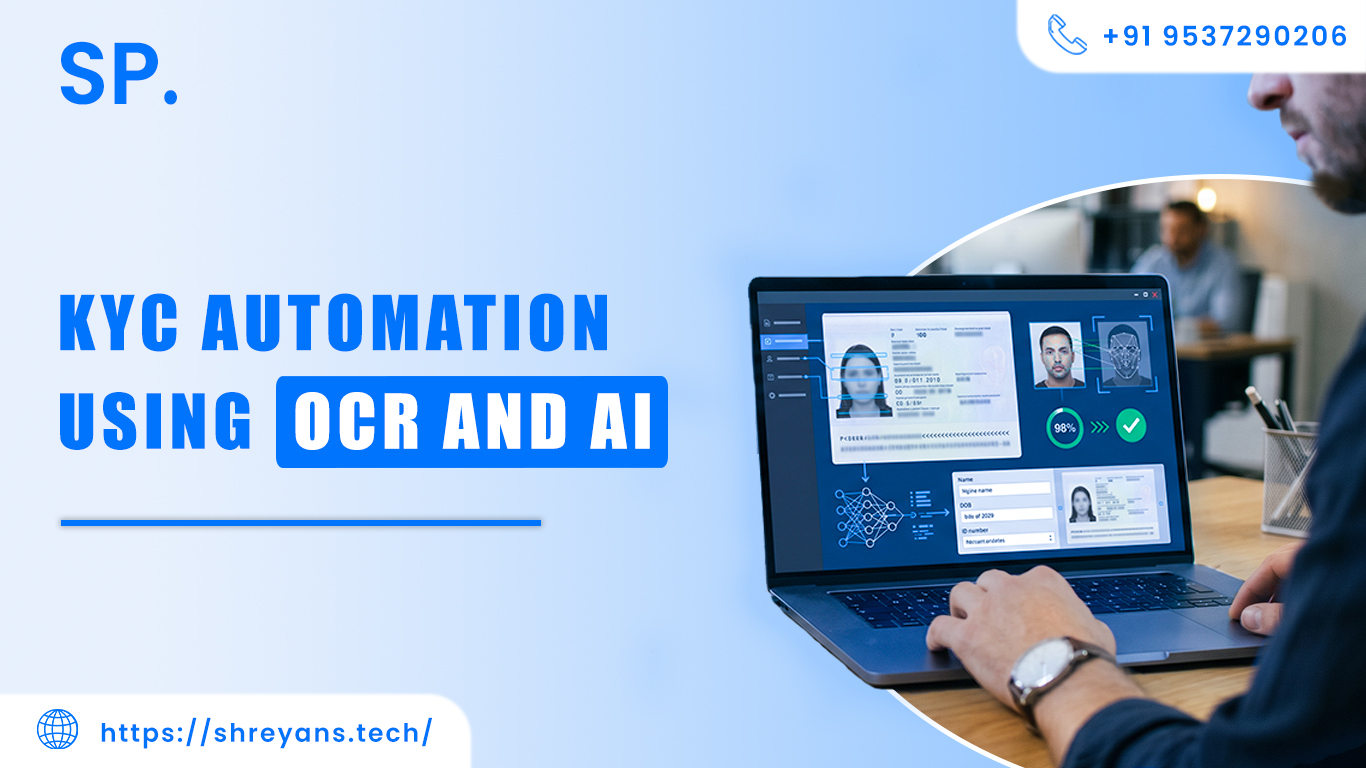
OCR technology acts as the 'eyes' of the system, capable of extracting text and data from physical and digital documents. AI, on the other hand, provides the 'brainpower,' analyzing the extracted data, cross-referencing information, detecting anomalies, and making intelligent decisions. Together, OCR and AI form a robust framework for automated, intelligent, and efficient KYC processes.
The Foundation: How OCR Powers Digital KYC
Optical Character Recognition (OCR) is the cornerstone of document-based KYC automation. It allows machines to 'read' and interpret human-readable text from various sources, converting it into machine-encoded text. For KYC, this means transforming images of identity documents, proof of address, or other supporting paperwork into structured data that can be processed and analyzed.
From Image to Data: The OCR Process
The OCR process typically involves several steps: image acquisition (e.g., scanning or taking a photo of an ID), preprocessing (cleaning up the image), character recognition (identifying individual letters and numbers), and post-processing (structuring the recognized text). Advanced OCR solutions are highly accurate, even with varying document quality and fonts, making them ideal for the diverse range of documents encountered in KYC.
Precision Data Extraction for Identity Documents
For KYC, OCR focuses on extracting critical information such as name, date of birth, address, document number, issuing authority, and expiry date from passports, national IDs, driver's licenses, and utility bills. Intelligent OCR (I-OCR) goes a step further by understanding the document layout and context, ensuring that the correct data fields are identified and extracted, regardless of their position on the document.
Boosting Accuracy and Efficiency with Smart OCR
By automating the data entry process, OCR significantly reduces the time required for identity verification, often from minutes to seconds. More importantly, it drastically minimizes the risk of human error associated with manual data input, leading to higher data accuracy and a more reliable KYC outcome. This efficiency gain translates directly into faster customer onboarding and reduced operational costs.
The Brainpower: AI's Transformative Impact on KYC
While OCR handles data extraction, Artificial Intelligence (AI) takes the extracted data and elevates the KYC process to an entirely new level. AI algorithms provide the intelligence needed to analyze, validate, and contextualize information, moving beyond mere data recognition to true identity verification and risk assessment. AI powers sophisticated checks that are impossible or impractical for humans to perform manually.
Intelligent Data Validation and Verification
AI engines can validate extracted data against reliable external sources, such as government databases, credit bureaus, or public records. They can cross-reference information across multiple documents (e.g., name on ID matching name on utility bill) and identify inconsistencies or discrepancies that might signal fraud. This multi-layered validation significantly strengthens the verification process.
Securing Identities with Biometrics and Liveness Checks
AI-powered facial recognition and fingerprint scanning allow for robust biometric verification, comparing a live selfie or fingerprint to the one on the submitted ID document. Crucially, liveness detection technology, also driven by AI, can differentiate between a real person and a fraudulent attempt using a photo, video, or mask, preventing sophisticated identity spoofing.
Proactive Fraud Detection and Risk Profiling
Machine learning algorithms can analyze vast datasets to identify patterns indicative of fraudulent activity or high-risk profiles. By learning from past fraud cases, AI can flag suspicious applications, identify synthetic identities, and assess the risk level of a new customer in real-time, greatly enhancing an organization's ability to combat financial crime.
Ongoing Compliance: Continuous Monitoring and Sanctions Screening
Beyond initial onboarding, AI tools enable continuous monitoring of customer profiles against watchlists, sanctions lists (like OFAC), and politically exposed persons (PEP) databases. This ensures ongoing compliance throughout the customer lifecycle, automatically alerting institutions to any changes in a customer's risk status or new entries on critical lists.
Unlocking Value: Key Benefits and Real-World Applications
The synergistic combination of OCR and AI in KYC automation brings a multitude of benefits, revolutionizing how businesses interact with new and existing customers while upholding stringent regulatory standards. These technologies are not just about compliance; they are powerful drivers of business growth and operational excellence across various industries.
Accelerated Onboarding for a Superior Customer Experience
Perhaps the most immediate and tangible benefit is the drastic reduction in customer onboarding time. What once took days or even weeks can now be completed in minutes, even seconds. This rapid process significantly improves the customer experience, reduces abandonment rates, and allows businesses to acquire new clients more efficiently, fostering growth.
Cost Savings and Minimized Human Error
Automating manual data entry and verification tasks through OCR and AI leads to substantial cost savings. Businesses can optimize their workforce allocation, shifting personnel from mundane data processing to more complex investigative or customer-facing roles. Furthermore, eliminating human intervention in repetitive tasks significantly reduces the potential for costly errors and rework.
Strengthened Compliance and Fraud Prevention
With AI-driven verification, fraud detection capabilities are vastly improved. The ability to cross-reference data, perform liveness checks, and continuously screen against watchlists ensures a higher level of compliance with AML (Anti-Money Laundering) and CFT (Combating the Financing of Terrorism) regulations. This proactive approach minimizes regulatory risks and protects an organization's reputation.
Navigating the Landscape: Challenges and Strategic Considerations
While the benefits of OCR and AI in KYC automation are compelling, implementing these technologies is not without its challenges. Businesses must carefully consider potential hurdles related to data privacy, system integration, and the complexities of diverse global documentation to ensure a successful and sustainable deployment.
Ensuring Data Privacy and Robust Security
Handling sensitive personal data requires strict adherence to privacy regulations like GDPR and CCPA. Organizations must implement robust data encryption, secure storage, and access controls. Public trust hinges on the assurance that their identity information is protected from breaches and misuse when processed by automated systems.
Integrating with Existing Systems
Many businesses operate with complex legacy IT infrastructures. Integrating new OCR and AI solutions seamlessly into existing onboarding workflows, CRM systems, and core banking platforms can be technically challenging and require significant planning and investment. Compatibility and API availability are crucial factors.
Accuracy Across a Global Document Landscape
The world uses a vast array of identity documents, each with unique layouts, languages, and security features. Ensuring that OCR and AI systems maintain high accuracy across this diversity, including handling damaged or poor-quality documents, requires continuous training, sophisticated algorithms, and sometimes human-in-the-loop review for exceptions.
The Horizon: Future Trends and Concluding Thoughts
The journey of KYC automation is continuously evolving. As technology advances, we can expect even more sophisticated and integrated solutions that further streamline identity verification, enhance security, and adapt to emerging threats and regulatory landscapes. The synergy of OCR and AI is just the beginning.
Looking Ahead: Blockchain and Decentralized Identity
Future trends include the integration of blockchain technology for creating tamper-proof digital identities and decentralized identity solutions, giving individuals more control over their personal data. Further advancements in AI, such as explainable AI (XAI) and federated learning, will also play a role in making KYC processes more transparent and secure.
Embracing a Smarter, Safer Digital Future
KYC automation powered by OCR and AI is no longer a luxury but a necessity for businesses aiming to thrive in the digital age. It strikes a crucial balance between robust security, stringent compliance, and an exceptional customer experience. By embracing these innovative technologies, organizations can build trust, mitigate risks, and unlock new opportunities in an increasingly interconnected world.
Frequently Asked Questions (FAQs)
Got more questions about KYC automation using OCR and AI? Here are answers to some common inquiries.
Primary Benefit of AI in KYC
The primary benefit of AI in KYC is its ability to perform intelligent analysis, risk assessment, fraud detection, and continuous monitoring. While OCR extracts data, AI interprets it, identifies patterns, and makes informed decisions, significantly enhancing the accuracy and security of the verification process beyond simple data capture.
Can OCR Automate KYC Alone?
No, OCR alone cannot fully automate KYC. OCR is excellent for extracting data from documents. However, true KYC automation requires AI to validate that data, perform liveness checks, cross-reference against databases, assess risk, and detect fraud. OCR provides the input; AI provides the intelligence and verification logic.
Security of Automated KYC
Yes, when implemented correctly with robust security protocols, automated KYC is highly secure. It often surpasses manual processes in security due to AI-powered fraud detection, biometric verification, and encrypted data handling. Compliance with data protection regulations and industry best practices is paramount for maintaining security and trust.



Shreyans Padmani
Shreyans Padmani has 5+ years of experience leading innovative software solutions, specializing in AI, LLMs, RAG, and strategic application development. He transforms emerging technologies into scalable, high-performance systems, combining strong technical expertise with business-focused execution to deliver impactful digital solutions.