Generative AI, built to ship
Hire a freelance generative AI developer who builds beyond the demo
Build custom generative AI solutions to automate workflows, power AI chatbots, generate intelligent content, and drive smarter business decisions. LLM integration, RAG pipelines, fine-tuning, and production deployment, one engineer, direct access, milestone-based billing.
Available now, projects start within 48 to 72 hours, NDA before any data moves
Plain answer
What is a freelance generative AI developer?
A freelance generative AI developer is an independent engineer who designs, builds, and deploys applications powered by large language models and generative AI systems, on a project or dedicated contract basis. Core deliverables include LLM-powered chatbots, RAG pipelines, fine-tuned models, AI content generation systems, and workflow automation. Unlike a full-time hire, a freelance GenAI developer starts in 48 to 72 hours with no salary overhead, direct communication, and milestone-based billing.
The role spans the full technical stack: selecting the right LLM (GPT-4o, Claude 3.5, LLaMA 3, Mistral), designing retrieval-augmented generation pipelines, fine-tuning open-source models on private data, building prompt engineering systems that enforce structured output, and deploying everything as production APIs with monitoring and cost controls. A freelance generative AI developer differs from a data scientist, who analyses data, and a generic software engineer, who builds apps without AI expertise. The GenAI engineer bridges both: deep AI expertise plus the software engineering discipline to ship systems that run reliably at scale.
Run the numbers first
What manual conversations are costing you
A RAG chatbot grounded in your knowledge base typically automates 40 to 60% of inbound queries. Move the sliders to match your support volume and see what a conservative deflection rate is worth.
Estimate only, based on published industry benchmarks and delivered projects. Escalated conversations still need a human, which is by design. Your actual target is agreed in a written technical spec before any work begins, measured against your support platform's own logs rather than a slider.
Job title decoder
Generative AI developer vs LLM engineer vs prompt engineer vs AI chatbot developer
These titles overlap but mean different things. Most businesses searching "hire generative AI developers" or "LLM integration developer" need the first profile: someone who can scope the architecture, select the model, build the integration, and ship to production. That is what I deliver.
| Title | Core focus | Output | Hire when you need |
|---|---|---|---|
| Generative AI developer | Full-stack GenAI applications: LLMs, RAG, fine-tuning, APIs, deployment | Production GenAI app plus API plus monitoring | An end-to-end product built and shipped |
| LLM integration developer | Connecting LLMs to existing systems, APIs, databases, workflows | LLM-powered integration layer | To add AI to an existing product or workflow |
| Prompt engineer | Optimising prompts, chains, and output structure for existing LLMs | Prompt library, chain design, evals | To improve accuracy of an already-integrated LLM |
| AI chatbot developer | Conversational interfaces powered by LLMs or rule-based logic | Deployed chatbot plus intent system | Customer-facing or internal chat automation |
| Freelance GenAI dev (Shreyans) | All of the above as one engagement | Model plus pipeline plus chatbot plus API plus docs | One engineer, full scope, production-ready |
Freelance, dedicated, or agency: which engagement model fits?
| Factor | Freelance (project-based) | Dedicated GenAI developer | Agency |
|---|---|---|---|
| Cost | $ fixed per project | $$ monthly retainer | $$$ to $$$$, team plus markup |
| Start time | 48 to 72 hours | 3 to 5 days | 2 to 4 weeks |
| Who does the build | Named engineer (me) | Named engineer (me) | Allocated junior plus account manager |
| Direct access | Always | Always | Rarely |
| Flexibility | Scope changes by agreement | Sprint-based, adjustable | Locked SOW |
| Best for | Defined project, 2 to 12 weeks | Ongoing AI roadmap, 3+ months | Enterprise compliance requirements |
Need a dedicated engineer embedded in your sprint cycle
I offer dedicated monthly engagements with a fixed weekly hour commitment, direct Slack access, and continuous delivery. Dedicated clients get priority scheduling and first access to new model evaluations.
What I build
What can generative AI do for your business?
I develop generative AI systems using modern models and frameworks to automate processes, generate content, and support intelligent decision-making. Each solution is designed around real business goals. Violet tags are build engagements. Amber is advisory.
LLM integration development
Integrating large language models into your existing products, workflows, and data systems: model selection for latency and cost, an integration layer, hallucination guardrails, and a versioned API.
- OpenAI GPT-4o, Claude 3.5, Gemini 1.5 Pro integration
- Open-source LLM integration: LLaMA 3, Mistral, Phi-3
- Guardrails, output validation, and cost controls
RAG chatbot development
Retrieval-augmented generation grounds an LLM's response in your verified documents at query time instead of relying on training knowledge that may be outdated or wrong for your domain.
- Document ingestion pipelines: PDFs, web pages, databases
- Hybrid search: dense vector plus sparse BM25 for recall
- Citation-grounded responses, hallucination reduced 60 to 80%
AI chatbot development
Production chatbots for customer support, internal knowledge retrieval, sales qualification, and HR automation, grounded in your actual knowledge base and monitored post-deployment.
- Customer support chatbots with escalation logic
- Internal knowledge chatbots: HR, IT helpdesk, onboarding
- Sales and lead qualification chatbots
LLM fine-tuning on private data
When a general-purpose LLM does not perform well enough on your domain-specific tasks, fine-tuning open-source models with QLoRA and LoRA enables cost-efficient adaptation. Your data never leaves your infrastructure during the run.
- QLoRA / LoRA fine-tuning on domain-specific data
- Instruction-following fine-tuning for task-specific accuracy
- RLHF-style preference alignment to reduce harmful outputs
Generative AI consulting
Not sure whether RAG, fine-tuning, prompt engineering, or a pre-built API fits your use case? A technical advisory session covering data readiness, model options, and cost-benefit, output as a written spec.
- RAG vs fine-tuning vs prompt engineering decision framework
- Model selection: cost, latency, privacy, accuracy trade-offs
- Written technical spec and architecture diagram
Prompt engineering and LLM evaluation
Poorly designed prompts cost money in unnecessary tokens, reduce accuracy, and expose your system to prompt injection. I build structured prompt systems and evaluation frameworks that measure accuracy before deployment.
- System prompt design and structured output enforcement
- LLM evaluation frameworks: RAGAS, DeepEval, custom evals
- Prompt injection defence and output sanitisation
AI content generation systems
Automate high-volume content workflows: product descriptions, SEO articles, personalised email sequences, report generation, and document drafting, enforcing brand voice and business rules.
- Product description generation at scale
- Personalised email and marketing copy automation
- Report and document generation from structured data
AI workflow automation
Connect generative AI to your business processes: trigger-based LLM actions, document processing, automated classification and routing, and multi-step workflows that reduce manual work without removing human judgment.
- Document processing and extraction pipelines
- Automated ticket classification and routing
- Multi-step LLM workflow orchestration: LangGraph, CrewAI
Voice AI and multimodal applications
Speech-to-text transcription, text-to-speech with a custom voice, and multimodal applications that process images alongside text, for meeting transcription, call analytics, and voice interfaces.
- Whisper-based transcription and summarisation pipelines
- Text-to-speech with ElevenLabs or Coqui for brand voice
- Multimodal LLM applications: GPT-4o Vision, LLaVA
The architecture behind the demo above
What is retrieval-augmented generation?
Retrieval-augmented generation is an LLM architecture pattern where relevant documents are retrieved from a knowledge base at query time and injected into the model's context window before it generates a response. This grounds the LLM's answer in verified, up-to-date source material rather than its training knowledge, reducing hallucinations by 60 to 80% compared to a bare LLM call. RAG is the most common architecture for enterprise AI chatbots and knowledge assistants because it does not require retraining the model when your data changes.
When your data moves faster than a training run
- Your data changes frequently: product catalogues, policies, knowledge bases
- You need cited, traceable answers a reviewer can verify
- Data privacy prevents sending documents to a third-party fine-tuning service
When the model itself needs to change, not just its context
- You need the model to adopt a specific tone or voice consistently
- You need a strict output format the base model does not reliably follow
- The base model handles the task poorly regardless of how good the prompt is
Many production systems use both: a fine-tuned model serving as the backbone of a RAG pipeline. Which one you need is exactly the kind of question a generative AI consulting session resolves before any build work starts.
Expectations, in writing
What results to expect: generative AI benchmarks
Concrete expectations based on delivered projects. Every engagement includes a written technical spec with target metrics before work begins. Benchmarks assume access to representative sample data and clear success criteria, both established in the discovery call before billing begins.
| Project type | Typical outcome | Timeline to production |
|---|---|---|
| RAG chatbot on internal knowledge base | Hallucination reduction 60 to 80% vs bare LLM, answer relevance above 90% on eval set | 3 to 6 weeks from document corpus |
| LLM integration into existing product | Production API live with under 500ms P95 latency, cost per query benchmarked and optimised | 2 to 4 weeks from API access |
| LLM fine-tune (QLoRA, domain data) | Task-specific accuracy 15 to 30% above base model on held-out eval set | 3 to 5 weeks from labelled dataset |
| AI chatbot (customer support) | Automated resolution rate 40 to 60% of inbound queries, escalation logic tested | 4 to 8 weeks including integration |
| Content generation pipeline | Output quality benchmarked vs a human baseline before launch, 80%+ approval rate target | 2 to 5 weeks from brand guidelines |
| AI workflow automation | Manual task hours reduced by 50 to 80%, edge case handling documented | 3 to 6 weeks from process spec |
Where it runs
Industries and use cases
Domain-specific generative AI experience across these verticals means faster architecture decisions and higher accuracy on your data from day one.
SaaS and B2B
Knowledge assistant chatbots, automated customer support, in-app AI features, contract analysis, release note generation.
Ecommerce and retail
Product description generation at scale, AI shopping assistants, personalised email automation, review summarisation.
Healthcare
Clinical document summarisation, patient intake chatbots, medical Q&A grounded in verified clinical sources, HIPAA-aligned RAG.
Fintech
Financial document parsing and Q&A, earnings call summarisation, compliance policy chatbots, automated report generation.
HR and recruiting
AI-powered job description generation, candidate screening chatbots, onboarding knowledge assistants, policy Q&A bots.
Legal
Contract review and clause extraction, legal research assistants, document drafting from templates, compliance Q&A.
Manufacturing
Technical manual chatbots, maintenance troubleshooting assistants, safety policy Q&A, incident report generation.
Your vertical not listed?
The architecture transfers. The knowledge base and guardrails are what change.
Talk it throughHow it gets built
Process for building generative AI solutions
A structured process to transform ideas into scalable generative AI applications: requirement analysis, model design, development, integration, and continuous optimisation for long-term performance.
PHASE 01days 1 to 2Discovery
+
PHASE 02before buildArchitecture design and model selection
+
PHASE 03the decisive oneData preparation and pipeline build
+
PHASE 04iterated to targetBuild, integration, and evaluation
+
PHASE 05handoffDeployment and production hardening
+
PHASE 0630 days plusMonitoring, cost optimisation, and support
+
Tooling
Technology stack for generative AI solutions
Modern AI models, frameworks, and cloud platforms, selected per project to build AI chatbots, content generation, automation, and AI agents that deliver fast, accurate, real-world results.
Features
Why work with Shreyans Padmani
Building generative AI solutions that create useful content, automate workflows, and support real business needs.
Custom generative models
Every business has different needs, so I build generative AI models tailored to your use case, whether that is text generation, document automation, or content creation.
Smart content generation
Systems that generate text, summaries, reports, or responses automatically, reducing manual work and improving team productivity.
Seamless integration
Solutions designed to work smoothly with your existing tools, websites, or internal systems, without interrupting your workflow.
Delivered work
Deep expertise in advanced AI technologies
A sample of shipped projects across recruitment, media, and customer experience.
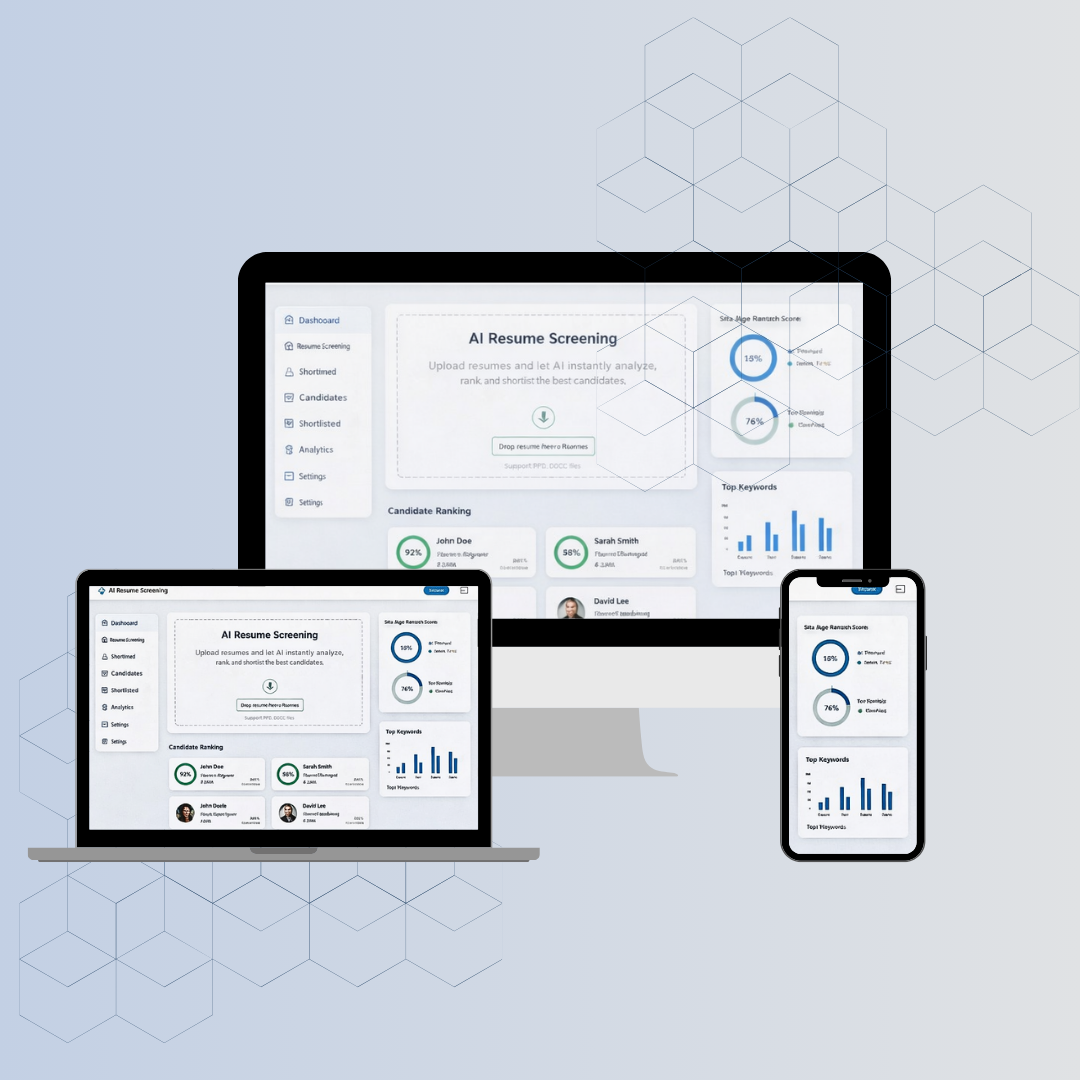 Case study
AI resume screening for recruiters
Automated resume parsing and candidate matching, cutting hiring time by 70% and shortlisting top talent faster.
Read case study →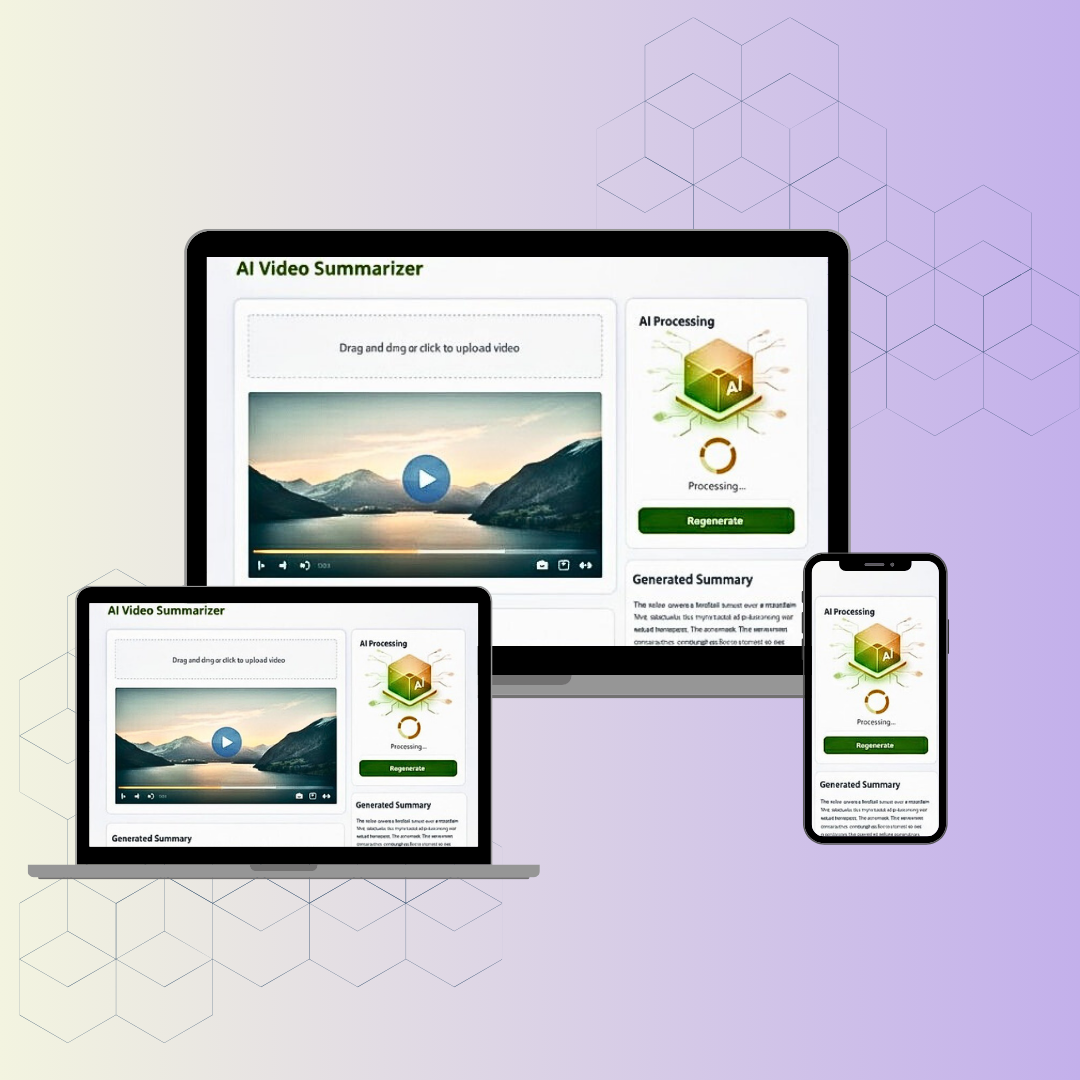 Case study
AI video summarizer for businesses
Speech-to-text plus summarisation turned long meetings and training videos into quick, concise summaries.
Read case study →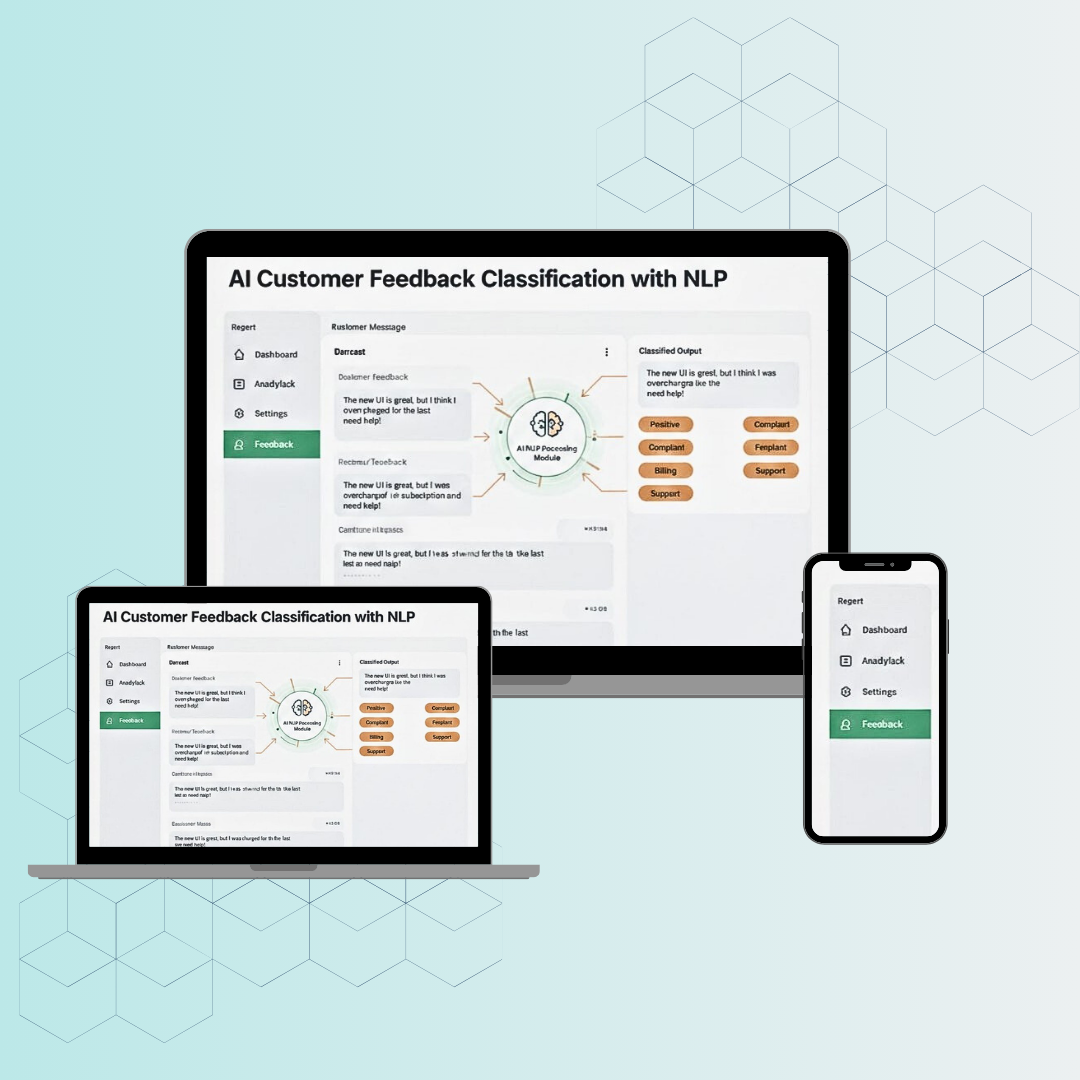 Case study
AI customer feedback classification
NLP automated open-text feedback classification, replacing slow manual analysis with faster, more consistent insight.
Read case study →About
Freelance generative AI developer

I am an independent generative AI developer and LLM engineer with 5+ years building production AI systems for companies in SaaS, healthcare, fintech, ecommerce, and HR tech. My generative AI work spans the full stack: from data architecture through RAG pipeline design, LLM fine-tuning, API deployment, and production monitoring.
When you hire me, you work directly with the engineer building your system. Not an account manager. Not a team lead who passes the work to a junior. I scope every project personally, write the architecture doc, build the pipeline, and ship the API. That direct access is the core reason freelance GenAI developers consistently outperform agencies for scoped projects.
FAQ