Computer vision, built to ship
Hire a freelance computer vision developer and consultant
I design, train, and deploy AI systems that interpret visual data: object detection, image classification, video analytics, defect inspection, OCR, and medical imaging. From annotation strategy through edge deployment, one engineer, direct access, no account-manager layer.
Available now, projects start within 48 to 72 hours, NDA before any images move
inline inspection, boxes drawn where the model is confident a defect exists
Plain answer
What is a freelance computer vision developer?
A freelance computer vision developer is an independent engineer who designs, trains, and deploys AI systems that interpret and act on visual data: images, video streams, and real-time camera feeds. Core deliverables include object detection models, image classifiers, video analytics pipelines, OCR systems, defect detection tools, and medical image analysis. Unlike a full-time hire, a freelance CV developer starts in 48 to 72 hours, brings senior-level expertise without salary overhead, and works directly on your problem with no intermediary or account manager.
A freelance CV developer handles the full technical scope: dataset preparation and annotation, model architecture selection (YOLO, ResNet, EfficientDet, Vision Transformer), training on labelled data, evaluation against mAP and FPS targets, and deployment to cloud, server, or edge device. The consultant role adds architecture advisory: helping you choose between building custom, fine-tuning, or using a pre-built vision API, and evaluating whether your existing CV system has a fixable accuracy problem or a data problem.
Before you annotate anything
How much labelled data do you actually need?
The most underestimated part of every CV project. Pick your task, set how many labelled examples per class you can realistically get, and see a grounded accuracy expectation. This is a planning aid, not a promise. The real target comes from a data audit in the discovery phase.
Estimate only, based on delivered projects. Below the workable minimum, accuracy is capped and augmentation and active learning become essential. The data audit gives you a specific target for your exact use case before any annotation spend.
Job title decoder
CV developer vs CV engineer vs CV consultant: which do you need?
The titles overlap but carry different implications for scope and engagement. Most searches for "hire computer vision developer" want the CV engineer profile: someone who can build a production-grade model, not just run a notebook. "Computer vision consultant" searches typically want the advisory role. I deliver both in a single engagement.
| Title | Primary focus | Output | Hire when you need |
|---|---|---|---|
| CV developer | Building CV-powered applications and APIs | Production CV app plus inference API | A CV feature integrated into a product |
| CV engineer | Model architecture, training pipelines, dataset ops, MLOps | Trained model plus pipeline plus monitoring | Scalable, robust CV infrastructure |
| CV consultant | Architecture advisory, approach evaluation, feasibility assessment | Technical spec, decision framework, audit report | To validate an approach before building |
| Freelance CV dev and consultant (Shreyans) | All three: scope, build, advise, deploy | Model plus API plus docs plus consulting report | Full scope from one engineer |
Freelance, agency, or in-house?
A straight comparison across cost, speed, and specialisation, so you can weigh the trade-offs before hiring.
| Factor | Freelance (Shreyans) | Agency | In-house hire |
|---|---|---|---|
| Cost | $ to $$ (project or monthly) | $$$ to $$$$ (team, overhead, markup) | $$$$ (salary, benefits, hardware) |
| Start time | 48 to 72 hours | 2 to 4 weeks | 3 to 6 months |
| Who builds | Named engineer, direct access | Allocated team, account manager layer | Direct, after ramp-up |
| CV specialisation | Deep CV focus, 5+ years | Generalist teams with CV capability | Varies widely |
| Edge and on-device | Yes: TFLite, ONNX, OpenVINO, TensorRT | Varies by team allocated | Requires specialist hire |
| Best for | Defined project or ongoing roadmap | Enterprise compliance, large teams | Long-term core product IP |
What I build
What can computer vision do for your business?
Practical systems built on image and video intelligence to automate tasks, improve accuracy, and support faster decisions. Violet tags are build engagements. Amber is advisory.
Object detection and tracking
Custom detection models trained on your specific classes, environments, and lighting. YOLO (v8 to v10), Faster R-CNN, DETR, EfficientDet by your accuracy vs speed needs, with ByteTrack, DeepSORT, and BoT-SORT for video.
- Real-time detection at 30+ FPS on GPU, 10+ FPS on edge
- Multi-class detection with custom label sets, not just COCO classes
- Multi-object tracking with persistent IDs across frames
Image classification and recognition
Binary and multi-class classifiers for product categorisation, quality control, medical imaging, and content moderation. Transfer learning from EfficientNet, ResNet, ViT, and ConvNeXt cuts the labelled data requirement. I target 90%+ accuracy on balanced datasets.
- Multi-class classifiers with confidence scores and rejection thresholds
- Transfer learning on small datasets, 500+ labelled images minimum
- Grad-CAM explainability outputs for medical and compliance use
Video analytics and surveillance intelligence
Turn passive camera feeds into active intelligence: count people, detect events, measure dwell time, track movement, and trigger alerts. Real-time pipelines for retail, manufacturing, logistics, and security, processing RTSP streams and integrating with existing VMS.
- People counting, zone occupancy, queue length monitoring
- Event detection: falls, intrusions, smoke, equipment anomalies
- RTSP stream processing with sub-second alert latency
Defect detection and quality inspection
Automated visual quality control for production lines, replacing inconsistent human inspection with CV that catches defects at production speed. Custom models on your product images: scratches, cracks, dimensional deviations, contamination, assembly errors.
- Sub-millimetre defect detection with 95%+ precision targets
- Multi-defect classification: scratch, crack, stain, dimension error
- Edge deployment for real-time inline inspection
Medical image analysis
AI-assisted diagnostic tools for radiology, pathology, dermatology, and ophthalmology. Models for lesion detection, organ segmentation, anomaly classification, and measurement extraction from X-ray, CT, MRI, ultrasound, and histopathology. Strict data privacy, HIPAA-aligned handling.
- Lesion detection and segmentation (U-Net, nnU-Net, SAM)
- Classification for radiology and pathology images
- DICOM pipeline with clinical annotation tool integration
Document AI and OCR
Extract structured data from forms, invoices, contracts, ID documents, and mixed-format PDFs. Classical OCR (Tesseract, PaddleOCR) combined with layout-aware deep learning (LayoutLM, Donut, TrOCR) for high accuracy without template-by-template engineering.
- Multi-template invoice and form extraction, no per-template rules
- Handwritten text recognition for historical documents and forms
- Table detection and cell extraction from complex layouts
Data annotation and dataset preparation
The most underestimated phase of every CV project, because a model is only as good as its training data. I design annotation strategy, set up pipelines (CVAT, Label Studio, Roboflow), define taxonomies, implement QA, and advise on how much labelled data you actually need.
- Annotation strategy: bounding box, polygon, keypoint, segmentation
- Active learning pipelines to minimise annotation cost
- Augmentation: Albumentations and custom domain transforms
Edge AI and on-device computer vision
Deploy CV on resource-constrained hardware: NVIDIA Jetson, Raspberry Pi, smartphones, industrial cameras, and custom embedded systems. Models optimised through quantisation (INT8), pruning, and distillation, then exported to the right runtime for the target.
- Model compression: quantisation, pruning, knowledge distillation
- TFLite for mobile, OpenVINO for Intel, TensorRT for Jetson
- Latency and FPS benchmarking on target device before handoff
Computer vision consulting
Architecture advisory before you commit to building. I review your use case, data, hardware, and accuracy requirements, then deliver a written spec: recommended architecture, data requirements, realistic targets, timeline, and cost. Useful for feasibility, diagnosing underperformance, or build vs API decisions.
- CV feasibility assessment with written recommendation report
- Model audit: root-cause diagnosis of accuracy or speed problems
- Architecture spec: model, data, deployment path, cost estimate
Expectations, in writing
What results to expect: computer vision benchmarks
Concrete expectations based on delivered projects. Target metrics are agreed in the technical spec before work begins. All benchmarks assume clean, representative training data. If your data is insufficient, you will hear that before any billing begins.
| Project type | Typical accuracy / performance | Timeline to production |
|---|---|---|
| Object detection (custom classes, YOLO) | mAP@0.5 of 0.85 to 0.94 with 1,000+ annotated images per class | 4 to 8 weeks from annotated dataset |
| Image classification (transfer learning) | 90 to 97% test accuracy with 500+ images per class | 2 to 5 weeks from labelled dataset |
| Defect detection (manufacturing) | Precision 95%+ at agreed recall threshold, false positive rate below 2% | 4 to 8 weeks including annotation |
| Video analytics (people counting) | Counting error below 5% in controlled lighting, below 10% in variable conditions | 3 to 6 weeks from camera access |
| OCR and document extraction | Field extraction accuracy 92 to 98% on typed documents, 85 to 92% on handwritten | 3 to 6 weeks from document sample set |
| Medical image analysis | AUC-ROC 0.88 to 0.96 depending on task and data quality | 6 to 12 weeks including clinical validation |
| Edge deployment (NVIDIA Jetson) | 10 to 30 FPS depending on model size and Jetson variant | 2 to 4 weeks post model training |
The number that decides all the others
Every row above assumes representative training data. Most CV underperformance traces back to annotation inconsistency, class imbalance, or a gap between the training images and the real deployment environment, not to the model architecture. That is why the data audit comes before any billing.
Where it runs
Industries and use cases
Domain-specific CV experience across these verticals means faster annotation strategy decisions, better augmentation choices, and higher baseline accuracy from day one.
Manufacturing
Inline defect detection, dimensional measurement, assembly verification, weld inspection, surface quality control.
Healthcare and medical imaging
Radiology AI (X-ray, CT, MRI), dermatology lesion classification, pathology slide analysis, surgical instrument tracking.
Retail and ecommerce
Customer foot traffic analytics, shelf availability monitoring, visual product search, self-checkout loss prevention.
Security and surveillance
Intrusion detection, access control, crowd density monitoring, fall detection, perimeter security.
Logistics and warehousing
Barcode and label OCR, pallet and package detection, dock door monitoring, inventory visual counting.
Agriculture
Crop disease detection from drone imagery, yield estimation, irrigation monitoring, pest identification.
Automotive and mobility
Lane detection, parking space monitoring, vehicle damage assessment, ADAS component testing.
Your vertical not listed?
CV transfers across domains. The annotation strategy is what changes.
Talk it throughHow it gets built
The computer vision development process
Every project starts by understanding the real business problem and where visual AI creates value. Six phases, and phase two decides most of the outcome.
PHASE 01days 1 to 2Discovery and feasibility
+
PHASE 02the decisive oneData audit, annotation strategy, and pipeline build
+
PHASE 03week 1 of dataModel architecture selection and baseline
+
PHASE 04iterated to targetFull training, optimisation, and evaluation
+
PHASE 05handoffDeployment and integration
+
PHASE 0630 days plusMonitoring, retraining support, and advisory
+
Tooling
Computer vision technology stack
A combination of frameworks, models, libraries, and deployment platforms for model development, visual data processing, and scalable deployment. The right tool is chosen per project, not by default.
Features
Why work with Shreyans Padmani
Computer vision that solves real problems and works reliably in real-world environments, not just on a benchmark slide.
Custom models, not templates
Every project is different, so I build CV models tailored to your specific data, environment, and real-world use case, not a generic off-the-shelf class set.
Real-time detection
Systems that detect and track objects in real time, at production speed, so they automate a task instead of just demonstrating one.
Seamless integration
Solutions designed to fit into your existing software, cameras, and infrastructure, so you can adopt them without disrupting the workflow.
Edge to cloud
Deployed where it makes sense: quantised on a Jetson at the camera, or as an API in your cloud. Profiled on the real hardware before handoff.
Explainable where it counts
Grad-CAM and failure-case analysis for medical and compliance use, so a reviewer can see why the model decided what it did.
One engineer, both roles
The same person advises and builds. No account-manager layer, no handoff between a consultant who scopes and a team who ships.
Delivered work
Deep expertise in advanced AI
A sample of shipped projects across recruitment, media, and customer experience.
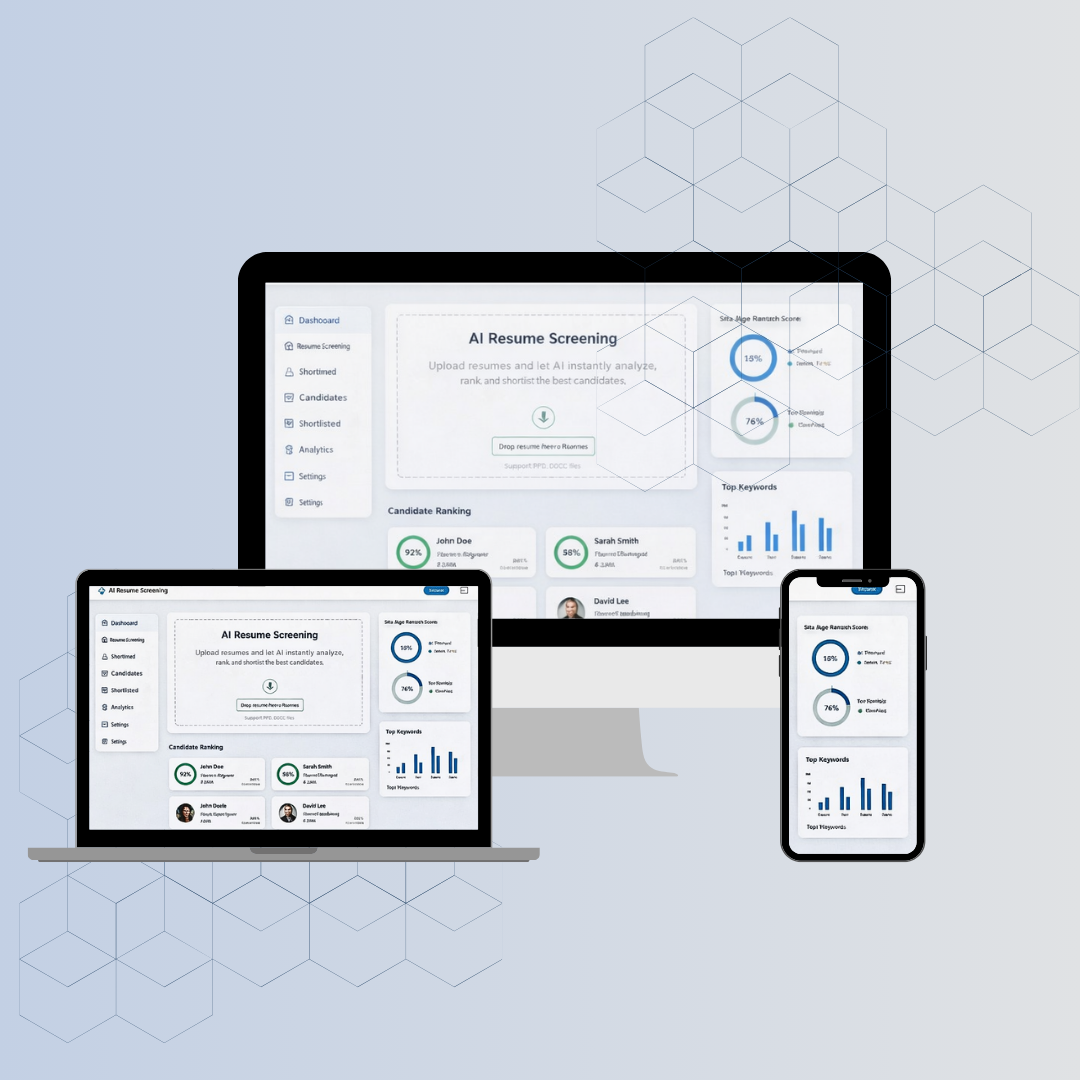 Case study
AI resume screening for recruiters
Automated resume parsing and candidate matching, cutting hiring time by 70% and shortlisting top talent faster.
Read case study →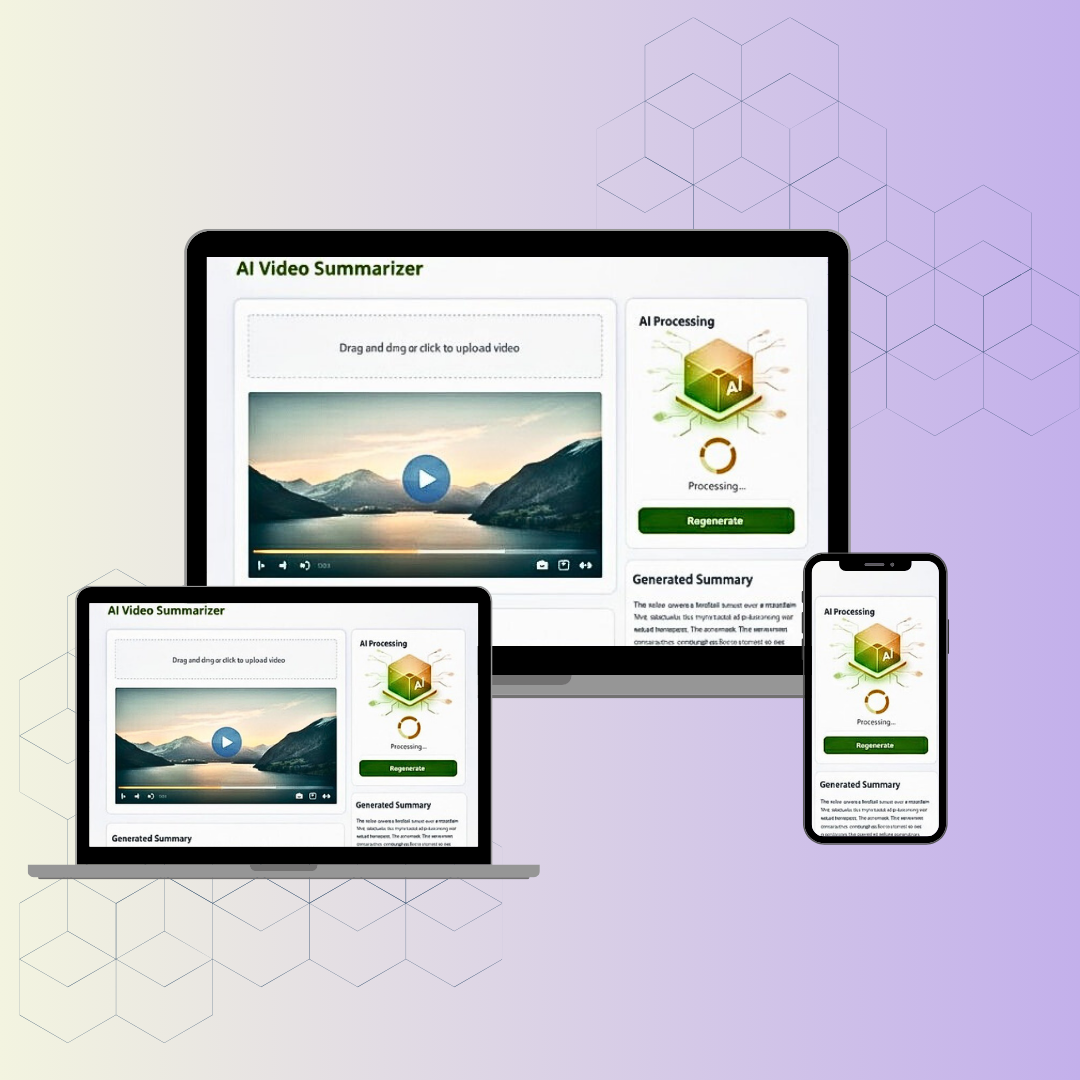 Case study
AI video summarizer for businesses
Speech-to-text plus summarisation turned long meetings and training videos into quick, concise summaries.
Read case study →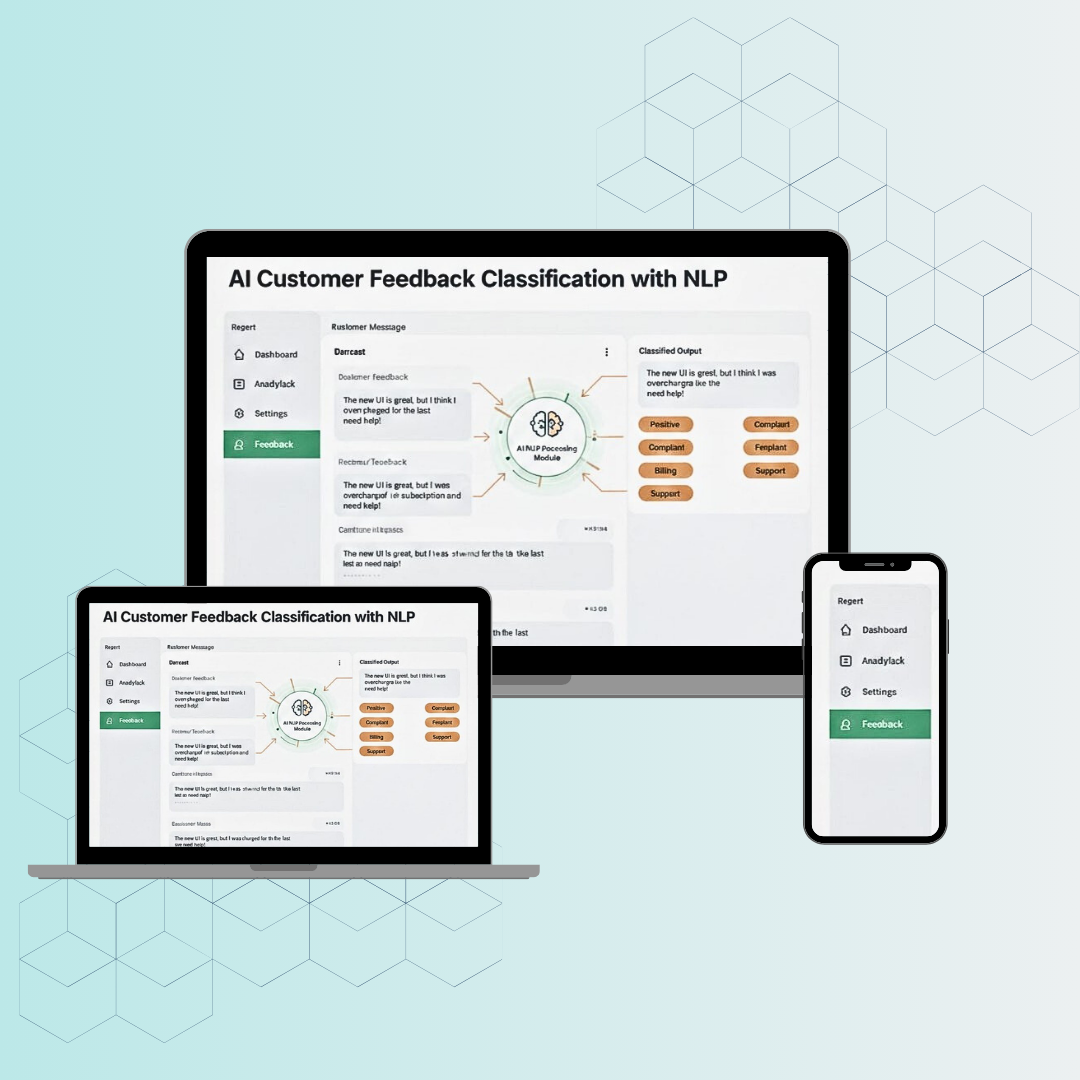 Case study
AI customer feedback classification
NLP automated open-text feedback classification, replacing slow manual analysis with faster, more consistent insight.
Read case study →About
Freelance computer vision developer and consultant

I am an independent computer vision engineer and AI developer with 5+ years building and deploying CV systems for companies in manufacturing, healthcare, retail, logistics, and security. My work spans the full CV pipeline: from annotation strategy through model architecture, training, evaluation, edge optimisation, and production deployment.
As a freelance CV consultant, I also work with teams earlier in the process: evaluating whether a CV approach is feasible, diagnosing why an existing model underperforms, and writing technical specs that engineering teams use to build or evaluate vendor proposals. You get direct access to the same engineer for both the advisory and the build.
FAQ