Introduction
In today’s data-driven financial world, organizations deal with massive volumes of unstructured documents—think invoices, contracts, audit reports, loan applications, and compliance records. Extracting meaningful insights from these documents manually is not only time-consuming but also prone to human error.
This is where Natural Language Processing (NLP) steps in. Leveraging advanced AI techniques, NLP enables financial institutions to automate document processing, improve accuracy, and unlock actionable insights faster than ever before.
Inspired by insights from Hitachi Solutions, this blog explores how NLP-based financial document processing is revolutionizing the industry.
What is NLP in Financial Document Processing?
Natural Language Processing (NLP) is a branch of artificial intelligence that allows machines to understand, interpret, and process human language.
In financial services, NLP is used to:
-
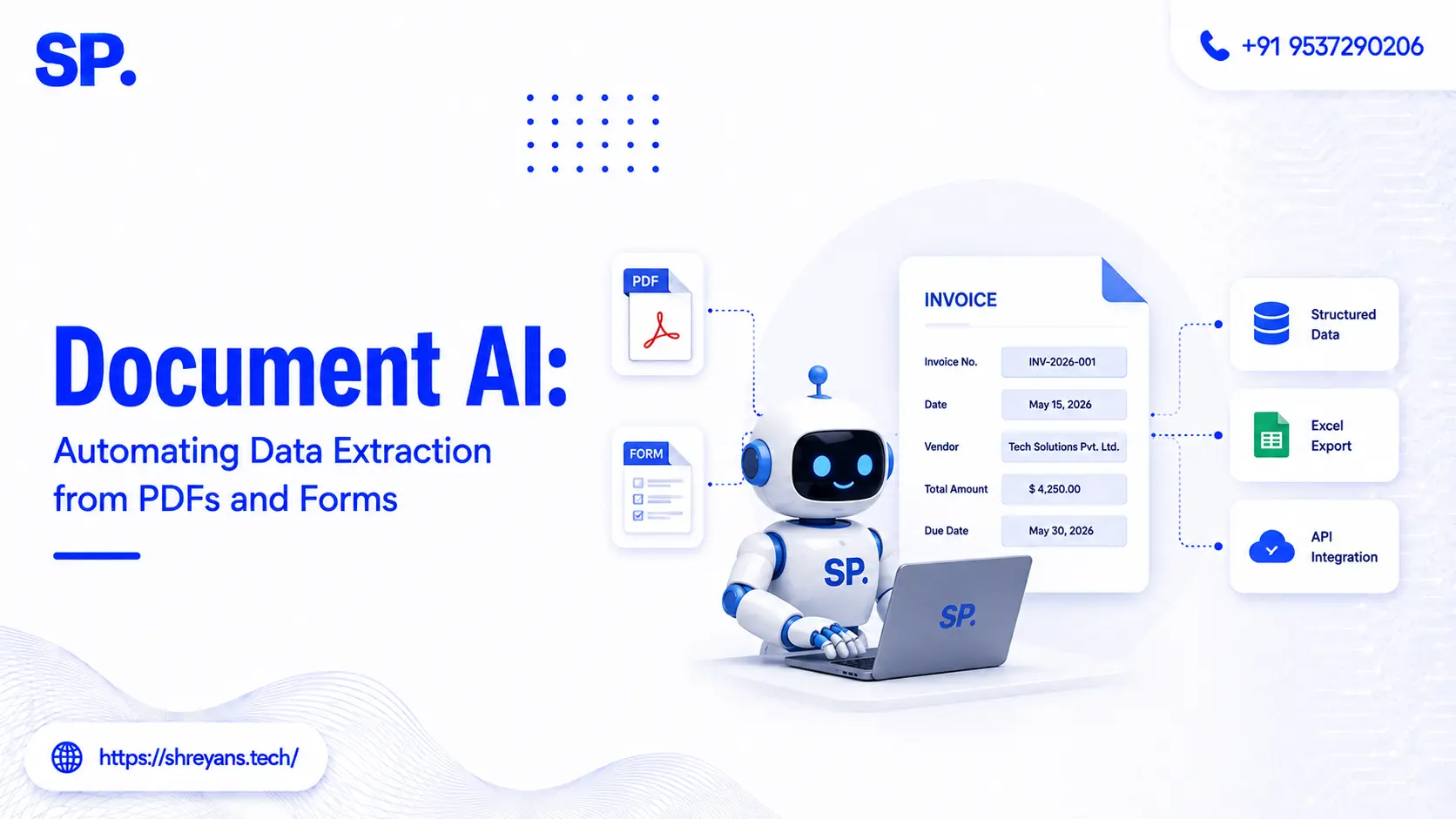
Extract Key Data from Financial Documents
NLP-powered systems automatically identify and extract important information such as names, dates, transaction amounts, and account details from invoices, contracts, and statements—reducing manual effort and improving data accuracy. -
Classify and Categorize Financial Records Efficiently
AI-driven document processing organizes financial documents into categories like invoices, tax forms, bank statements, and reports, making data management faster and more structured. -
Detect Anomalies and Prevent Fraud
Advanced NLP models analyze patterns in financial data to identify unusual activities, inconsistencies, or suspicious transactions, helping organizations detect fraud early and minimize financial risks. -
Automate Compliance and Regulatory Reporting
NLP simplifies compliance by automatically analyzing regulatory documents, generating accurate reports, and ensuring that financial operations meet industry standards and legal requirements.
Instead of manually reading thousands of pages, NLP systems can scan, interpret, and organize information within seconds.
Why Financial Institutions Need NLP
Financial organizations face several challenges:
-
Handling Large Volumes of Unstructured Data
Financial institutions deal with massive amounts of unstructured data such as PDFs, emails, contracts, and reports. Managing and extracting insights from this data manually is time-consuming and inefficient. -
Meeting Strict Regulatory Compliance Requirements
The financial industry must follow complex and constantly evolving regulations. Ensuring accurate documentation and compliance can be challenging without automated systems. -
Managing High Operational Costs
Manual document processing requires significant human resources, leading to increased operational expenses and reduced overall efficiency. - Minimizing the Risk of Human Errors
Manual data entry and analysis often result in errors that can lead to financial losses, compliance issues, and poor decision-making.
NLP addresses these challenges by:
-
Reduce Manual Workload with Automation
NLP automates repetitive tasks like data entry and document review, significantly reducing manual effort and allowing teams to focus on higher-value financial activities. -
Improve Data Accuracy and Reliability
AI-powered systems minimize human errors by accurately extracting and processing financial data, ensuring more reliable and consistent results. -
Ensure Regulatory Compliance with Ease
NLP helps organizations stay compliant by automatically analyzing documents, tracking regulatory changes, and generating accurate compliance reports. -
Accelerate Decision-Making with Real-Time Insights
By quickly processing large volumes of financial data, NLP enables faster insights and supports smarter, data-driven decision-making.
Key Applications of NLP in Financial Document Processing
1. Automated Data Extraction
NLP tools can extract critical information such as:
-
Extract Names, Dates, and Financial Amounts
NLP systems can accurately identify and capture essential details such as customer names, transaction dates, and monetary values from financial documents, ensuring structured and usable data. -
Capture Account Details Automatically
AI-powered processing extracts critical account information like account numbers, IBANs, and customer identifiers, reducing the need for manual data entry. -
Analyze and Organize Transaction Data
NLP enables automatic extraction and structuring of transaction data, helping financial institutions track activities, generate reports, and gain actionable insights efficiently.
This eliminates manual data entry and reduces errors.
2. Document Classification
Financial documents come in many forms. NLP helps classify them into categories like:
-
Invoices
NLP systems can automatically process invoices by extracting key details such as vendor names, invoice numbers, dates, and payment amounts, helping streamline accounts payable workflows. -
Contracts
AI-powered NLP analyzes contracts to identify important clauses, terms, and obligations, making it easier to manage agreements and reduce legal risks. -
Bank Statements
NLP tools extract and organize transaction details from bank statements, enabling faster reconciliation, financial tracking, and reporting. -
Tax Documents
NLP simplifies tax document processing by capturing relevant financial data, ensuring accurate filing, and supporting compliance with regulatory requirements.
This ensures better organization and faster retrieval.
3. Fraud Detection & Risk Analysis
By analyzing patterns and language in documents, NLP can:
-
Identify Suspicious Transactions in Real Time
NLP-powered systems analyze financial data patterns to quickly detect unusual or high-risk transactions, helping organizations respond proactively to potential threats. -
Detect Data Inconsistencies and Irregularities
AI can compare financial records across multiple documents to identify mismatches, duplicate entries, or missing information, ensuring data integrity and accuracy. -
Flag Potential Fraud Cases Automatically
Advanced NLP models can recognize fraud indicators and automatically flag suspicious activities, enabling faster investigation and reducing financial risks.
4. Compliance & Regulatory Reporting
Regulatory requirements are constantly evolving. NLP helps:
-
Monitor Compliance Documents Efficiently
NLP systems continuously analyze financial and regulatory documents to track compliance requirements, ensuring that all records are up-to-date and aligned with industry standards. -
Automatically Generate Accurate Reports
AI-powered tools can create detailed financial and compliance reports by extracting and organizing data, saving time and reducing manual reporting efforts. -
Ensure Adherence to Financial Regulations
NLP helps organizations stay compliant by identifying regulatory obligations, highlighting gaps, and ensuring all processes meet legal and industry requirements.
5. Sentiment Analysis for Financial Insights
NLP can analyze:
-
Analyze Market Reports for Actionable Insights
NLP systems can process large volumes of market reports to extract key trends, forecasts, and performance indicators, helping businesses make informed financial decisions. -
Interpret Earnings Calls Automatically
AI-powered NLP analyzes earnings call transcripts to identify key highlights, management insights, and financial performance indicators, enabling quicker and more accurate analysis. -
Track Financial News in Real Time
NLP tools monitor and analyze financial news from multiple sources to detect sentiment, emerging risks, and market opportunities, supporting smarter investment strategies.
This helps organizations understand market sentiment and make better investment decisions.
Benefits of NLP-Based Financial Document Processing
Increased Efficiency with AI Automation
NLP-powered automation significantly reduces document processing time—from hours to seconds—enabling faster workflows and improved productivity across financial operations.
Improved Accuracy in Data Processing
By minimizing manual intervention, NLP ensures precise data extraction and analysis, reducing errors and enhancing the reliability of financial information.
Cost Reduction through Intelligent Automation
Automating repetitive financial tasks helps organizations lower operational costs by reducing dependency on manual labor and increasing overall efficiency.
Better Decision-Making with Real-Time Insights
NLP systems provide instant access to structured data and insights, empowering businesses to make faster, smarter, and data-driven decisions.
Scalability for Growing Data Needs
AI-driven systems can easily handle large volumes of financial data, making them ideal for scaling operations without compromising performance.
Challenges to Consider
While NLP offers many advantages, there are some challenges:
Handling Complex Financial Jargon
-
Financial documents often contain technical terms and industry-specific language, which can be challenging for NLP systems to interpret accurately without proper training and domain-specific models.
Data Privacy and Security Concerns
-
Processing sensitive financial data requires strong security measures, including encryption and access control, to ensure compliance with data protection regulations and prevent breaches.
Integration with Legacy Systems
-
Many financial institutions rely on outdated systems, making it difficult to seamlessly integrate modern NLP solutions without additional customization and infrastructure upgrades.
Requirement for High-Quality Training Data
-
NLP models need large volumes of clean, well-structured, and domain-specific data to perform accurately, making data preparation a critical and sometimes resource-intensive task.
However, with continuous advancements in AI, these challenges are being addressed rapidly.
Future of NLP in Financial Services
The future of NLP in finance looks promising. Emerging trends include:
-
AI-Powered Chatbots for Customer Service
NLP-driven chatbots can handle customer queries, provide financial assistance, and deliver personalized support 24/7, improving customer experience while reducing operational workload. -
Real-Time Fraud Detection Systems
Advanced NLP and AI systems continuously monitor financial data to detect suspicious activities instantly, enabling organizations to prevent fraud before it escalates. -
Intelligent Document Processing Platforms
AI-powered platforms combine NLP with automation to extract, analyze, and manage financial documents efficiently, streamlining workflows and reducing manual intervention. -
Predictive Analytics Using NLP Insights
NLP enables predictive analysis by identifying patterns and trends in financial data, helping businesses forecast risks, optimize strategies, and make proactive decisions.
Financial institutions that adopt NLP early will gain a significant competitive advantage.
Frequently Asked Questions (FAQ)
1. What types of financial documents can NLP process?
Ans: NLP can process a wide range of documents including invoices, contracts, bank statements, tax forms, audit reports, and loan applications.
2. Is NLP secure for handling sensitive financial data?
Ans: Yes, when implemented with proper security measures such as encryption and access controls, NLP systems can securely handle sensitive financial data.
3. How accurate is NLP in document processing?
Ans: Modern NLP systems are highly accurate, often achieving over 90% accuracy depending on the use case and quality of training data.
4. Can NLP integrate with existing financial systems?
Ans: Yes, NLP solutions can be integrated with existing systems like ERP, CRM, and document management platforms.
5. Is NLP suitable for small financial businesses?
Ans: Absolutely. With scalable cloud-based solutions, even small businesses can leverage NLP to improve efficiency and reduce costs.
Conclusion
NLP-based financial document processing is no longer a futuristic concept—it’s a necessity for modern financial institutions. By automating data extraction, improving accuracy, and enabling faster decision-making, NLP empowers organizations to stay competitive in a rapidly evolving landscape.
As highlighted by Hitachi Solutions, adopting NLP technologies can significantly transform how financial data is managed and utilized. Businesses that embrace this innovation today will be better equipped to handle tomorrow’s challenges.



Shreyans Padmani
Shreyans Padmani has 5+ years of experience leading innovative software solutions, specializing in AI, LLMs, RAG, and strategic application development. He transforms emerging technologies into scalable, high-performance systems, combining strong technical expertise with business-focused execution to deliver impactful digital solutions.