PwC's 2025 AI Agent Survey found that 66% of companies using AI agents report increased productivity, with knowledge workers recovering a median of 6.4 hours per week. Senior practitioners running multiple agents in production report saving 10 to 12 hours weekly, meaning the 20-plus hour figure in this title isn't a stretch for teams stacking agents across several workflows at once; it's the median outcome for teams doing this well across three or four functions simultaneously.
Organisations investing in AI agent development services are increasingly building specialised agents for high-impact workflows, enabling faster implementation and more consistent productivity gains across departments.
Below are ten specific AI agent use cases where time savings show up reliably, drawn from real production deployments rather than demo-day capability claims.
1. Lead Qualification
An agent that reviews inbound leads against your ideal customer profile, enriches them with firmographic data, and routes only qualified leads to sales reps removes hours of manual triage per week. An AI-Powered Lead Assignment system built on this pattern automatically routes leads to the right salesperson using intelligent matching, increasing conversion by getting the right rep on the right lead faster.
2. Email Triage
Reading, categorising, and drafting responses to high-volume inboxes is one of the most time-consuming, least strategic parts of many roles. An Email Automation & Classification system cut response time by 80 percent by automatically analysing, categorising, and routing emails, giving teams back hours that used to disappear into inbox management.
3. Invoice Processing
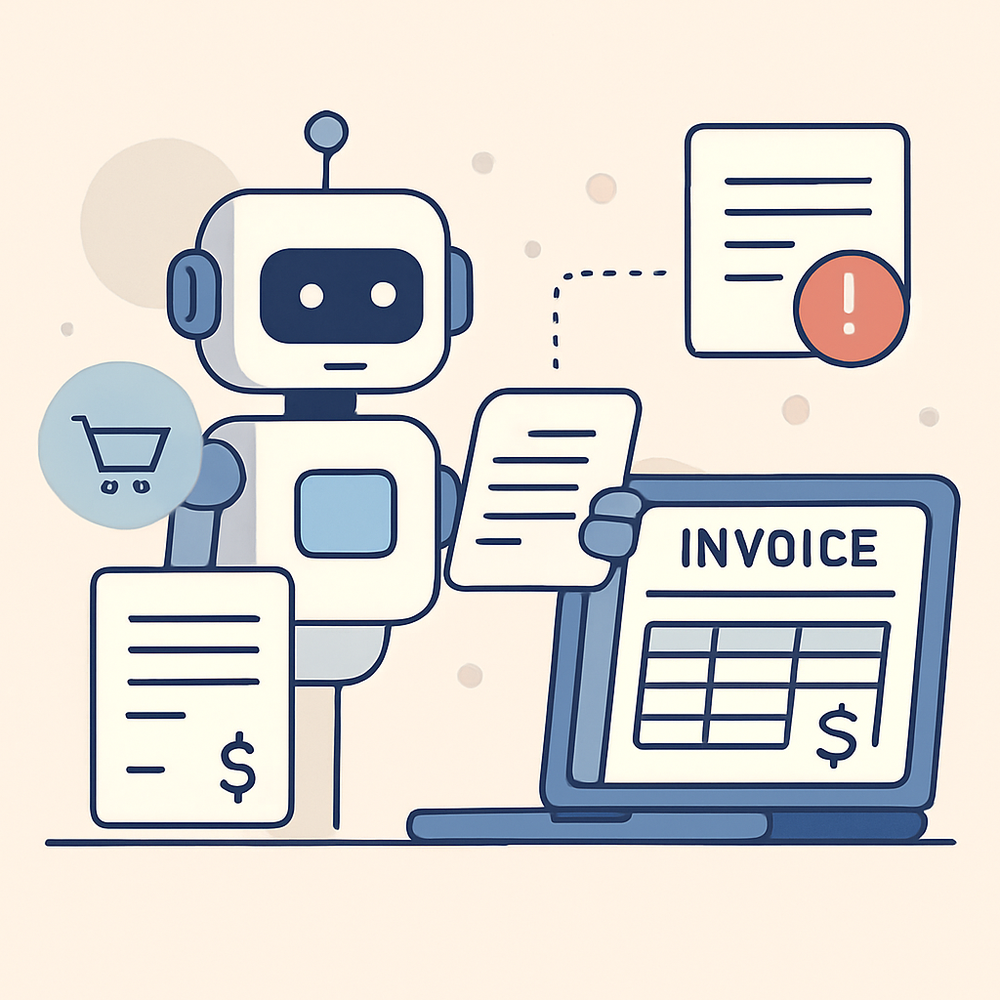
An agent that reads incoming invoices, matches line items against purchase orders, flags discrepancies, and routes exceptions to a human reviewer can cut invoice processing time from 15 minutes to under 2 minutes per document, with straight-through processing handling the majority of routine cases without any manual touch.
4. Support Escalation
Distinguishing between a query a chatbot can answer and one that genuinely needs a human, then routing it with full context attached, is where agents earn their keep over a basic chatbot. AI Agents vs Chatbots: Which One Is Better for Business? makes the distinction clearly: a chatbot answers, an agent decides and acts, and support escalation is exactly the kind of decision-plus-action workflow that separates the two.
5. Competitive Monitoring
An agent that continuously scans competitor pricing, product pages, and public announcements, then summarises meaningful changes into a weekly digest, replaces hours of manual browsing with a five-minute read. This use case compounds in value over time since the agent never skips a week, unlike a manual process that quietly lapses when the team gets busy.
6. Internal Knowledge Q&A
An agent that answers employee questions against your internal wiki, policy documents, and past decisions eliminates the repeated interruptions that pull specialists away from deep work to answer the same questions. AI Agent Development Services: Full Stack or Focused Specialist is a useful reference for scoping this correctly, since a narrow, well-grounded retrieval agent usually outperforms an overly ambitious general assistant here.
7. Meeting Prep Briefs
An agent that pulls together a one-page brief before every external meeting, recent email threads, CRM notes, and relevant news, saves the 15 to 30 minutes per meeting that would otherwise go into manual prep. Across a week with a dozen external meetings, that alone accounts for a meaningful share of the hours-saved total.
8. Social Media Scheduling
An agent that drafts, schedules, and adapts content across platforms based on a content calendar and brand voice guidelines removes the manual coordination overhead of running a consistent social presence, freeing marketing teams to focus on strategy and creative direction rather than publishing logistics.
9. HR Onboarding
An AI Agent for Job Postings case study shows this pattern directly: automatically generating optimised, inclusive, role-specific job descriptions to streamline recruitment. The same agentic pattern extends naturally to onboarding checklists, document collection, and scheduling, removing repetitive coordination work from HR teams.
10. Sales Follow-Up Sequences
An agent that tracks where each prospect is in the sales cycle and triggers personalised, context-aware follow-ups at the right moment prevents the deals that quietly go cold because a rep got busy. Unlike a static drip sequence, an agent can adjust timing and content based on actual prospect behaviour, which is where the meaningful lift in response rate comes from.
What Comes Next
As agent orchestration frameworks mature and the cost of running multiple agents in parallel keeps falling, the ceiling on hours saved per week will keep rising for teams that stack these use cases deliberately rather than chasing a single flashy demo. The businesses pulling ahead in 2026 aren't necessarily running the most sophisticated agents, they're running the most disciplined ones: narrow scope, clear escalation paths, and measured results before expanding to the next use case. If one or two of these ten map to a real bottleneck on your team, hire ai and ml developers who can scope and ship the first one properly.
Frequently asked questions
How many hours can AI agents actually save a business per week?
What is the difference between an AI agent and a chatbot for these use cases?
Which AI agent use case delivers ROI the fastest?
How much does it cost to implement one of these AI agent use cases?
Do these AI agent use cases require replacing existing software systems?
What custom AI agent solutions setup is needed to get started with one use case?



Shreyans Padmani
Shreyans Padmani has 5+ years of experience leading innovative software solutions, specializing in AI, LLMs, RAG, and strategic application development. He transforms emerging technologies into scalable, high-performance systems, combining strong technical expertise with business-focused execution to deliver impactful digital solutions.