OpenAI API vs Anthropic API vs Gemini API: What Matters When You're Hiring a Developer to Build on Top of Them
Syncfusion's 2026 API comparison research is direct about how this decision has changed: agentic features like tool calling, computer use, and multi-step workflows are now expected of a frontier API, not a differentiator, which shifts the real question from which model scores highest on a benchmark to which platform fits how your specific product actually calls the model. APIScout's 2026 developer-focused comparison confirms there is no universal winner across OpenAI's GPT-5 series, Anthropic's Claude Opus 4.6, and Google's Gemini 3 Pro: OpenAI wins on ecosystem depth, fine-tuning, and coding throughput, Anthropic leads on agentic work and controlled reasoning, and Gemini wins on native multimodal support, context window maturity, and price-per-token at the low end.
None of this tells you what actually matters when you are hiring a developer to build on top of one of these APIs, since the provider comparison and the hiring decision are two different questions that get conflated constantly. This guide covers the dimensions that should actually shape a generative AI development services scoping conversation, not just which model wins a benchmark.
1. Ecosystem and Tooling Maturity
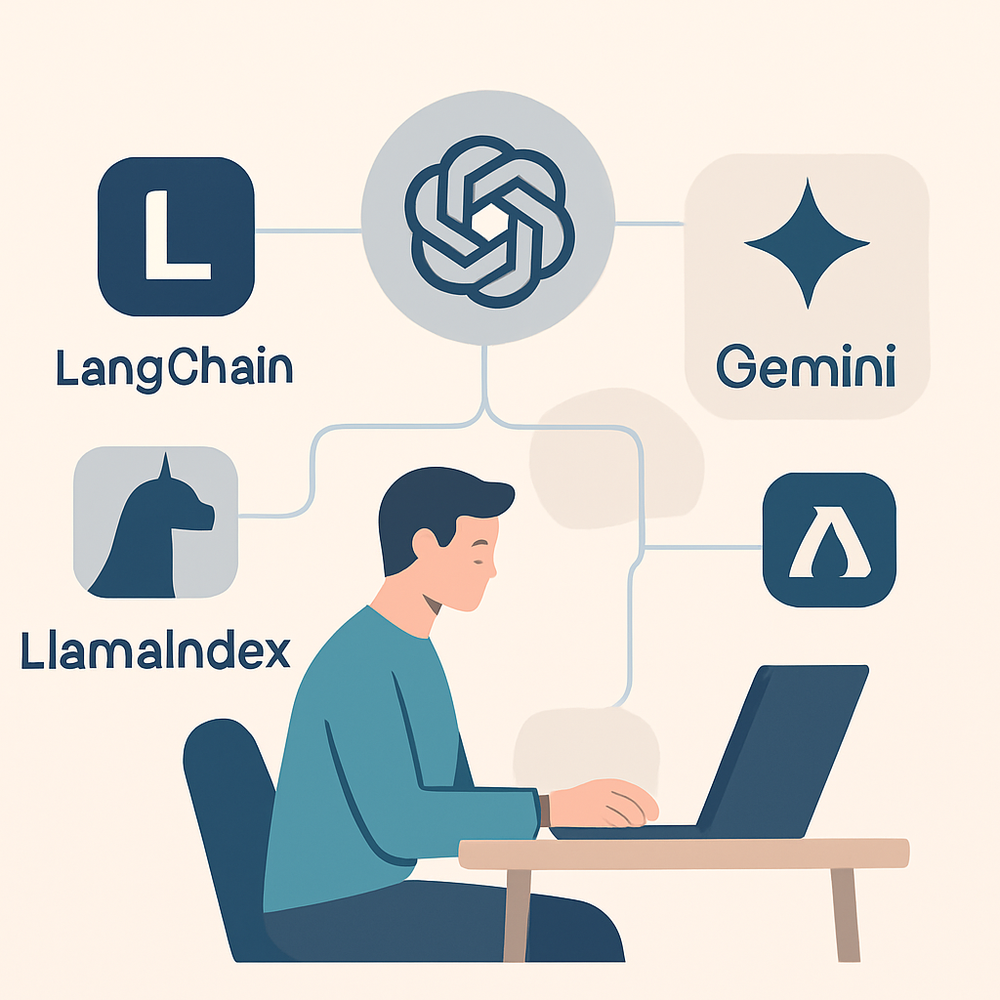
PE Collective's 2026 API comparison is unambiguous about where the ecosystem currently sits: OpenAI's developer tooling is unmatched, with LangChain, LlamaIndex, the Vercel AI SDK, and Semantic Kernel all built OpenAI-first, and if your team already knows OpenAI, there is often little practical reason to switch. This matters more for hiring than it might seem, since a developer building complex tool orchestration on Gemini or Claude through a framework designed OpenAI-first can hit friction the framework was never built to handle cleanly.
Ask specifically which framework a candidate plans to use and whether it was designed around the provider you are choosing or adapted to support it after the fact. A developer who has actually shipped production work on Anthropic or Google's SDKs directly, rather than only through an OpenAI-first abstraction layer, is a meaningfully different hire than one who has only worked inside the ecosystem with the most tutorials.
2. Context Window: Bigger Isn't Automatically Better
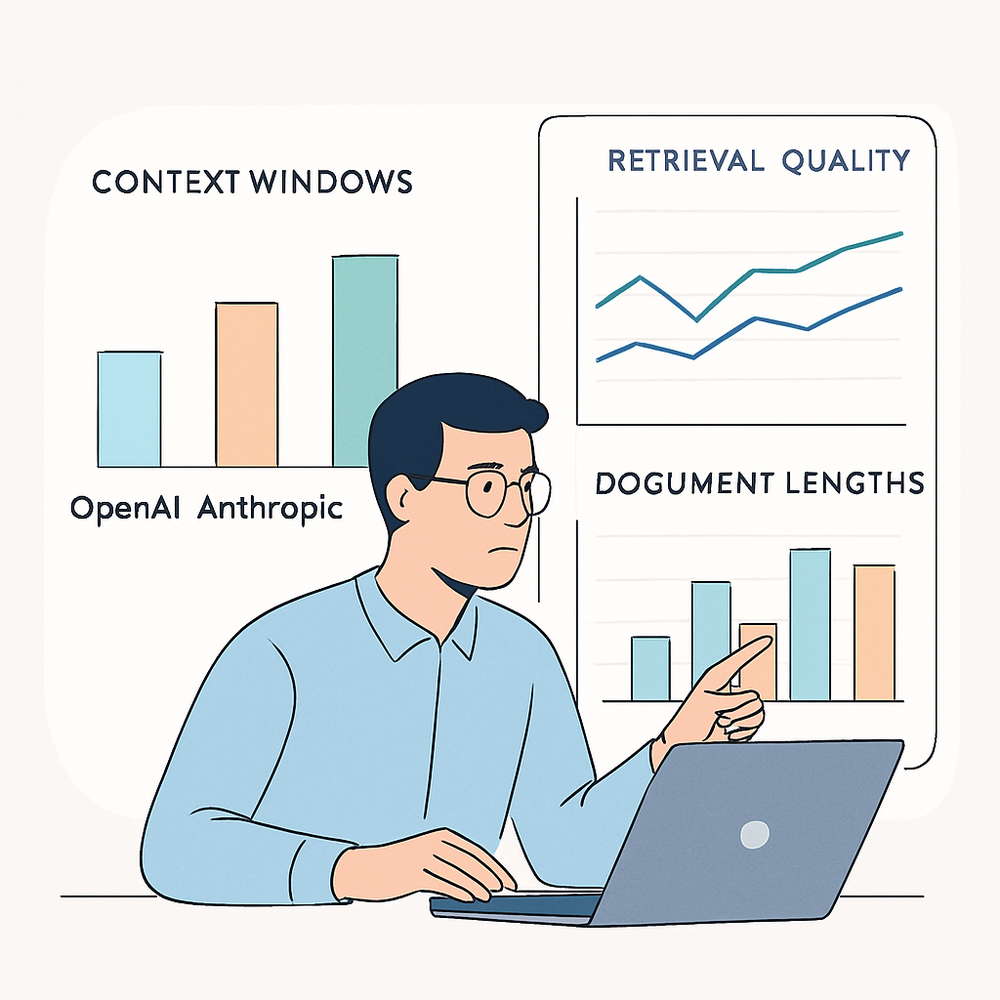
Syncfusion's 2026 research makes a point worth repeating to any developer quoting a context window number: a large context window does not guarantee stable retrieval, and the only way to know is to benchmark at the real document lengths your product will actually run in production. Opslyft's 2026 pricing comparison lays out where each provider currently stands: Gemini 3.1 Pro offers up to a two million token window on Vertex AI, Claude's flagship models run at one million tokens, and OpenAI's context sits at roughly 1.05 million tokens on its newest release. APIScout adds an important nuance: Google's one million token context is production-ready and generally available across its Gemini 3 lineup, while Anthropic's one million token context remains in beta and limited to its Opus tier.
What this means for hiring: ask a candidate to demonstrate retrieval quality at the context length your actual use case needs, not the provider's advertised maximum. A developer who cannot show you this distinction is quoting a marketing number, not an engineering constraint they have actually tested.
3. Rate Limits: The Constraint That Surprises Teams at Launch

Rate limits get far less attention than pricing or context windows during vendor selection, but APIScout's 2026 comparison shows the gap between providers is large enough to bottleneck a launch: OpenAI's Tier 1 rate limit of roughly 1,000 requests per minute is about 20 times higher than Anthropic's 50 requests per minute at the same tier, with Gemini's paid Tier 1 sitting between the two at 150 to 300 requests per minute.
For a product expecting a fast ramp to production traffic, this is a real scoping question, not a technicality. Ask a developer proposing custom AI agent solutions specifically how they have planned around Tier 1 constraints and how quickly your account can move to a higher rate limit tier with the provider you are choosing, since an agentic system running multiple calls per task hits these ceilings faster than a single-call chatbot integration.
4. Fine-Tuning and Model Customization Support
APIScout's 2026 comparison names OpenAI as the clear leader on fine-tuning support among the three major providers, while PE Collective's provider breakdown notes Claude's smaller model lineup and lack of native image generation or speech models as a real trade-off against its excellent tool use and structured output support.
If your roadmap includes fine-tuning at any point, confirm a candidate has hands-on experience with the specific provider's fine-tuning workflow, not general fine-tuning experience assumed to transfer cleanly. Data formats, evaluation tooling, and deployment mechanics for AI model training work differ meaningfully enough across OpenAI, Anthropic, and Google that provider-specific experience is worth asking about directly rather than assuming.
Hire Generative AI API Developer
5. Multimodal Capabilities: Where Gemini Pulls Ahead
APIScout's research is clear that Gemini currently wins on native multimodal support, handling video and audio inputs directly in ways OpenAI and Anthropic do not match as natively. AIonX's 2026 developer pricing guide adds a concrete use case this enables: Gemini 3 Pro's one million token context window is large enough to process entire codebases, up to roughly 750,000 lines of code, in a single call, a scale that changes what a code-analysis or documentation product can attempt architecturally.
If a product roadmap includes video or audio understanding, this narrows the realistic provider choice before the hiring conversation even starts, since PE Collective's provider comparison notes Claude specifically lacks native image generation or speech models as part of its current lineup. Confirming this requirement explicitly with a candidate avoids discovering the gap mid-project.
6. Vendor Lock-In and the Case for an Abstraction Layer
Syncfusion's 2026 research flags a cost that rarely shows up in an initial project quote: proprietary features like prompt caching keys, tool runtimes, and quota models become dependencies over time, and frequent model deprecations and mandatory retirement cycles across OpenAI, Azure OpenAI, and Anthropic make provider churn effectively inevitable over a product's lifetime. Syncfusion's practical recommendation is to isolate provider-specific calls behind an internal interface when portability is a concern, so a future migration touches one layer of the codebase rather than every feature that calls the model directly.
GPTProto's 2026 pricing analysis surfaces a specific gotcha worth asking a candidate about directly: Anthropic's newer tokenizer can produce roughly 30 percent more tokens for the same text depending on the workload, a detail that changes cost calculations meaningfully if a team migrates from another provider without re-testing token counts on real data. The Gen AI portfolio red flags post covers what to look for when a candidate's portfolio suggests they have never actually navigated a provider migration.
7. The Developer Question That Matters More Than "Which API"
Opslyft's 2026 pricing research reaches a conclusion worth applying directly to hiring: there is no single cheapest or best provider, and the practical answer for most products is to route by task rather than commit to one provider for everything. A developer who recommends multi-provider routing based on what each task actually needs, rather than pushing whichever provider they personally know best, is giving you a more honest scoping conversation than one who has a single default answer regardless of the workload.
The provider comparison shapes the technical requirements list, but the more decisive filter in hiring is whether a candidate has actually shipped a production system on the specific provider your project needs, not just experimented with all three in a personal project. The Gen AI vetting questions post covers the broader interview questions worth asking alongside these provider-specific ones.
OpenAI vs Anthropic vs Gemini: Strongest For and Watch Out For
|
Provider |
Strongest For |
Watch Out For |
|---|---|---|
|
OpenAI |
Ecosystem depth, fine-tuning support, coding throughput |
Tight rate limits for new accounts, frequent pricing changes |
|
Anthropic (Claude) |
Agentic work, tool use, controlled reasoning, long context |
Smaller model lineup, no native image or speech generation |
|
Google (Gemini) |
Native multimodal input, largest context window, low-end pricing |
Framework support less mature outside Google Cloud tooling |
Hire Generative AI API Developer
Scope the API Decision and the Hiring Decision Separately
The provider comparison and the developer hiring decision are related but not the same question. Choosing the right API narrows the technical requirements list; choosing the right developer is about whether they have actually shipped production work on that specific provider, planned for its rate limits and deprecation cycles, and can explain why it fits your workload rather than defaulting to whichever one they know best.
The AI predictions 2026 post covers where these three providers and the broader model landscape are heading through the rest of the year. Hire an AI developer who can speak to the trade-offs across all three providers specifically, not just the one their last project happened to use.
Frequently asked questions
Which API is best for a startup building its first AI feature?
Does context window size matter more than the provider's benchmark scores?
Why do rate limits matter if my product isn't at scale yet?
Should I build my product to work with only one AI provider?
Is Gemini always cheaper than OpenAI or Anthropic?
What should I ask a developer about fine-tuning before hiring them?



Shreyans Padmani
Shreyans Padmani has 5+ years of experience leading innovative software solutions, specializing in AI, LLMs, RAG, and strategic application development. He transforms emerging technologies into scalable, high-performance systems, combining strong technical expertise with business-focused execution to deliver impactful digital solutions.