Gravitee's State of AI Agent Security 2026 Report surveyed over 900 executives and technical practitioners and found that 88% of organizations confirmed or suspected an AI agent security incident in the past year. Only 14.4% of teams report going live with full security approval, even though 81% are already past the planning phase and into active testing or production.
That gap between how fast agents are being deployed and how carefully they're being vetted starts at the hiring stage. Here are ten specific red flags that predict which ai agent development freelancer engagements end up in that 88%, before you've signed a contract.
1. No Live Agent Demos
A candidate who can only show slides, architecture diagrams, or a recorded video, but no live, interactive agent you can actually test, hasn't necessarily shipped anything that works reliably outside a controlled recording. Ask to interact with a working agent, even a simplified one, before committing to a full engagement.
2. Vague on Orchestration Frameworks
If a candidate can't name and compare specific frameworks, LangChain, LangGraph, CrewAI, or AutoGen, and explain why they'd choose one over another for your specific use case, they likely haven't built enough production agents to have developed real opinions. A generic "I use whatever fits" answer without specifics is a sign of surface-level familiarity, not depth.

3. No Memory or State Design Plan
An agent that can't maintain context across a multi-step task, or across separate sessions when that's required, will fail on anything beyond a single-turn interaction. Ask specifically how they plan to handle memory: what gets stored, for how long, and how state is recovered if a session is interrupted mid-task. A candidate with no answer here is planning to build something closer to a scripted chatbot than a genuine agent.
4. Can't Explain Tool-Calling
Tool-calling, how an agent decides which external function or API to invoke and with what parameters, is the mechanism that separates an agent from a conversational interface. A candidate who can't walk through how they'll structure tool definitions, validate the agent's chosen parameters before execution, and handle a tool call that fails, doesn't yet have the technical foundation this work requires.
5. No Error-Handling Strategy
Agents fail in ways a simple script doesn't: a tool call times out, an API returns an unexpected format, or the agent gets stuck in a reasoning loop. Practical AI Agent Security outlines why limiting an agent's combination of data access, system access, and autonomous action matters specifically because failures compound when all three are present without a defined recovery path. A candidate with no concrete error-handling plan is planning to discover these failure modes in your production environment instead of before deployment.
6. No Cost Estimate for API Calls
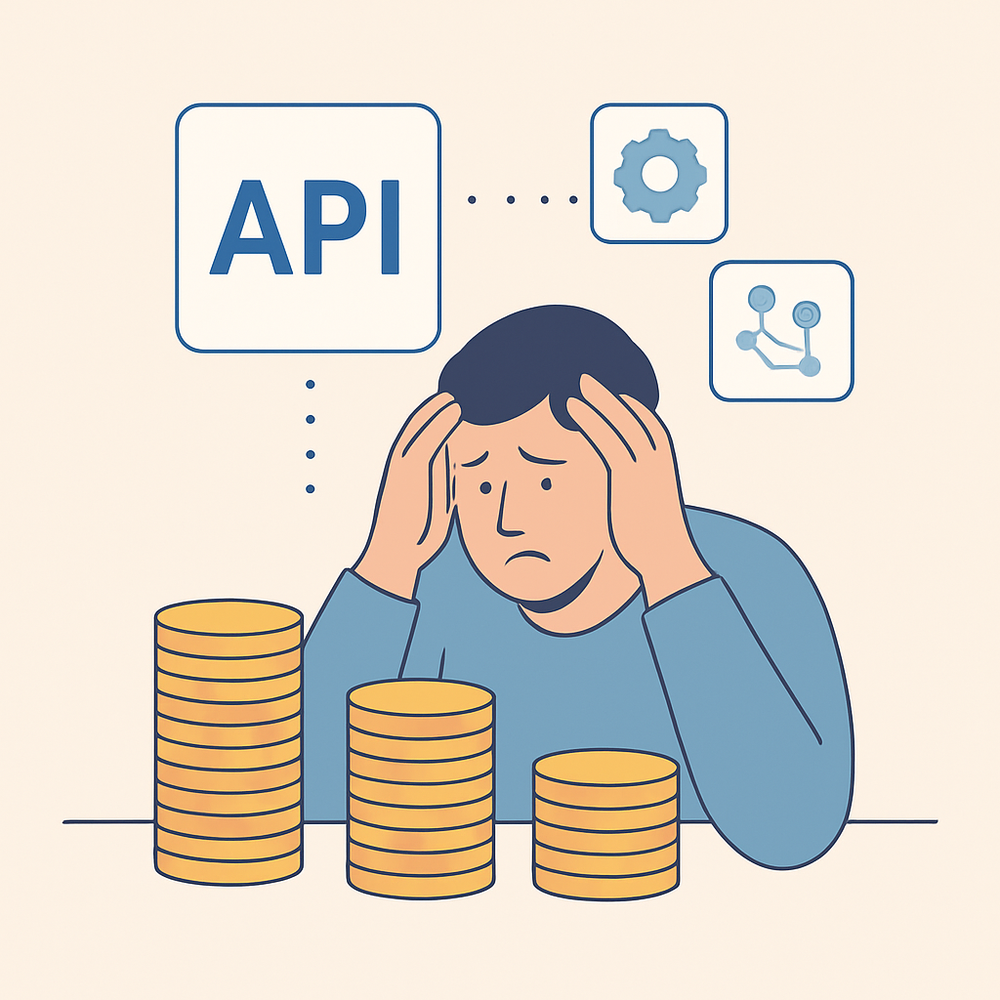
An agent that makes multiple LLM calls per task, plus tool calls and potential retries, can rack up API costs far faster than a single-prompt chatbot. A candidate who can't give you even a rough estimate of expected monthly API spend at your anticipated usage volume either hasn't thought about production economics or is avoiding an uncomfortable conversation about cost before you've signed.
7. Avoids Multi-Agent Complexity
If your use case genuinely needs multiple specialised agents coordinating on a task, and a candidate insists a single general-purpose agent will handle everything, that's often a sign they're avoiding architecture they're not comfortable building rather than making a genuine scoping judgment. AI Agent Development Services: Full Stack or Focused Specialist? is a useful reference for thinking through when multi-agent architecture is actually warranted, so you can tell the difference between a legitimate scoping call and an avoidance pattern.
8. No Testing Methodology
Ask specifically how they plan to test the agent before launch: a fixed set of test cases, adversarial or edge-case inputs, and a defined accuracy threshold the agent needs to hit. A candidate who plans to "test as we go" without a structured evaluation plan is likely to discover major failure modes after launch rather than before it.
9. No Handoff Documentation
An agent your team can't maintain or extend without the original developer is a liability, not an asset, the moment that developer becomes unavailable. Confirm upfront that the engagement includes documentation covering architecture decisions, access scope, and how to troubleshoot common failure modes, not just working code with no explanation of why it's structured the way it is.
10. Overpromises Timelines
A candidate who quotes a firm delivery date before seeing your actual data, API access, and integration requirements is guessing, not scoping. Real agent development timelines depend heavily on integration complexity that only becomes clear after a short discovery phase, and a candidate confident enough to skip that phase is either inexperienced with how often these projects hit unexpected complexity or willing to overpromise to win the contract.
What Comes Next
As agent frameworks standardise and tooling matures, some of these red flags will become easier to spot through better platform-level guardrails, but the fundamental gap between a freelancer who has shipped agents to production and one who has only prototyped them isn't going away soon. Gartner's own research reinforces the stakes here, projecting that the average large enterprise will run over 150,000 AI agents by 2028, while only 13% currently report having adequate governance in place. Getting the hiring decision right the first time matters more as that gap widens. If you'd rather start from a vetted track record than run this checklist cold, hire ai and ml developers with documented AI agent deployments and a clear testing and handoff process.
Frequently asked questions
What is the biggest red flag when hiring an AI agent development freelancer?
How do I verify an AI agent freelancer's claimed orchestration experience?
Why does an AI agent's access scope matter so much when hiring a developer?
What should be included in the contract to avoid these red flags after hiring?
How much does it cost to fix a poorly built AI agent versus hiring it correctly the first time?
Is it normal for an AI agent development services freelancer to need a discovery phase before quoting a firm price?



Shreyans Padmani
Shreyans Padmani has 5+ years of experience leading innovative software solutions, specializing in AI, LLMs, RAG, and strategic application development. He transforms emerging technologies into scalable, high-performance systems, combining strong technical expertise with business-focused execution to deliver impactful digital solutions.