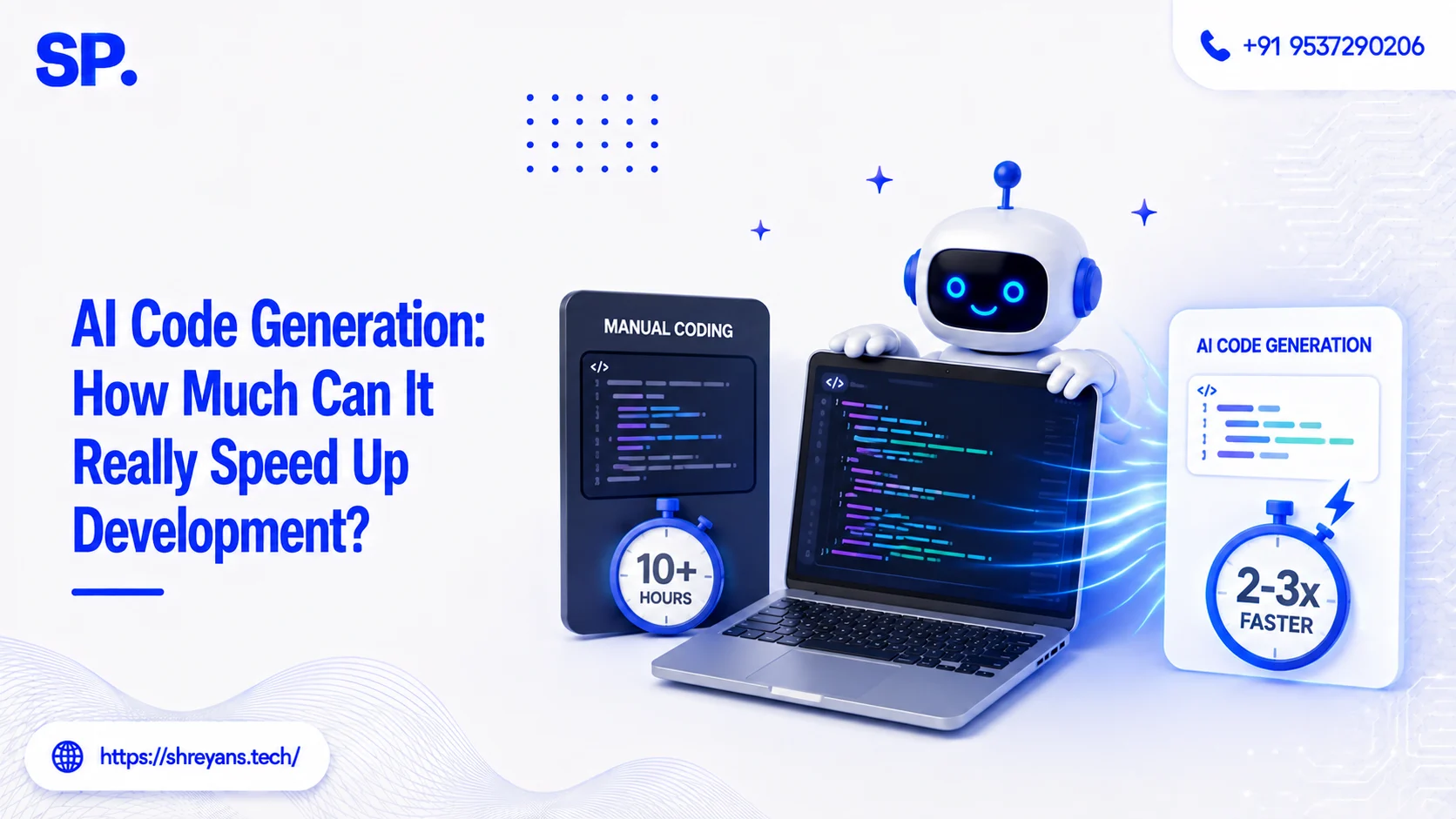
A Microsoft Research, GitHub, and MIT Sloan randomized controlled trial found developers using GitHub Copilot completed a task 55.8% faster than a control group. A METR randomized controlled trial found experienced developers using AI tools took 19% longer than without them.
Both are rigorous RCTs. Both are correct. The reason they reach opposite conclusions is the single most useful thing to understand about ai code generation, because it tells you exactly when to expect a speedup and when to expect the opposite. This is one piece of a broader picture covered in our generative ai for business guide, but it's the piece engineering leaders get wrong most often.
Two Rigorous Studies, Opposite Answers
The headline numbers get quoted constantly without the study conditions attached. Those conditions are the whole story.
|
GitHub / MIT (2023) |
METR (2025, follow-up 2026) |
|
|---|---|---|
|
Participants |
70 professional developers |
16 experienced open-source developers |
|
Task |
Build an HTTP server in JavaScript from scratch |
246 real issues in their own repositories |
|
Codebase |
Greenfield, no existing code |
Mature repos averaging 1M+ lines |
|
Developer familiarity |
New task, no prior context |
Years of contributions to that specific codebase |
|
Result |
55.8% faster (161 min → 71 min) |
19% slower (2026 follow-up held at ~18%) |
One study measured a developer writing new code in unfamiliar territory. The other measured a developer modifying code they already knew intimately. Those are different activities, and AI helps enormously with the first while adding overhead to the second.
What Actually Explains the Gap
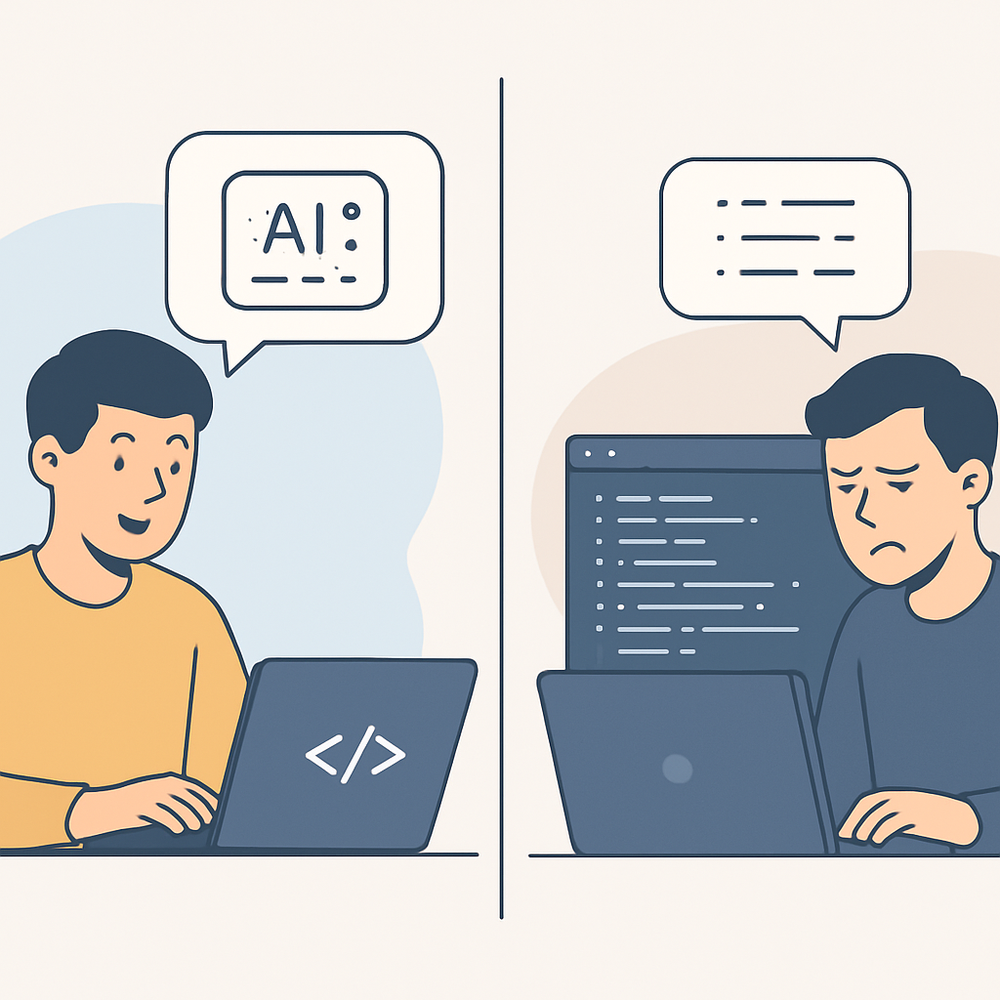
Three variables consistently determine whether AI code generation speeds you up or slows you down.
Task type
Well-defined tasks with clear success criteria, boilerplate, standard API integrations, test scaffolding, config files, are where the large gains come from. Ambiguous tasks requiring system-level understanding are where AI adds review overhead without adding much speed.
Codebase familiarity
METR's own paper acknowledged this directly, noting it's likely AI tools are useful in contexts different from their setting, specifically for less experienced developers or developers working in an unfamiliar codebase. When you already know exactly what to write, the time spent prompting, reading, and verifying a suggestion exceeds the time to just write it.
Developer experience level
The GitHub study found the largest gains among developers with less programming experience. AI supplies patterns a junior developer hasn't internalised yet. A senior developer already has those patterns loaded, so the same suggestion delivers far less marginal value. This is a consistent finding across the research, and it has practical implications for how teams deploy these tools, much the same way LLM integration hiring depends on matching the right capability to the right problem rather than assuming a uniform benefit.
Hire AI Code Generation
The Perception Problem Nobody Plans For
The most uncomfortable finding in the METR study isn't the slowdown itself. Before the trial, developers predicted AI would make them 24% faster. Afterward, having actually done the work, they reported feeling 20% faster. The clock said 19% slower.
That's a 39-percentage-point gap between perception and measured reality, from developers assessing their own work on their own codebases. It matters because nearly every corporate claim about AI coding productivity rests on self-reporting or proxy metrics. If your evidence that AI is working is that your team says it's working, you don't yet have evidence.
More Code Is Not More Shipped Software
A National Bureau of Economic Research working paper studying over 100,000 GitHub developers found that autonomous coding agents drove 180% more commits and 50% more projects, but only 30% more actual releases.
Output volume rose far faster than delivered software. The bottleneck moved rather than disappearing: generating code got dramatically cheaper, while reviewing, integrating, testing, and shipping it did not. GitClear's analysis points in the same direction, reporting a fourfold growth in duplicated code blocks alongside a roughly 60% drop in refactoring activity, both signals of volume outpacing maintenance.
So What Speedup Should You Actually Expect?
Mapping the research onto real scenarios gives a more useful answer than any single headline percentage.
|
Scenario |
Realistic expectation |
|---|---|
|
Greenfield project, standard patterns, junior-to-mid developer |
Large gains, plausibly 30–55% on the coding step itself |
|
Boilerplate, tests, config, documentation |
Consistent, reliable gains across experience levels |
|
Unfamiliar language, framework, or codebase |
Meaningful gains; AI substitutes for ramp-up time |
|
Mature codebase, senior developer, complex change |
Near zero to negative; verification overhead dominates |
|
Whole-team delivery throughput |
Far smaller than coding-step gains; review and integration become the constraint |
Field studies at Microsoft and Accenture landed at 12% to 22% improvement, well below the 55% lab figure, which is roughly what you'd predict once real codebases and real review cycles enter the picture. That range is a more honest planning number than either headline. Getting closer to the top of it is largely a matter of who is using the tools and on what, which is why GenAI developer skills matter more than tool selection.
Frequently asked questions
How much faster does AI code generation actually make developers?
Why do AI coding productivity studies contradict each other?
Do junior or senior developers benefit more from AI code generation?
Does AI code generation affect code quality?
How should a team measure whether AI coding tools are actually working?



Shreyans Padmani
Shreyans Padmani has 5+ years of experience leading innovative software solutions, specializing in AI, LLMs, RAG, and strategic application development. He transforms emerging technologies into scalable, high-performance systems, combining strong technical expertise with business-focused execution to deliver impactful digital solutions.