Introduction
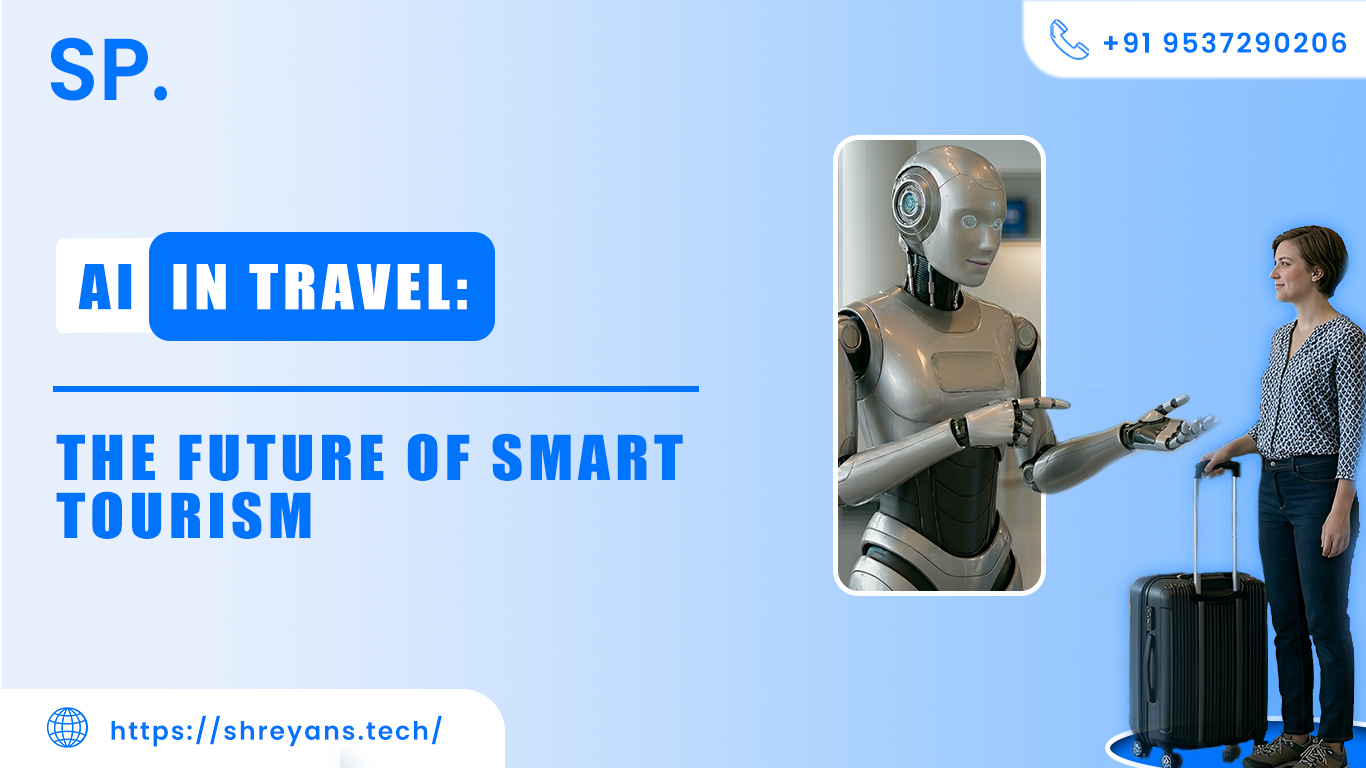
The travel and tourism industry is evolving rapidly, and Artificial Intelligence (AI) is at the heart of this transformation. From personalized trip planning to real-time travel assistance, AI is redefining how people explore the world.
According to recent insights, the AI in the tourism market is expected to grow significantly, reaching over $13 billion by 2030, showing how quickly smart tourism is becoming the new standard .
Today’s travelers expect seamless, personalized, and efficient experiences and AI is making this possible. Whether it’s suggesting destinations, optimizing prices, or providing instant customer support, AI is transforming every stage of the travel journey.
What is AI in Travel and Smart Tourism?
AI in travel refers to the use of advanced technologies like machine learning, data analytics, and automation to improve travel experiences and business operations.
Smart tourism goes a step further by combining AI with data and digital tools to create intelligent, connected, and personalized travel ecosystems.
In simple terms:
-
AI = Technology That Learns and Automates
-
Artificial Intelligence (AI) is a smart technology that can learn from data, understand user behavior, and make decisions automatically. In the travel industry, AI helps automate tasks like booking, customer support, and recommendations—saving time and improving efficiency for both travelers and businesses.
-
Smart Tourism = AI + Data + Better Travel Experience
-
Smart Tourism combines AI, real-time data, and digital tools to create a more connected and personalized travel experience. It allows travelers to receive customized suggestions, instant updates, and seamless services, making their journeys more convenient, enjoyable, and efficient.
How AI is Transforming the Travel Industry
1. Personalized Travel Planning
AI analyzes user preferences, past bookings, and behavior to create customized travel plans. Instead of browsing endless options, travelers get tailored suggestions instantly.
Example:
-
Customized Itineraries
-
AI-powered travel platforms create customized itineraries based on your preferences, budget, and travel history. Instead of spending hours planning, travelers receive a complete travel plan that includes destinations, activities, and schedules tailored specifically to their interests. This makes trip planning faster, easier, and more efficient.
-
Personalized Hotel and Activity Recommendations
-
Artificial Intelligence analyzes user behavior and reviews to provide personalized hotel and activity recommendations. Whether you prefer luxury stays, budget accommodations, or adventure activities, AI suggests options that match your needs, ensuring a more enjoyable and satisfying travel experience.
2. Intelligent Travel Assistants
Modern AI-powered assistants go beyond basic chatbots. They can:
-
Plan Complete Trips
-
AI-powered tools can plan complete trips from start to finish, including flights, hotels, activities, and transportation. By analyzing your preferences, budget, and travel goals, AI creates a well-structured itinerary, saving time and reducing the stress of manual planning.
-
Suggest Alternatives
-
One of the biggest advantages of AI in travel is its ability to suggest smart alternatives instantly. If a flight is delayed, a hotel is fully booked, or plans change, AI recommends better options based on availability, price, and convenience, ensuring a smooth travel experience.
-
Provide Real-Time Updates
-
AI systems deliver real-time travel updates such as flight delays, gate changes, weather conditions, and traffic alerts. This helps travelers stay informed and make quick decisions, improving overall safety, convenience, and travel efficiency.
These assistants act like a 24/7 digital travel agent.
3. Real-Time Travel Updates
AI systems monitor:
-
Weather Conditions
-
AI-powered travel systems monitor real-time weather conditions to help travelers plan better and avoid disruptions. Whether it’s rain, extreme heat, or storms, AI provides timely alerts and suggestions, ensuring a safer and more comfortable travel experience.
-
Flight Delays
-
Artificial Intelligence tracks airline data to detect and predict flight delays or cancellations. Travelers receive instant notifications along with alternative options, helping them manage their journey efficiently and avoid unnecessary stress.
-
Traffic Situations
-
AI analyzes live traffic data to provide accurate updates on traffic situations, including congestion, roadblocks, or accidents. This helps travelers choose the fastest routes, save time, and reach their destinations without delays.
This allows travelers to adjust plans instantly, making journeys smoother and stress-free.
4. Predictive Analytics and Dynamic Pricing
AI predicts demand and adjusts prices accordingly. This helps:
-
Travelers Find Better Deals
-
AI-powered systems analyze pricing trends, demand patterns, and user preferences to help travelers find the best deals on flights, hotels, and travel packages. By comparing multiple options in real time, AI ensures users get cost-effective and value-for-money travel choices, making trips more affordable.
-
Businesses Maximize Revenue
-
For travel companies, AI uses predictive analytics and dynamic pricing strategies to adjust prices based on demand, seasonality, and customer behavior. This helps businesses maximize revenue, improve occupancy rates, and optimize pricing, ensuring better profitability while still offering competitive deals.
Hotels using AI systems have reported up to a 10% increase in revenue .
5. Enhanced Customer Experience
AI improves customer service by:
-
Reducing Wait Times (Up to 50%)
-
AI-powered chatbots and virtual assistants help reduce customer wait times by up to 50% by handling multiple queries simultaneously. This ensures faster responses, improves customer satisfaction, and eliminates long waiting queues in travel support services.
-
Offering Instant Support
-
With AI, travelers can access instant customer support 24/7. Whether it’s booking assistance, itinerary changes, or general queries, AI systems provide quick and accurate solutions, making the travel experience smooth and hassle-free.
-
Providing Multilingual Communication
-
AI enables multilingual communication, allowing travelers from different countries to interact with بسهولة in their preferred language. This removes language barriers, enhances user experience, and makes global travel more accessible and convenient.
This ensures a better experience for global travelers.
6. Automation in Travel Operations
AI automates repetitive tasks like:
-
Booking Management
-
AI simplifies booking management by automating tasks like reservations, cancellations, and schedule changes. It ensures accuracy, reduces manual errors, and allows travelers to manage their bookings quickly and efficiently.
-
Customer Queries
-
AI-powered chatbots handle customer queries instantly, providing quick answers to common questions about flights, hotels, and travel policies. This improves response time, enhances customer satisfaction, and reduces the workload on support teams.
-
Fraud Detection
-
AI systems enhance security by detecting fraudulent activities in real time. By analyzing patterns and unusual behavior, AI helps prevent fake bookings, payment fraud, and identity theft, ensuring a safe and secure travel experience for both customers and businesses.
This reduces costs and improves efficiency for travel companies.
Key Benefits of AI in Smart Tourism
Hyper-Personalization
AI enables hyper-personalized travel experiences by analyzing user preferences, past behavior, and interests. Travelers receive tailored recommendations for destinations, hotels, and activities, making every trip unique and more enjoyable.
Time-Saving
With AI automation, travelers can save time on planning and bookings. There’s no need for endless searching AI quickly finds the best options and creates efficient travel plans within seconds.
Cost Optimization
AI uses smart algorithms to provide cost optimization through dynamic pricing and deal recommendations. Travelers get the best value for money, while businesses can adjust prices strategically to stay competitive.
Improved Safety and Convenience
AI enhances travel safety by offering real-time alerts, weather updates, and risk analysis. It also improves convenience by helping travelers make quick, informed decisions during their journey.
Better Business Performance
AI provides data-driven insights that help travel companies understand customer behavior, improve services, and increase revenue. This leads to faster growth and better overall business performance.
Real-World Example of AI in Travel
Major platforms like Booking.com use AI to deliver personalized experiences, improve conversions, and reduce operational costs .
Airlines also use AI for:
Flight Predictions
-
AI uses historical data and real-time information to make accurate flight predictions, including delays, cancellations, and arrival times. This helps travelers plan better and reduces uncertainty, making the overall travel experience more reliable.
Automated Boarding Systems
AI-powered automated boarding systems streamline the airport process by using technologies like facial recognition and digital verification. This reduces queues, speeds up boarding, and enhances efficiency for both passengers and airlines.
Customer Communication
-
AI improves customer communication by providing instant updates, notifications, and personalized messages. From booking confirmations to travel alerts, AI ensures travelers stay informed at every step of their journey, enhancing satisfaction and trust.
The Future of Smart Tourism
The future of travel is fully automated, intelligent, and connected.
Soon, AI will be able to:
Plan Entire Trips Automatically
-
AI will soon be able to plan entire trips automatically, from selecting destinations to booking flights, hotels, and activities. By understanding user preferences and travel history, AI can create fully customized itineraries with minimal human effort.
Handle Bookings and Changes
Advanced AI systems can manage bookings and handle changes in real time, including cancellations, rescheduling, and upgrades. This ensures a smooth and flexible travel experience without the need for manual intervention.
Provide Immersive Virtual Previews of Destinations
With AI and virtual technologies, travelers can enjoy immersive previews of destinations before booking. Virtual tours, 3D experiences, and interactive guides help users explore locations in advance, making better and more confident travel decisions.
Act as a Complete Travel Companion
AI is evolving into a complete travel companion, offering end-to-end support throughout the journey. From planning and booking to navigation and real-time assistance, AI ensures a seamless, personalized, and stress-free travel experience.
Challenges of AI in Travel
While AI offers many benefits, there are some challenges:
Data Privacy Concerns
AI systems rely heavily on user data, which raises data privacy and security concerns. Travelers may worry about how their personal information is collected, stored, and used. Ensuring strong data protection and transparency is essential for building trust.
High Implementation Costs
-
Implementing AI technology requires significant investment in infrastructure, software, and skilled professionals. For small and medium-sized travel businesses, these high costs can be a major challenge.
Dependence on Technology
Over-reliance on AI can lead to dependence on technology, where systems handle most operations. Any technical failure or system downtime can disrupt services and impact the overall travel experience.
Need for Human Touch in Complex Situations
While AI is efficient, it cannot fully replace the human touch in complex or emotional situations. Travelers may still prefer human assistance for personalized advice, problem-solving, or handling unexpected travel issues.
FAQs
1. How is AI used in the travel industry?
AI is used for personalized recommendations, booking automation, customer support, predictive pricing, and real-time travel updates.
2. Why is AI important in tourism?
AI enhances efficiency, reduces costs, improves customer experience, and helps businesses make better decisions using data.
3. Will AI replace travel agents?
No, AI supports travel agents by automating routine tasks, allowing them to focus on complex and personalized services.
4. What is smart tourism?
Smart tourism uses AI, data, and digital technologies to create seamless, personalized, and connected travel experiences.
5. Is AI safe for travelers?
Yes, AI is generally safe, but users should be mindful of data privacy and use trusted platforms.
Conclusion
AI in travel is no longer a future concept—it is already transforming how we plan, book, and experience trips. From personalized recommendations to real-time assistance, AI is making travel smarter, faster, and more enjoyable.
As technology continues to evolve, smart tourism will become the norm, offering highly customized and seamless travel experiences for everyone.
For businesses, adopting AI is no longer optional—it’s essential to stay competitive. And for travelers, it means a future where every journey is effortless and perfectly tailored.



Shreyans Padmani
Shreyans Padmani has 5+ years of experience leading innovative software solutions, specializing in AI, LLMs, RAG, and strategic application development. He transforms emerging technologies into scalable, high-performance systems, combining strong technical expertise with business-focused execution to deliver impactful digital solutions.