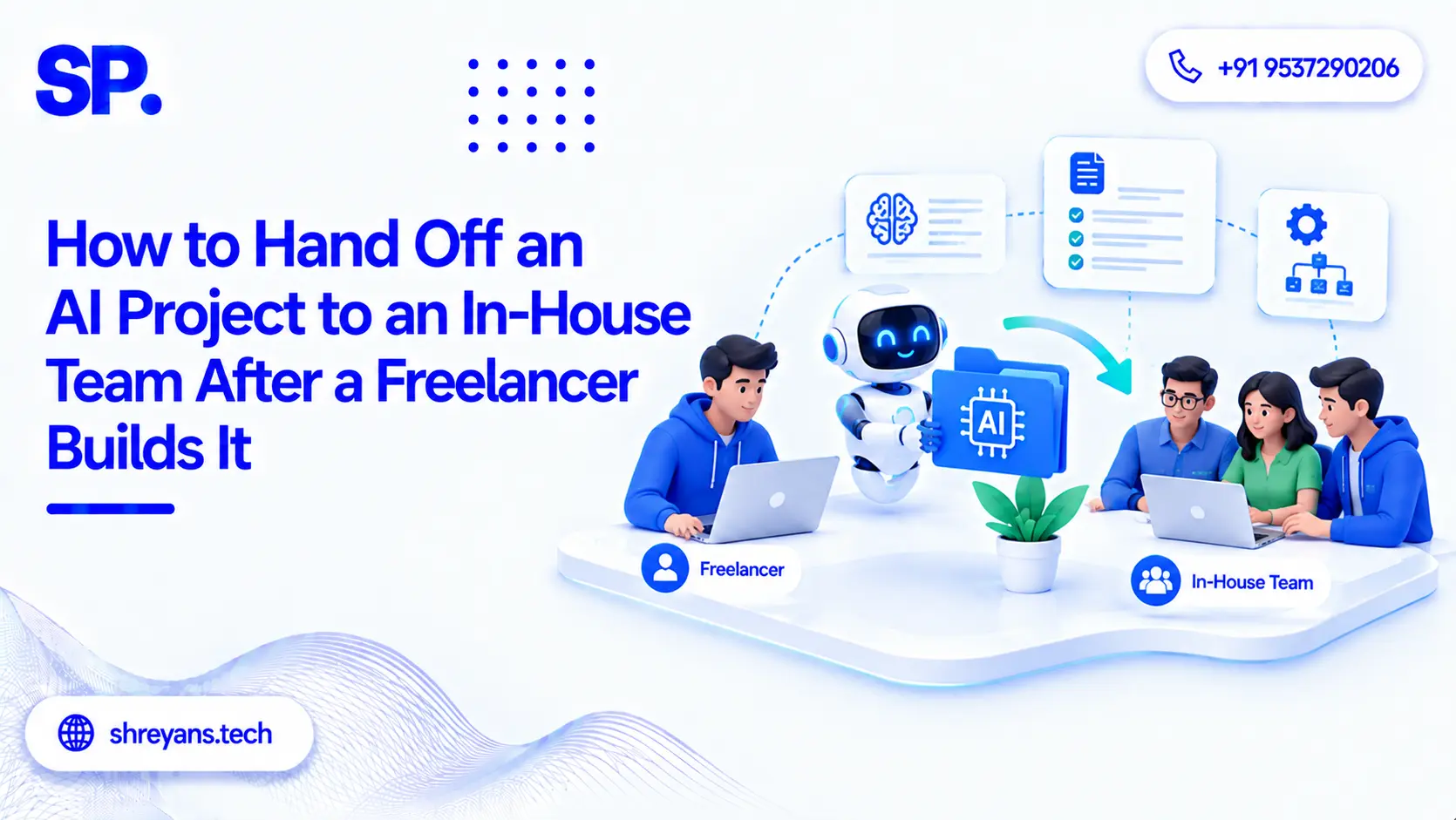
How to Hand Off an AI Project to an In-House Team After a Freelancer Builds It
A 2025 Deloitte survey of technology leaders found that 61 percent of organisations that engaged freelance or contract AI developers planned to transition system ownership to an in-house team within 18 months of go-live. Of those that had completed the transition, 44 percent reported significant knowledge loss: undocumented architectural decisions, monitoring systems the team could not interpret, and retraining procedures that existed only in the developer's memory. The cost of a poorly managed handover is not always immediate; it compounds over months as the in-house team makes decisions without context and the system degrades without anyone understanding why.
The freelancer-then-in-house-team model is a legitimate and often effective approach to building AI capability inside an organisation. The approach discussed in the freelancer vs full-time team analysis describes why startups and growing organisations choose this path. What that model requires to work is a handover protocol that begins before the build does, not after the final invoice is paid. This guide covers every component of that protocol: the artefacts, the process, and the timeline.
Why Most AI Handovers Fail
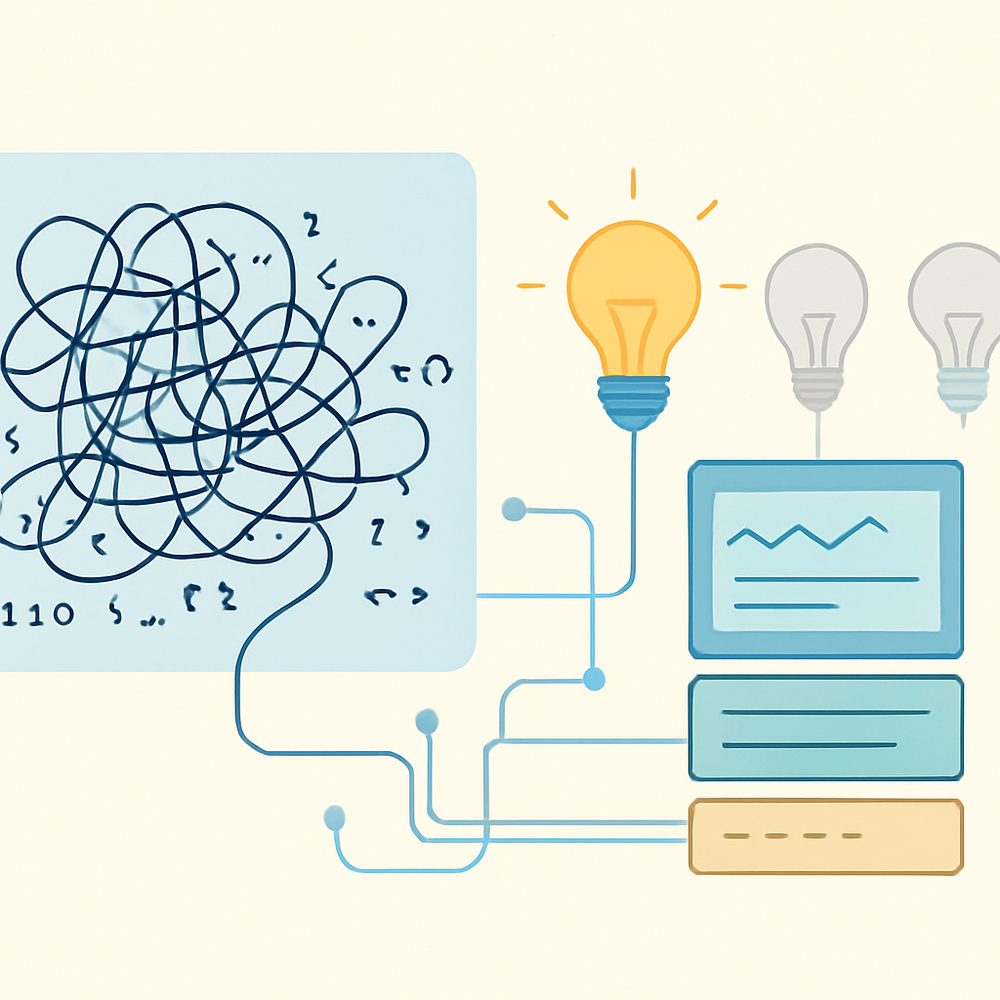
Software handovers are difficult. AI system handovers are harder, because the system's behaviour is partially determined by data and model weights, not just code. A new engineer who receives a well-documented Django application can read the codebase and understand what it does. A new engineer who receives a fine-tuned language model without its model card, training data schema, and evaluation benchmarks cannot determine whether the model is degrading, why it makes specific errors, or how to retrain it safely.
Three failure modes account for most bad handovers. The first is documentation debt: the developer built the system correctly but documented nothing, assuming their availability for questions. The second is monitoring blindness: the in-house team inherits dashboards they did not build and cannot interpret, so they do not know when the system is underperforming. The third is retraining opacity: the team knows the model needs updating but does not have the training pipeline, the labelled data, or the evaluation criteria needed to retrain safely. The role of ML consulting in a well-designed transition is to make all three of these visible before the freelancer exits.
Artefact 1: The Model Card
A model card is the single most important document in an AI system handover. The format was introduced by Google in the 2019 paper "Model Cards for Model Reporting" by Mitchell et al. and is now standard practice at organisations including Hugging Face, Meta, and Microsoft. A model card documents the model's intended use, training data characteristics, evaluation results, known failure modes, and recommendations for use. It is the instruction manual for the model as a component in a production system.
Every model delivered in a handover must include a model card with the following sections: model architecture and base model (e.g. "Mistral 7B fine-tuned with LoRA"), training data description (source, size, date range, labelling process), evaluation results on the held-out test set (accuracy, precision, recall, and any domain-specific metrics), performance benchmarks by input category (the model may perform differently on formal versus informal text), known limitations (input types or edge cases where the model underperforms), and recommended retraining trigger (the metric threshold that indicates the model needs updating). Machine learning development services at production level treat the model card as a deliverable equal in importance to the model weights.
Hire Edge Computer Vision
Artefact 2: The System Runbook
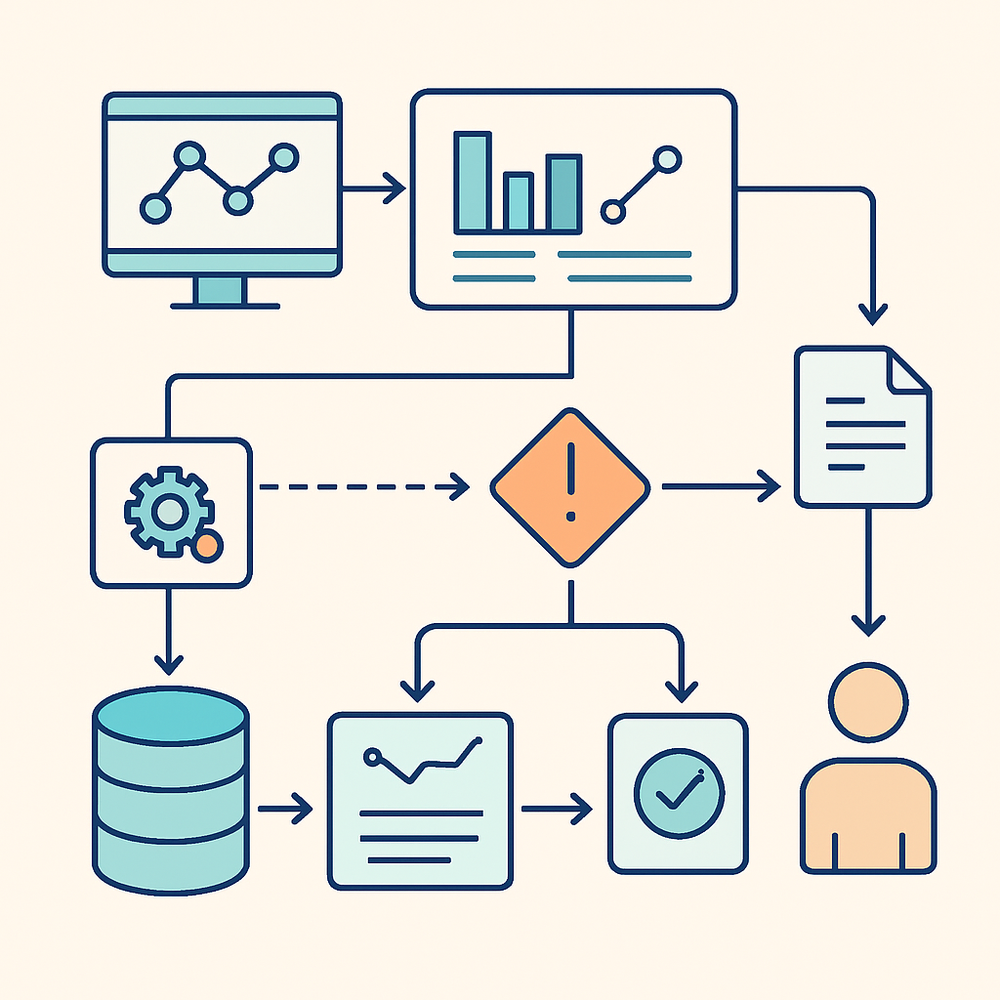
The runbook is the operational manual for the AI system as a whole, covering everything the in-house team needs to operate the system without the freelancer present. It is distinct from the model card (which is about the model) and distinct from the codebase README (which is about the code). The runbook is about the running system: how to restart it, how to scale it, how to handle alerts, and how to escalate when something the runbook does not cover occurs.
A complete AI system runbook includes: the system architecture diagram (data flow, component dependencies, API surfaces), the deployment process (how to deploy a new model version with zero downtime, including the canary rollout procedure), the alerting configuration (what each alert means, what triggers it, and what action it requires), the escalation path (who to contact when the runbook does not cover the situation), and the scheduled maintenance procedures (retraining cadence, data pipeline refreshes, dependency updates). The runbook should be specific enough that an engineer who has never seen the system can bring it back to a healthy state from a documented failure mode, using only the runbook and the codebase.
Artefact 3: The Monitoring Dashboard and Baseline
A monitoring system that the freelancer built and understands but the in-house team cannot interpret is worse than no monitoring system. Every metric on the dashboard must be defined, with its normal range, its degraded range, and the action it triggers. The first responsibility of the handover process is to establish the performance baseline, the numbers the system posts during normal operation, and document them alongside the dashboard.
For generative AI systems, monitoring covers infrastructure metrics (latency p50/p95/p99, error rate, token cost per request), data quality metrics (input length distribution, out-of-vocabulary token rate), and output quality metrics (downstream task success rate, human evaluation scores on a sample). For ML classification or prediction systems, monitoring covers prediction distribution drift, feature distribution drift (using PSI or similar), and business metric correlation. Generative AI development services at a professional level include a monitoring handover that documents each metric, its derivation, and its alert threshold, not just the dashboard itself.
Hire Edge Computer Vision
Artefact 4: The Retraining Pipeline Documentation
The retraining pipeline is often the least documented component of an AI system, because the freelancer who built it can run it from memory and the trigger for retraining rarely occurs during the build phase. By the time the in-house team needs to retrain the model, the freelancer is gone and the process must be reconstructed from incomplete notes. This failure mode is entirely preventable.
Retraining documentation must cover: the data collection process (where training data comes from, how it is labelled or verified, and what quality checks it passes before use), the training script invocation (the exact command, configuration file, and environment variables needed to launch a training run), the evaluation process (which evaluation script to run, what metrics to check, and what threshold must be met before the new model replaces the production version), and the deployment process (how to promote a new model version to production and how to roll back if post-deployment evaluation shows regression). AI agent development services engagements that include agentic components need extended retraining documentation covering tool definitions, prompt templates, and the relationship between prompt changes and downstream behaviour, since changes to agent prompts are functionally equivalent to model updates. For an overview of what these agent systems deliver when functioning correctly, the AI agent use cases analysis documents the operational value that is at risk during a poorly managed transition.
The Transition Timeline: Four Phases
|
Phase |
Duration |
Who Owns It |
Key Output |
|
Documentation sprint |
Final 2 weeks of build |
Freelancer |
Model card, runbook, monitoring guide, retraining docs |
|
Parallel operation |
Weeks 1 to 4 post-handover |
Both |
In-house team shadows, raises questions; freelancer clarifies |
|
Supervised independence |
Weeks 5 to 8 |
In-house team |
Team operates; freelancer available for escalations only |
|
Full ownership |
Week 9 onward |
In-house team |
First independent retraining completed; freelancer engagement ends |
The parallel operation phase is the most important and most frequently skipped. Four weeks of shadowing, where the in-house team watches the freelancer handle real incidents and operate the system under load, transfers contextual knowledge that documentation cannot capture. Teams that skip this phase and move directly from documentation to full ownership are the ones that call the freelancer back six months later with a system they cannot operate.
What to Check Before Signing Off on the Handover
|
Checklist Item |
Who Verifies |
Pass Condition |
|
Model card complete and reviewed |
In-house ML lead |
All sections populated; team can describe model behaviour from card alone |
|
Runbook tested end-to-end |
In-house engineer (first-time reader) |
Simulated failure resolved using runbook only, no freelancer input |
|
Monitoring dashboard understood |
In-house on-call engineer |
Team member can describe what each metric measures and what triggers each alert |
|
Retraining pipeline executed |
In-house ML engineer |
Training run completed, evaluation passed, new model version deployed to staging |
|
Access and secrets transferred |
In-house DevOps |
All API keys, model registry access, cloud accounts transferred and rotated |
|
Dependency inventory reviewed |
In-house engineer |
All third-party services, models, and libraries inventoried with licence and support status |
The Handover Is Part of the Delivery
A freelancer who builds a working AI system and leaves without documentation has delivered half the project. The other half is the knowledge transfer that allows the organisation to operate, maintain, and evolve the system independently. The most effective engagements treat the handover protocol as a contract deliverable, specified in the project brief alongside the technical requirements, with defined artefacts and a transition timeline that both parties agree to before work begins.
If you are planning an AI project where the goal is long-term in-house ownership after an initial freelance build phase, the starting point is engaging a developer who builds for handover from day one. To explore what that engagement structure looks like in practice, the next step is to hire an AI developer who includes model cards, runbooks, and retraining documentation as standard deliverables, not optional extras.
Frequently asked questions
When should the handover documentation process begin?
How many weeks of overlap between freelancer and in-house team is typically needed?
What happens if the freelancer left without producing documentation?
What technical skills does the in-house team need to own an AI system post-handover?
Should the freelancer be kept on retainer after the handover?
Can a freelancer be re-engaged to add features to a system they previously built and handed over?



Shreyans Padmani
Shreyans Padmani has 5+ years of experience leading innovative software solutions, specializing in AI, LLMs, RAG, and strategic application development. He transforms emerging technologies into scalable, high-performance systems, combining strong technical expertise with business-focused execution to deliver impactful digital solutions.