Introduction
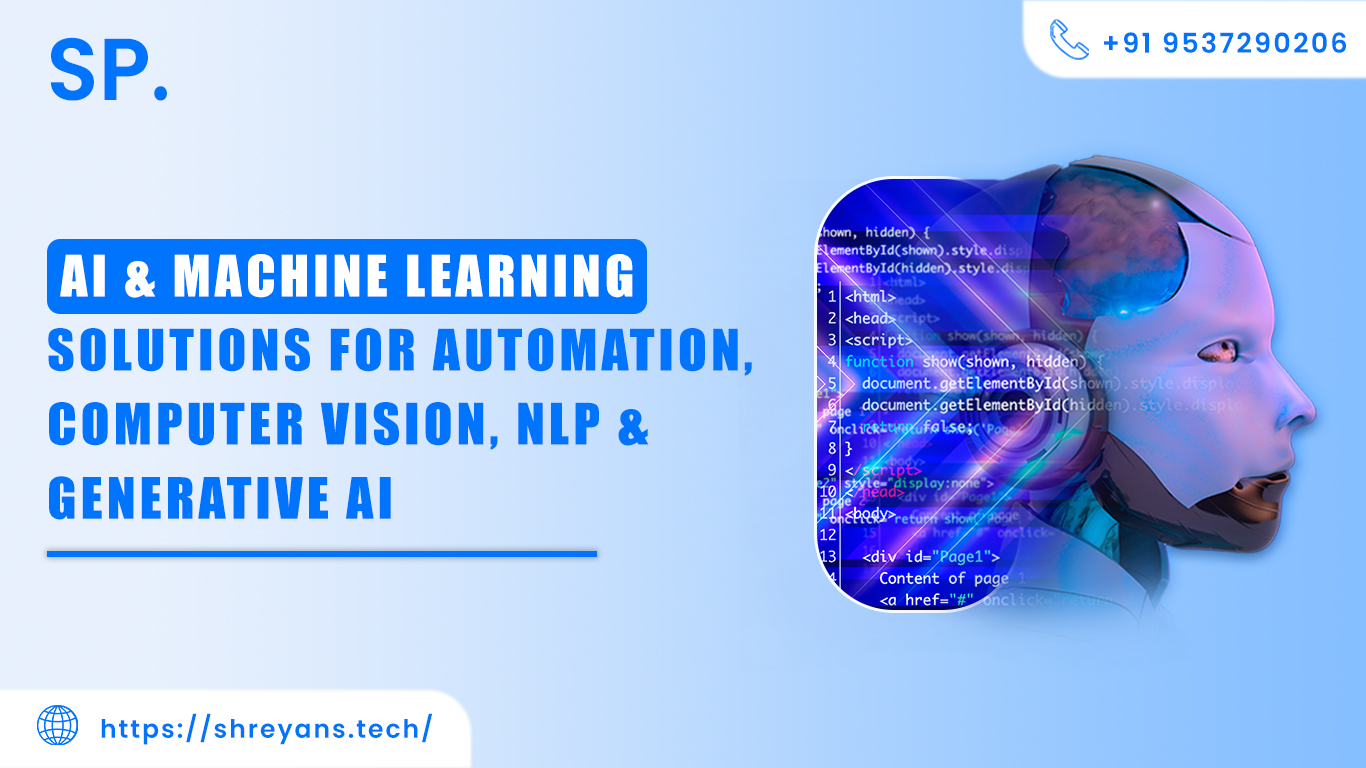
Artificial Intelligence (AI) and Machine Learning (ML) are no longer futuristic concepts—they are actively transforming how businesses operate today. From automating repetitive tasks to enabling machines to “see,” “understand,” and even “create,” AI is becoming the backbone of modern digital innovation.
In 2026, organizations across industries are adopting AI-driven solutions to improve efficiency, reduce costs, and deliver smarter user experiences. This blog explores how AI and ML solutions are shaping four major domains: Automation, Computer Vision, Natural Language Processing (NLP), and Generative AI—in a simple and practical way.
1. AI for Automation
Automation powered by AI goes beyond basic scripts and rules. It enables systems to learn patterns, make decisions, and improve over time.
Key Benefits
-
• Reduces Manual Work and Human Errors:-
AI-powered automation helps businesses eliminate repetitive manual tasks, allowing employees to focus on more important and creative work. By using smart algorithms and machine learning, systems can perform tasks with high accuracy, significantly reducing the chances of human error. This not only improves the quality of work but also ensures consistent results across operations, making businesses more reliable and efficient. -
• Improves Speed and Productivity:-
Artificial Intelligence enhances the speed of business processes by automating time-consuming tasks and streamlining workflows. Tasks that once took hours can now be completed in minutes, helping teams achieve more in less time. Increased efficiency directly boosts productivity, enabling businesses to handle larger workloads without compromising on quality or performance. -
• Enables 24/7 Operations:-
One of the biggest advantages of AI-driven solutions is their ability to operate continuously without breaks. Unlike humans, AI systems can work 24/7, providing uninterrupted services such as customer support, data processing, and monitoring. This ensures that businesses remain active at all times, improving customer satisfaction and responsiveness, especially in global markets.
• Saves Operational Costs:-
Implementing AI solutions can significantly reduce operational costs in the long run. By automating tasks and reducing the need for large manual workforces, businesses can lower labor expenses. Additionally, improved efficiency and reduced errors lead to cost savings in terms of time, resources, and rework. Overall, AI helps organizations maximize their return on investment while maintaining high performance.
Real-World Use Cases
-
• Chatbots Handling Customer Support:-
AI-powered chatbots are widely used by businesses to provide instant customer support. These smart systems can answer frequently asked questions, guide users through products or services, and even resolve basic issues without human intervention. By using Natural Language Processing (NLP), chatbots understand customer queries and respond in a human-like manner. This not only improves customer experience but also reduces the workload on support teams while ensuring quick and efficient service 24/7. -
• AI-Based Workflow Automation in Businesses:-
AI helps automate complex business workflows by connecting different processes and systems. From managing approvals to tracking tasks and generating reports, AI can handle multiple operations automatically. This reduces manual effort, minimizes delays, and ensures smoother business operations. Companies benefit from improved efficiency, better decision-making, and faster execution of daily tasks, making workflow automation a key part of modern digital transformation. -
• Smart Email Filtering and Response Systems:-
AI-driven email systems can automatically filter spam, categorize emails, and even suggest or generate replies. These systems learn from user behavior and improve over time, ensuring important messages are prioritized while unwanted emails are filtered out. This saves time for employees and helps them focus on critical communication. In addition, automated responses can handle common queries, improving response speed and productivity in professional environments. -
• Robotic Process Automation (RPA) in Finance and HR:-
Robotic Process Automation (RPA) uses AI to automate repetitive tasks in departments like finance and human resources. In finance, RPA can handle tasks such as invoice processing, data entry, and report generation. In HR, it can manage employee records, payroll processing, and recruitment workflows. By reducing manual work and errors, RPA improves accuracy, saves time, and lowers operational costs, allowing teams to focus on strategic and high-value activities.
Example: A company can automate invoice processing using AI, reducing hours of manual data entry into seconds.
2. Computer Vision Solutions
Computer Vision allows machines to interpret and understand visual data like images and videos.
Key Benefits
-
• Enhances Accuracy in Visual Tasks:-
AI-powered computer vision systems can analyze images and videos with a high level of precision, often exceeding human capabilities in repetitive or detail-focused tasks. These systems are used in areas like medical imaging, quality inspection in manufacturing, and facial recognition. By identifying patterns, objects, and anomalies accurately, AI reduces mistakes and ensures consistent results, making visual tasks faster, more reliable, and highly efficient. -
• Improves Security and Monitoring:-
Artificial Intelligence plays a crucial role in modern security systems by enabling intelligent surveillance and monitoring. AI can continuously analyze video feeds, detect unusual activities, and alert authorities in real time. This is widely used in smart cities, offices, and public spaces to enhance safety. With features like motion detection, facial recognition, and behavior analysis, AI helps prevent threats and ensures better protection of assets and people. - • Enables Real-Time Detection and Analysis:-
AI systems are capable of processing large amounts of data instantly, allowing real-time detection and decision-making. Whether it’s identifying objects in a video, detecting fraud in financial transactions, or monitoring traffic conditions, AI provides immediate insights. This real-time analysis helps businesses and organizations respond quickly to situations, improve efficiency, and make smarter decisions based on up-to-date information.
Real-World Use Cases
-
• Face Recognition Systems:-
Face recognition systems use AI and computer vision to identify or verify individuals based on their facial features. These systems are widely used in smartphones, security systems, and access control applications. By analyzing patterns such as the distance between eyes, nose shape, and facial structure, AI can accurately recognize a person in seconds. This technology improves security, reduces the need for passwords, and provides a fast and seamless user experience. -
• Object Detection in Self-Driving Cars:-
Self-driving cars rely heavily on AI-based object detection to understand their surroundings. Using cameras, sensors, and advanced algorithms, these systems can identify objects like pedestrians, vehicles, traffic signals, and road signs in real time. This helps the vehicle make safe driving decisions, avoid collisions, and navigate efficiently. Accurate object detection is essential for ensuring safety and reliability in autonomous driving technology. -
• Medical Image Analysis (X-rays, MRI):-
AI is transforming healthcare by improving the analysis of medical images such as X-rays and MRI scans. Machine learning models can detect abnormalities, tumors, or diseases at an early stage with high accuracy. This assists doctors in making faster and more accurate diagnoses. AI not only reduces human error but also speeds up the overall diagnostic process, leading to better patient outcomes and more efficient healthcare services. -
• Quality Inspection in Manufacturing:-
In manufacturing, AI-powered vision systems are used for quality inspection of products. These systems can quickly scan items on production lines to detect defects, damages, or inconsistencies. Unlike manual inspection, AI ensures consistent accuracy and works continuously without fatigue. This helps companies maintain high product quality, reduce waste, and improve overall production efficiency while lowering operational costs.
Example: In retail, AI-powered cameras can track customer behavior and improve store layouts.
3. Natural Language Processing (NLP)
NLP helps machines understand, interpret, and respond to human language.
Key Benefits
-
• Improves Communication Between Humans and Machines:-
AI technologies like Natural Language Processing (NLP) make it easier for humans to interact with machines using everyday language. Instead of complex commands, users can simply type or speak naturally, and the system understands their intent. This improves communication, making technology more accessible and user-friendly. From voice assistants to chatbots, AI bridges the gap between humans and computers, creating smoother and more natural interactions. -
• Enables Language Translation and Sentiment Analysis:-
AI-powered systems can automatically translate text from one language to another with high accuracy, helping people communicate across different regions and cultures. In addition, sentiment analysis allows businesses to understand customer opinions by analyzing text data from reviews, social media, or feedback. This helps organizations gain valuable insights, improve services, and make better decisions based on customer emotions and preferences. -
• Enhances User Experience in Applications:-
AI significantly improves user experience by making applications smarter and more personalized. It can recommend content, predict user behavior, and provide instant assistance through features like chatbots and virtual assistants. These intelligent systems adapt to user needs over time, offering faster responses and more relevant suggestions. As a result, users enjoy a more engaging, efficient, and satisfying experience while interacting with digital platforms.
Real-World Use Cases
-
• Voice Assistants (like Siri, Alexa):-
Voice assistants such as Siri and Amazon Alexa use AI and Natural Language Processing (NLP) to understand and respond to spoken commands. Users can ask questions, set reminders, control smart home devices, or search information just by speaking. These assistants make everyday tasks faster and more convenient, improving accessibility and creating a hands-free user experience. -
• Chatbots and Virtual Assistants:-
AI-powered chatbots and virtual assistants are widely used on websites and apps to handle customer queries and provide instant support. They can answer questions, guide users, and even complete transactions. By understanding user intent and providing quick responses, these systems reduce waiting time and improve customer satisfaction. Businesses benefit by offering 24/7 support while reducing the workload on human staff. -
• Language Translation Tools:-
AI-based translation tools like Google Translate help users convert text or speech from one language to another in real time. These tools use advanced machine learning models to provide accurate translations, making communication easier across different languages. They are widely used in travel, business, and education, helping people connect globally without language barriers. -
• Sentiment Analysis for Social Media:-
AI-driven sentiment analysis tools examine text from social media platforms to understand user opinions and emotions. Businesses use this technology to analyze reviews, comments, and posts to determine whether feedback is positive, negative, or neutral. This helps companies improve their products, manage their brand reputation, and make data-driven decisions based on customer sentiment and trends.
Example: Businesses use NLP to analyze customer reviews and improve their products.
4. Generative AI
Generative AI is one of the most exciting advancements. It allows machines to create new content like text, images, videos, and even code.
Key Benefits
-
• Boosts Creativity and Innovation:-
AI-powered tools help individuals and businesses generate new ideas, designs, and solutions quickly. From creating artwork and music to suggesting innovative product ideas, AI acts as a creative partner. It can analyze trends, generate unique concepts, and inspire fresh thinking, allowing users to explore possibilities they might not have considered. This leads to faster innovation and more creative outputs across industries. -
• Saves Time in Content Creation:-
AI significantly reduces the time required to create content such as blogs, social media posts, videos, and marketing materials. It can automatically generate text, suggest headlines, edit content, and even create visuals. This helps content creators and businesses produce high-quality material in less time, improving productivity while maintaining consistency and quality. -
• Personalizes User Experiences:-
AI enables applications and platforms to deliver highly personalized experiences by analyzing user behavior, preferences, and interactions. It can recommend products, content, or services tailored to individual users, making their experience more relevant and engaging. Personalization not only improves user satisfaction but also increases customer retention and overall business success.
Real-World Use Cases
-
• AI Content Writing Tools:-
AI content writing tools like ChatGPT and Jasper AI help users create blogs, articles, social media posts, and marketing content quickly. These tools use advanced language models to generate high-quality, SEO-friendly text in seconds. They assist with idea generation, grammar correction, and content optimization, making them valuable for writers, marketers, and businesses looking to scale content production. -
• Image and Video Generation:-
AI tools such as DALL·E and Runway ML allow users to create stunning visuals and videos from simple text prompts. These tools are widely used in marketing, entertainment, and design to produce creative content without requiring advanced technical skills. They save time and open new possibilities for visual storytelling and digital content creation. -
• Code Generation for Developers:-
AI-powered coding assistants like GitHub Copilot help developers write code faster and more efficiently. These tools can suggest code snippets, auto-complete functions, and even generate entire programs based on simple instructions. This improves developer productivity, reduces errors, and allows programmers to focus on solving complex problems instead of writing repetitive code. -
• AI Music and Design Tools:-
AI is also transforming the creative industry with tools like AIVA and Canva. These platforms help users create music, graphics, and designs effortlessly. Whether it's composing background music or designing social media posts, AI tools make creative work faster, easier, and more accessible to everyone, even without professional skills.
Why Businesses Are Adopting AI & ML Solutions
• Competitive Advantage – Stay Ahead in the Market:-
-
AI helps businesses gain a strong competitive edge by enabling faster innovation, better decision-making, and improved efficiency. Companies that adopt AI can quickly respond to market trends, automate operations, and deliver smarter solutions compared to their competitors. This allows them to stay ahead in the market, attract more customers, and build a stronger brand presence in an increasingly competitive business environment.
• Data-Driven Decisions – Make Smarter Business Choices:-
-
AI enables organizations to analyze large volumes of data and extract meaningful insights in real time. Instead of relying on guesswork, businesses can make informed decisions based on accurate data and predictive analytics. This leads to better strategies, reduced risks, and improved outcomes. Data-driven decision-making helps companies understand customer behavior, optimize operations, and identify new growth opportunities.
• Scalability – Easily Grow Operations:-
-
AI-powered systems are highly scalable, allowing businesses to expand their operations without a significant increase in resources or costs. Whether it’s handling more customers, processing larger datasets, or managing additional tasks, AI can adapt and grow with the business. This flexibility makes it easier for companies to scale efficiently while maintaining performance and quality.
• Customer Satisfaction – Deliver Personalized Experiences:-
-
AI helps businesses provide personalized experiences by analyzing customer preferences, behavior, and interactions. From product recommendations to tailored communication, AI ensures that customers receive relevant and engaging content. This improves user experience, builds customer loyalty, and increases satisfaction, ultimately leading to higher retention rates and long-term business success.
Challenges of AI Implementation
While AI offers many benefits, there are also some challenges:
• High Initial Investment:-
-
Implementing AI solutions often requires a significant upfront investment in technology, infrastructure, and development. Businesses may need to purchase advanced software, upgrade hardware, and invest in data storage and processing systems. While the long-term benefits are substantial, the initial cost can be a challenge, especially for small and medium-sized businesses. Proper planning and strategy are important to ensure a good return on investment.
• Data Privacy and Security Concerns:-
-
AI systems rely heavily on large amounts of data, which can raise concerns about data privacy and security. Handling sensitive information such as customer data requires strict security measures and compliance with regulations. Any data breach or misuse can harm a company’s reputation and lead to legal issues. Therefore, businesses must implement strong data protection practices and ensure transparency in how data is collected and used.
• Need for Skilled Professionals:-
-
Developing and managing AI systems requires skilled professionals such as data scientists, machine learning engineers, and AI specialists. Finding and hiring qualified talent can be difficult and expensive. Additionally, existing employees may need training to work with AI technologies. This skill gap can slow down AI adoption and increase operational challenges for organizations.
• Integration with Existing Systems:-
-
Integrating AI solutions with existing business systems can be complex and time-consuming. Many organizations use legacy systems that may not be compatible with modern AI technologies. This can lead to technical challenges, increased costs, and delays in implementation. Proper planning, testing, and gradual integration are essential to ensure a smooth transition and maximize the benefits of AI.
- However, with the right strategy, these challenges can be managed effectively.
Future of AI & Machine Learning
The future of AI is extremely promising. We can expect:
• Smarter Automation Across Industries:-
-
AI is driving smarter automation in industries such as manufacturing, finance, healthcare, and retail. Advanced AI systems can handle complex tasks, analyze data, and make decisions with minimal human intervention. This leads to faster processes, reduced errors, and improved efficiency. As AI continues to evolve, businesses will benefit from more intelligent and adaptive automation solutions that enhance productivity and innovation.
• More Advanced AI Assistants:-
-
AI assistants are becoming more intelligent, conversational, and context-aware. Future AI assistants will not only respond to commands but also understand user preferences, predict needs, and perform tasks proactively. From managing schedules to handling complex workflows, these assistants will act more like personal digital helpers, improving convenience and efficiency in both personal and professional life.
• Improved Healthcare and Diagnostics:-
AI is set to revolutionize healthcare by enabling faster and more accurate diagnostics. Advanced AI models can analyze medical data, detect diseases early, and assist doctors in making better treatment decisions. This leads to improved patient outcomes, reduced costs, and more efficient healthcare systems. AI will also play a key role in personalized medicine, offering treatments tailored to individual patients.
• AI Integration in Everyday Devices:-
-
AI is increasingly being integrated into everyday devices such as smartphones, home appliances, and wearable technology. These smart devices can learn user behavior, automate tasks, and provide personalized experiences. From smart home systems to fitness trackers, AI enhances convenience, efficiency, and connectivity, making daily life easier and more intelligent.
AI will continue to evolve and become an essential part of every business and technology ecosystem.
FAQs
Q1. What is the difference between AI and Machine Learning?
Ans: AI is a broad concept where machines perform tasks intelligently, while Machine Learning is a subset of AI that allows systems to learn from data and improve automatically.
Q2. How is AI used in automation?
Ans: AI automates tasks by analyzing data, learning patterns, and making decisions without human intervention, improving efficiency and accuracy.
Q3. What industries use Computer Vision?
Ans: Industries like healthcare, retail, automotive, and security widely use Computer Vision for tasks like image recognition, surveillance, and diagnostics.
Q4. What is Generative AI used for?
Ans: Generative AI is used to create content such as text, images, videos, and code, making it useful for marketing, design, and development.
Q5. Is AI expensive to implement?
Ans: Initially, AI can be costly, but in the long run, it reduces operational costs and increases efficiency, making it a valuable investment.
Conclusion
AI and Machine Learning are transforming the way we work, live, and interact with technology. From automation that simplifies business processes to Computer Vision that enables machines to see, NLP that helps them understand language, and Generative AI that allows them to create—these technologies are redefining innovation.
Businesses that adopt AI solutions today are not just improving efficiency—they are building the foundation for future growth and success. As AI continues to evolve, it will unlock even more opportunities, making it essential for organizations to embrace this powerful technology.



Shreyans Padmani
Shreyans Padmani has 5+ years of experience leading innovative software solutions, specializing in AI, LLMs, RAG, and strategic application development. He transforms emerging technologies into scalable, high-performance systems, combining strong technical expertise with business-focused execution to deliver impactful digital solutions.