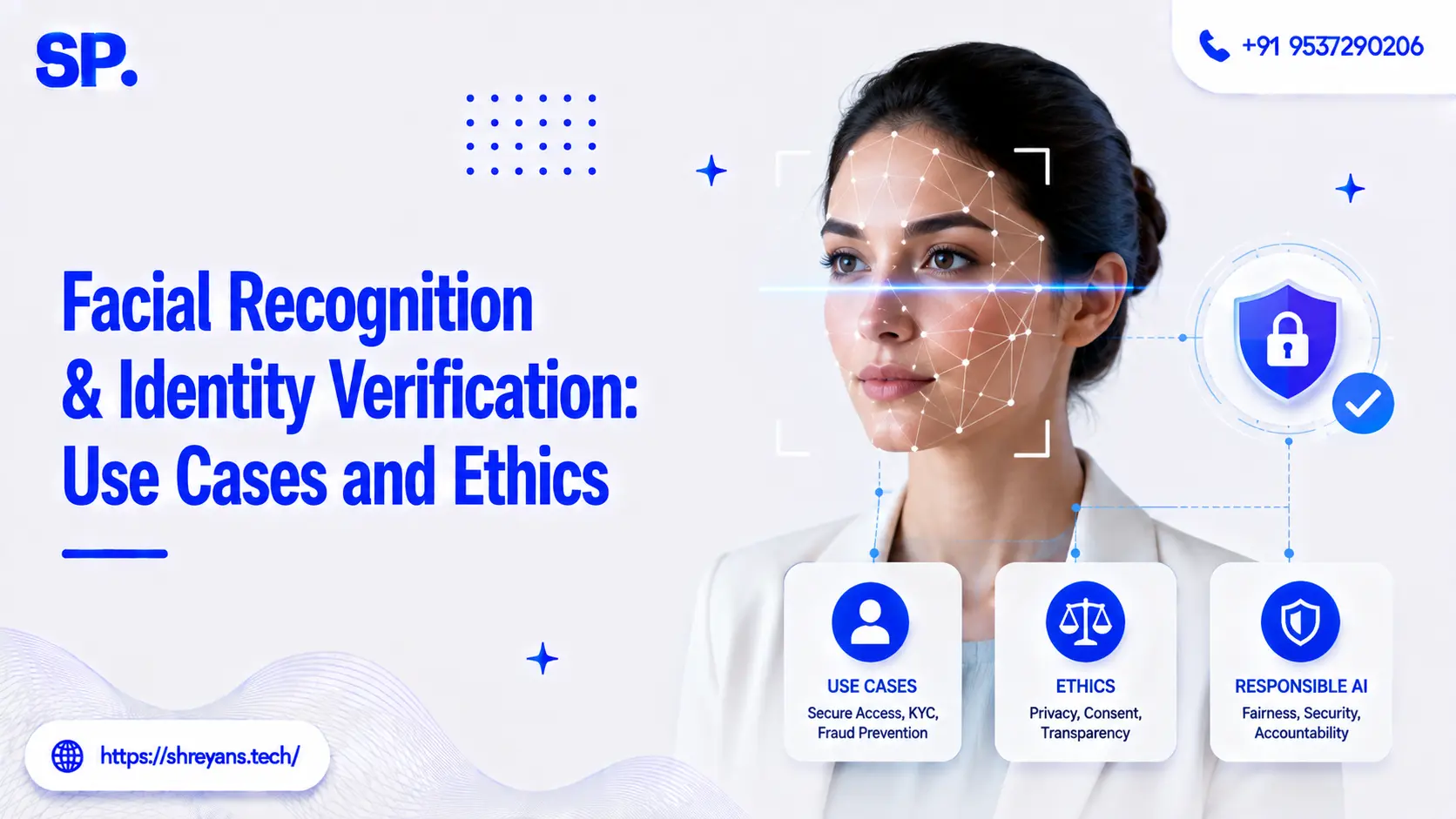
Facial Recognition & Identity Verification: Use Cases and Ethics
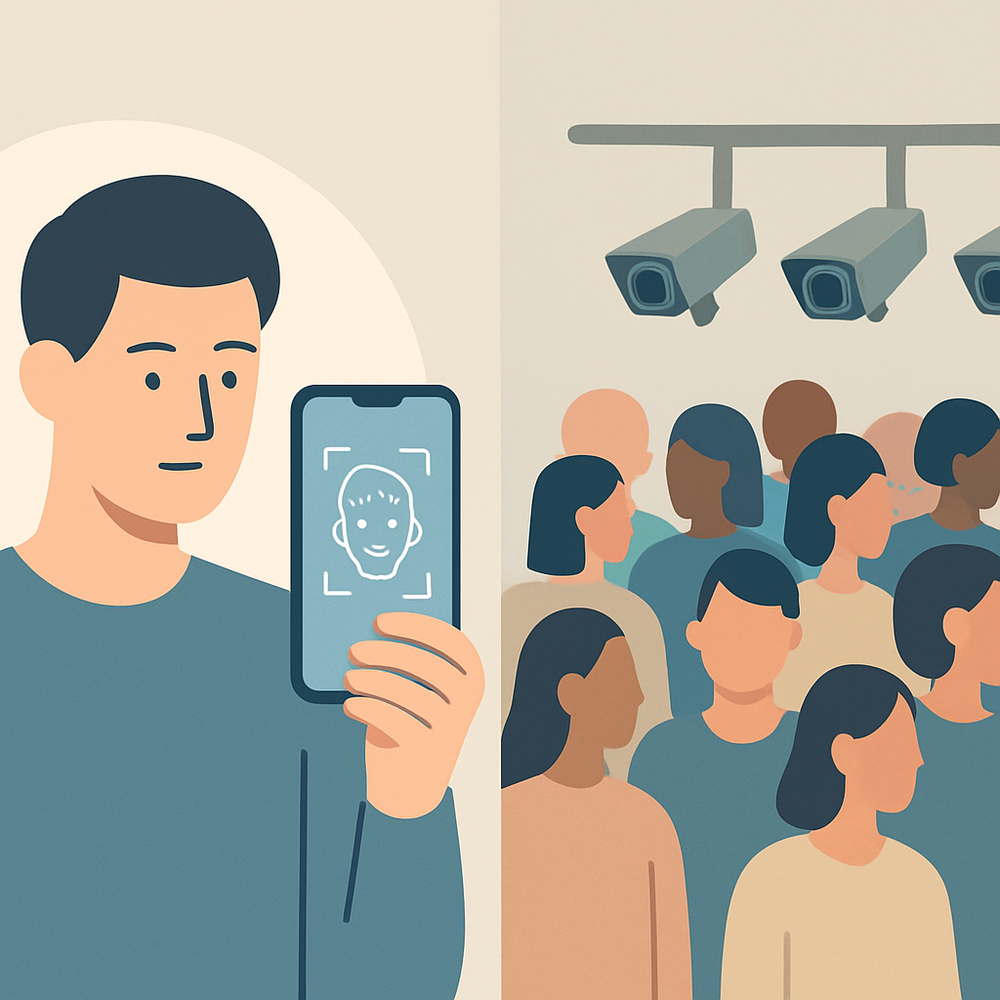
The European Union prohibited most real-time facial recognition in public spaces in February 2025. It did not prohibit unlocking your phone with your face, or matching a selfie against a passport photo during account opening. Both are facial recognition.
That split isn't a loophole, it reflects a real technical and ethical distinction that most public debate collapses. AI identity verification covers two operations with opposite risk profiles, and almost every meaningful question about use cases, accuracy, bias, and law depends on which one you're talking about.
Two Operations That Look Like One
|
1:1 verification |
1:N identification |
|
|---|---|---|
|
The question asked |
Is this person who they claim to be? |
Who is this person? |
|
What it compares |
A live face against one reference image the person provided |
A captured face against a database of many faces |
|
Subject participation |
Active and consented; you present yourself |
Often passive; the subject may not know |
|
Typical setting |
Phone unlock, account opening, airport e-gate |
Watchlist search, investigation, public-space surveillance |
|
Dominant failure |
You get locked out of your own account |
Someone else gets identified as you |
|
2026 legal posture (EU) |
Permitted, regulated |
Largely prohibited in public spaces, narrow exceptions |
The asymmetry in the failure row is the ethical crux. A false match in 1:1 verification inconveniences the person it happens to, who can retry or escalate. A false match in 1:N identification can place a stranger at a crime scene, and the person harmed usually has no idea it happened until consequences arrive.
Hire Edge Computer Vision
How the Technology Actually Works
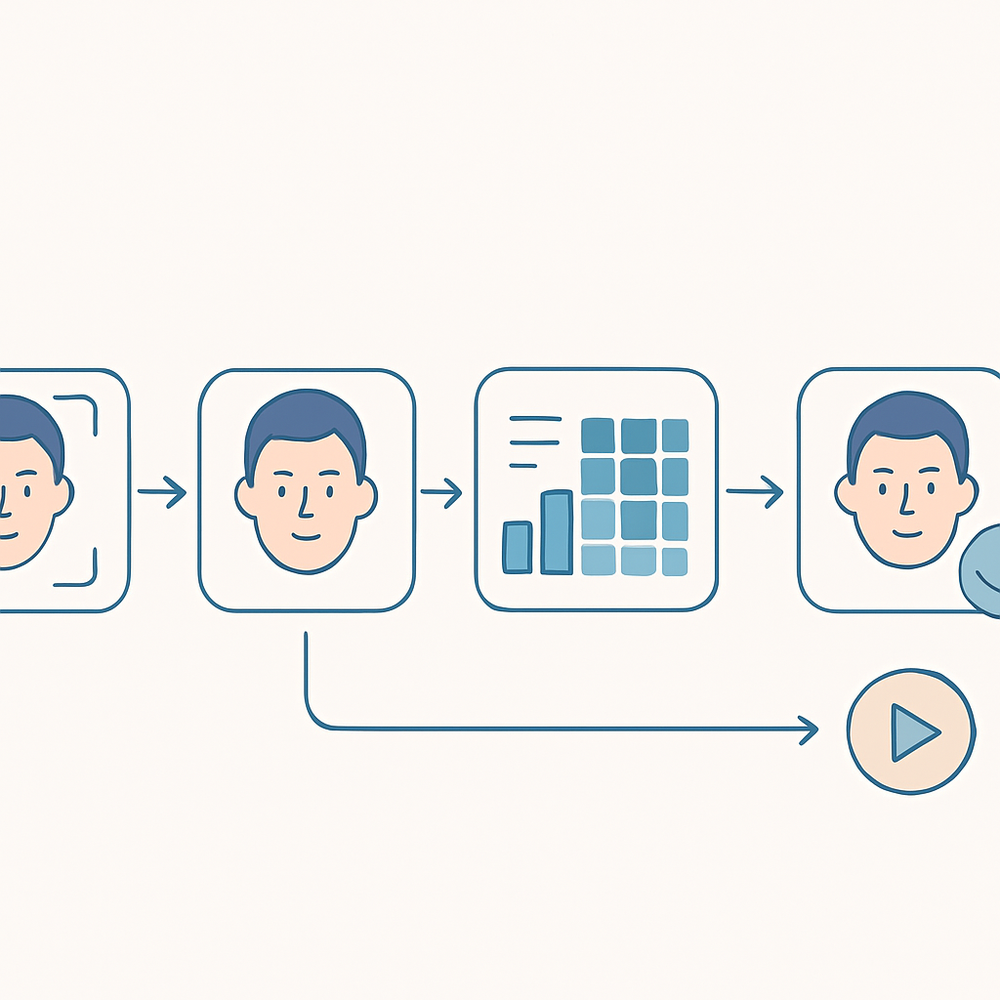
Both operations share the same pipeline up to the final step. A detector locates faces in the image. An alignment step normalises pose and scale. An embedding model converts the face into a numerical vector, a few hundred numbers capturing geometric relationships, and it's this vector rather than the photograph that gets stored and compared. A similarity score is computed against the reference, and a threshold converts that score into a decision.
The threshold is where policy enters engineering. Set it strict and you reduce false matches while locking out more legitimate users; set it loose and the reverse. There is no setting that eliminates both errors, which is why any vendor quoting a single accuracy figure without stating the operating threshold is describing one point on a curve as though it were the whole curve.
Production verification systems add liveness detection, which confirms a real person is present rather than a photograph, screen replay, mask, or injected deepfake video. This has become the harder half of the problem as generative tools have improved, and it's a separate model from the matching itself.
Where 1:1 Verification Is Used
The consented, participatory side of this technology is now routine infrastructure: device unlock, account recovery, airport e-gates, age assurance, and remote onboarding for regulated services.
Financial onboarding is the highest-volume commercial case. A typical flow captures an identity document, extracts and validates its data, captures a live selfie, confirms liveness, and matches the two. KYC automation with OCR covers the document extraction half of that pipeline, which does much of the work before any face matching happens. A document verification in practice deployment shows the same principle applied to catching fraudulent documentation that manual review would likely have missed.
What makes these deployments defensible is not the technology but the conditions around it: the subject knows it's happening, has chosen to participate, is matching against a reference they supplied, and has a fallback route if it fails.
Hire Edge Computer Vision
The Accuracy and Bias Question, Honestly
This is genuinely contested, and both positions rest on the same body of evidence, NIST's Face Recognition Vendor Test programme. It's worth setting out each fairly.
The case that bias is a serious, persistent problem
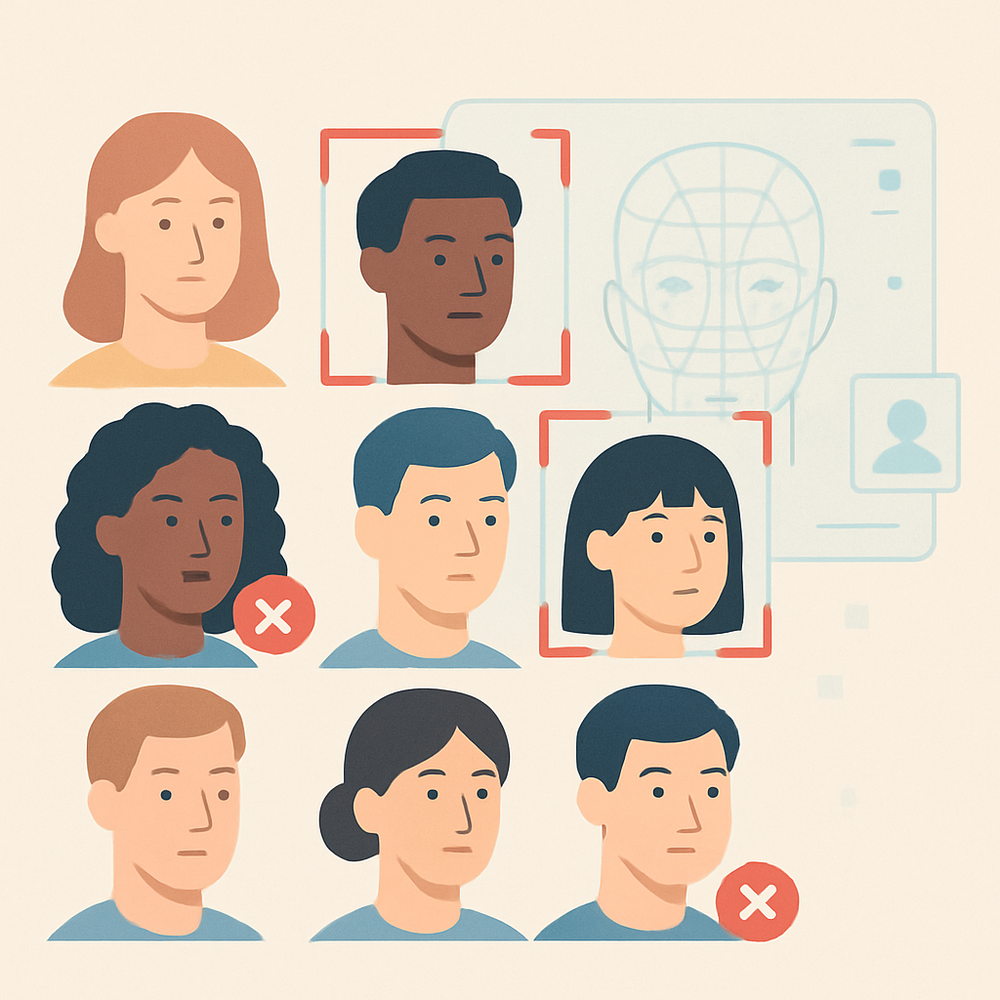
NIST's 2019 demographic study tested nearly 200 algorithms and found false positive rates in 1:1 matching often 10 to 100 times higher for Asian and African American faces than for white faces, with the worst 1:N false positives falling on African American women. More recently, the top-performing system as of March 2025 still produced roughly 358 times as many false positives for older West African women as for middle-aged Eastern European men. False positives are the error that manufactures a wrong suspect, and documented wrongful arrests have followed from exactly this failure.
The case that the picture has changed materially
NIST's own data shows verification error rates falling by a factor of three between 2020 and 2025, and identification error against a mugshot gallery falling by a factor of five. Industry groups reading the same programme argue that the most accurate current algorithms show negligible differences between demographic groups, and that image quality, lighting, pose, and exposure, rather than race, drives most remaining error. There is a defensible general point underneath this: more accurate algorithms produce fewer errors overall and tend to show smaller demographic gaps.
Two things can be said without taking a side. First, performance varies enormously between vendors, so "facial recognition is accurate" and "facial recognition is biased" can both be true depending on which system is deployed. Second, aggregate accuracy figures above 99% are measured under ideal conditions and say little about performance on a low-resolution camera at an oblique angle in poor light, which describes most real surveillance imagery.
Hire Edge Computer Vision
The 2026 Regulatory Map
Rules now track the 1:1 versus 1:N distinction closely rather than regulating "biometrics" as a single category.
European Union. Under the AI Act, a defined set of practices has been prohibited since February 2025: most real-time remote biometric identification in public spaces, untargeted scraping of facial images to build databases, biometric categorisation to infer protected characteristics, and emotion recognition in workplaces and schools. Narrow law enforcement exceptions exist for terrorist threats, trafficking victims, and missing persons, each requiring prior judicial authorisation and enabling domestic law. Retrospective identification is treated as high-risk rather than banned, and the Act becomes fully applicable in August 2026.
United States. No federal statute; a patchwork instead. Illinois's BIPA and Texas's CUBI impose consent requirements, with BIPA's private right of action driving substantial litigation. State laws continue to arrive: Virginia's takes effect July 2026, and Maryland's prohibits arrest based solely on a facial recognition result, requires defendants be notified when it was used, and mandates officer training.
United Kingdom. No dedicated statute, making it an outlier among comparable jurisdictions. London's Metropolitan Police scanned roughly one million faces in 2025 under general data protection law rather than purpose-built rules.
Deploying It Responsibly
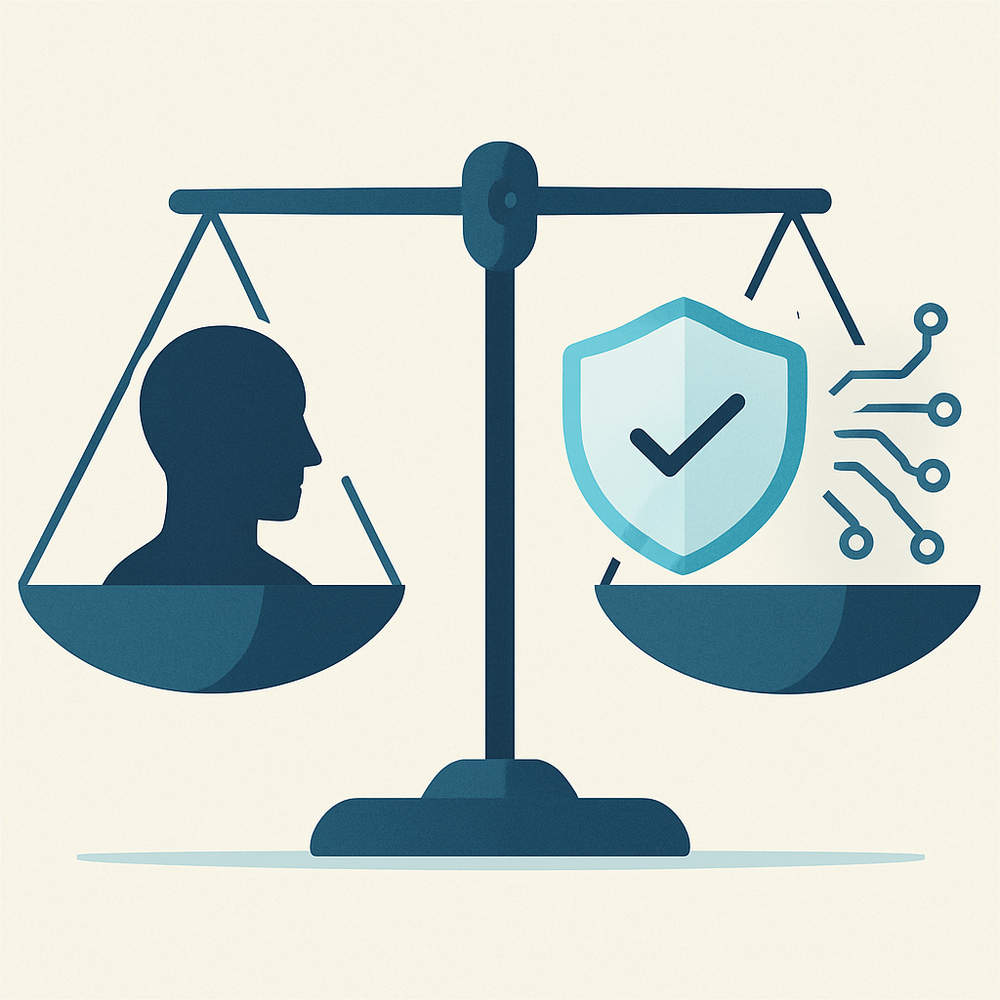
For organisations building verification rather than surveillance, a handful of commitments carry most of the ethical weight.
Store vectors, not photographs, and treat them as biometric data under whichever regime applies. Keep purpose narrow: a face captured for account opening should not later populate a search database, which is precisely the drift regulators are targeting. Provide a non-biometric fallback, since demographic error gaps mean a face-only path fails unevenly across your user base. Keep a human in the loop for consequential decisions, and never let a match alone drive an irreversible action.
The through-line is that most of what makes a facial recognition deployment acceptable or unacceptable is decided outside the model: who consented, what happens on failure, what else the data gets used for, and whether anyone reviews the result before it matters.
Hire Edge Computer Vision
Frequently asked questions
What is the difference between 1:1 verification and 1:N identification?
Is facial recognition banned in the EU?
How accurate is AI identity verification, and is it biased?
What is liveness detection and why does it matter?
What laws govern facial recognition in the United States?
What should a business do to deploy identity verification responsibly?



Shreyans Padmani
Shreyans Padmani has 5+ years of experience leading innovative software solutions, specializing in AI, LLMs, RAG, and strategic application development. He transforms emerging technologies into scalable, high-performance systems, combining strong technical expertise with business-focused execution to deliver impactful digital solutions.