Amazon's recommendation engine drives approximately 35 percent of the company's total sales, and Netflix has reported that recommendations shape roughly 75 percent of what subscribers watch, according to widely cited industry analysis of both platforms. Coherent Market Insights valued the global AI in retail market at 18.4 billion US dollars in 2026, with machine learning alone accounting for 50.2 percent of retail AI technology spend. McKinsey's research puts the average revenue uplift from AI-driven personalisation at 10 to 15 percent, with fast-growing retailers pulling 40 percent more of their revenue from personalisation than slower-growing peers.
Retail AI hiring gets treated as one job when it is really three. A developer who can build a recommendation engine is not automatically equipped to build a computer vision pipeline that reads a shelf, and neither skill set guarantees someone can forecast demand across thousands of SKUs and store locations. This guide separates the hiring decision into the tracks that actually appear in retail job specifications, recommendation engines, shelf analytics and demand forecasting, plus where generative AI and autonomous agents now fit around them.
What Recommendation Engine Hiring Requires
A production recommendation engine is rarely a single model. It is typically a candidate generation stage using collaborative filtering or embedding similarity, followed by a ranking stage that re-scores those candidates against a shopper's real-time context. The developers who do this well are fluent in embedding-based retrieval, sequence models for session behaviour, and the cold-start problem of recommending to a shopper with no purchase history. They also need to design for latency, since a recommendation that takes longer than the page render is a recommendation nobody sees. This is squarely the domain of machine learning development services built around ranking and retrieval systems, not a generic data science hire assembling a single classifier.
Amazon's recommendation engine remains the most cited proof point in the industry, driving approximately 35 percent of the company's total sales, while Netflix has said recommendations influence around 75 percent of what members choose to watch. Industry analysis from SQ Magazine puts recommendation engines at 25 to 35 percent of total ecommerce revenue across retailers generally, not just the largest platforms, which is why the hiring decision for this track carries direct revenue weight rather than being treated as a secondary feature.
Shelf Analytics: Computer Vision on the Retail Floor
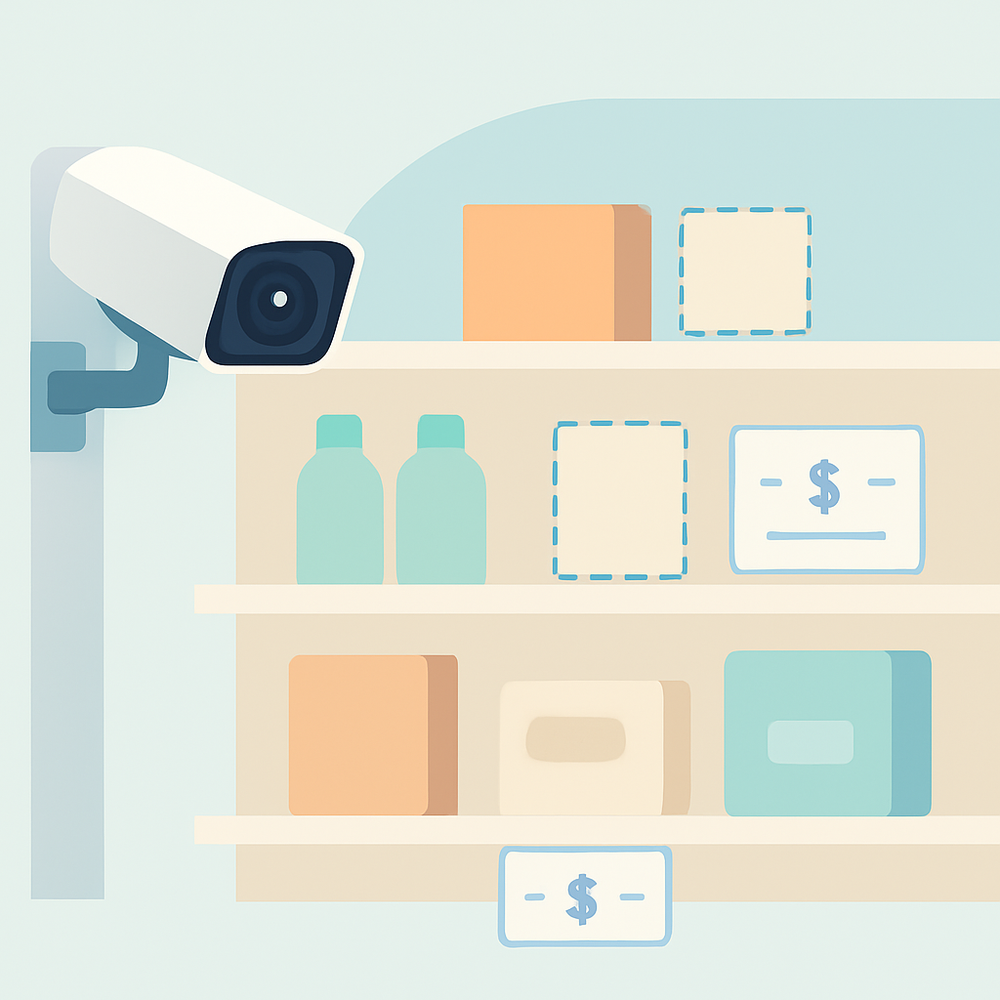
Shelf analytics turns a camera feed into a structured signal: which SKUs are present, which are missing, whether the layout matches the planogram, and whether pricing labels are correct. Vendors such as Trax and Simbe have built businesses on exactly this problem, and a custom hire needs to match that bar, typically object detection models trained on thousands of annotated SKU images, running on edge hardware so a shelf gap is flagged in seconds rather than hours. This is the specific skill set behind computer vision development work that most retailers underestimate until they try to build it themselves.
Retailers deploying computer vision for shelf monitoring have reported inventory accuracy reaching 96 percent and stockout reductions of up to 90 percent in documented deployments, alongside shrinkage savings reported in the hundreds of thousands of dollars per store. Advisory firm Infocepts has framed the scale of the underlying problem as a 1.7 trillion US dollar shelf crisis, arguing that stockouts are systemic rather than isolated, caused by disconnected data systems and delayed reporting cycles across hundreds or thousands of store locations. For a fuller picture of where computer vision pays off fastest across industries, the computer vision ROI by industry post breaks down the pattern beyond retail alone.
Demand Forecasting: The Most Underrated Retail AI Investment
Demand forecasting is less visible to customers than a recommendation widget but often delivers the largest single return, because getting inventory levels wrong is expensive in both directions: understocking loses sales, overstocking ties up capital and drives markdowns. The stronger forecasting hires combine classical time series methods with gradient boosting or LSTM-based models that ingest exogenous signals such as weather, local events and promotional calendars alongside historical sales. Fashion retail adds a further complication, since demand is non-stationary and trends shift within weeks rather than seasons, which is why apparel forecasting typically needs its own tuning rather than a model borrowed from grocery.
Zara's implementation of custom AI demand forecasting has been credited with a 34 percent reduction in inventory holding costs, while a 2026 analysis of fashion forecasting found that moving SKU-level accuracy from around 60 percent to 75 percent produced meaningful gains in full-price sell-through and gross margin. Coherent Market Insights reports that retailers using AI-driven inventory forecasting see 30 to 50 percent cuts in forecast error and 35 percent lower inventory levels industry-wide, figures large enough that a specialist forecasting hire typically pays for itself well inside a single planning cycle.
Where AI Agents Fit: Automated Reordering and Dynamic Pricing
Forecasting a number and acting on it are different problems. An increasing number of retailers are layering autonomous agents on top of their forecasting and inventory systems so that a predicted stockout triggers a reorder, or a predicted demand spike triggers a price adjustment, without a person manually approving each action. Walmart has described exactly this pattern in its own supply chain, using agentic AI to give a unified view of inventory across stores and fulfilment centres and to detect and correct issues automatically. Hiring for this layer means vetting for the skill set behind AI agent development services, tool orchestration, guardrails and escalation paths, not just forecasting accuracy.
The pattern extends beyond inventory. IBM's February 2026 analysis places AI agents across demand forecasting, inventory management, production and logistics planning simultaneously, combining historical data, real-time signals and reasoning models rather than a single forecasting step in isolation. Retailers including Walmart, Target, Amazon and Zara now run live deployments that combine structured forecasting models with generative and agentic layers, which is the direction most mid-market retailers are being pulled toward whether or not they have budgeted for it yet.
Most projects touch two or three of these at once
Detection plus edge deployment. Annotation plus OCR. Tell me what you are trying to automate.
Book discovery call →Personalisation at Scale: Generative AI for Retail Content
Recommendation engines decide what to show a shopper; generative AI increasingly decides how to describe it. Product descriptions, personalised email subject lines, and on-site merchandising copy generated and tested at scale are now common generative AI use cases layered on top of a recommendation system, and they need a developer who understands prompt design, retrieval grounding against a live product catalogue, and brand voice consistency at volume. This is a different hire from the ranking-model work in the recommendation engine track, which is why retailers increasingly bring in generative AI development services specifically for the content and personalisation layer rather than asking a ranking specialist to also own copywriting infrastructure.
AI-personalised email campaigns have been reported to drive 29 percent higher open rates and 41 percent higher click-through rates compared with non-personalised sends, and 64 percent of shoppers say they are open to purchasing a product a generative AI system suggested. The commercial upside is real, but so is the failure mode: generative content that drifts from a brand's actual catalogue or pricing erodes trust faster than no personalisation at all, which is why grounding the generation in live product data matters as much as the language model choice.
|
Track |
Core Technique |
Common Tools |
Typical ROI Signal |
|---|---|---|---|
|
Recommendation Engines |
Candidate generation plus ranking on real-time context |
Embedding retrieval, collaborative filtering, gradient boosting |
25 to 35 percent of ecommerce revenue attributed to recommendations |
|
Shelf Analytics |
Object detection on shelf imagery against a planogram |
Computer vision models, edge inference, OCR for pricing |
Up to 90 percent reduction in stockouts in documented deployments |
|
Demand Forecasting |
Time series and gradient boosting with exogenous signals |
LSTM, XGBoost, weather and event data feeds |
30 to 50 percent reduction in forecast error |
The Interview and Vetting Process
A candidate's portfolio of generic recommendation demos built on public datasets such as MovieLens says little about whether they can handle a retailer's actual constraints: sparse purchase histories, seasonal SKUs, and a catalogue that changes weekly. A stronger technical round asks the candidate to design for cold start explicitly, walk through how they would evaluate a ranking model with an offline metric that correlates with real revenue rather than accuracy alone, and explain how they would detect when a shelf-analytics model's accuracy degrades as store layouts change. The blog's ML interview questions post is a solid starting checklist for the general technical bar before layering retail-specific scenarios on top.
Retail AI has a lower regulatory bar than finance or healthcare, but it has its own failure modes worth probing directly. Eighty-nine percent of retail and CPG companies report using or testing AI according to McKinsey-cited research, yet only a third of online stores have implemented AI across their operations, a gap that most often traces back to models built without a plan for retraining as catalogues, seasons and store layouts change.
What This Costs and How Engagement Models Differ
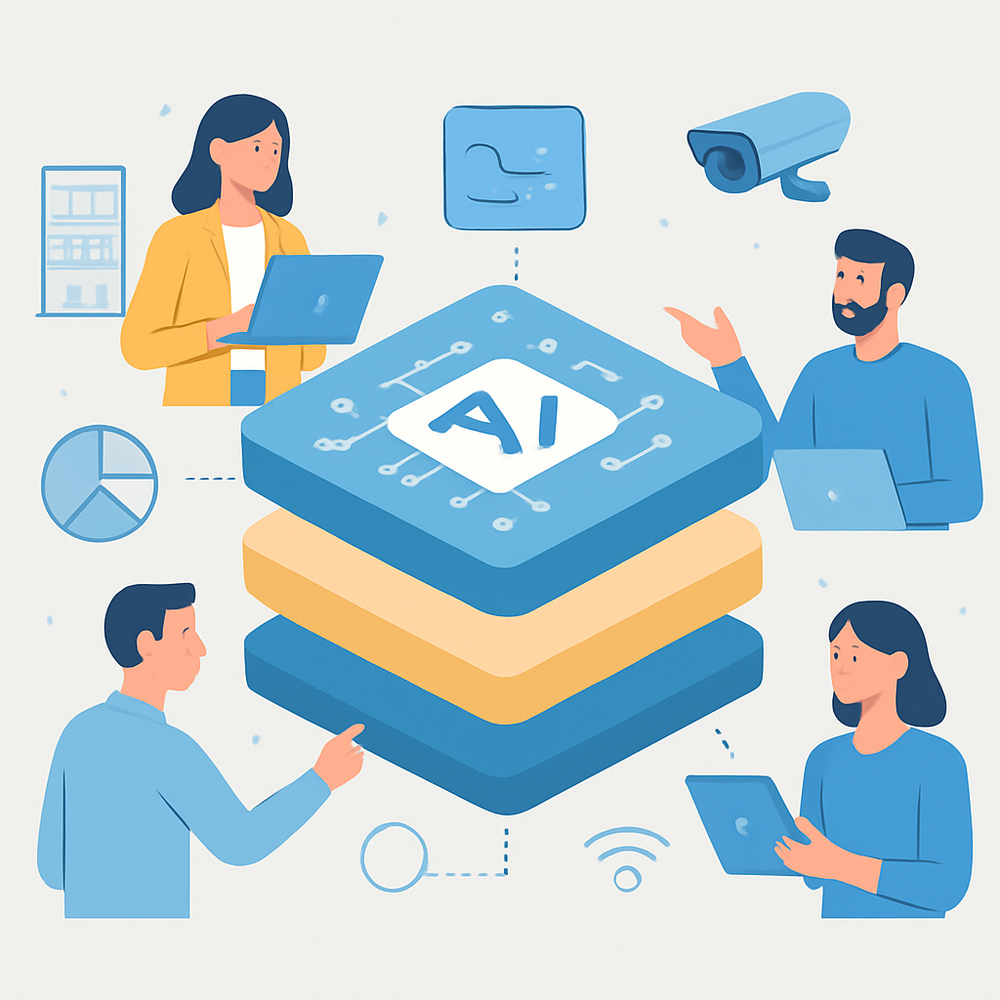
Cost in retail AI hiring tracks the same three drivers as other industries: how much clean historical data already exists, how tight the latency requirement is, and how many systems the model needs to integrate with, from a point-of-sale platform to a warehouse management system. A recommendation engine prototype on an existing product catalogue is a smaller engagement than a shelf-analytics rollout across hundreds of stores, which needs camera hardware, edge deployment and an annotation pipeline before the modelling work even starts. Freelance specialists typically move faster on a single, well-scoped track than an agency layering account management on top of the same work, and the freelancer vs full-time team post is a useful reference for retailers weighing a permanent hire against a project-based engagement.
The scale of the opportunity keeps the budget conversation grounded. AllAboutAI's 2026 analysis found that retailers actively using AI report 5 to 15 percent annual revenue growth alongside operational cost reductions of up to 30 percent, a return large enough that most retailers underinvest in specialist hiring relative to what the technology can return, not the other way around.
Hire AI Retail Experts
Unlock revenue growth with expert AI developers, schedule a consultation
Hire AI DevelopersWhere Retail AI Hiring Actually Pays Off
The retailers seeing the strongest returns are not the ones running the most pilots; they are the ones matching a specialist to each track instead of asking one generalist to own recommendations, shelf analytics and forecasting at once. A recommendation hire who has never handled cold start, a computer vision hire unfamiliar with edge deployment constraints, or a forecasting hire who cannot explain exogenous variables will each cost more in rework than a properly scoped interview process saves in time.
If you are ready to scope a recommendation engine, shelf analytics or demand forecasting project, hire an AI developer for retail who has already built for retail's specific constraints, sparse data, seasonal catalogues and store-level variation, rather than adapting a generic ML background on your production system. The retailers still running gut-instinct inventory decisions next year will be competing against ones whose systems already know what is about to sell out.
Frequently asked questions
What does an AI developer for retail actually build?
Recommendation engines vs demand forecasting: what is the hiring difference?
What should a technical interview for a shelf analytics hire include?
What determines the cost of a retail recommendation or forecasting build?
Do small and mid-size retailers actually need custom AI, or are off-the-shelf tools enough?
Should a retailer hire a freelance AI developer or an agency for these projects?



Shreyans Padmani
Shreyans Padmani has 5+ years of experience leading innovative software solutions, specializing in AI, LLMs, RAG, and strategic application development. He transforms emerging technologies into scalable, high-performance systems, combining strong technical expertise with business-focused execution to deliver impactful digital solutions.