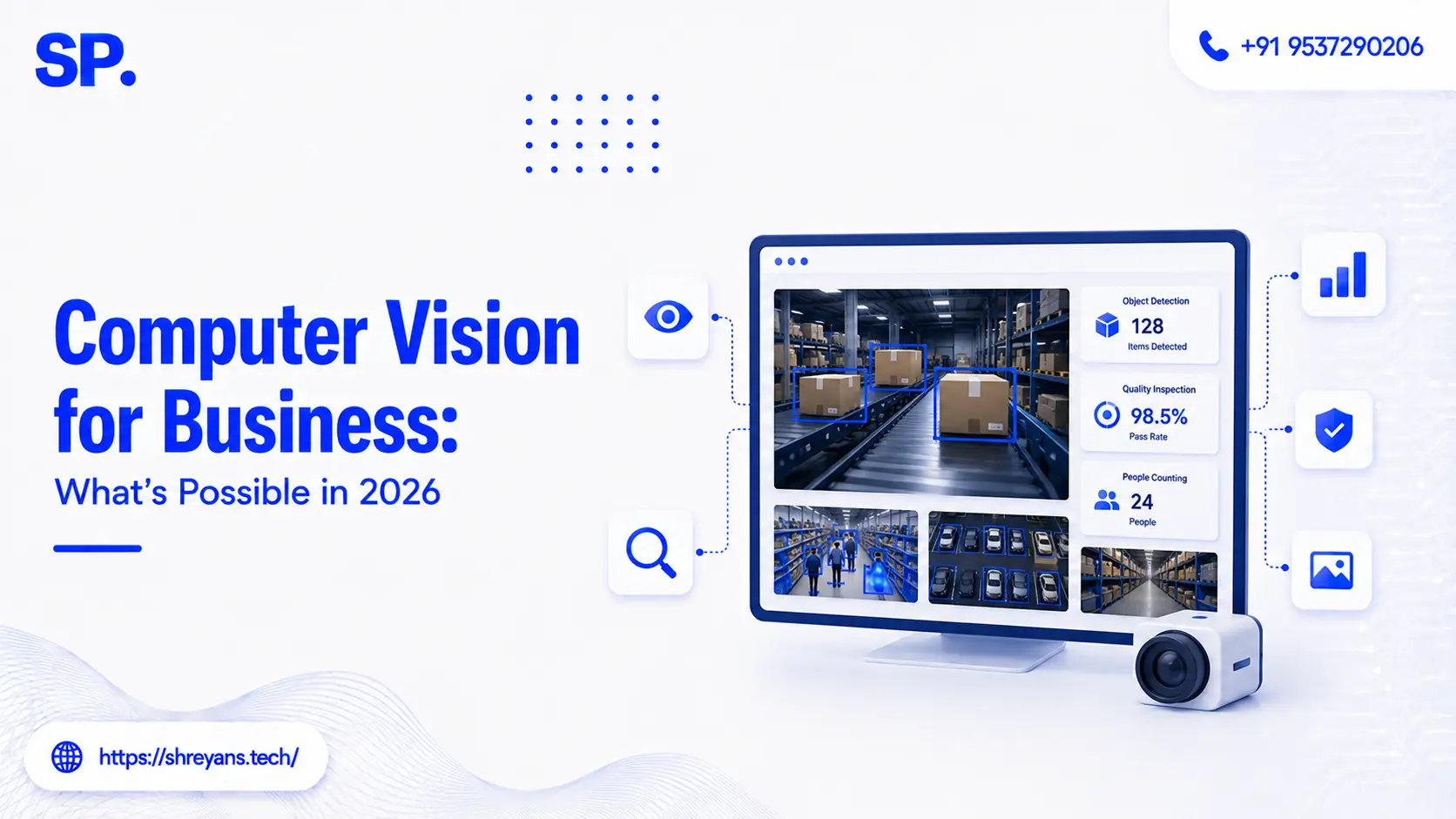
Forrester research on AI vision inspection deployments reports a 374% average three-year ROI with a 7 to 8 month payback period. That number looks almost conservative next to the baseline it's replacing: human visual inspection misses 20 to 30% of defects under real production conditions, and accuracy degrades a further 15 to 25% after just two hours of continuous observation.
That gap between human inspection limits and what a properly scoped vision system can catch is where freelance computer vision developers deliver the fastest, most measurable returns. Here are six industries where that ROI shows up reliably, with typical project size and payback timeline for each.
1. Manufacturing (Defect Detection)
Automated visual inspection catches surface defects, dimensional errors, and assembly faults at a consistency no human inspector can sustain across a full shift. This is the largest and fastest-maturing computer vision application by spend, and Computer Vision in Manufacturing: Improving Production and Quality covers the specific inspection, monitoring, and automation patterns driving that adoption.
Typical project size ranges from $10,000 for a single inspection station to $50,000+ for a multi-line rollout, with payback commonly landing in the 6 to 12 month range once scrap reduction and reduced rework are counted. 7 Real-World Projects That Showcase Expertise documents the kind of portfolio evidence worth asking for before committing to this project size.
2. Retail (Shelf Analytics)
Camera-based shelf monitoring tracks stock levels, planogram compliance, and out-of-stock events in real time, replacing periodic manual audits with continuous visibility. Typical project scope runs $8,000 to $30,000 depending on store count and camera coverage, with payback in the 6 to 10 month range driven primarily by reduced out-of-stock lost sales.
3. Healthcare (Imaging Triage)
Computer vision models that flag likely-abnormal scans for priority radiologist review, without replacing clinical judgment, speed up time-to-diagnosis on the cases that matter most. This is the highest-scrutiny application on this list, given regulatory and liability considerations, so project timelines run longer, typically 4 to 8 months, and payback is measured more in clinical outcome improvement and reduced review backlog than pure cost savings, though both matter to the business case.

4. Logistics (Damage Detection)
Vision systems that inspect packages during loading and unloading catch damage before it becomes a costly claim or a customer complaint, and the same camera infrastructure often doubles as an inventory tracking system. Computer Vision for Inventory Management Systems covers how this dual-purpose deployment, damage detection plus real-time stock visibility, compounds the ROI from a single camera investment.
Typical project size runs $10,000 to $35,000 for a warehouse-scale deployment, with payback in the 6 to 9 month range from reduced claims and fewer manual counting cycles.
5. Agriculture (Crop Disease Detection)
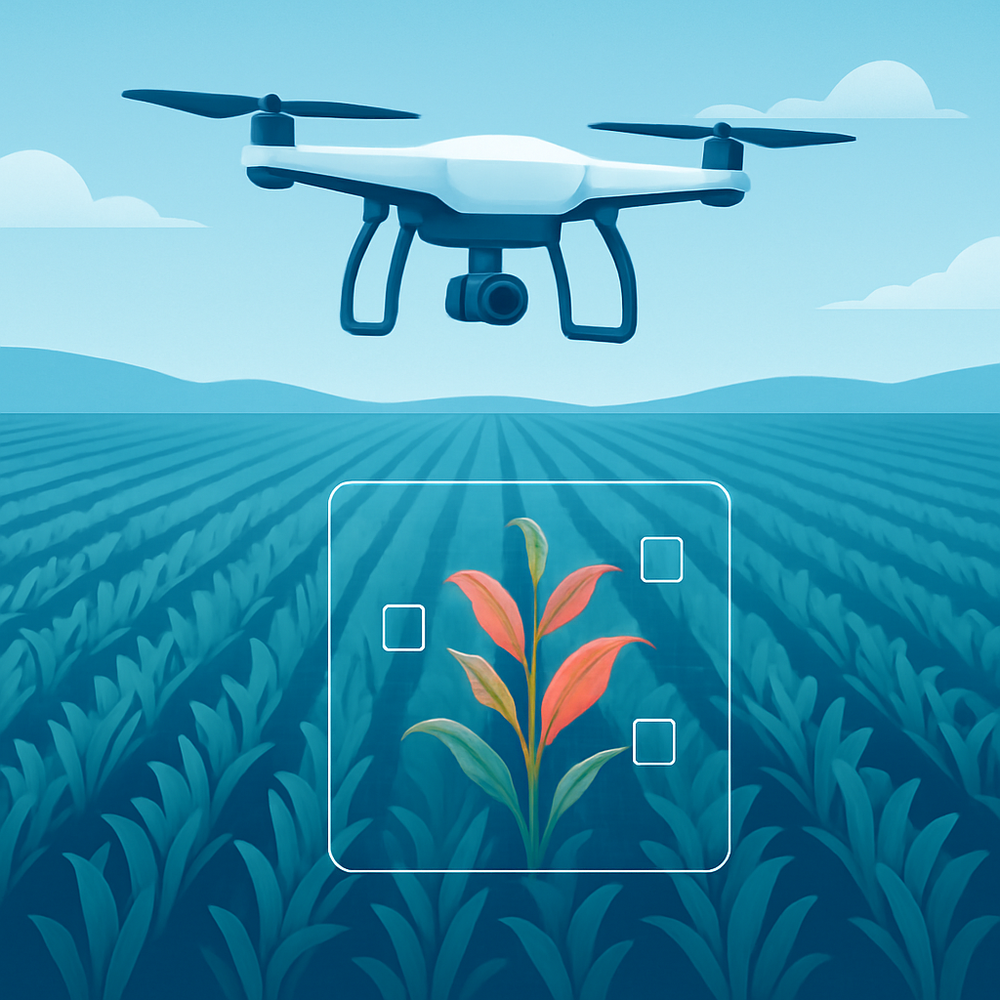
Drone or fixed-camera vision systems that identify crop disease, pest damage, or irrigation issues early let growers intervene before a problem spreads across a field. This use case has a longer typical payback, 8 to 14 months, tied to the seasonal nature of agricultural cycles. Still, the cost of a missed early warning, an entire lost crop section, makes even a modest detection accuracy improvement highly valuable.
6. Security (Anomaly Detection)
Vision systems that flag unusual behaviour, unauthorised access, or object left-behind events in real time reduce the staffing burden of continuous manual monitoring while catching incidents faster than a human watching multiple feeds. A Fraud Detection & Verification case study shows the adjacent pattern directly: real-time visual and document analysis catching fraudulent activity that manual review would likely miss or catch too late.
Typical project size runs $8,000 to $25,000 for a scoped deployment across a defined set of cameras, with payback in the 5 to 9 month range depending on the cost of the incidents being prevented.
ROI Snapshot Across All Six Industries
|
Industry |
Typical project size |
Typical payback |
|---|---|---|
|
Manufacturing |
$10,000–$50,000+ |
6–12 months |
|
Retail |
$8,000–$30,000 |
6–10 months |
|
Healthcare |
$15,000–$40,000 |
4–8 months (clinical + cost) |
|
Logistics |
$10,000–$35,000 |
6–9 months |
|
Agriculture |
$8,000–$25,000 |
8–14 months |
|
Security |
$8,000–$25,000 |
5–9 months |
What Comes Next
As camera hardware and edge inference chips keep getting cheaper, the upfront cost barrier that once kept computer vision out of reach for mid-sized operations in several of these six industries keeps shrinking, which means the payback windows above will likely compress further over the next few years. The industries seeing the fastest ROI today aren't necessarily the ones with the most sophisticated models, they're the ones with the clearest baseline to beat, whether that's a known human error rate or a known cost of a missed defect. If one of these six matches your business, ai and ml freelance developers with computer vision experience in that specific domain can scope the real numbers for your case.
Frequently asked questions
Which industry gets the fastest ROI from computer vision?
How much does a computer vision project typically cost by industry?
Why does human visual inspection perform worse than computer vision?
Is computer vision ROI different for regulated industries like healthcare?
Can one computer vision system serve multiple use cases in the same industry?
How do I hire a freelance computer vision developer with the right industry experience?



Shreyans Padmani
Shreyans Padmani has 5+ years of experience leading innovative software solutions, specializing in AI, LLMs, RAG, and strategic application development. He transforms emerging technologies into scalable, high-performance systems, combining strong technical expertise with business-focused execution to deliver impactful digital solutions.