Python remains the primary language for machine learning, with 55 percent adoption among professional developers in the Stack Overflow 2025 survey, and PyTorch has become the dominant framework in 2026, per Stackforce's hiring guide. Yet KORE1's 2026 recruiting data is blunt about what that popularity hides: eight years of Django experience does not transfer to a machine learning engineering role, same language, entirely different discipline.
Companies that had no machine learning ambitions eighteen months ago are now building retrieval and agent-powered features, and they need Python engineers who understand production ML constraints, inference latency, GPU memory budgets, model versioning, not just clean web application code. This guide covers what actually separates a general Python developer from someone qualified for real machine learning development services work, and what to pay for the difference.
The Two Python Developer Profiles in 2026
StepTo's 2026 hiring guide splits the market into two distinct profiles: Python web engineers, who work in Django or FastAPI on REST APIs, database design and production web systems, and Python ML engineers, who work on model training, inference pipelines, vector databases, embedding APIs and retrieval-augmented generation architectures. A senior Python web engineer may have no ML experience at all, and a skilled ML engineer may genuinely struggle with production web API design; the two skill sets overlap far less than the shared language suggests.
KORE1 frames the underlying difference in optimisation goals rather than syntax. A data scientist optimises for getting the right answer; a software engineer optimises for code that runs reliably at three in the morning when nobody is watching. Hiring a data scientist and expecting them to also own production infrastructure, or hiring a backend engineer and expecting them to own model quality, produces friction on both sides.
Why Django Experience Doesn't Transfer to ML Engineering
A generic Python developer knows how to write clean, maintainable application code, but has rarely touched the specific constraints that make ML code different: numerical stability, memory-bound batch processing, GPU utilisation, or the reproducibility problem of a model whose output changes with the training data even when the code has not changed. None of that is covered by strong Django or FastAPI experience, however senior.
Ctrecord's 2026 analysis of what to look for when hiring notes an uncomfortable truth about AI projects specifically: most of the actual work is not modelling at all. A Python developer working on machine learning spends far more time cleaning, transforming and validating data than training models, which is precisely the unglamorous skill a generic Python developer's portfolio rarely demonstrates.
The Skills Gap: What Generic Python Misses
|
Skill area |
Generic Python developer |
Python developer for ML |
|
Core frameworks |
Django, Flask, FastAPI for APIs |
PyTorch, scikit-learn, Hugging Face Transformers |
|
Data handling |
ORM queries, basic ETL scripts |
Pipeline design, class imbalance, feature engineering |
|
Deployment concern |
Uptime, request latency |
Inference latency, GPU memory budgets, model versioning |
|
Evaluation |
Unit and integration tests |
Model evals, drift monitoring, distribution shift |
Mypcot's 2026 hiring analysis names data engineering and analytics as core, non-negotiable skills for this profile, because AI and automation systems only run reliably on accurate, structured, high-quality datasets. A developer who cannot design a preprocessing pipeline for large-scale or real-time data will produce a model that looks correct in a notebook and fails silently in production.
MLOps: The Skill That Separates Academic From Production
Ctrecord identifies MLOps knowledge as the single most defining line between academic AI knowledge and production AI capability in 2026, covering model versioning, experiment tracking, automated retraining pipelines and drift monitoring. A developer who can train an impressive model but has never deployed one, monitored it for performance degradation, or managed a retraining cycle is not ready for real production custom AI model training work, whatever their notebook results show.
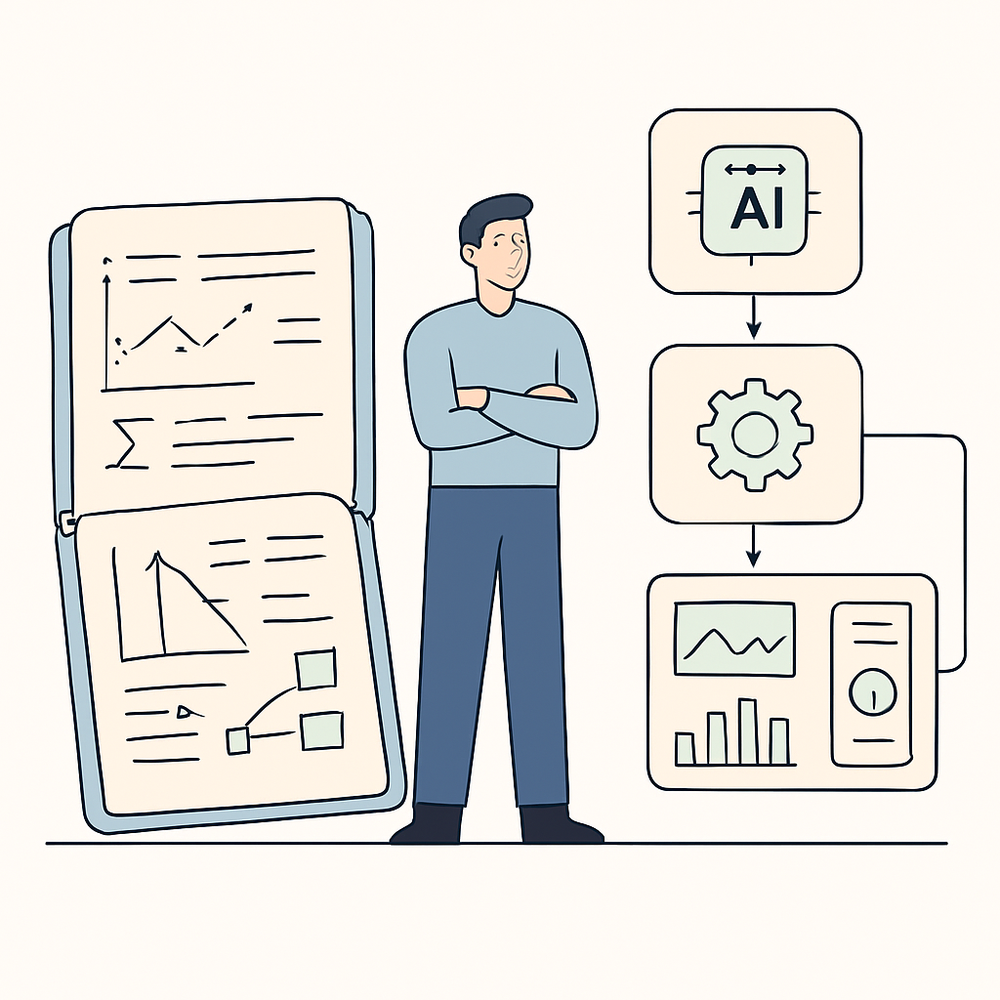
Ask specifically about tools such as MLflow or Weights and Biases, and ask for a specific production deployment the candidate managed from training through to monitored rollout, not a description of a model that never left a notebook. The training approaches by budget comparison is a useful reference for scoping how much MLOps infrastructure a given project actually needs before writing the job description.
LLM and Agent Skills Now Expected of ML-Focused Python Developers
Stackforce's 2026 hiring guide lists LLM integration, OpenAI API experience, LangChain, vector databases and retrieval-augmented generation architectures as the single most in-demand Python skill set of the year, ahead of classical ML frameworks alone. This is a direct consequence of companies building agentic features on top of existing ML pipelines rather than replacing them, which means a Python developer for ML in 2026 increasingly needs comfort with generative AI and AI agent builds, not just classical model training.
Ctrecord's data adds a sharper edge to this shift: 66 percent of developers now spend more time fixing AI-generated code than writing it themselves, which means the value of a strong ML-focused Python developer in 2026 is increasingly in guardrails, observability and tool-use verification around AI-generated output, not just the ability to write a model from scratch.
What This Talent Costs
Global Python developer hourly rates span 30 to 190-plus US dollars, per StepTo's 2026 data, but that range collapses the two distinct profiles into one number. Data scientists and ML engineers with strong Python skills command a clear premium over general-purpose Python web developers, and senior ML and AI Python engineers alone can take eight to fourteen weeks to hire through a staffing pipeline, against two to three weeks for a junior web role.
That timeline gap is a major reason founders turn to freelance or fixed-scope engagements for a first ML build rather than opening a full-time requisition immediately. The why startups hire freelance breakdown covers the same reasoning across AI and ML hiring more broadly, and applies directly to a first Python-for-ML engagement.
Hire Python ML Engineers
Get expert machine learning solutions with our team, free code review
Get Free Code ReviewHow to Vet a Python Developer for ML Work
Screen for the specific skills this guide has covered rather than a generic Python interview: ask for a production deployment they owned end to end, ask how they detect distribution shift after launch, and ask them to walk through a data-cleaning decision that changed a model's outcome. The ML interview questions guide provides a structured baseline for this screen before adding project-specific questions.
The strongest signal in any interview is specificity. A candidate who names the exact framework version, the exact metric that flagged drift, and the exact fix they shipped has done the work; a candidate who speaks only in general terms about machine learning capability usually has not carried a system through a full production lifecycle.
Hiring for the Discipline, Not the Language
Python is the language almost every machine learning system in 2026 is built on, but the language was never the hard part. The discipline, data pipelines, MLOps, evaluation, and now LLM and agent integration, is what separates a developer who can write a script from one who can ship a system that survives real production traffic.
Shreyans Padmani builds production machine learning, model training and AI agent systems in Python for founders who need results, not a demo notebook. Hire an AI developer to scope your next ML build with someone who has shipped this work before.
Frequently asked questions
Why isnt generic Python experience enough for machine learning roles?
What is the difference between a Python web engineer and a Python ML engineer?
How much does it cost to hire a Python developer for machine learning?
What is MLOps and why does it matter when hiring?
Do Python developers for ML need LLM and agent experience in 2026?
What should I ask when interviewing a Python developer for an ML role?



Shreyans Padmani
Shreyans Padmani has 5+ years of experience leading innovative software solutions, specializing in AI, LLMs, RAG, and strategic application development. He transforms emerging technologies into scalable, high-performance systems, combining strong technical expertise with business-focused execution to deliver impactful digital solutions.