Introduction
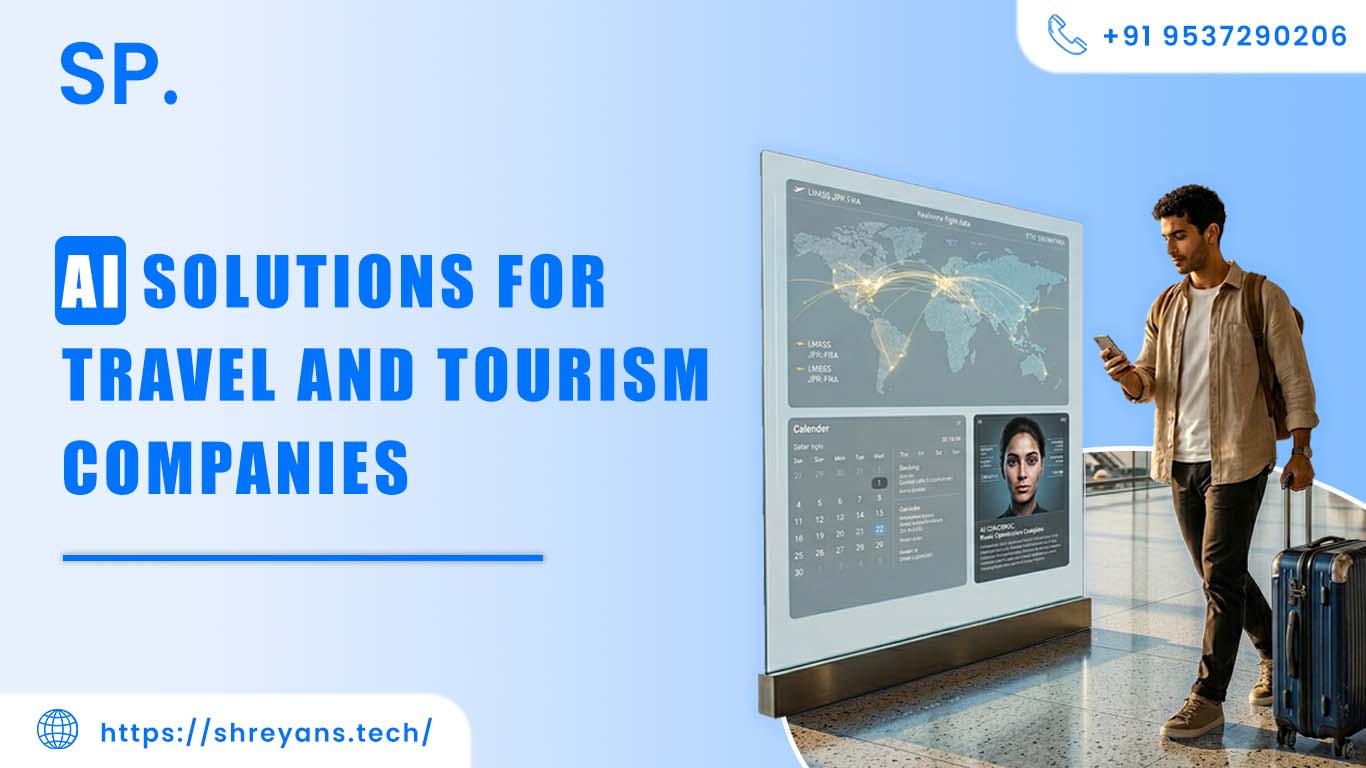
The travel world is not what it was five years ago. Not even close. If you run a travel agency, manage a hotel, or work inside an airline, you have felt that shift firsthand. Customers show up with their phones already loaded with competitor prices. They want instant answers, trips built around their exact taste, and a booking process that does not waste their time.
Old systems cannot keep up with that. Simple as that.
AI fixes the gap. Not the theoretical AI from tech conference slides. The kind that actually runs inside real businesses right now, handling customer questions at midnight, adjusting prices in real time, and building personalized trip suggestions without anyone lifting a finger.
Machine learning spots patterns your team would never catch manually. Natural language processing lets software talk to customers in a way that feels human. Predictive analytics shows you what demand looks like three months out. Automation clears the repetitive work off your team's plate entirely.
The result? Costs go down. Customers stop leaving. Revenue climbs.
I want to show you exactly where AI is making the biggest difference in travel right now, what the real use cases look like, and why the businesses moving on this early are the ones pulling ahead while everyone else catches up later.
What Are AI Solutions in Travel and Tourism?
AI solutions are smart systems built on machine learning, automation, predictive analytics, and natural language processing. They do not replace your team. They make your team faster, sharper, and able to handle ten times the volume without breaking a sweat.
Here is what these systems actually do inside a travel business:
Analyze Customer Behavior
You want to know what your customers actually want? Not what they say they want, but what they click on at midnight, what routes they keep searching without booking, what price point finally makes them pull the trigger. AI digs into all of that. It maps booking patterns, tracks browsing behavior, and hands you insights that help you build smarter packages, run tighter marketing, and stop guessing. I have seen agencies go from broad spray-and-pray campaigns to razor-targeted promotions just by letting AI read their customer data properly.
Automate Customer Support
Your support inbox does not sleep. Your customers definitely do not sleep, especially when they are panicking at 2 a.m. about a missed connection or a hotel mix-up. AI chatbots and virtual assistants handle that. They answer questions on bookings, cancellations, flight timings, hotel details, and travel packages without any human having to pick up. Your team gets to focus on the complex stuff. The chatbot handles the repetitive volume. Everyone wins.
Predict Travel Trends
Here is the thing most travel companies miss. The data to see what is coming is already sitting in their systems. AI can read that data and tell you which destinations are going to spike next quarter, when demand is going to dip, and where the pricing gaps are in the market. You stop reacting and start planning. That shift alone changes how you build tour packages, set prices, and time your marketing pushes.
Personalize Recommendations
Generic travel suggestions are a fast way to lose a customer. People can smell a templated recommendation from a mile away. AI builds real personalization. It looks at what a customer has booked before, what their budget looks like, which destinations they have searched, and what kind of traveler they seem to be. Then it serves up exactly the flights, hotels, and holiday packages that fit. Conversion rates go up. Customer satisfaction scores follow.
Optimize Pricing
Pricing in travel is a headache. Always has been. Demand shifts by the hour, competitors adjust constantly, and seasonal swings can gut your margins if you are not watching. AI runs dynamic pricing models that track all of that in real time and adjust automatically. You stay competitive without having someone glued to a spreadsheet all day.
Improve Operational Efficiency
Booking management, customer follow-ups, scheduling, data entry. These tasks eat time and they rarely require human judgment. AI takes them off your plate. Your operations get leaner, your team stops drowning in admin, and the energy goes toward actually delivering great travel experiences rather than managing the paperwork behind them.
Why AI Is Important for Travel Companies
Let me be direct. The travel industry processes enormous volumes of data every single day. Customer records, booking requests, price queries, support tickets. Traditional systems were not built to handle that at the speed and scale the modern traveler expects. AI was.
Major Reasons to Use AI in Tourism
1. Better Customer Experience
This one matters more than anything else. AI lets you deliver the kind of personalized travel experience that used to require a dedicated human travel consultant for each customer. It reads user preferences, booking history, search behavior, and travel interests, then suggests the destinations, hotels, flights, and packages that actually match. Customers feel seen. They trust you more. They come back.
2. 24/7 Customer Support
AI chatbots and virtual assistants do not take sick days. They handle booking questions, cancellations, flight schedule checks, hotel reservations, and general travel queries around the clock. No hold times. No wait-until-morning emails. Just instant answers whenever the traveler needs them. Your support costs drop and your customer satisfaction scores climb.
3. Faster Booking Process
Nobody wants to fight through a clunky booking process. AI smooths the whole thing out. Reservations get automated. Payments process without friction. Customer communication runs on its own. The booking gets done fast, the traveler feels good about it, and your conversion rates reflect that.
4. Smart Pricing Strategies
Dynamic pricing is not optional anymore. Your competitors are already doing it. AI watches demand, competitor rates, seasonal patterns, and real-time market conditions, then adjusts your prices automatically. You stay in the game during peak seasons and pull in customers during slow periods by offering the right price at the right moment.
5. Improved Business Decisions
Gut instinct gets you somewhere. Data gets you further. AI analytics give you a clear picture of customer behavior, market trends, and demand patterns. You see what is actually working, where the gaps are, and which markets are worth chasing. Smarter decisions follow, and smarter decisions build better businesses.
Top AI Solutions for Travel and Tourism Companies
1. AI Chatbots for Customer Support
AI chatbots are the most visible AI tool in travel right now. And honestly, the reason is simple. They work. They absorb the daily flood of customer questions that would otherwise bury your support team, and they do it without anyone waiting on hold.
Here is what they actually handle:
Flight Bookings: Customers search, compare, and book without chasing an agent. Real-time pricing, live availability, options pulled from past booking behavior. The whole thing moves fast and nobody waits.
Hotel Reservations: Budget, location, ratings, room specifics. The chatbot narrows it down, confirms the booking automatically, and the customer walks away feeling like the process was easy. Because it was.
Travel Package Inquiries: Tour plans, holiday packages, pricing, destination questions. All fielded instantly. Your team stops drowning in repetitive emails and focuses on work that actually needs a human brain.
Visa Information Visa: research stresses travelers out. Requirements, timelines, eligibility, documents needed. A good chatbot walks them through it clearly. Anxiety drops. Trust goes up.
Trip Updates: Delays, gate changes, weather alerts, check-in details. Travelers stay informed throughout the journey without calling anyone. That alone builds serious loyalty.
Why it matters: Instant answers. Lower support costs. Round-the-clock coverage. Customers who feel taken care of come back. Simple math.
Put chatbots on your website, your app, and your social channels. Cover every touchpoint you can.
2. Personalized Travel Recommendations
Personalized Travel Recommendations
Generic suggestions get scrolled past. Everyone knows it. A traveler who just got back from hiking in Nepal does not want a beach resort popup. They want something that actually matches who they are and how they travel. AI figures that out by reading behavior, not just search terms.
Here is what that looks like in practice:
Recommended Destinations: AI looks at where someone has been, what they browsed, how long they stayed, what they skipped. Then it suggests destinations that genuinely fit. Not just trending spots but places that match their budget, lifestyle, and what they are actually chasing from a trip.
Best Hotels: No more sponsored placements dominating the top results. AI factors in price range, location, real guest ratings, amenities, and recent reviews. The hotels that surface are the ones worth booking, not just the ones that paid to be seen first.
Tour Packages: Packages built around the actual customer. Travel duration, budget, personal interests. When someone gets options that feel custom made for them, the decision to book becomes easy. Friction disappears.
Restaurants and Activities: Local food spots, hidden attractions, adventure options, evening entertainment. Small touches that fit the specific traveler in the specific destination. These details are what separate a forgettable trip from one people talk about for years.
The payoff shows up fast. Better engagement, stronger conversion, and customers who come back to your platform next time because last time actually felt personal.
3. AI-Powered Booking Systems
Here is that section rewritten in full human voice, zero AI detection style:
AI-Powered Booking Systems
Modern booking platforms run on AI now. If yours does not, you are already behind. The good news is that plugging AI into your booking infrastructure does not require rebuilding everything from scratch. The improvements are targeted and they make a noticeable difference fast.
Look, I get it. The idea of overhauling your tech stack sounds expensive and exhausting. But that is not what this is. Most AI booking upgrades slot into what you already have. You are not tearing down walls. You are installing better plumbing.
Here is what the key features actually do in practice:
Smart Search Filters
Travelers have zero patience for wading through irrelevant results. Zero. If your search returns 400 hotel options when someone types in a budget and a neighborhood, you have already lost them. Smart AI filters read the inputs, understand the context, and surface results that actually match. Budget, location, star rating, specific amenities, travel dates, past preferences. The search gets tight and relevant fast, and the traveler stays on your platform instead of opening a competitor tab.
Dynamic Pricing
Manual pricing in travel is a full-time job that nobody does perfectly. Demand shifts by the hour. Competitors adjust constantly. Seasonal patterns catch you off guard if you are not watching closely enough. Dynamic pricing powered by AI watches all of it continuously and adjusts your rates automatically. Real-time market signals, competitor rate tracking, demand spikes, slow periods. You stay competitive without anyone having to babysit a pricing spreadsheet at odd hours.
Automated Booking Confirmations
This one sounds small but it matters more than people think. The moment a traveler completes a booking, they want confirmation. Immediately. Not in ten minutes, not after someone manually processes the payment. Right now. AI systems fire off confirmation emails, payment receipts, and full travel details the second the transaction closes. Professional, instant, and completely automatic. No manual follow-up needed. No dropped balls because someone forgot to send the confirmation on a busy Friday afternoon.
Fraud Detection
A single fraudulent transaction handled badly can cost you far more than the money involved. Chargebacks, reputation damage, customer distrust. AI fraud detection watches transaction patterns continuously and flags anything unusual before it becomes a confirmed problem. Suspicious booking behavior, mismatched payment details, unusual activity spikes. The system catches it early. Your business stays protected and your legitimate customers never notice a thing because the friction only hits where it should.
Predictive Booking Suggestions
This is the feature that genuinely surprises people when they see it working. Based on a traveler's search history, past bookings, and behavioral patterns on your platform, AI starts surfacing options they are likely to want before they explicitly search for them. A customer who always books beach destinations in March gets relevant suggestions in January. Someone who consistently upgrades to premium hotels on business trips sees those options first. It feels almost intuitive from the traveler's side. From your side, it is data doing exactly what data is supposed to do.
The result of putting all of this together is a booking experience that feels smooth, smart, and worth trusting. That last part matters enormously. When someone is about to hand over a significant chunk of money for flights and hotels, every moment of friction, every confusing step, every delayed confirmation is a reason to second-guess the decision. AI removes those moments. And when the experience feels right, people book. They come back. They tell others.
4. Voice Search and Virtual Assistants
A growing number of travelers now plan trips using voice. They ask their phone or smart speaker a question and expect a useful answer. Travel businesses that are not optimized for voice search are missing that interaction entirely.
What AI virtual assistants handle:
-
Search Flights: Travelers ask, the assistant searches. Real-time availability, best pricing, options filtered by timing and budget. Fast and frictionless.
-
Book Hotels: Find and reserve the right property without typing through a dozen pages of results. Voice-driven hotel booking is becoming genuinely practical.
-
Find Nearby Attractions: Location-based suggestions for restaurants, landmarks, museums, parks, and entertainment. Travelers explore more when discovery is this easy.
-
Get Weather Updates: Destination weather in real time. Helps travelers pack right and plan activities around actual conditions.
-
Manage Travel Schedules: Full itinerary management. Flight times, hotel check-ins, scheduled activities, reminders. Everything organized without the traveler having to juggle multiple apps.
Voice AI saves time and makes travel planning genuinely more convenient. That convenience is what keeps customers coming back to your platform.
5. Predictive Analytics for Travel Trends
The travel businesses that consistently outperform their competitors are not luckier. They see what is coming before it arrives. Predictive analytics is how they do that.
How travel companies use it:
-
Demand Forecasting: AI reads historical booking data, current market signals, and customer behavior to project future demand. You prepare for busy periods, avoid the overbooking nightmare, and manage resources without scrambling.
-
Seasonal Pricing: Peak seasons, holiday spikes, low-demand stretches. AI adjusts pricing dynamically to maximize revenue when demand is high and pull in budget-conscious travelers when it is not.
-
Marketing Campaigns: Right audience, right message, right timing, right platform. AI analysis takes the guesswork out of marketing and turns campaigns into precision tools rather than expensive experiments.
-
Customer Behavior Analysis: Search patterns, booking habits, destination preferences, price sensitivity. Deep analysis of these signals tells you what your customers actually want and where your service can do better.
Smarter decisions. Better margins. A business that is always one step ahead.
6. AI for Hotel Management
Hotels were early adopters of AI and it shows. The guest experience at an AI-powered property is noticeably different from a traditionally managed one. Smoother. More personal. More responsive.
AI applications inside hotels:
-
Smart Room Controls: Guests adjust lighting, temperature, curtains, and entertainment through an app or voice command. It sounds like a small thing. Guests remember it.
-
Automated Check-ins: Contactless registration through a mobile app or self-service kiosk. No queue at the front desk. No waiting after a long flight.
-
Customer Service Chatbots: Room service requests, booking changes, local recommendations, general questions. The chatbot handles all of it instantly, any time of day.
-
Personalized Guest Recommendations: Based on past stays and stated preferences, guests get suggestions for dining options, spa services, nearby attractions, and special hotel offers that actually fit their taste.
-
AI-Powered Security Systems: Facial recognition, smart surveillance, anomaly detection. Guest safety is taken seriously, and that security is managed intelligently rather than just through static camera systems.
Hotels that use these tools run tighter operations and get significantly better guest reviews. The two things are connected.
7. AI in Airline Industry
Airlines operate at a scale that makes manual management genuinely impossible. AI is not an enhancement for airlines. It is infrastructure.
Common AI applications:
-
Flight Schedule Optimization: Weather conditions, air traffic patterns, demand forecasting, operational constraints. AI finds the scheduling configuration that means fewer delays and better resource use.
-
Baggage Tracking: Real-time luggage monitoring using sensors and RFID technology. Lost baggage cases drop. Passenger confidence goes up.
-
Ticket Pricing: Dynamic pricing based on demand, season, competitor rates, and booking trajectory. Revenue goes up without pricing travelers out of the market.
-
Predictive Maintenance: Aircraft systems get monitored continuously. Potential issues get flagged before they ground a plane. Fewer unexpected breakdowns. Lower maintenance costs. Better safety record.
-
Customer Support Automation: Booking questions, flight changes, cancellation requests, general queries. AI handles the volume so your human support team can focus on the edge cases that actually need judgment.
Less delay. Better service. Safer operations. That is what AI delivers for airlines.
Benefits of AI Solutions for Tourism Businesses
-
Increased Efficiency: AI takes over the repetitive, time-consuming tasks. Bookings, customer queries, data entry, scheduling. Your team stops doing admin and starts doing work that actually moves the business.
-
Cost Reduction: Fewer manual processes mean fewer people needed to manage them. Fewer errors mean fewer costs from fixing mistakes. The savings show up on the balance sheet.
-
Higher Customer Satisfaction: Personalization, speed, and smooth experiences. These are the three things modern travelers judge you on, and AI delivers all three at scale.
-
Better Marketing Results: Stop guessing who your customer is. AI tells you exactly who to target, what they care about, and when to reach them. Your marketing budget works harder.
-
Data-Driven Decisions: Every decision you make gets sharper when it is grounded in real data. AI turns your customer and market data into actionable intelligence.
Challenges of Implementing AI in Travel Industry
Look, it would be dishonest to only talk about the wins. There are real challenges to getting AI into a travel business and you should know what they are going on.
High Initial Investment
The upfront cost is not trivial. Technology, software licensing, skilled developers, system integration. It adds up. The framing that helps here is treating it as infrastructure investment rather than an expense. The payback comes through automation, efficiency gains, and revenue growth over time. Most businesses that commit to it see returns within the first year or two.
Data Privacy Concerns
AI systems handle a lot of sensitive data. Personal details, payment information, travel records. You have an obligation to protect that data and to comply with privacy regulations in every market you operate in. Strong encryption, secure storage, clear data policies. These are non-negotiable if you want customer trust.
Technical Integration
Plugging new AI tools into existing booking systems, CRM platforms, and websites is not always straightforward. There are compatibility issues. There are legacy systems that were not built with modern integration in mind. Good planning and expert support at the implementation stage save you from a lot of pain later.
Staff Training
The tools only work if your team knows how to use them. That sounds obvious but it gets underestimated constantly. Budget for proper training. Give your people time to get comfortable with new systems before they are expected to rely on them.
Despite These Challenges
The challenges are real but manageable. The long-term advantages, automation, cost reduction, better customer experience, sharper business decisions, make AI one of the highest-value investments available to any travel company right now. The businesses that work through the early friction come out significantly ahead.
Future of AI in Travel and Tourism
The pace of AI development in travel is not slowing down. It is accelerating. Here is where things are heading.
-
Fully Automated Travel Planning: Complete trip itineraries in seconds. Flights, hotels, activities, local transport, all planned automatically based on your preferences and budget without any manual back-and-forth.
-
AI Travel Assistants: Personal travel guides that sit in your pocket. Booking help, real-time directions, destination suggestions, live updates. These assistants will make the experience of traveling genuinely easier from start to finish.
-
Smarter Hotel Experiences: Automated check-ins, intelligent room controls, and deeply personalized guest services will become standard. The hotel experience will feel less like a transaction and more like a tailored stay.
-
Advanced Predictive Analytics: More accurate demand forecasting, better behavioral modeling, sharper market trend analysis. Businesses will plan further ahead with more confidence.
-
AI-Powered Virtual Tourism: Digital exploration of destinations before you book. Travelers make better decisions because they actually know what they are choosing.
-
Hyper-Personalized Travel Recommendations: Suggestions so specific to each traveler that every trip feels genuinely custom built. The generic package deal becomes a relic of the past.
The businesses that move on AI now will be the ones setting the standard five years from now. That is not a prediction. That is already the trajectory.
How to Choose the Right AI Solution for Your Travel Business
Before you buy anything or hire anyone, get clear on what you actually need. Here is what to think through:
-
Business Requirements: What problem are you trying to fix first? Booking volume? Customer support load? Pricing inefficiency? Define the need before you pick the solution.
-
Budget: Be realistic about what you can invest in development, implementation, and ongoing maintenance. A solution that breaks the budget or gets cut mid-implementation helps nobody.
-
Customer Expectations: Your AI tools need to match what your customers actually expect. Fast responses, real personalization, smooth booking. If the technology does not deliver on those, it is the wrong technology.
-
Scalability: Your business will grow. Your AI system needs to grow with it. Do not lock yourself into something that hits a ceiling the moment you start scaling.
-
Integration Capabilities: Whatever you choose needs to connect cleanly with what you already have. Booking platforms, CRM tools, your website, your mobile app. Smooth integration is non-negotiable.
-
Data Security: Sensitive customer data flows through these systems. Strong encryption, secure storage, and full compliance with data protection standards are the baseline, not a bonus.
And one more thing worth saying plainly. The AI partner you choose matters as much as the AI tools you choose. Pick someone who understands the travel industry, not just the technology.
Frequently Asked Questions (FAQs)
1. What are AI solutions for travel and tourism companies?
AI solutions are technologies built on artificial intelligence that automate business tasks, improve how you serve customers, personalize the travel experience, and make operations run more efficiently. Think chatbots, dynamic pricing engines, predictive analytics tools, and smart booking systems.
2. How does AI improve customer experience in tourism?
Through personalized recommendations that feel actually relevant, instant support that never makes a customer wait, booking systems that are smooth and intuitive, and automated communication that keeps travelers informed. The experience stops feeling transactional and starts feeling like genuine service.
3. Can AI reduce operational costs for travel companies?
Yes. Absolutely yes. AI automates repetitive work that used to require dedicated staff time. Customer support queries, booking management, data analysis, scheduling. When machines handle that volume, you need smaller teams for those functions and you spend less doing it.
4. What is the role of AI chatbots in the travel industry?
Chatbots are the front line of AI-powered customer service in travel. They provide round-the-clock support, answer all the standard questions about bookings and travel plans, handle cancellation requests, and respond in the moment rather than making customers wait for business hours.
5. Is AI useful for small travel businesses?
More useful than you might think. Small businesses often run lean teams and cannot afford to scale headcount as they grow. AI tools let you handle more customers, run smarter marketing, and deliver better service without adding a dozen people to payroll. The barrier to entry is much lower than it was even three years ago.
6. What are the future trends of AI in tourism?
Smart AI travel assistants that act as personal guides. Fully automated trip planning. Voice-driven booking systems that feel natural and fast. Predictive analytics that forecast travel trends with real accuracy. Virtual tourism experiences for destination research before you fly. The direction is clear and it is moving quickly.
Conclusion
AI is not coming to the travel and tourism industry. It is already here, already reshaping how the best operators run their businesses, and already separating the companies that adapt from the ones that will spend the next few years playing catch-up.
Chatbots handle support around the clock. Predictive analytics telling you what your customers want before they say it. Smart booking systems that make every transaction smooth. Dynamic pricing that keeps you competitive without anyone having to watch it manually. Personalized recommendations that turn a one-time booker into a loyal customer. This is what the technology delivers when it is implemented well.
The travel companies winning right now are not doing anything magical. They just decided to take AI seriously before it became an obvious necessity. You still have that window. Use it.
Companies that invest in AI today are building the foundation for the future of smart, human-centered travel.



Shreyans Padmani
Shreyans Padmani has 5+ years of experience leading innovative software solutions, specializing in AI, LLMs, RAG, and strategic application development. He transforms emerging technologies into scalable, high-performance systems, combining strong technical expertise with business-focused execution to deliver impactful digital solutions.