Roughly two-thirds of organisations now use generative AI in at least one business function, and Gartner projects more than 80 percent will have a generative AI application in production by the end of 2026, per Masai School's 2026 industry survey. That shift, from trying a chatbot to running production infrastructure on generative AI, is exactly why a client pitch built around a text generator or a basic Q&A bot lands flat in 2026.
The ten ideas below are scoped as production systems with a named business outcome, not portfolio pieces, because a client evaluating generative AI development services in 2026 has usually already seen a demo and wants to know what changes in their business once the system ships. The Gen AI portfolio red flags guide covers the warning signs that a proposed project is still a demo wearing a client-facing label.
1. A Retrieval-Augmented Assistant Over Internal Knowledge
Every mid-sized company has years of internal documentation, wikis, support tickets and policy documents that nobody can search effectively. A RAG assistant scoped against that specific corpus, with citations back to the source document and a defined accuracy target, solves a real productivity problem rather than demonstrating that an LLM can answer trivia. The pitch difference is the evaluation harness: a client wants to know the assistant's answer accuracy on their documents, not a general claim about retrieval quality.
2. Automated Financial and Regulatory Reporting
Deloitte's 2026 State of AI in the Enterprise report projects that more than half of standard financial reports, earnings summaries, risk reports and regulatory filings, will be drafted from structured data by generative AI. This is a project with a clear before-and-after metric, hours of analyst time per reporting cycle, that makes it an easy return-on-investment conversation with a finance leader rather than an abstract capability pitch.
3. Contract and Document Review with Clause Extraction
Legal, insurance and procurement teams spend enormous time extracting specific clauses, obligations and exceptions from long documents, and a generative system that extracts and flags those clauses against a defined checklist is directly billable value rather than a novelty. The insurance document automation piece covers how this pattern plays out specifically in insurance claims and underwriting, and the same architecture, NLP development services combined with a generative extraction layer, transfers directly to legal and procurement contract review.
4. Multi-Agent Customer Support Workflows
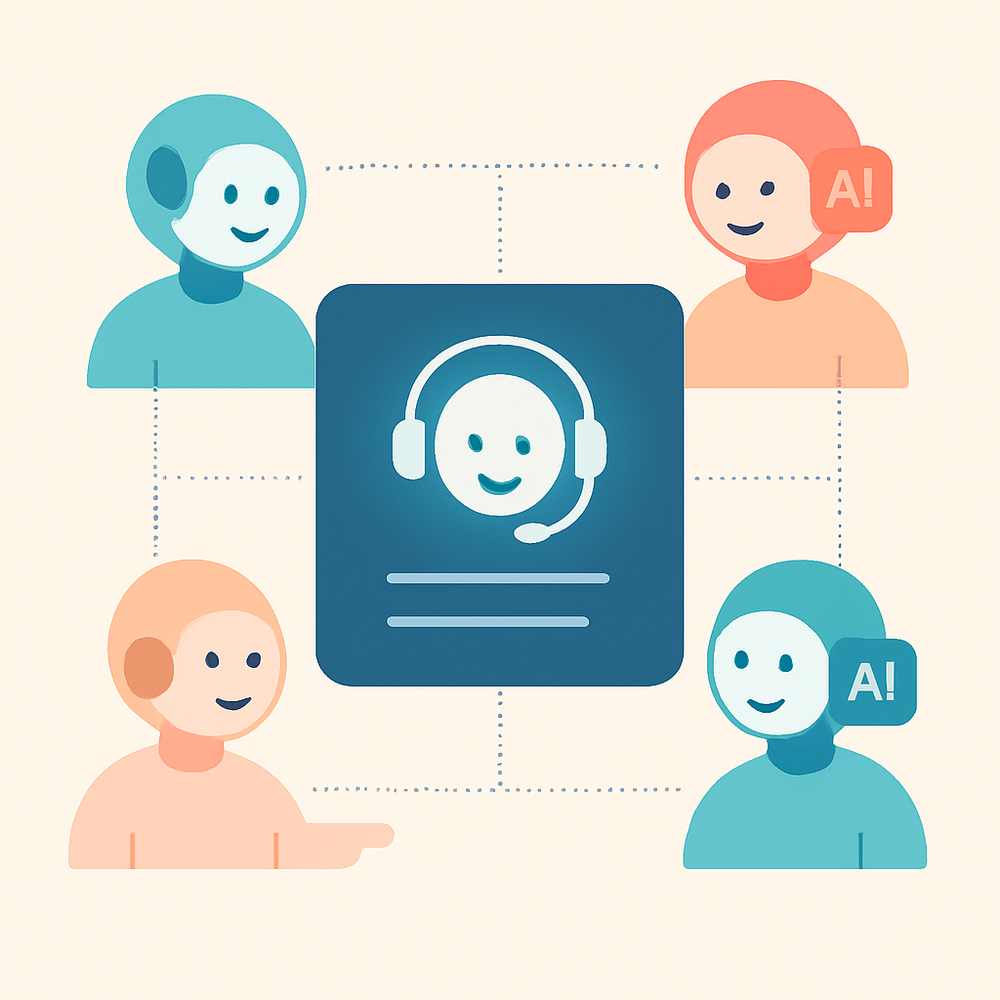
Customer service automation now delivers 50 to 70 percent faster resolution times, per Pecan AI's 2026 use case data, and the systems achieving that speed are agentic rather than single-prompt, one agent classifying the issue, one retrieving account data, one drafting the response for human review. Gartner projects roughly 40 percent of enterprise applications will include task-specific AI agents by the end of 2026, up from under 5 percent a year earlier, which makes this the single fastest-growing category a client is likely to ask about directly.
5. Multi-Agent Marketing Content Production
Content and marketing copy generation is used by roughly 85 to 89 percent of marketers already, per Masai School's 2026 data, which means a single content-generation demo no longer differentiates a proposal. What does differentiate it is a coordinated multi-agent system, one agent researching and briefing, one drafting, one designing visuals, that cuts total content production time by up to 70 percent while keeping brand guardrails enforced at each stage rather than relying on a single unsupervised prompt.
Hire Generative AI Developers
Expertise for production-ready projects, get a free code review
Get Free Code Review6. AI Code Review and Engineering Copilots for Internal Teams
Code generation is delivering up to 55 percent faster development cycles, per Pecan AI's 2026 benchmarks, but the highest-value client project is rarely raw code generation, it is a review and guardrail layer that catches the errors AI-generated code introduces before they reach production. Engineering leaders in 2026 are far more receptive to a pitch about reducing code review burden and catching AI-introduced defects than to another code-completion tool.
7. Synthetic Data Generation for Regulated Model Training
Recent research from arXiv, in collaboration with Harvard researchers, validated that LLM-generated synthetic data is now statistically reliable for training downstream models, removing a major blocker for healthcare and finance clients who cannot use real patient or transaction data for model development without extensive compliance review. This is a project pitch specifically for regulated clients who have a model they want to build but a data-access problem standing in the way.
8. Call and Meeting Transcript Summarisation Synced to CRM
A generative pipeline that transcribes, summarises and syncs sales calls or client meetings directly into the CRM with structured fields, next steps, objections raised, competitor mentions, removes a manual data-entry task that sales and account teams consistently skip under time pressure. The value proposition here is completeness of CRM data, a metric a sales operations leader already tracks and can measure before and after deployment.
9. Engineering Documentation and Specification Assistants
Manufacturing and hardware companies generate enormous volumes of specification documents, change orders and maintenance manuals that engineers currently search manually. A generative assistant scoped against that specific technical corpus, with strict grounding to prevent hallucinated specifications, directly reduces the hours engineers spend searching for answers that already exist somewhere in the documentation.
10. Personalised Video and Voice Content at Production Scale
AI-generated video is shifting from novelty to standard production tooling as models produce synchronised audio and dialogue, and Coca-Cola's Create Real Magic campaign is a documented example of a major brand using generative co-creation at consumer scale. For a client with a real content production bottleneck, personalised video generation, one base template rendered into dozens of localised or audience-specific variants, is a defensible production system rather than a one-off creative experiment.
Hire Generative AI Developers
Accelerate projects with expert generative AI developers, get a free proof-of-concept scoping session
Get Free POC ScopingPitching the System, Not the Demo
Every idea on this list solves a named business problem with a measurable before-and-after, which is the actual difference between a project a client approves and a demo they politely admire and forget. The questions to ask guide is worth reviewing before that first client conversation, whichever side of the table you sit on.
Shreyans Padmani builds production generative AI and AI agent systems that ship past the demo stage. Hire an AI developer to scope a generative AI project your client will actually use.
Frequently asked questions
What makes a generative AI project idea client-ready instead of a demo?
What percentage of businesses use generative AI in 2026?
Why are multi-agent systems replacing single-prompt chatbots in client projects?
Is synthetic data generation viable for regulated industries?
How much faster is generative AI code generation than manual development?
What should a client ask before approving a generative AI project?



Shreyans Padmani
Shreyans Padmani has 5+ years of experience leading innovative software solutions, specializing in AI, LLMs, RAG, and strategic application development. He transforms emerging technologies into scalable, high-performance systems, combining strong technical expertise with business-focused execution to deliver impactful digital solutions.