NatWest has reduced new-account fraud by 90 percent since 2019 by moving from rule-based checks to AI-based detection, according to analyst reporting on the bank's fraud programme. Feedzai's 2025 AI Trends in Fraud and Financial Crime Prevention report found that more than half of all fraud attempts now involve AI on the attacker's side, and the Federal Trade Commission recorded 12.5 billion US dollars in consumer fraud losses in 2024, a 25 percent increase on the year before. The Cambridge Centre for Alternative Finance's 2026 report found that 52 percent of financial institutions are already piloting or deploying agentic AI in production.
Hiring in finance is not a single job. A developer who can build a real-time fraud scoring pipeline is rarely the same person who can defend a credit risk model to a regulator, and neither is automatically qualified to build or supervise a trading system. This guide breaks the hiring decision into the three tracks that actually appear in finance job specifications, fraud detection, risk modelling and trading models, and sets out the skills, interview questions and regulatory context needed to hire correctly for each one.
What Fraud Detection Hiring Actually Requires
Fraud detection is a real-time classification problem with severe class imbalance, since genuine fraud might account for a fraction of one percent of transactions, so a model tuned on accuracy alone will look excellent while missing almost everything that matters. The developers who do this well combine supervised models, such as XGBoost or LightGBM, for known fraud patterns with unsupervised anomaly detection for schemes that the training data has never seen. They also need to design for latency, because a card-present transaction typically needs a scoring decision in well under a second, which shapes the entire feature pipeline around streaming systems such as Kafka and pre-computed feature stores rather than batch jobs. This is the specific skill set behind machine learning development services built around imbalanced classification and streaming inference, not general data science headcount.
Industry analysis from payments technology firm Emburse describes fraud detection in 2026 as evolving from rule-based monitoring into proactive, agentic defense networks that continuously analyse transactions and autonomously escalate suspicious activity before losses occur, which changes what a fraud detection hire needs to know beyond classic supervised learning. NatWest's 90 percent reduction in new-account fraud since 2019 shows the scale of what a properly tuned system can achieve. Signicat's 2024 analysis found that 42.5 percent of fraud attempts in financial services are now AI-driven, yet only 22 percent of financial institutions have implemented AI-based fraud prevention tools, leaving most defenders several steps behind their attackers. That gap is effectively the hiring gap: an institution without a specialist on its fraud model is competing against attackers who already have one.
Hiring for Risk Models: Credit Risk, AML and Regulatory Exposure
Risk models carry a heavier compliance burden than fraud detection because they usually make or influence a decision about a named individual, whether that is a credit line, a loan rate or an account restriction. Under the EU AI Act, credit scoring and creditworthiness systems are explicitly classified as high-risk under Annex III, point 5(b), with the core obligations, data governance, technical documentation, human oversight and post-market monitoring becoming enforceable from 2 August 2026. Fraud detection systems sit on murkier ground: tools used purely for transaction pattern analysis without an individual eligibility decision often fall outside the high-risk tier, while any system that influences credit or payment access for a named person is likely to be pulled back in. Building and retraining a model inside that documentation burden is a different job from a one-off notebook handoff, which is why teams increasingly look for custom AI model training work that treats governance as part of the build rather than an afterthought.
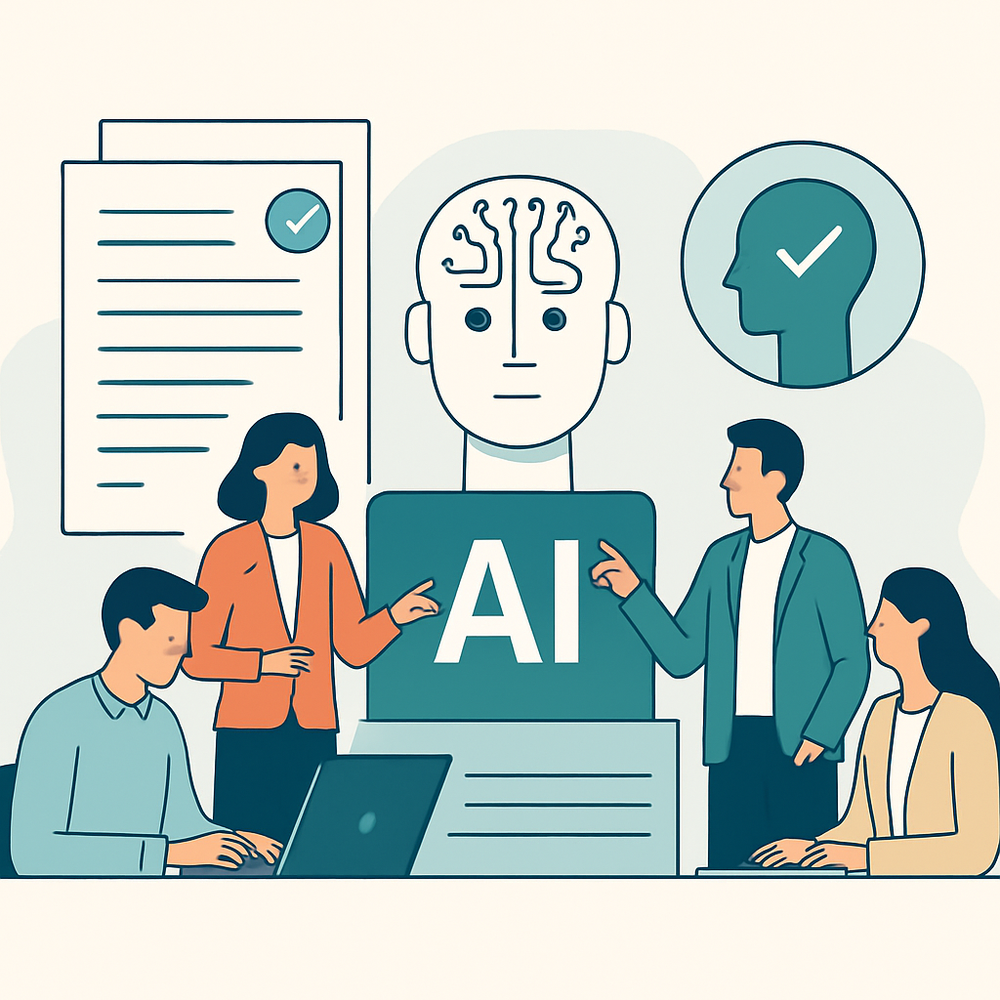
Non-compliance with the EU AI Act's high-risk obligations carries penalties of up to 15 million euros or three percent of global annual turnover, whichever is higher, according to compliance platform Regumatrix's summary of Article 99. For a bank running dozens of credit and underwriting models at once, that is not a fine a legal team can absorb quietly. It is a reason to hire a developer who can produce SHAP-based explainability documentation before a regulator asks for it, not after.
The EU is not acting alone on this. The European Banking Authority has been mapping AI Act implications specifically for banks and payment institutions, noting that firms offering credit as an ancillary service face the same high-risk exposure as traditional lenders. A risk model hire who can navigate the overlap between banking regulation and general AI regulation is worth more to an institution than one who only knows the modelling technique.
Hiring for Trading Models: Quant Development and Autonomous Agents
Trading model hiring splits again, into predictive logic that forecasts price movement or generates signals, and execution logic that gets an order filled at the best price without moving the market. FINRA governs algorithmic strategies under Rule 3110, requiring firms to supervise and control their trading algorithms, while SEC Rule 15c3-5 requires pre-trade financial risk controls before an order reaches the market. A developer hired for this track needs to be fluent in backtesting discipline, not just model accuracy, because a strategy that looks profitable on historical data can fail immediately once real order flow and slippage are involved. JPMorgan's asset management strategists recently built AI agents that outperformed a traditional 60/40 portfolio in backtests, while explicitly warning against uncritically trusting a model's confident-sounding output, and hiring for that kind of system means vetting for the skill set behind AI agent development services, tool orchestration, guardrails and human-in-the-loop escalation, rather than model accuracy alone.
Adoption has moved past the experimental stage. Research cited by UC Irvine's Merage School puts generative AI use above two-thirds of hedge funds in 2026, and Jane Street has described deep learning as central to its quantitative trading strategy after a record trading revenue year in 2025. Citadel's quant leadership has separately warned that widespread AI adoption is starting to make trades more correlated rather than less, which is itself a hiring signal: a developer needs to understand crowding risk, not only alpha generation.
The Situational Awareness hedge fund's collapse in July 2026 is a reminder that model quality alone does not protect a trading operation. The fund sold its entire public equity portfolio to Citadel on 30 July 2026 after margin calls from Goldman Sachs, JPMorgan Chase and Bank of America, triggered not by a flawed model but by roughly four times leverage on AI infrastructure positions that fell between 35 and 47 percent during that month's AI stock rout. A developer hired to build or maintain a trading model needs to understand position sizing and leverage constraints as part of the job, not treat risk management as someone else's problem further down the desk.
|
Track |
Core Modelling Approach |
Common Tools |
Primary Regulatory Framework |
|---|---|---|---|
|
Fraud Detection |
Real-time anomaly detection plus supervised classification on imbalanced data |
XGBoost, LightGBM, Kafka, feature stores |
AML and card-network rules; EU AI Act only where an individual decision is involved |
|
Risk Models |
Credit and underwriting scoring with mandatory explainability |
Logistic regression, gradient boosting, SHAP |
EU AI Act Annex III, point 5(b); Basel-style model risk governance |
|
Trading Models |
Predictive and execution logic with rigorous backtesting and agent orchestration |
PyTorch, reinforcement learning, agent frameworks |
FINRA Rule 3110; SEC Rule 15c3-5 |
Where NLP and Document Intelligence Fit In
None of the three tracks above run on structured data alone. Anti-money-laundering teams need someone who can turn transaction narratives, KYC documents and case notes into structured signal, and increasingly need to draft or summarise Suspicious Activity Reports without losing the audit trail a regulator will later review. Trading desks use the same skill set in reverse, extracting sentiment and event signals from earnings calls, filings and news flow to feed into a model. This is squarely why finance teams hire an NLP developer separately from a general machine learning hire: parsing unstructured financial text at production reliability is its own discipline, closer to information extraction than to a customer-facing chatbot build.
The urgency here is rising on the fraud side too. Signicat's 2024 research found deepfake fraud attempts grew by 2,137 percent over three years, and ACI Worldwide's 2026 fraud trends report named synthetic identity, generative AI identities built by combining real and fabricated data, as one of the costliest and hardest to detect threats banks now face. Document and identity intelligence is no longer a secondary layer on top of transaction monitoring; it is where a growing share of losses now originate.
The Interview and Vetting Process That Actually Works
A portfolio of Kaggle competitions or generic classification demos reveals almost nothing about whether someone can build a financial model. The stronger test is a work sample on anonymised or synthetic transaction data with the same class imbalance the production system will face, scored on how the candidate handles the false positive and false negative trade-off rather than on raw accuracy. Ask the candidate to walk through how they would detect and respond to concept drift, the point at which a model's statistical assumptions stop matching current behaviour, since fraud and market patterns both shift constantly. A structured technical round should also probe documentation habits directly, and the blog's ML interview questions post is a useful starting checklist for the general technical bar before layering finance-specific questions on top.
FINRA's 2026 Annual Regulatory Oversight Report added a dedicated section on generative AI for the first time, instructing member firms to hold AI systems to the same governance standard as other business functions and to maintain written supervisory procedures covering AI vendor risk and agent monitoring. A candidate who has never had to produce documentation like that for a regulator is being hired into unfamiliar territory on day one, however strong their modelling skills are.
What This Costs and How Engagement Models Differ
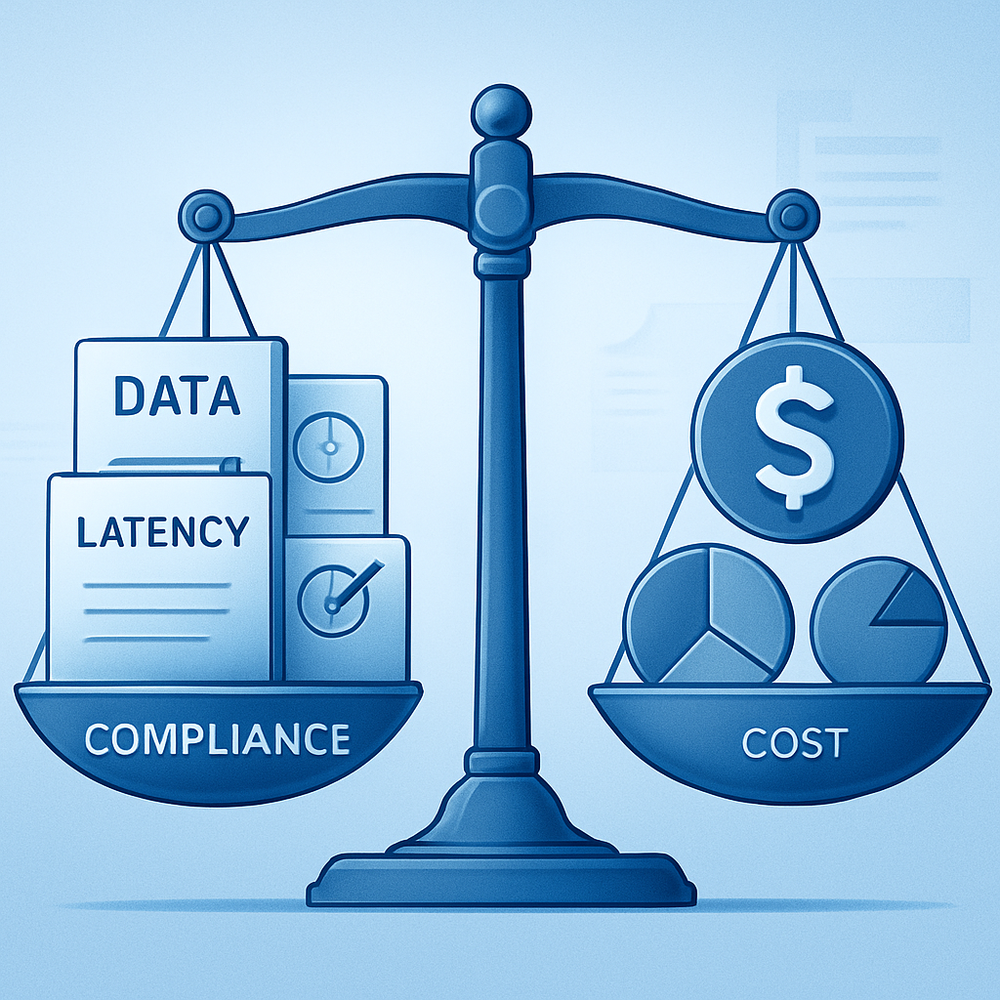
Cost is driven less by model architecture than by three factors: how much historical, labelled data already exists, how tight the latency requirement is, and how much documentation the compliance function will demand before deployment. A fraud detection pilot built on an existing data warehouse is a fundamentally smaller engagement than a production credit risk model that has to survive a conformity assessment under the EU AI Act, even where both use comparable modelling techniques. Agencies add an account-management layer that increases cost without adding modelling capacity, while an in-house hire carries salary, benefits and ramp-up time that a project-based engagement avoids. For a fuller breakdown of how pricing shifts by project type, the ML consultant cost post covers the ranges in detail rather than repeating them here.
The scale of what is at stake keeps the budget conversation grounded. BCG's analysis, cited by advisory firm Caspian One, put the industry-wide savings from AI fraud detection at over 9.6 billion US dollars annually for global banks by 2026. Even a mid-size institution capturing a small share of that figure is looking at a return that outweighs a specialist developer's engagement cost within the first year of deployment.
Build vs Buy: When Off-the-Shelf Vendors Aren't Enough
Vendor fraud tools from providers such as Feedzai are a legitimate starting point, and most institutions should not build fraud detection from a blank page when a mature product already covers the common patterns. The build decision becomes clearer on the risk and trading side, where competitive advantage depends on data no vendor has access to. One 2026 analysis of hedge fund AI spending put it plainly: differentiated returns come from proprietary data and in-house models, not from a tool every competitor can also buy. That is the point at which a team moves from a vendor subscription to a genuine build, and it is worth reading the model training approaches post before committing to one path, since the right approach differs sharply between a fraud classifier, a regulated risk model and a trading signal.
The dividing line is ownership of the edge. A vendor's fraud model is shared across its entire client base, which caps how much advantage any single bank can extract from it, whereas a custom risk or trading model trained on an institution's own data and monitored by its own team cannot be replicated by a competitor buying the same subscription.
Where the Vetting Actually Pays Off
The institutions getting this right are not necessarily the ones spending the most on AI; they are the ones matching the right specialist to the right track instead of hiring one generalist to cover fraud, risk and trading at once. A fraud detection hire who has never touched EU AI Act documentation, a risk modeller who cannot explain latency trade-offs, or a trading developer unfamiliar with FINRA supervision requirements will each cost more in rework than the interview process saves in time.
If you are ready to scope a fraud detection, risk modelling or trading model project, hire an AI developer for finance who has already worked inside these constraints rather than learning them on your production system. The next model your institution deploys will be judged by regulators, attackers and traders who are all improving at the same time, so the developer building it needs to be improving just as fast.
Frequently asked questions
What does an AI developer for finance actually build?
Fraud detection AI vs risk model AI: what is the hiring difference?
What should a technical interview for a fraud or risk model hire include?
What determines the cost of a custom fraud detection or risk model build?
Is AI-based algorithmic trading legal under SEC and FINRA rules?
Should a fintech hire a freelance AI developer or an agency for trading models?



Shreyans Padmani
Shreyans Padmani has 5+ years of experience leading innovative software solutions, specializing in AI, LLMs, RAG, and strategic application development. He transforms emerging technologies into scalable, high-performance systems, combining strong technical expertise with business-focused execution to deliver impactful digital solutions.