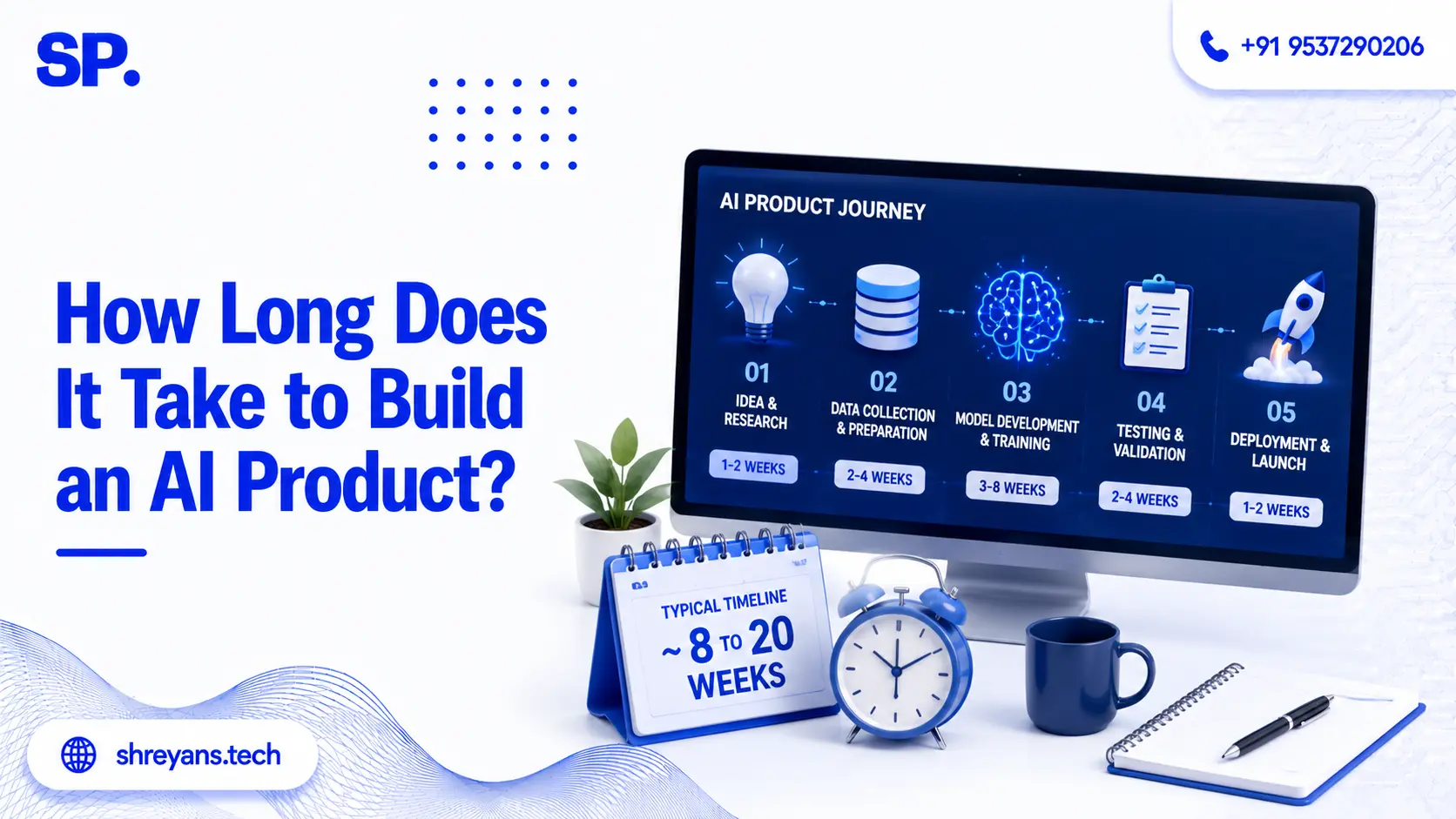
How Long Does It Take to Build an AI Product?
Most published answers to this question are real numbers measured on the wrong thing. Twenty to forty weeks for a mobile app is an accurate figure, but it's a figure about screens, and an AI product doesn't run on screens.
The more useful observation is that the answer to how long to build AI product work is mostly decided in week one, not in weeks eight through sixteen. Timelines slip because of scope ambiguity, data surprises, and integration discovered late, far more often than because engineering took longer than expected. Here are the real ranges, and the three variables that determine which end of them you land on.
Three Different Questions Hiding in One
"How long will it take" usually means three separate things, and conflating them causes most of the disappointment in AI projects.
|
Milestone |
What it means |
Typical gap from start |
|---|---|---|
|
Working prototype |
It does the thing, on sample data, in a demo |
2–6 weeks |
|
Production release |
Real users, real data, integrated, monitored, secured |
3–6 months for most first products |
|
Trusted at scale |
Reliability, edge cases, and accuracy the business will actually lean on |
6–18 months beyond first release |
The gap between the first and second rows is where projects go wrong. A demo that works is frequently mistaken for a product that's nearly finished, when production readiness is its own phase of roughly four to sixteen weeks: authentication, logging, guardrails, evaluation harnesses, error handling, and integration. Teams that skip planning for it don't finish sooner, they just discover the missing phase later.
Hire Edge Computer Vision
Realistic Timelines by Product Type
Ranges converge reasonably well across published 2026 sources. These assume a competent team and reasonably available data.
|
Product type |
Prototype |
Production |
|---|---|---|
|
Simple FAQ or rule-based assistant |
1–2 weeks |
2–4 weeks |
|
LLM assistant on a foundation model, light customisation |
2–3 weeks |
6–10 weeks |
|
RAG system over your own documents |
2–4 weeks |
2–4 months |
|
Custom model trained on proprietary data |
4–6 weeks |
3–5 months |
|
Computer vision or generative product |
4–8 weeks |
4–9 months |
|
Multi-agent system with tool use and memory |
4–6 weeks |
3–4 months |
|
Enterprise platform, multiple models, regulated |
— |
6–12 months+ |
Two notes on reading this table. A model trained genuinely from scratch, rather than fine-tuned, sits outside it entirely at twelve to twenty-four months, and is rarely the right answer for a business problem. And regulated environments add roughly three months for security and compliance review on top of whichever row applies, which is a scheduling fact rather than a complexity one.
Hire Edge Computer Vision
The Three Variables That Set Your Number
Where you land within a range is governed by three things, and none of them are about engineering speed.
Data readiness
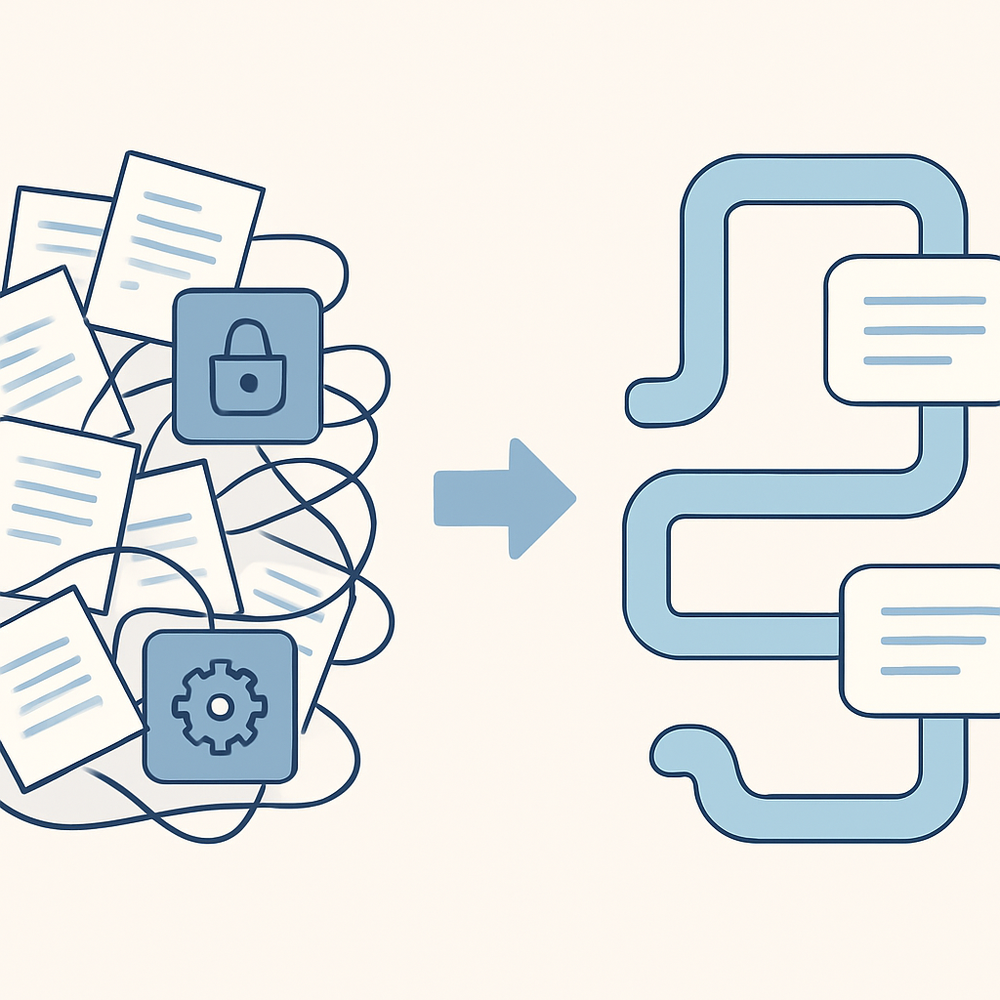
The single most common source of delay. If the data your product needs is clean, structured, and reachable through an API or export, you're at the fast end. If it sits in a legacy system requiring a custom extraction script, or in PDFs needing parsing and normalisation before anything can be indexed, add two to six weeks before real work starts. Across whole projects, data preparation commonly consumes 40% to 60% of the total schedule.
Error tolerance
How wrong can the system be before it causes real damage? An internal drafting assistant where a human reviews everything can ship at a lower accuracy bar than a system that acts autonomously on customer accounts. Error tolerance determines how much evaluation, guardrail, and human-in-the-loop work the build requires, and it can double a timeline without changing a single feature.
Integration surface
Each system the product must talk to adds time, and the multiplier depends heavily on documentation quality. A modern, well-documented API is a day or two. An internal legacy system with no documentation and one person who understands it is a fortnight and a scheduling dependency. Integration time is the variable most consistently underestimated at quoting stage.
Hire Edge Computer Vision
Why Discovery Decides the Timeline Rather Than Estimating It
In conventional software you estimate from scope, because scope is knowable in advance. In AI work, the feasibility of the core capability often isn't knowable until someone has looked at your actual data, which means an estimate produced before that point is a guess with a confident tone.
A discovery phase of one to four weeks exists to resolve exactly the three variables above: what state the data is really in, what accuracy the use case genuinely requires, and what the integration surface actually looks like. That's why discovery doesn't merely estimate the timeline, it determines it, and why a vendor willing to quote firmly before seeing your systems is telling you something about their process rather than about your project.
Running that discovery as a scoped, paid proof of concept is usually the efficient version, since it produces a real answer on real data rather than a document. building an AI PoC covers structuring it so the output is decision-grade evidence.
What Actually Causes the Slip
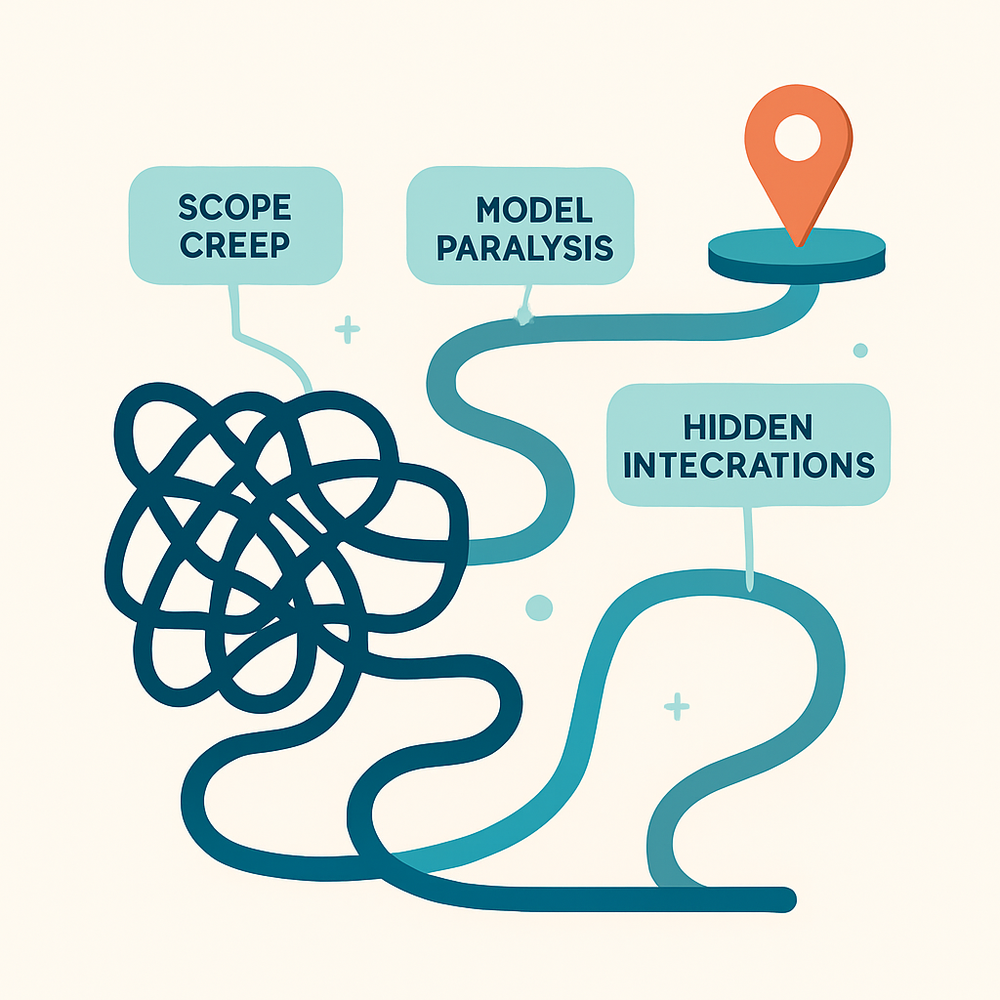
When AI projects run late, the cause is rarely that the engineering was harder than expected. Four patterns dominate.
Scope creep at the demo stage. A working prototype invites new requests, each individually small. The fix is agreeing what production version one includes before the demo is shown to stakeholders.
Model selection paralysis. Weeks lost comparing options that would all have worked. Pick a reasonable default, build the evaluation harness, and let measured results drive any change.
Integration discovered rather than planned. The three systems nobody mentioned in kickoff appear in week six. This is what the discovery phase is for.
Production readiness treated as a final step. Guardrails, logging, evaluation, and error handling are a phase, not a checklist item at the end.
Team model also moves the number, though less than people expect once the variables above are settled. What matters more than location is whether the team has shipped this category of product before, since prior experience mainly buys you fewer wrong turns rather than faster typing. AI developer cost by region covers how the cost side of that decision breaks down.
Getting a Quote You Can Actually Plan Against
Ask for the timeline split into prototype, production, and stabilisation rather than a single figure, since a single figure almost always describes the first of those while being heard as the second.
Then ask three questions that expose whether the estimate is grounded: what assumptions about our data does this timeline rest on, which integrations are included and which are assumed straightforward, and what specifically would push this to the upper end of the range. A vendor who can answer all three has scoped your project. One who can't has priced a template. choosing an AI development partner covers the broader evaluation questions worth pairing with these.
Hire Edge Computer Vision
Frequently asked questions
How long does it take to build an AI product?
Why is there such a big gap between a working demo and a finished product?
What causes AI projects to run late most often?
Why won't a vendor give a firm timeline upfront?
Does working in a regulated industry change the timeline?
What should I ask a vendor to get a timeline I can plan against?



Shreyans Padmani
Shreyans Padmani has 5+ years of experience leading innovative software solutions, specializing in AI, LLMs, RAG, and strategic application development. He transforms emerging technologies into scalable, high-performance systems, combining strong technical expertise with business-focused execution to deliver impactful digital solutions.