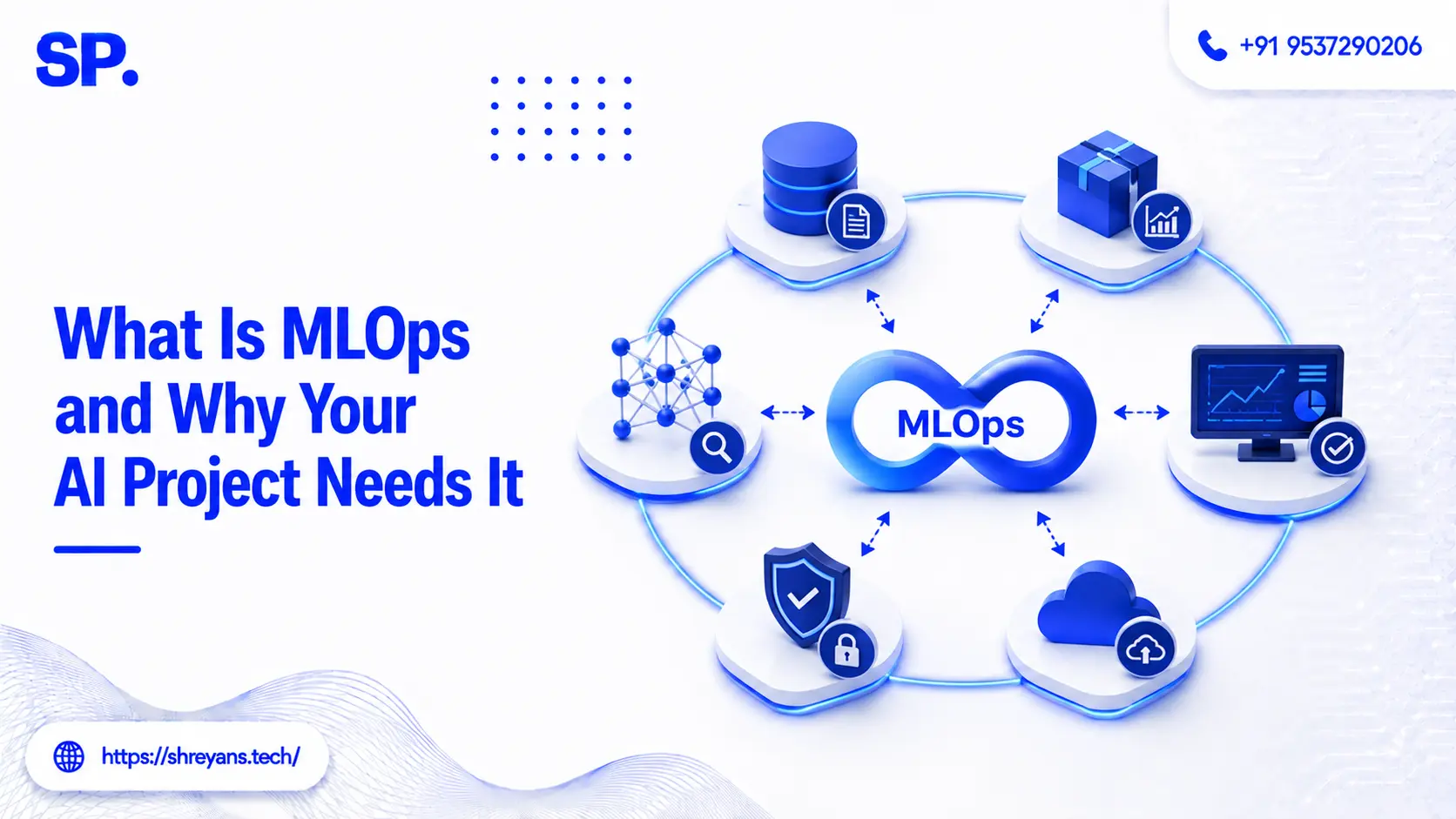
What Is MLOps and Why Your AI Project Needs It
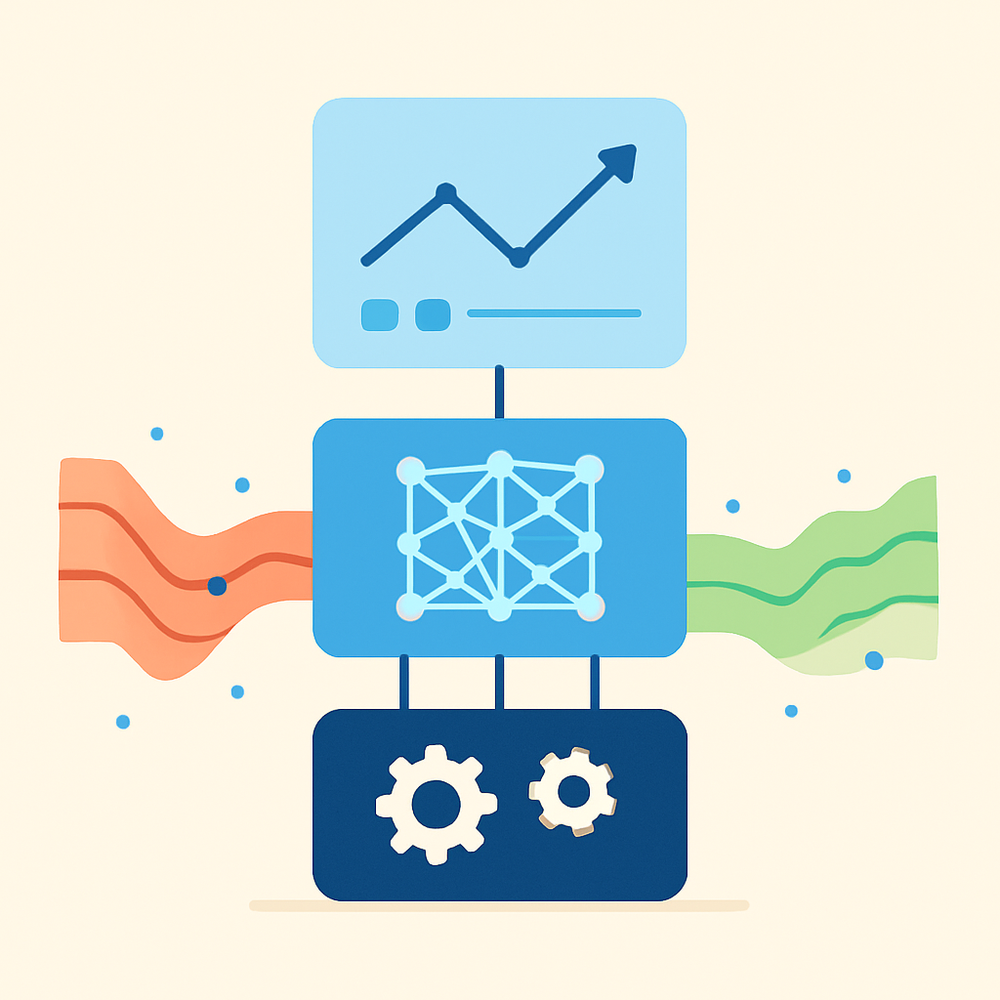
One analysis puts it bluntly: 88% of AI initiatives fail to reach production without MLOps, because models degrade as real-world data shifts even when the underlying code hasn't changed at all.
The clearest way to understand what is MLOps and why it exists as a separate discipline is this: a web service has one thing that can change underneath it, the code. A machine learning system has three, and they change independently of each other. Everything below follows from that.
The Three-Artifact Problem
In conventional software, behaviour is a function of code. Change the code and behaviour changes; leave it alone and it doesn't. Git captures the entire causal story, which is why DevOps works as well as it does.
A machine learning system has three moving artifacts:
|
Artifact |
What it is |
How it changes without anyone touching the code |
|---|---|---|
|
Code |
Training scripts, feature logic, serving application |
It doesn't; this is the well-behaved one |
|
Data |
Training data, features, and the live input distribution |
The world shifts: customer behaviour, suppliers, seasons, upstream schema changes |
|
Model |
The trained artifact, weights, hyperparameters, training environment |
Every retraining run produces a new one, which may be better or worse |
The consequence is that reproducibility becomes a multi-part problem. To explain why a production model behaved a certain way six months ago, you need the code version, the exact dataset version, the model artifact, the training environment, and the hyperparameters, all recoverable together. Any one of them missing and you can approximate what happened but not reproduce it, which is not good enough when the question comes from an auditor or a customer.
Hire Edge Computer Vision
MLOps, DevOps, and DataOps: Clean Boundaries
These three overlap enough to muddle a budget conversation, so it's worth separating them precisely. One ships code to production. One ships data. One ships models.
|
DevOps |
DataOps |
MLOps |
|
|---|---|---|---|
|
Primary artifact |
Application code |
Data pipelines and datasets |
Code + data + model |
|
Versioning |
Git |
Git plus data versioning |
Git plus data, model, environment, hyperparameters |
|
Testing focus |
Unit, integration, end-to-end |
Data quality, schema, freshness |
Plus model validation, drift, bias |
|
Monitoring |
Uptime, latency, errors |
Pipeline freshness, anomalies |
Plus accuracy, prediction and feature drift |
|
Pipeline trigger |
Code commit |
Schema or pipeline change |
Code commit, data change, drift signal, or schedule |
MLOps is not simply DevOps applied to machine learning. It's DevOps plus DataOps plus an additional layer for the model itself, which is a third artifact derived from data, dependent on a frozen training environment, and capable of degrading silently while everything around it appears healthy. DataOps is the foundation the whole thing stands on, because a feature store and a drift monitor are only as trustworthy as the data feeding them.
Why CI/CD Becomes CI/CD/CT
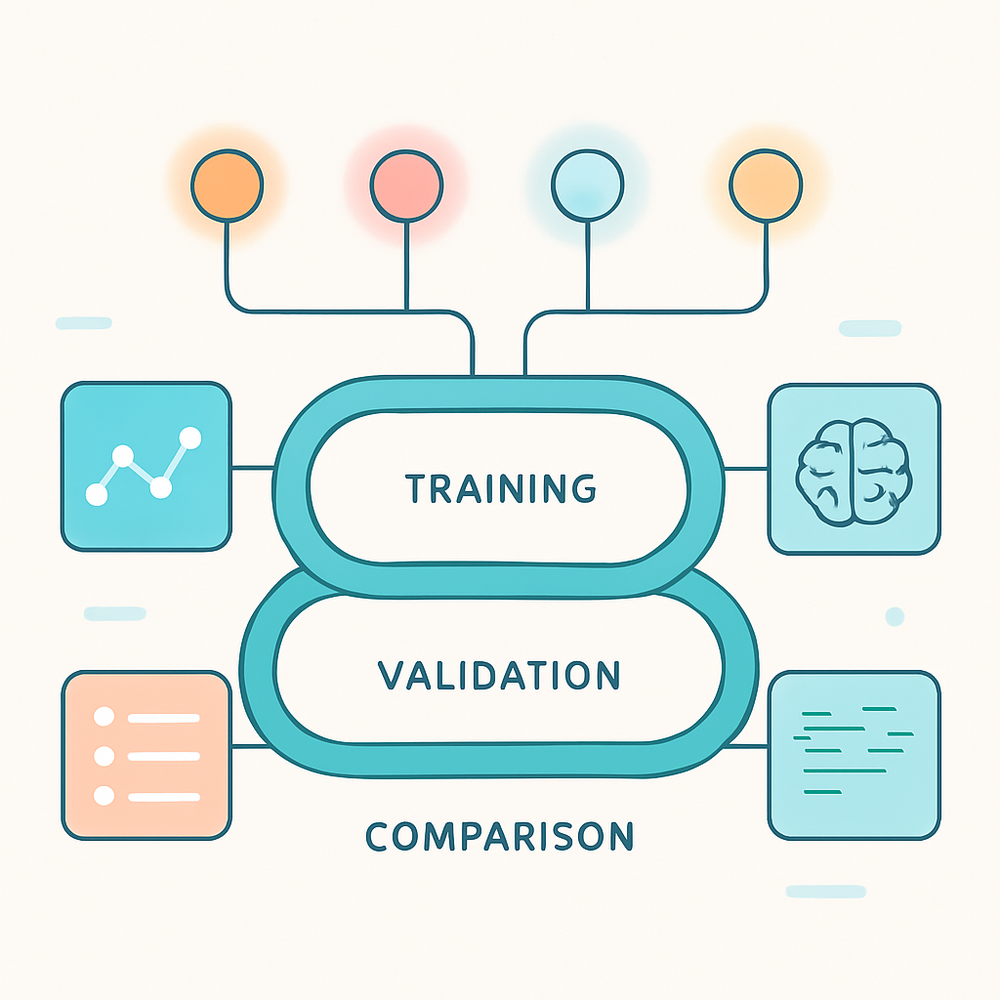
In DevOps, a pipeline runs when someone pushes a commit. That single trigger covers essentially every reason the system's behaviour might need to change.
In MLOps there are four triggers: a code commit, a change in the data, a drift signal from production, or a scheduled retraining interval. Three of those involve no human pushing anything. That's why the discipline adds a third letter, continuous training, to the familiar CI/CD, and why the pipeline itself has to do more work: validating incoming data for schema drift and statistical anomalies before training, then comparing the newly trained challenger against the current production champion and refusing to promote it if it performs worse.
A pipeline that trains and deploys without that comparison step will, eventually and confidently, ship a regression.
Hire Edge Computer Vision
What MLOps Actually Consists Of
Stripped of vendor framing, the discipline is a handful of capabilities. You don't need all of them on day one, but you should know what each solves.
|
Capability |
The problem it solves |
|---|---|
|
Data versioning |
Knowing exactly which dataset produced a given model |
|
Experiment tracking |
Recovering your best run instead of losing it in an old notebook |
|
Model registry |
Controlled promotion from staging to production, with lineage |
|
Feature store |
Serving the same feature logic in training and inference, avoiding skew |
|
Orchestration |
Repeatable, scheduled training and evaluation pipelines |
|
Monitoring |
Detecting drift and degradation before it becomes commercial damage |
Two practical notes. The feature store item is the one newcomers most often skip and most often regret, because a feature computed one way during training and another way at serving time produces a model that tests beautifully and underperforms in production for reasons nobody can find. And the serving layer itself is ordinary software engineering, ML web app development covers what wrapping a model in a reliable application actually involves.
Worth knowing before you shop: DevOps tooling is mature and standardised around Git, Jenkins, and Kubernetes. MLOps tooling is still fragmenting across MLflow, DVC, Kubeflow, Weights & Biases, and the cloud platforms. The term only emerged around 2018, and the lack of a settled stack is a real cost, not a detail.
Hire Edge Computer Vision
The Three Maturity Levels
Level 0: Manual
Data scientists work in notebooks. Training is manual, deployment is ad hoc, and nothing is reproducible by default. This is where the large majority of ML projects stall, and it's not a tooling failure so much as an absence of any process at all.
Level 1: Automated pipeline
Training and deployment run as an automated pipeline triggered by code or data changes. Experiments are tracked, data and models are versioned. This level is achievable by a small team and captures most of the practical benefit.
Level 2: Full CI/CD/CT
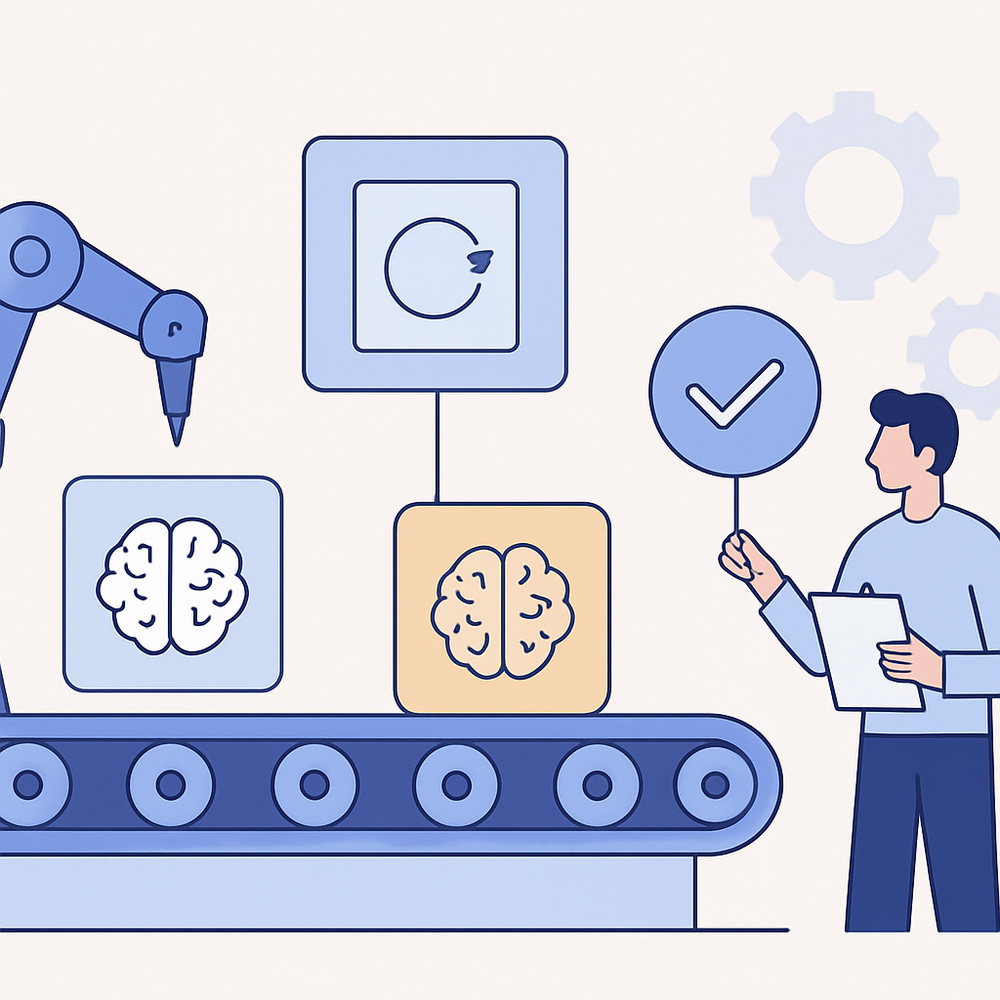
Continuous training with automated drift detection, automatic retraining, and human-in-the-loop approval gates for promotion. Worth building when you're running many models, operating under regulatory scrutiny, or retraining frequently enough that manual intervention becomes the bottleneck.
Most organisations should aim squarely at Level 1 and resist buying a Level 2 platform first. The capability that matters earliest is reproducibility, not automation, and teams commonly pair internal ownership with external engineering capacity to get there, which dedicated ML hiring covers structuring sensibly.
When You Don't Need It
Full MLOps infrastructure is genuine overhead, and applying it to a small problem is a real and common waste.
A single model, retrained rarely, serving a low-stakes internal decision, does not need a feature store and a continuous training pipeline. What it does need is the cheap subset: version the data, track the experiments, and write down how to reproduce the model. That's a week of discipline rather than a platform purchase, and it prevents the specific failure where the person who built the model leaves and nobody can rebuild it. If you're unsure where your project sits on that line, choosing an AI development partner covers the questions worth asking someone who's made the call before.
Hire Edge Computer Vision
Frequently asked questions
What is MLOps in simple terms?
Is MLOps just DevOps for machine learning?
What does the extra 'CT' in CI/CD/CT mean?
What tools are used for MLOps?
What MLOps maturity level should a small team aim for?
Can a project skip MLOps entirely?



Shreyans Padmani
Shreyans Padmani has 5+ years of experience leading innovative software solutions, specializing in AI, LLMs, RAG, and strategic application development. He transforms emerging technologies into scalable, high-performance systems, combining strong technical expertise with business-focused execution to deliver impactful digital solutions.