Eighty-eight percent of organisations now use AI in at least one function, yet only 6 percent qualify as AI high performers, according to McKinsey. The gap between adoption and measurable return is widening, not closing. Most teams experiment with generative AI for content tasks such as drafting blog posts or writing social captions, but far fewer connect those experiments to revenue, cost savings, or productivity gains they can report to a board.
This post moves past the hype. It covers the AI content generation use cases that are producing verifiable ROI in 2026, names the companies and studies behind the numbers, and explains what separates the organisations capturing value from those still running pilots that never reach production. Whether you are evaluating tools or deciding whether to hire generative AI developers to build custom pipelines, the use cases below will help you prioritise.
Marketing Automation Where AI Content Delivers the Fastest Payback
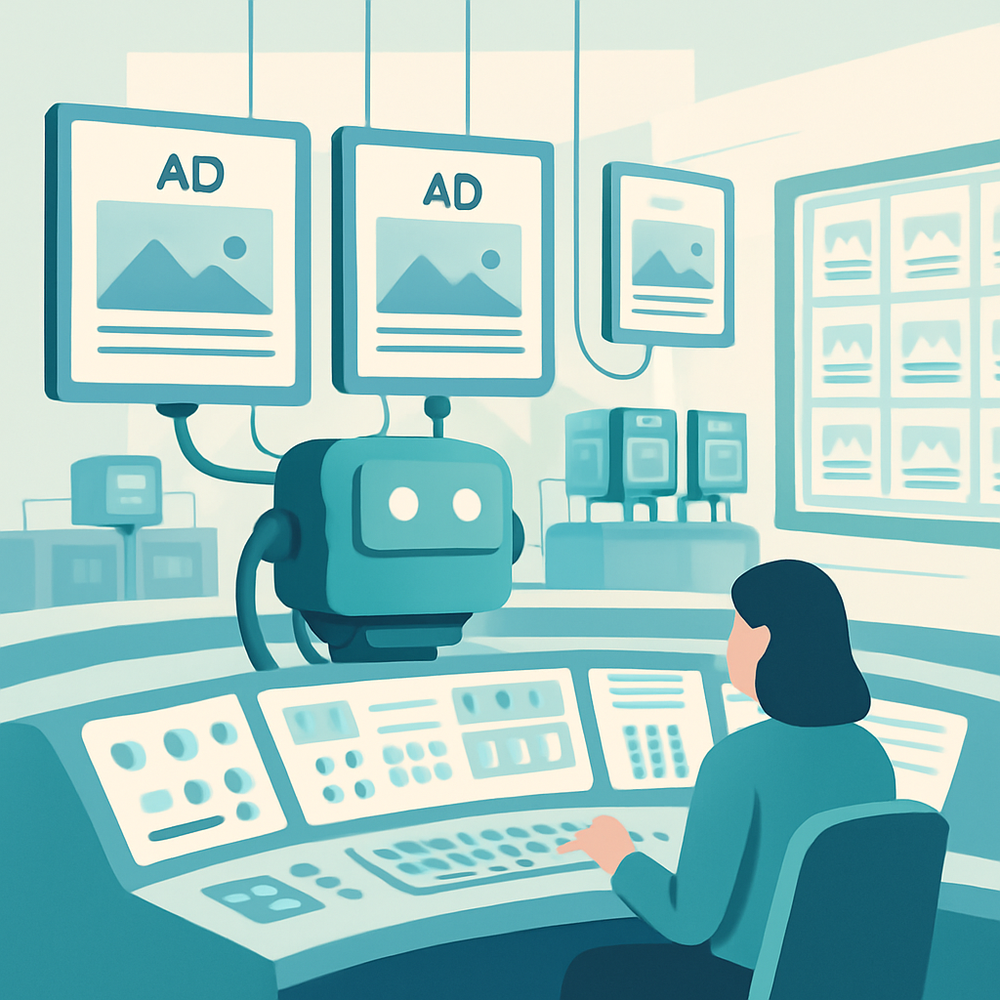
Marketing teams are the most common early adopters of generative AI, and for good reason. Content creation is repetitive, time-sensitive, and measurable. When AI handles first-draft generation, A/B copy variants, and campaign personalisation, the productivity gains compound across every channel.
JPMorgan Chase provides one of the most cited case studies in the industry. After deploying AI to generate and test ad copy across digital channels, the bank saw a 450 percent improvement in click-through rates on display ads and an 18 percent reduction in cost per acquisition. The program was not conceptual. It leveraged machine learning algorithms to write and test headlines at scale through machine learning development services, replacing a manual process that took weeks and delivered fewer variants.
Email and Lifecycle Content: 320 Percent Revenue Lifts Are Real
Email marketing was one of the first channels transformed by generative AI, and the revenue numbers remain striking. A widely documented Salesforce case study reported a 320 percent increase in email-driven revenue after implementing AI for subject line generation, send-time optimisation, and content personalisation at the subscriber level.
The mechanism is straightforward. AI models generate subject lines from historical performance data, test them against small audience segments, and deploy the winning variants to the full list. The same applies to body content: dynamic blocks adapt product recommendations, tone, and offers based on individual behaviour patterns. For lifecycle programs such as onboarding, abandoned cart, and re-engagement sequences, AI writes and adjusts every step without human intervention.
The cost side matters equally. Enterprise teams report a 65 percent reduction in content production costs after adopting AI for email workflows, according to a 2025 Salesforce State of Marketing report. That figure spans copywriting, design tagging, and translation tasks that previously required multiple contractors. The combination of higher revenue and lower cost is what makes email the single fastest channel to demonstrate AI ROI.
SEO and Long-Form Content: Scale Without Sacrificing Quality
Search visibility rewards consistent, high-quality publishing cadences. AI content generation tools allow marketing teams to scale from a few posts per month to dozens, covering long-tail topics and question clusters that would otherwise go unaddressed. The ROI here is indirect but measurable: increased organic traffic, higher domain authority, and reduced spend on paid acquisition channels.
The critical distinction is between volume and quality. Google's guidelines reward content that demonstrates experience, expertise, authoritativeness, and trustworthiness regardless of whether AI assisted in drafting. The most successful SEO programs use AI for research, outlining, and first drafts, then layer human editing for accuracy, voice, and original analysis. This hybrid model produces content that ranks and converts.
For enterprise teams producing content across multiple regions and languages, AI also slashes localisation costs. Automatic translation and cultural adaptation tools produce market-ready drafts in minutes rather than weeks. One documented result from Deloitte's 2025 Global Marketing Trends report found that companies using AI-assisted content localisation saw 40 percent faster time-to-market for international campaigns.
Ad Copy and Creative Optimisation: Testing at Machine Speed
Digital advertising rewards creative testing velocity. The more variants you test, the faster you find winners. AI tools now generate ad copy, headlines, descriptions, and visual briefs in seconds, enabling creative teams to run thousands of variants across platforms without scaling headcount.
Meta's Advantage+ platform, which uses AI to generate and rotate creative assets, reported average ROAS improvements of 32 percent for e-commerce advertisers in 2025. The platform automatically tests combinations of headlines, images, and descriptions against audience segments, then allocates budget to the best combinations. Human creative directors set the brand parameters; the system handles iteration at scale.
Enterprise Knowledge Systems: Internal Content That Saves Millions
Not all AI content generation is outward-facing. Internal knowledge systems are emerging as one of the highest-ROI enterprise use cases. AI models trained on company data can generate internal documentation, proposal drafts, customer support responses, and training materials at a fraction of the traditional cost.

Klarna's 2025 AI assistant deployment is frequently cited. The company reported that its AI-powered customer service tool, built on internal data, handled 2.3 million conversations, performed the work of 700 full-time agents, and improved resolution times by 35 percent. The estimated revenue impact was USD 40 million in profit improvement for the year. This is not a marketing use case. It is operational content generation driving direct cost savings.
For organisations considering whether to build these systems internally or buy SaaS tools, the decision often comes down to data control and customisation. Teams that choose to hire AI developers for enterprise teams to build proprietary pipelines on their own data gain a structural advantage: the models improve with proprietary inputs, and the outputs stay within the organisation's security perimeter.
Product Descriptions and E-Commerce Content: From Weeks to Hours
E-commerce companies with large product catalogues face an acute content problem. Writing unique, SEO-optimised descriptions for thousands of SKUs is expensive and slow. Generative AI compresses that timeline from weeks to hours.
A 2025 report by Boston Consulting Group found that retailers using AI for product description generation saw a 55 percent reduction in content creation costs and a 20 percent improvement in organic search conversion rates. The quality bar is lower than long-form editorial content because product descriptions follow predictable templates, making them ideal candidates for AI generation with light human review.
The ROI compounds. Better product descriptions improve search rankings, increase click-through rates, and reduce bounce rates. For a retailer with ten thousand products, even a five percent conversion uplift across the catalogue represents meaningful revenue with near-zero marginal cost after the initial system setup.
Get a Free AI Consultation
From AI strategy to production-ready solutions, our experts can help you identify the right opportunities, reduce costs, and build AI systems that deliver measurable business value.
Book Free ConsultationWhat Separates Organisations Capturing ROI from Those Stuck in Pilots
Despite the strong use cases above, not every organisation succeeds. Gartner predicted that 30 percent of generative AI projects would be abandoned after proof of concept by the end of 2025, and the actual rate appears higher. The most common reasons cited are poor data quality, unclear business value, and using horizontal AI without integrating proprietary data.
A 2025 study by MIT Project NANDA found that only 5 percent of generative AI pilots deliver measurable P&L impact. The gap between pilot and production is where most organisations lose momentum. Teams that succeed share several traits: they start with a specific workflow tied to a revenue or cost metric, they invest in data readiness before model selection, and they deploy production systems rather than perpetually testing tools.
This is why organisations are increasingly hiring developers who can build bespoke pipelines tied to their own data and processes. The talent market reflects this shift: demand for professionals with in-demand AI skills for 2026 such as RAG engineering, fine-tuning, and LLM Ops has outpaced supply, and salaries reflect the scarcity.
Vertical AI in Practice: Real Estate and Other Sectors
Vertical AI is not limited to marketing or customer service. Real estate companies are deploying AI developers to build property valuation models, generate listing descriptions from property data, and automate lead qualification with AI-driven chatbots. A separate analysis of AI developers in real estate found that firms investing in proprietary AI pipelines saw measurable improvements in lead conversion and listing turnaround times compared to those relying on off-the-shelf tools.
The pattern repeats across healthcare, legal services, and financial services. Organisations that treat AI content generation as a commodity tool get commodity results. Those that build domain-specific systems on their own data get compounding advantages that competitors cannot easily replicate.
How to Measure the Return on Your AI Content Investment
Quantifying AI content ROI requires discipline. Start with a baseline metric for each workflow before introducing AI, then track the delta. For marketing, measure cost per asset, time to publish, conversion rate, and revenue per campaign. For internal knowledge systems, measure time saved per document, reduction in external spend, and downstream productivity gains.
IDC and Microsoft jointly reported in 2025 that organisations deploying generative AI at scale see an average return of USD 3.70 for every dollar invested. Top performers within that cohort achieve USD 10.30 per dollar invested. The difference between average and top performers is not access to better tools. It is better data integration, clearer ownership, and production deployment rather than pilot mode.
Frequently asked questions
What is the average ROI of generative AI for content marketing?
How long does it take to see ROI from AI content generation?
What percentage of generative AI projects fail?
Which industries benefit most from AI content generation?
Is AI-generated content penalised by search engines?
Should we build or buy our AI content generation pipeline?



Shreyans Padmani
Shreyans Padmani has 5+ years of experience leading innovative software solutions, specializing in AI, LLMs, RAG, and strategic application development. He transforms emerging technologies into scalable, high-performance systems, combining strong technical expertise with business-focused execution to deliver impactful digital solutions.