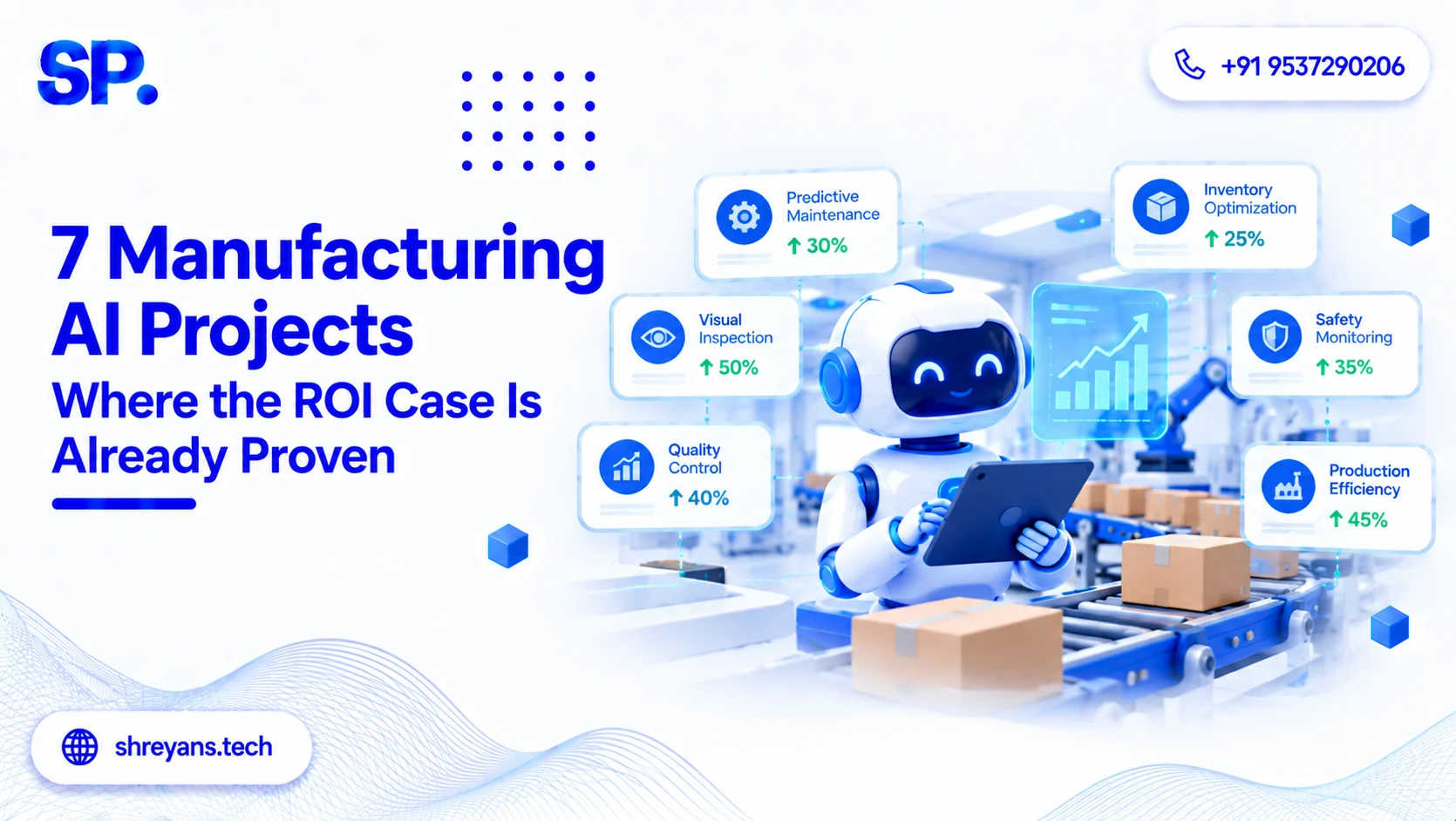
Siemens' True Cost of Downtime research puts unplanned outages at approximately 1.4 trillion US dollars in annual losses for Fortune 500 companies, equivalent to around 11 percent of their combined revenue. PwC research separately found that industrial predictive maintenance returns 7 US dollars for every 1 US dollar invested, and the average manufacturing facility now loses roughly 260,000 US dollars for every hour of unplanned downtime, a figure that is 50 percent higher than it was in 2019. Those numbers explain why predictive maintenance and defect detection have become the two most commonly funded AI hires on a factory floor.
Manufacturing AI hiring fails most often for a simple reason: a single generalist is asked to cover sensor-based forecasting, camera-based inspection, and unstructured maintenance records at once, when each of those is a different data problem with a different failure mode. This guide breaks the hiring decision into the tracks that actually appear in industrial AI job specifications, predictive maintenance, defect detection, and the maintenance-log analysis that connects them, then sets out a practical sequence for where to start.
What Predictive Maintenance Hiring Requires
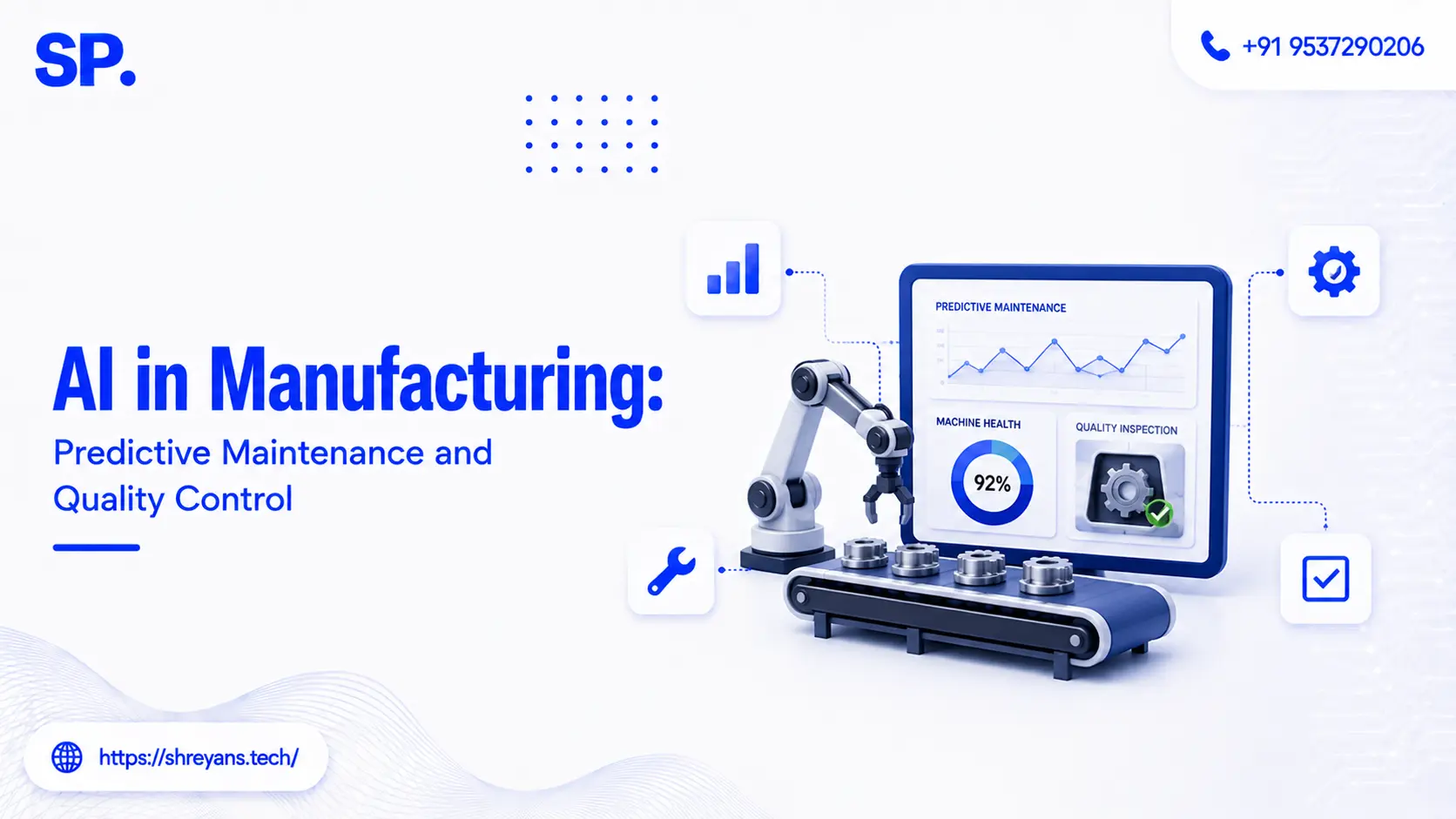
Predictive maintenance forecasts when a piece of equipment is likely to fail using sensor data, vibration, temperature, current draw, acoustic signatures, rather than a fixed calendar schedule. The developers who do this well combine classical time series forecasting with gradient boosting or LSTM-based models trained to recognise the early signature of degradation, and they need to estimate remaining useful life, not just flag a binary healthy or failing state, since a maintenance team needs a window to act within, not a surprise. This is the specific skill set behind machine learning development services built around sensor time series, not a generic forecasting hire assembling a single regression model.
Deloitte's research on industrial predictive maintenance documents a 35 to 45 percent reduction in unplanned downtime and 25 to 30 percent lower maintenance costs among organisations that have deployed it properly, consistent with the 30 to 50 percent downtime reduction cited across multiple 2026 industrial AI analyses. PwC's finding of a 7 to 1 return on investment is not an outlier figure; it reflects that a single prevented failure on a high-value asset, an automotive stamping press or a compressor, routinely pays for a specialist hire's entire engagement several times over.
Defect Detection: Computer Vision on the Line
Human visual inspection misses an estimated 20 to 30 percent of defects under real production conditions, and inspection accuracy has been shown to degrade further after roughly two hours of continuous observation as fatigue sets in. AI vision inspection systems, by contrast, are now documented achieving 95 to 99 percent detection accuracy while inspecting parts at production speed, built on object detection architectures such as the YOLO family combined with lightweight backbones for edge deployment where inspection has to keep pace with the line rather than review images afterward. This is exactly the discipline behind computer vision development work, and it is worth treating as its own hire rather than an extension of a predictive maintenance engagement, since the data, imagery instead of sensor streams, and the latency requirements are entirely different.

Volkswagen has reported a 30 percent production efficiency improvement from computer vision inspection with defect detection accuracy above 99 percent, and BMW has documented a 37 percent defect reduction from AI vision deployed across its production lines. For a broader view of where computer vision returns the fastest payback across industries beyond manufacturing alone, the computer vision ROI by industry post covers the comparison in more depth.
Where NLP Fits: Maintenance Logs and Work Orders
Every plant already generates a large volume of unstructured text that predictive maintenance models never touch: technician notes, work order descriptions, and shift handover logs that describe symptoms in free-form language before a sensor ever registers an anomaly. Turning that text into structured failure signal, extracting equipment identifiers, symptom descriptions and repair actions from inconsistent technician shorthand, is squarely why manufacturers hire an NLP developer alongside a sensor-focused forecasting hire rather than expecting one person to own both. Historically this text sits in a maintenance management system and is never analysed at scale, even though it often contains the earliest description of a failure mode months before a sensor threshold would have caught it.
The practical case for this work is simple: combining forecasting with log-derived signal closes a gap that neither data source closes alone, since accurate sensor-based predictions only lower safety stock and prevent failures if the underlying reorder policies and technician workflows are built on equally accurate context. A model that predicts a bearing is degrading is far more actionable when it is paired with a searchable history of every prior repair performed on that exact asset.
Training Models on Your Own Sensor and Vision Data
Generic pretrained models rarely transfer well to a specific plant's equipment, because vibration signatures, defect types and lighting conditions are highly specific to a facility's machinery and camera setup. Effective deployments retrain or fine-tune models on a facility's own historical sensor logs and annotated defect images, which is custom AI model training work in the most direct sense, and it is the step most underperforming deployments skip. Poor sensor coverage and inconsistent, noisy historian data are the two most commonly cited reasons predictive maintenance projects underdeliver, and both are training-data problems rather than modelling problems, which is why the developer doing this work needs to own data quality as part of the engagement, not treat it as someone else's preparation step.
The return on getting this right scales with asset value. A 250,000 US dollar compressor that runs to 85 to 95 percent of its rated service life instead of being replaced on a fixed schedule represents roughly 100,000 US dollars in deferred capital expenditure from a single well-trained model, and one automotive manufacturer has reported saving 4.2 million US dollars in a single year from monitoring servo motors on a single stamping press application.
Hire AI Manufacturing Experts
Maximize ROI with specialized AI developers, schedule a consultation
Hire AI DevelopersWhere to Start: A Practical Rollout Sequence
The manufacturers who get the best return do not start with the most valuable asset in the plant; they start with the asset that has the best sensor coverage and the cleanest failure history, prove the model works there, and expand from a position of evidence rather than ambition. A defensible sequence looks like an initial thirty-day audit of data hygiene and sensor coverage, a pilot on one or two lines with a clear before-and-after downtime or defect-rate measurement, and only then a wider rollout once the pilot has produced a number a plant manager will actually trust. Most manufacturers evaluating this for the first time are better served by a freelance specialist scoped to the pilot than a long-term platform contract signed before anyone has proven the concept on their own equipment, and the why startups hire freelance post covers the same reasoning that applies to a manufacturer running a first pilot rather than a full platform rollout.
Roughly 60 to 70 percent of a predictive maintenance project's eventual savings are typically realised within the first quarter of deployment when the pilot is scoped correctly, which is the strongest argument for starting narrow: a plant manager who sees real numbers inside three months will fund the expansion, and one who waits eighteen months for a full-plant rollout to prove itself rarely gets the chance to find out.
|
Track |
Core Technique |
Common Tools |
Typical ROI Signal |
|---|---|---|---|
|
Predictive Maintenance |
Time series forecasting and anomaly detection on sensor streams |
Gradient boosting, LSTM, IIoT sensor pipelines |
30 to 50 percent reduction in unplanned downtime |
|
Defect Detection |
Object detection and classification on production-line imagery |
YOLO-family models, edge inference cameras |
95 to 99 percent detection accuracy versus 70 to 80 percent for manual inspection |
|
Maintenance Log Analysis |
Information extraction from technician notes and work orders |
NLP entity extraction, document classification |
Structured failure signal recovered from previously unused free text |
Hiring and Vetting for Industrial AI
A candidate's experience with public benchmark datasets for time series or defect detection says little about whether they can handle a real plant's constraints: inconsistent sensor sampling rates, mislabelled historical failures, and cameras mounted in whatever position the line allowed rather than the position a vision model would prefer. A stronger interview asks the candidate to walk through how they would handle a facility with poor historical failure labels, how they would validate a remaining-useful-life estimate against ground truth that only arrives when equipment actually fails, and how they would monitor a defect detection model's accuracy as lighting, product variants or camera angles drift over time.
The strongest industrial AI candidates treat sensor and camera infrastructure as part of the scope, not a precondition somebody else handles before they arrive, because the two most common reasons deployments underdeliver, poor sensor coverage and inconsistent historian data, are exactly the problems a specialist should be diagnosing in the first thirty days rather than discovering after the model has already been built.
What This Costs and How Engagement Models Differ
Cost tracks the same drivers across all three tracks: how much clean historical sensor or image data already exists, how many production lines or asset types the model needs to generalise across, and how much custom hardware, sensors, cameras, edge compute, the deployment requires beyond the modelling work itself. A predictive maintenance pilot on one well-instrumented line is a materially smaller engagement than a plant-wide defect detection rollout needing camera installation and an annotation pipeline across dozens of product variants. For a fuller breakdown of how pricing shifts by project type, the ML consultant cost post covers the ranges in more detail than fits here.
Implementation costs for a comprehensive predictive maintenance system typically run from 200,000 to 1 million US dollars depending on facility size and sensor infrastructure, but most organisations recover 60 to 70 percent of the projected savings within the first quarter when the pilot is scoped narrowly, which is why starting with one instrumented line rather than a full-plant contract remains the better-tested path to a return.
Where the Rollout Actually Pays Off
The plants seeing the strongest returns are not the ones that bought the most sensors or the most expensive vision cameras; they are the ones that matched a specialist to the right track and proved value on one line before expanding. A predictive maintenance hire who has never validated a remaining-useful-life estimate against real failures, a defect detection hire unfamiliar with edge deployment constraints, or a project that skips the maintenance-log data sitting unused in the plant's own systems will each cost more in rework than a properly scoped pilot saves in time.
If you are ready to scope a predictive maintenance, defect detection or maintenance-log project, hire an AI developer for manufacturing who will start with a data audit rather than a model, since the plants still relying on calendar-based maintenance next year will be competing against ones that already know which machine is about to fail.
Frequently asked questions
What does an AI developer for manufacturing actually build?
Predictive maintenance vs defect detection: what is the hiring difference?
Where should a manufacturer start if they have never used AI on the plant floor?
What determines the cost of a predictive maintenance or defect detection build?
Can predictive maintenance work with older, legacy equipment that lacks modern sensors?
Should a manufacturer hire a freelance AI developer or a platform vendor for a first pilot?



Shreyans Padmani
Shreyans Padmani has 5+ years of experience leading innovative software solutions, specializing in AI, LLMs, RAG, and strategic application development. He transforms emerging technologies into scalable, high-performance systems, combining strong technical expertise with business-focused execution to deliver impactful digital solutions.