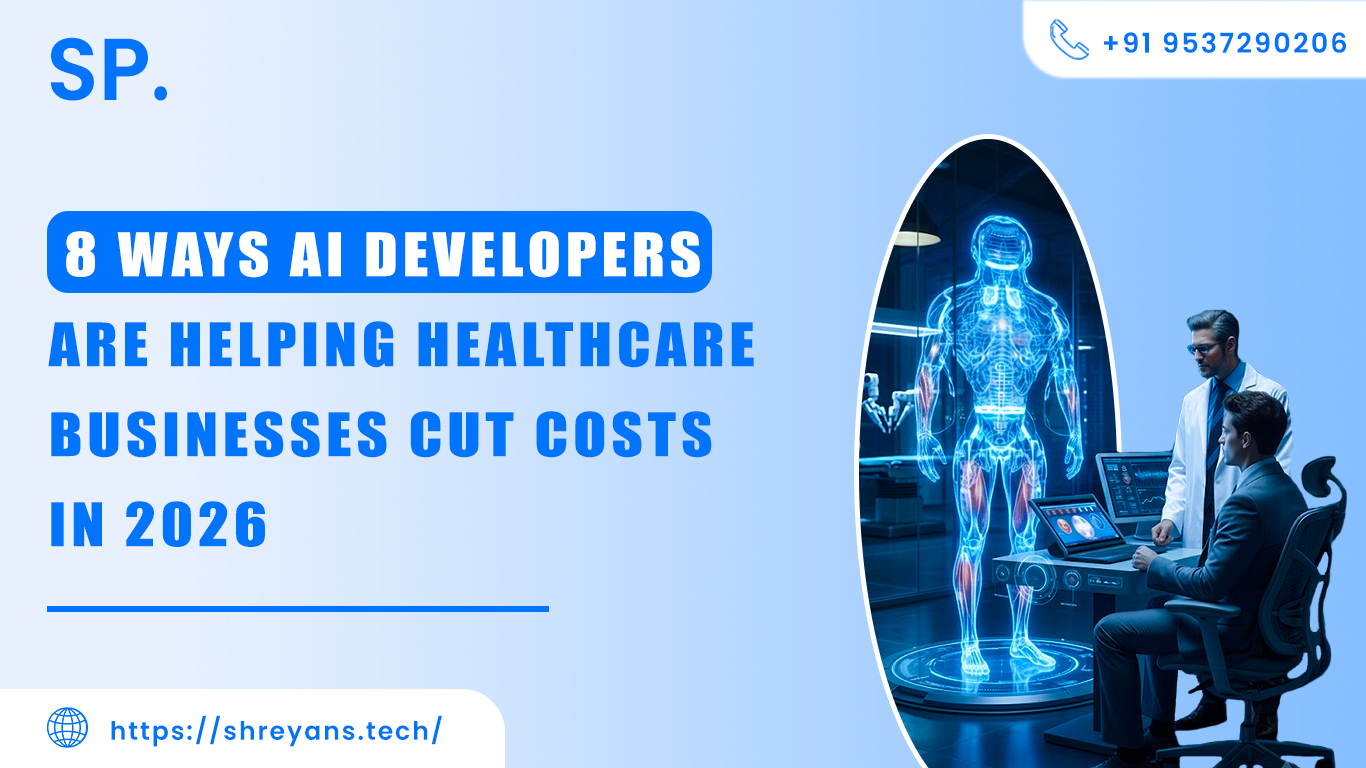
6 Ways AI Developers Are Helping Healthcare Companies Reduce Admin Overhead in 2026
The American Medical Association's 2024 Physician Practice Benchmark Survey found that physicians spend an average of 15.6 hours per week on administrative tasks, equivalent to 36 percent of their working time. The Medical Group Management Association reported in 2025 that administrative costs account for 34.2 percent of total US healthcare spending, approximately USD 1.1 trillion annually. These are not new problems, but 2026 is the first year where AI systems robust enough to handle the regulatory and interoperability constraints of healthcare environments are available at a cost that community hospitals, specialty clinics, and mid-market health tech companies can afford.
The organisations benefiting most are those engaging AI developers with direct experience in healthcare data formats (HL7, FHIR, DICOM), HIPAA-compliant deployment architectures, and the clinical workflows that generate administrative load. The six use cases below represent the highest-impact applications currently in production, with specific cost and time figures drawn from published case studies and verified industry benchmarks. For organisations evaluating which of these applies to their context, the hire AI developer for healthcare page provides a framework for matching use case to implementation approach.
1. Clinical Documentation Automation via NLP
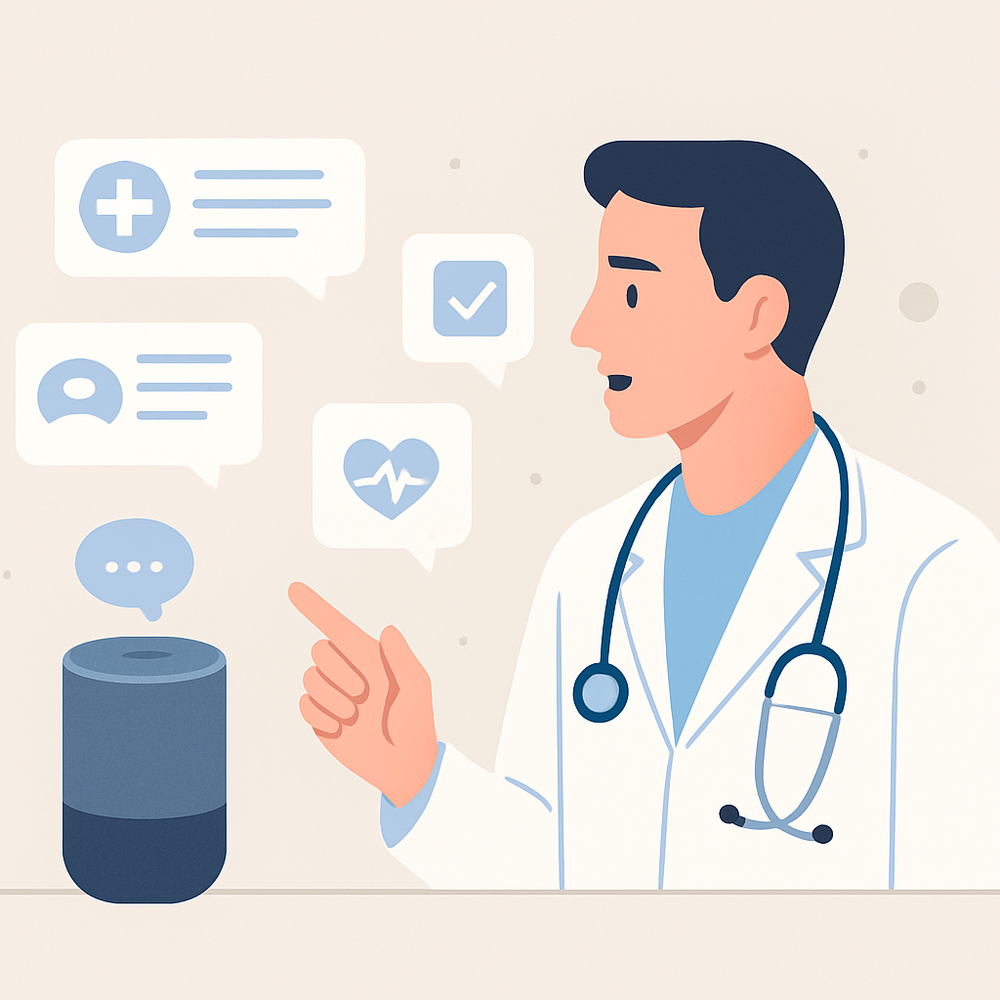
Clinicians in the United States generate an estimated 2.6 billion clinical notes per year. A significant portion of that documentation is dictated or typed manually after patient encounters, consuming time that has clinical opportunity cost. NLP-powered documentation systems, trained on EHR data and clinical language models (BioGPT, ClinicalBERT, or fine-tuned Llama variants), can convert structured voice input, physician dictation, or partial notes into fully formatted SOAP notes, discharge summaries, and referral letters.
Nuance (a Microsoft company) reported in 2024 that its DAX Copilot ambient documentation system reduced post-appointment documentation time by 72 percent at pilot sites across 150 US health systems. Smaller-scale implementations built on open-source clinical NLP models achieve 50 to 65 percent time reduction, with the gap attributable to training data volume and EHR system integration depth. The key constraint is HIPAA compliance: the NLP pipeline must either run on-premise or in a Business Associate Agreement-covered cloud deployment. NLP development services in healthcare contexts require both clinical language expertise and HIPAA-aware infrastructure design.
2. Automated Medical Billing and Claims Coding (ICD-10/CPT)
Medical coding, the translation of clinical documentation into ICD-10 diagnosis codes and CPT procedure codes for insurance billing, is one of the highest-error, highest-cost administrative functions in healthcare. The American Health Information Management Association estimated in 2025 that coding errors contribute to approximately USD 380 billion in denied or delayed claims annually in the US healthcare system. Manual coding for a mid-size hospital employing 20 coders carries a fully-loaded labour cost of approximately USD 1.4 million per year.
AI coding assist systems, using NLP to extract clinical entities from physician notes and map them to billing codes, now achieve 94 to 97 percent accuracy on standard inpatient DRG coding with human-in-the-loop review on edge cases. Pure automation (no human review) reaches 88 to 92 percent accuracy on clean, well-structured notes. The accuracy gap closes significantly when the system is fine-tuned on an organisation's own historical coding data and note templates. For the full financial picture of AI in healthcare administration, the healthcare cost reduction analysis covers ROI figures across billing, documentation, and scheduling workflows.
Hire Edge Computer Vision
3. Prior Authorisation Processing
Prior authorisation (PA), the requirement that providers obtain insurer approval before certain procedures, medications, or specialist referrals, consumed an estimated 16 hours of physician time per week per practice according to a 2024 AMA survey. The PA process involves gathering clinical evidence, completing payer-specific forms, and tracking approval status across multiple insurers, each with different portals and documentation requirements.
AI agent systems built specifically for PA workflows, using combinations of document extraction, form completion automation, and payer portal interaction, are demonstrating 60 to 75 percent reduction in staff time per PA submission at early production deployments. UnitedHealth Group's 2025 provider communications acknowledged a trial of AI-assisted PA review that reduced decision latency from 14 days to under 48 hours for standard submissions. Organisations implementing this capability need AI agent development services from developers who understand both the clinical evidence requirements and the integration constraints of payer portals, which vary significantly across insurers.
The compliance dimension is significant. PA submissions contain protected health information, and any automated system processing them must be covered by a Business Associate Agreement with the AI vendor and must log all decisions and actions for audit purposes. The HIPAA-aware hiring guide covers the technical and contractual requirements for engaging a developer on PA automation.
4. Appointment Scheduling and No-Show Prediction
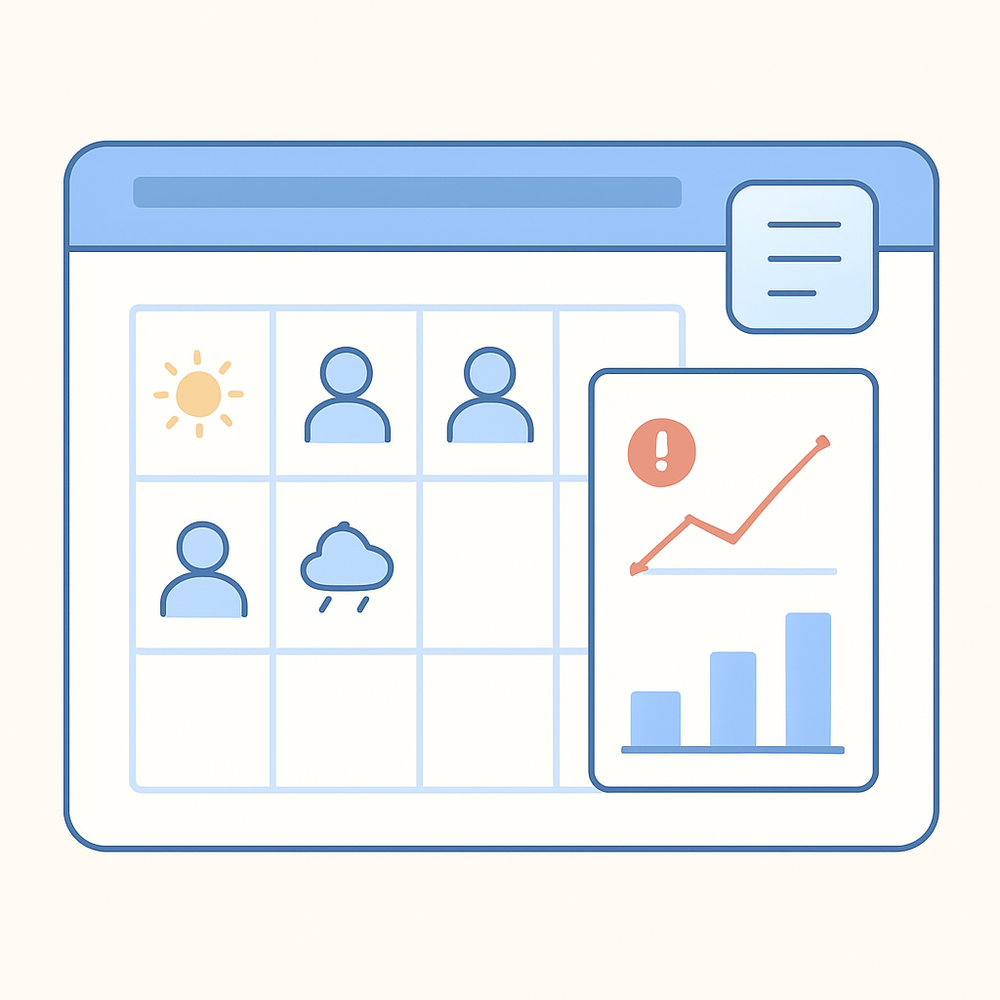
No-show rates in outpatient healthcare average 18 to 23 percent according to MGMA 2024 benchmarking data, with rates as high as 36 percent in community health centre settings. Each no-show costs a primary care practice approximately USD 200 in lost revenue and disrupts the scheduling of other patients. Machine learning-based no-show prediction models, trained on appointment history, patient demographics, weather data, and prior cancellation patterns, can identify high-risk appointments 48 to 72 hours in advance with 78 to 84 percent accuracy.
Production deployments of predictive scheduling at healthcare organisations typically reduce no-show rates by 25 to 40 percent by enabling targeted outreach (automated reminder calls, SMS confirmations, rescheduling offers) to the highest-risk cohort. The second component of intelligent scheduling is demand forecasting: ML models that predict appointment volume by specialty, time of day, and day of week, allowing staff to be allocated more efficiently and reducing wait times. Both applications require integration with the EHR scheduling module (Epic MyChart, Cerner Scheduling, or similar) and access to 18 to 24 months of historical appointment data.
5. Revenue Cycle Management and Denial Prediction
Claim denials are the most expensive administrative event in the revenue cycle. The Advisory Board reported in 2025 that average claim denial rates across US health systems range from 8 to 15 percent, with denial management costing approximately USD 25 per claim in staff time. Machine learning models trained on historical claims data can predict denial probability before a claim is submitted, allowing the billing team to correct documentation gaps proactively rather than reactively manage the appeals process.
Production denial prediction systems achieve 80 to 88 percent recall on high-probability denials (catching 80 to 88 percent of claims that would have been denied before submission). At a hospital submitting 50,000 claims per month with a 10 percent denial rate, a system that catches 80 percent of predicted denials before submission prevents approximately 4,000 denial events per month, saving approximately USD 100,000 per month in denial management cost at the USD 25 per claim benchmark. The model requires regular retraining as payer rules change, which is a production maintenance consideration that must be included in any implementation budget.
Hire Edge Computer Vision
6. Patient Communication Automation (Triage, FAQs, Post-Visit Follow-Up)
Healthcare contact centres handle millions of inbound queries annually that do not require clinical judgement: appointment confirmation, prescription refill requests, insurance coverage questions, and post-discharge wound care instructions. These queries can be handled by AI systems trained on clinical FAQs and EHR-sourced patient data, reducing call volume to human agents and improving response time from hours to seconds.
The design constraint in healthcare patient communication AI is the distinction between administrative and clinical interactions. A system that answers "what time is my appointment" is clearly administrative. A system that answers "my wound is infected, what should I do" is clearly clinical and must escalate to a licensed clinician. Production-ready healthcare communication AI systems include explicit routing logic that classifies queries by clinical risk level and routes anything above a defined threshold to a human. Organisations that have deployed this boundary correctly report 40 to 60 percent reductions in administrative call volume without increasing clinical risk incidents.
Overhead Reduction by Use Case
|
Use Case |
Primary Admin Cost Reduced |
Typical Time Saving |
Key Constraint |
|
Clinical documentation NLP |
Physician admin time |
50 to 72 percent per encounter |
EHR integration, HIPAA hosting |
|
Billing and claims coding |
Coder headcount, denial rate |
40 to 60 percent coding time |
Coding accuracy, audit trail |
|
Prior authorisation automation |
PA staff hours per submission |
60 to 75 percent per PA |
BAA, payer portal integration |
|
No-show prediction |
Lost revenue per no-show |
25 to 40 percent no-show rate reduction |
18 to 24 months of history data |
|
Denial prediction |
Denial management cost per claim |
USD 100K/month at scale |
Payer rule drift, retraining cadence |
|
Patient communication AI |
Contact centre call volume |
40 to 60 percent admin call deflection |
Clinical vs admin routing logic |
The Administrative Burden Is a Solvable Engineering Problem
Healthcare administration overhead is not the result of bad people or broken processes. It is the result of workflows that were designed before the AI systems capable of handling them existed. The six use cases above are in production at healthcare organisations of every size, from solo practitioner networks to multi-site health systems, and the patterns are established enough that implementation timelines and costs are predictable.
For healthcare organisations ready to move from evaluation to implementation, the right starting point is a scoped pilot on one of the six use cases above, with a defined success metric and a HIPAA-compliant deployment architecture from day one. To explore what that looks like in practice with a developer who has shipped healthcare AI in production, the next step is to hire an AI developer with verified healthcare AI experience and a HIPAA-ready development process.
Frequently asked questions
Can HIPAA-compliant AI systems use cloud-hosted models such as GPT-4 or Claude?
How long does it take to implement a clinical NLP documentation system?
What EHR systems do AI healthcare developers typically integrate with?
Is AI-powered prior authorisation automation currently approved by major US insurers?
What data is needed to train a no-show prediction model for a clinic?
Does implementing healthcare AI require a separate vendor contract or can a freelance developer deliver it?



Shreyans Padmani
Shreyans Padmani has 5+ years of experience leading innovative software solutions, specializing in AI, LLMs, RAG, and strategic application development. He transforms emerging technologies into scalable, high-performance systems, combining strong technical expertise with business-focused execution to deliver impactful digital solutions.