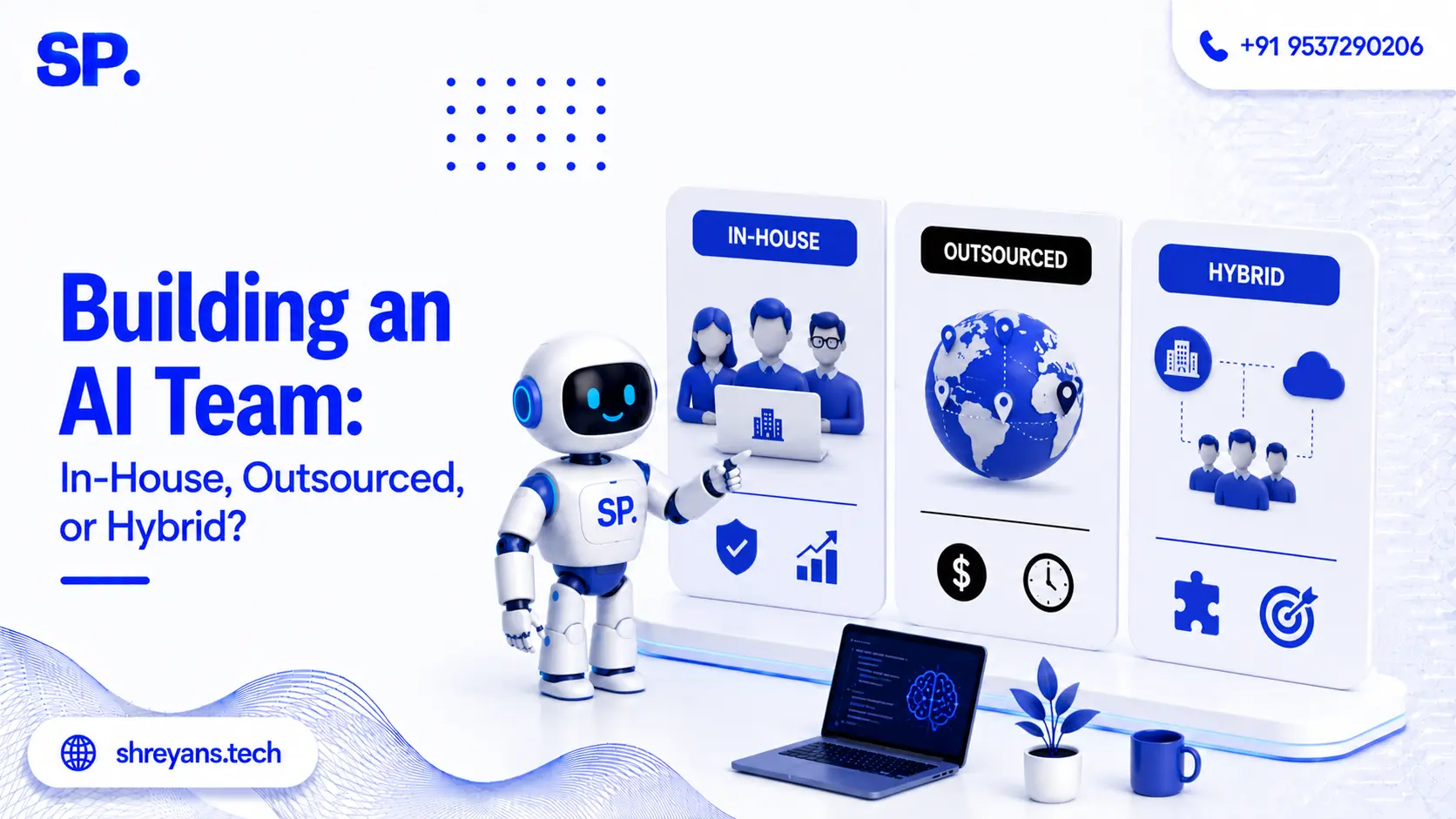
McKinsey's 2025 AI survey found that organizations using a hybrid team model deployed AI 2.4 times faster and achieved 35% higher ROI than organizations relying exclusively on either a fully in-house or a fully outsourced approach. That gap is large enough that the old framing of this decision, pick one model and commit, is quietly becoming the wrong question to ask.
The better question is which pieces of ai team building genuinely need to sit inside your organization, and which pieces are better bought as capability from outside it, because those two answers are rarely the same for any given company. Here's a framework for making that call deliberately instead of by default.
The Three Models, Defined
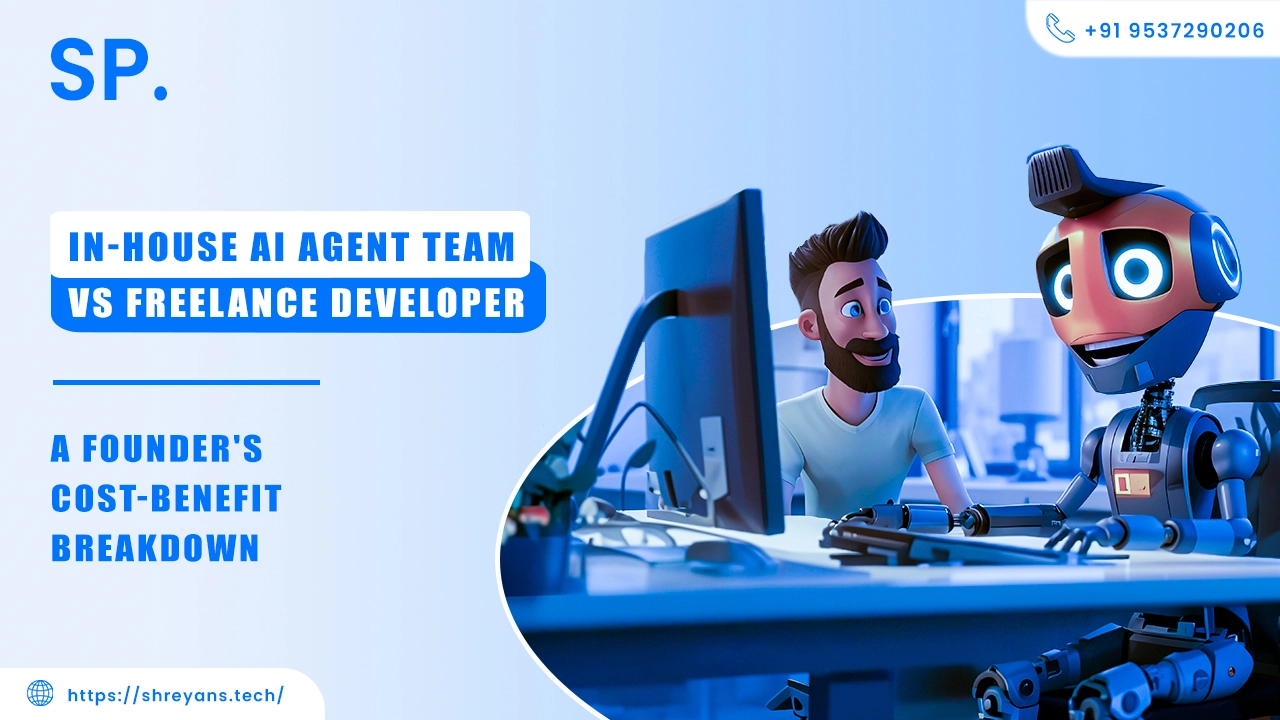
An in-house AI team consists of full-time employees who report directly into the organization, own institutional context, and work exclusively on internal priorities. An outsourced team, whether a freelance developer, a dedicated contractor, or a full agency, delivers a defined scope of work without becoming a permanent part of the organization's headcount. A hybrid model splits responsibility deliberately: a small internal team owns strategy, data governance, and architectural decisions, while external specialists handle execution, model development, MLOps infrastructure, or integration work that doesn't require deep organizational context to do well.
The distinction that actually matters isn't the label, it's which specific responsibilities sit on which side of that line, and that's a decision most companies make by accident rather than on purpose, usually by hiring whoever happened to be available first.
Comparing the Three Models Across Five Dimensions
|
Dimension |
In-house |
Outsourced |
Hybrid |
|---|---|---|---|
|
Cost (3-year total) |
Highest: full salary, benefits, overhead |
Lowest: pay only for work delivered |
Moderate: internal core plus flexible external capacity |
|
Speed to first result |
Slowest: 3–6 months to hire and ramp |
Fastest: days to weeks to start |
Fast: external team starts immediately, internal team ramps in parallel |
|
Institutional context retention |
Highest: compounds over years |
Lowest: resets between engagements |
Retained where it matters: internal team owns context |
|
Access to current, niche expertise |
Limited to what's hired and retained |
High: match the exact skill per project |
High: internal generalists, external specialists as needed |
|
Scalability up or down |
Slow and costly in both directions |
Fast, but capacity isn't guaranteed |
Fast: external capacity flexes, internal core stays stable |
Cost differences compound faster than most budgets assume. Independent 2026 cost analyses comparing fully in-house AI hiring against an outsourced AI-first team found the in-house path running 6 to 17 times more expensive over a three-year horizon for comparable output, with a hybrid model landing at roughly 3 to 4 times the fully outsourced cost, still a large gap, but a meaningfully smaller one than going fully in-house. AI developer cost by region breaks down how much the outsourced side of that comparison shifts depending on where the team is based.
Why Hybrid Has Become the Default in 2026
Beyond the McKinsey speed and ROI numbers above, hybrid has become the dominant pattern for a structural reason: AI talent demand currently outpaces supply by roughly 4 to 1 in the specialized roles most AI projects actually need, which makes a fully in-house strategy slow and expensive to execute even when the budget exists to try. A hybrid structure sidesteps that bottleneck by keeping the roles that require deep, compounding institutional knowledge internal, while sourcing the roles facing the most acute talent scarcity from outside.
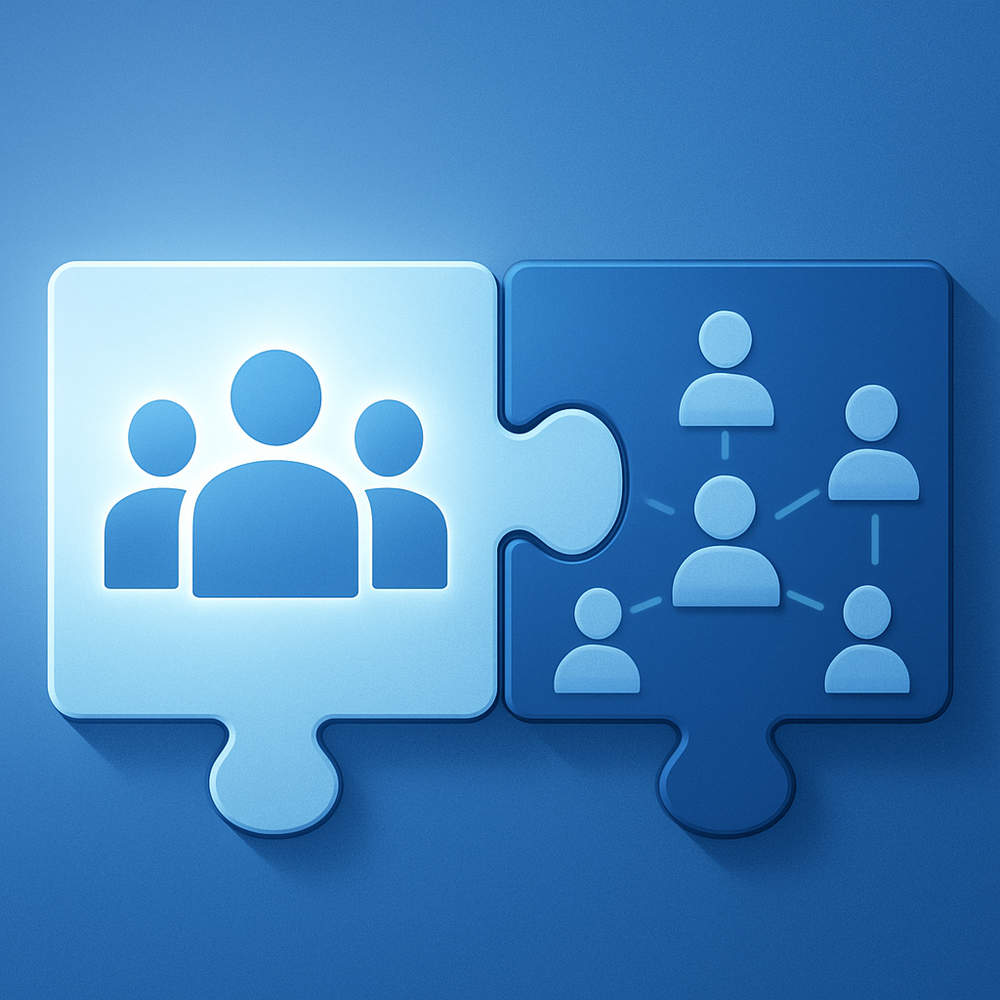
This is exactly the logic behind AI partner for startups: building a full in-house AI capability from a standing start is slow and resource-intensive, while a specialized partner provides immediate execution capacity without the multi-month hiring cycle, letting the founding or core team stay focused on the product and strategic decisions only they can make.
A Maturity-Based Decision Framework
Exploring or piloting: outsource almost everything
If the organization is still validating whether an AI use case is worth pursuing, a fully outsourced proof of concept is the lowest-risk path. There's no institutional AI expertise to leverage yet, so there's little cost to sourcing execution externally, and committing to full-time hires before the concept is validated risks a expensive reversal if the pilot doesn't pan out.
Scaling a validated capability: hybrid
Once a pilot has proven real business value and the roadmap includes ongoing, evolving AI work, a hybrid structure typically becomes the right fit. A small internal team, often just one or two people, takes ownership of strategy, data governance, and vendor coordination, while external specialists handle the execution work at a pace and skill-match that would be slow and expensive to replicate by hiring internally from scratch.
AI as the core product: shift toward in-house
When AI capability is the product itself, not a supporting feature, the calculus shifts toward building deeper in-house ownership, because outsourcing a core competitive differentiator creates a dependency risk that compounds as the product scales. Most organizations in this position still use external specialists for narrow, time-bound needs, but the architectural core and long-term model ownership move in-house as the business matures.
What to Keep In-House vs What to Outsource
Even within a hybrid structure, the split isn't arbitrary. Decisions with long-term, compounding consequences, data governance, architecture choices, vendor selection, production deployment approval, belong internally, where the people making them carry accountability for the outcome over time. Execution work that benefits from deep, current specialization but doesn't require ongoing organizational context, model fine-tuning, MLOps infrastructure setup, a specific integration build, is usually better sourced externally, especially work tied to a fast-moving technical area where an external specialist's cross-client experience stays sharper than a single internal hire's would.
Ambiguous ownership between the two sides is consistently the most common cause of friction in hybrid AI programs. Defining explicitly, before work starts, who owns architecture decisions versus who owns delivery accountability prevents most of the coordination problems hybrid teams otherwise run into. choosing an AI development partner covers the vendor-evaluation questions worth asking before bringing an external partner into that structure.
Common Mistakes When Building an AI Team
Choosing one model and never revisiting it
The organizations that struggle most are the ones that pick in-house, outsourced, or hybrid once, early, and never reconsider it as the AI program's maturity changes. The right model at the pilot stage is rarely the right model once a capability is core to the product, and treating the staffing decision as permanent is a common, avoidable mistake.
Outsourcing the parts that need institutional context
Handing data governance or architecture decisions to an external party with no long-term stake in the outcome tends to produce systems that work in isolation but don't fit the organization's actual constraints. These decisions compound over years and are worth keeping close, even in an otherwise heavily outsourced structure.
Building in-house before validating the use case
Hiring full-time AI talent before a pilot has proven real business value front-loads the most expensive, hardest-to-reverse commitment before the risk has actually been reduced. Validating first, with an outsourced or hybrid structure, is consistently the lower-risk sequencing.
Frequently asked questions
Is it better to build an AI team in-house or outsource it?
How much cheaper is outsourcing an AI team compared to hiring in-house?
What should stay in-house even in a hybrid AI team model?
When should a company transition from outsourced AI development to in-house?
What causes hybrid AI teams to fail or underperform?
How fast can an outsourced or hybrid AI team show results compared to an in-house team?



Shreyans Padmani
Shreyans Padmani has 5+ years of experience leading innovative software solutions, specializing in AI, LLMs, RAG, and strategic application development. He transforms emerging technologies into scalable, high-performance systems, combining strong technical expertise with business-focused execution to deliver impactful digital solutions.