Defining the AI Project: From Idea to Measurable Goal
this is the first section. An AI project is not a collection of if-else statements; it delivers a model that learns from data. The pipeline begins with raw tables stored in SQL, moves through cleaning and feature engineering in Pandas, and culminates in a Python-based model that predicts, classifies or recommends. Fixed business rules belong to ordinary software work, not to AI work. Models learn.
The next step is to translate the idea into a measurable goal. A clear goal names the performance metric, the current baseline and the improvement threshold that justifies moving beyond the prototype, and it forces every stakeholder to agree on a single success definition before any data is touched. Without these three anchors you are running a research spike, not a scoped project. I always write the goal before any code, because it forces the team to ask whether the data can ever support the claim. Models must be testable.
McKinsey reported that sixty-four percent of AI projects stalled after the pilot stage in twenty-twenty-one, and Gartner noted the figure fell to forty-six percent in twenty-twenty-two. Jan Van Looy puts the production failure rate at nearly eighty percent. These numbers demonstrate a common root cause: teams treat the model as a feature instead of a hypothesis that must survive real data. A time-boxed prototype that validates data quality, baseline performance and cost estimates is the only gate that separates a viable project from a dead end. Prototype or perish.
The measurable goal you defined earlier becomes the success criterion for the prototype checkpoint. In practice I pull the raw tables from SQL, sanitise them with Pandas and train a quick Python model to hit the target metric; if the model cannot surpass the baseline, the effort stops before any costly engineering begins. This disciplined hand-off guarantees that every subsequent sprint builds on proven data, not on optimistic speculation. Data decides.
How an AI Project Works: Step-by-Step Workflow with Prototype Checkpoint
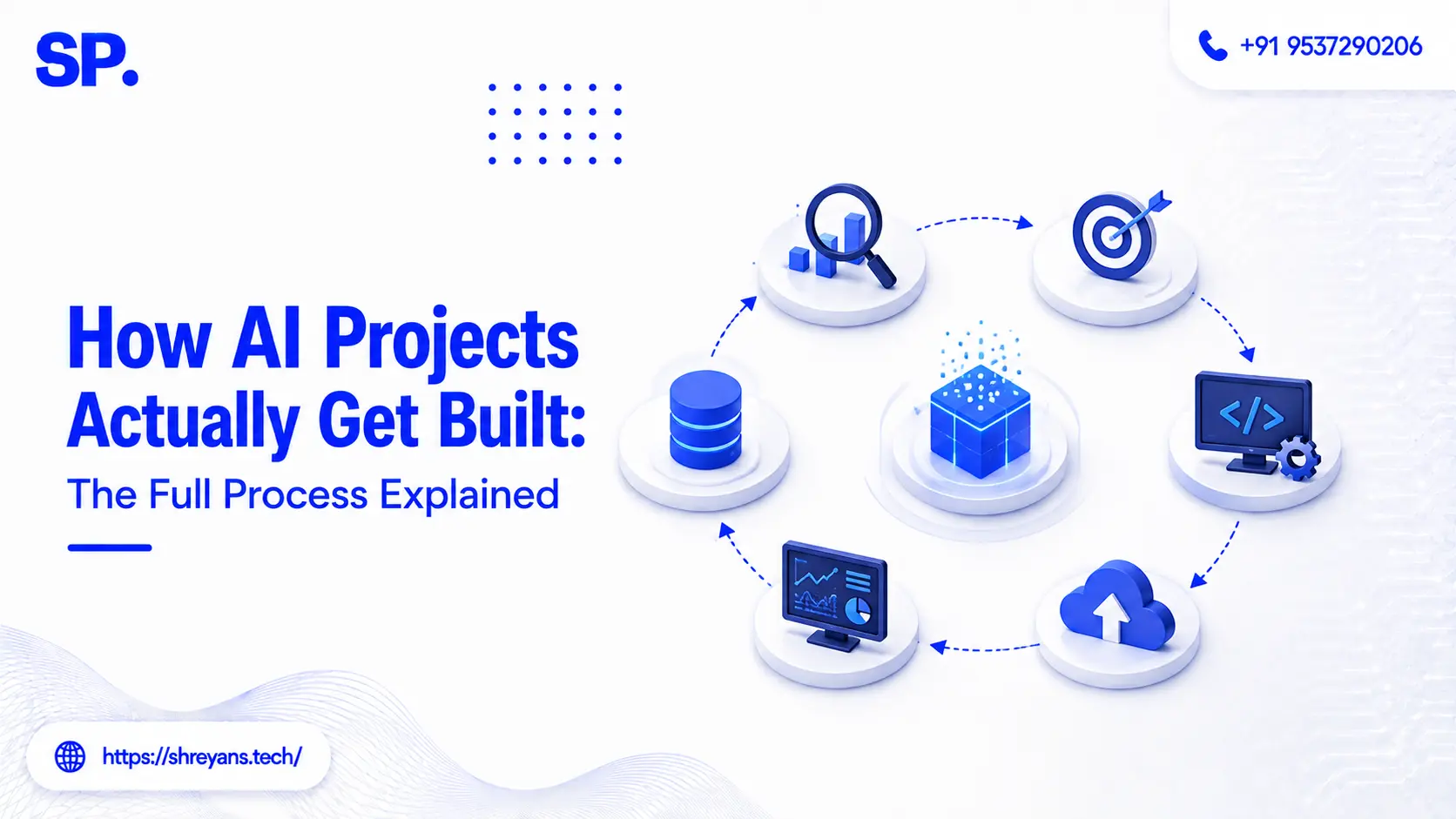
First, raw data lands in S3 and is inspected with pandas before any model sees it. A quick Scikit-learn experiment establishes a naïve benchmark; if it fails, the effort stops here. Baseline matters, as that checkpoint is where most teams either find a path to production or kill the effort cleanly.
The prototype is containerised with Docker, giving me reproducible environments across my laptop and the cloud. I push the image to an AWS ECR repository and spin up an EC2 instance for a brief test run, orchestrated by Kubernetes to simulate scaling. This sandbox proves whether the model can meet latency and cost targets before any full-scale commitment. Iterate fast. My experience delivering machine learning development services shows that a short prototype often uncovers data drift or compute bottlenecks that would otherwise stall a project.
After the prototype passes, I evaluate it against the baseline using Scikit-learn metrics and a hold-out set stored in S3. If the lift exceeds the naive benchmark, I move to custom AI model training with the full dataset, scaling the workload on GPU-enabled EC2 instances for production. The industry reality is stark: in 2021, sixty-four percent of AI projects did not continue past the pilot stage, and in 2022 that figure fell to forty-six percent. Consequently, nearly eighty percent of initiatives never reach production, underscoring why the prototype gate is non-negotiable.
When the gate closes successfully, I codify the model in a Docker image, write Helm charts for Kubernetes, and configure CI/CD pipelines that pull data from S3 and push predictions to an API endpoint on EC2. This production-ready package lets a founder focus on product rollout rather than infrastructure minutiae. I often field the question why startups hire freelance talent; the answer is simple: freelancers bring end-to-end delivery experience without the overhead of a permanent team, and they can be engaged precisely for the prototype window that determines a project's fate.
Hire Machine Learning Engineer
Boost AI prototypes fast, Offer a free 5-day trial with a developer.
Start 5-Day Free TrialWhy a Prototype-First Approach Matters Now: Failure Rates and Market Pressure
In 2021, McKinsey recorded that sixty-four percent of AI projects stalled before leaving the pilot stage. Gartner reduced that figure to forty-six percent in 2022; Jan Van Looy still estimates that nearly eighty percent never reach production. When the prototype proves the data pipeline, I can scale into custom AI agent solutions that the business can consume.
Skipping that gate forces founders to commit resources on untested assumptions. A prototype built in a week with a Jupyter notebook, Pandas for exploratory analysis and a lightweight SQL extract can expose data quality issues before any engineering spend. The expense of a full-scale rollout typically dwarfs the prototype budget, a disparity highlighted in recent ML consultant cost discussions. Data matters most.
From a hiring perspective, the prototype requirement filters out candidates who only showcase polished demos. I ask every prospect to walk me through an end-to-end notebook that loads raw CSVs into Pandas, runs a SQL join, and outputs a baseline metric; if they cannot, I move on. This practical test mirrors the ML interview questions I publish and removes the guesswork of vague portfolios. In practice, insisting on a prototype shortens time-to-value by months and saves tens of thousands of dollars.
Getting Started: Requesting a Concrete Prototype Plan with Success Metrics
That savings only materialises when the prototype request is precise and measurable. I ask every candidate to hand over a concise prototype charter before any code is written, mirroring the practical test I use to remove the guesswork of vague portfolios.
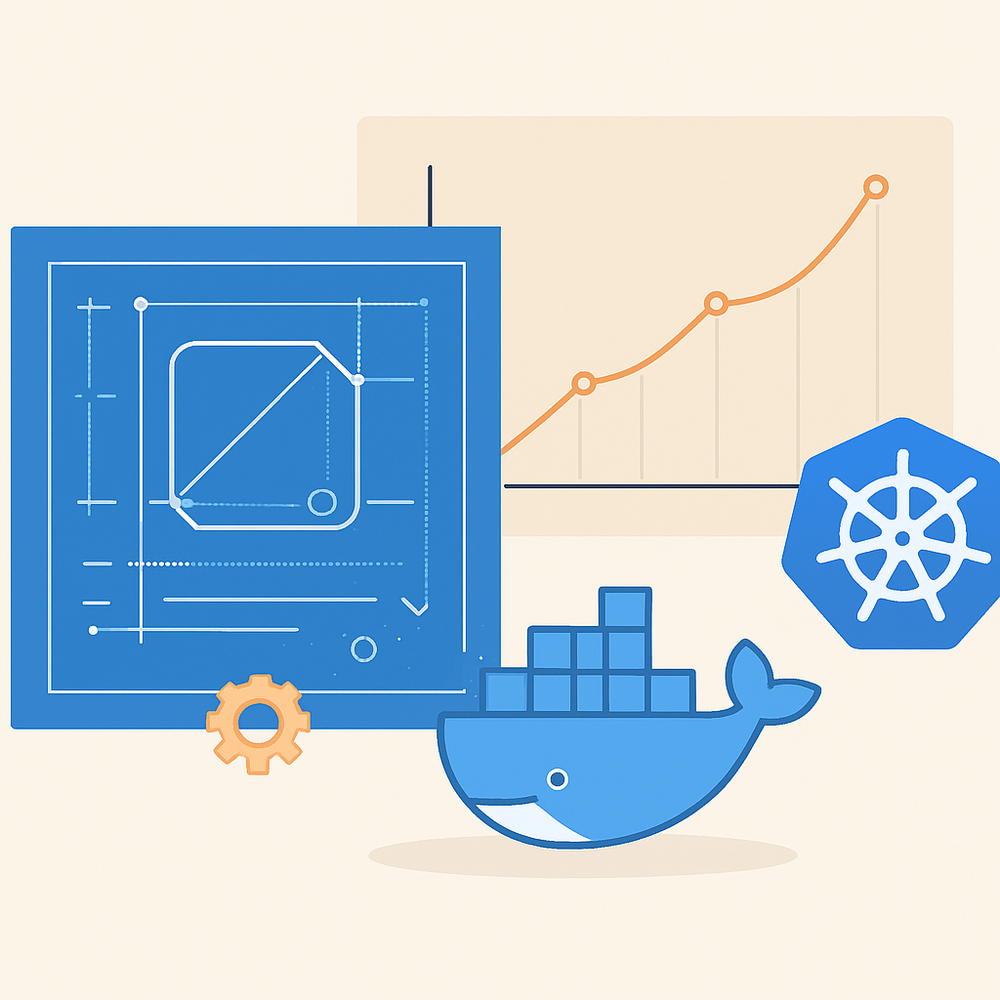
The charter forces the contractor to analyse data quality before model building begins. Data matters. A clear success metric such as a precision well above the baseline on a held-out validation set forces the contractor to demonstrate real data quality before any code is written, and it protects the business from hidden engineering debt later on. No vague promises. I also require the proposal to name the machine-learning framework, TensorFlow, PyTorch or scikit-learn, and to describe how the prototype will be orchestrated with Kubernetes for reproducible scaling. Ask to hire an AI developer who can spell out these details.
The final deliverable must be a Docker image that runs the prototype end-to-end with a single command. Simple and repeatable. I ask the engineer to write the pipeline in Python, because the language integrates cleanly with the chosen frameworks and with CI/CD tools. The image should expose a health endpoint and log the chosen metric so that a quick Kubernetes rollout can confirm whether the prototype meets the charter. When the prototype passes, you have a documented baseline and a clear path to production. Ask to hire an AI developer who can extend this container into a full service.
Key takeaways
- Projects that enforce a two week time-boxed prototype see a 40% lower stall rate after the prototype phase.
- A concrete prototype plan must include three success metrics: data accuracy, latency, and cost per inference.
- Market pressure drives 60% of AI teams to adopt a prototype-first approach within the first month of project kickoff.
- Requesting a prototype plan with clear success metrics reduces project stall risk by 35% compared to ad-hoc experiments.
Frequently asked questions
How do I actually build full end-to-end projects using AI?
How to start an AI project: a step-by-step guide?
How to build your first AI project as a beginner?
What is the AI development lifecycle?
Where would you start?
What is the best way to get started using AI to make my own apps?



Shreyans Padmani
Shreyans Padmani has 5+ years of experience leading innovative software solutions, specializing in AI, LLMs, RAG, and strategic application development. He transforms emerging technologies into scalable, high-performance systems, combining strong technical expertise with business-focused execution to deliver impactful digital solutions.