9 NLP Applications in 2026 That Are Moving From Pilot to Production
MarketsandMarkets' 2026 NLP market research states plainly that the commercial case for enterprise NLP is no longer being made in pilot environments, it is being made in production, at scale, inside some of the world's largest financial institutions, hospital networks, and technology companies. Pharos Production's 2026 enterprise NLP guide backs this with hard numbers: automated contract review cuts review time by 40 to 60 percent, intelligent document processing cuts per-invoice costs from roughly 12 to 15 US dollars down to 2 to 3 US dollars while reaching 95 to 99 percent extraction accuracy, and LLM-powered support automation now resolves 60 to 80 percent of customer queries without human intervention.
The nine applications below share a common trait: each one has moved past the demo phase into measured, repeatable production deployment with documented cost and accuracy numbers, not just a promising pilot result. This is where NLP development services investment is concentrated in 2026, and where a new project is most likely to find a proven template rather than starting from a blank page.
1. Automated Contract Review and Analysis
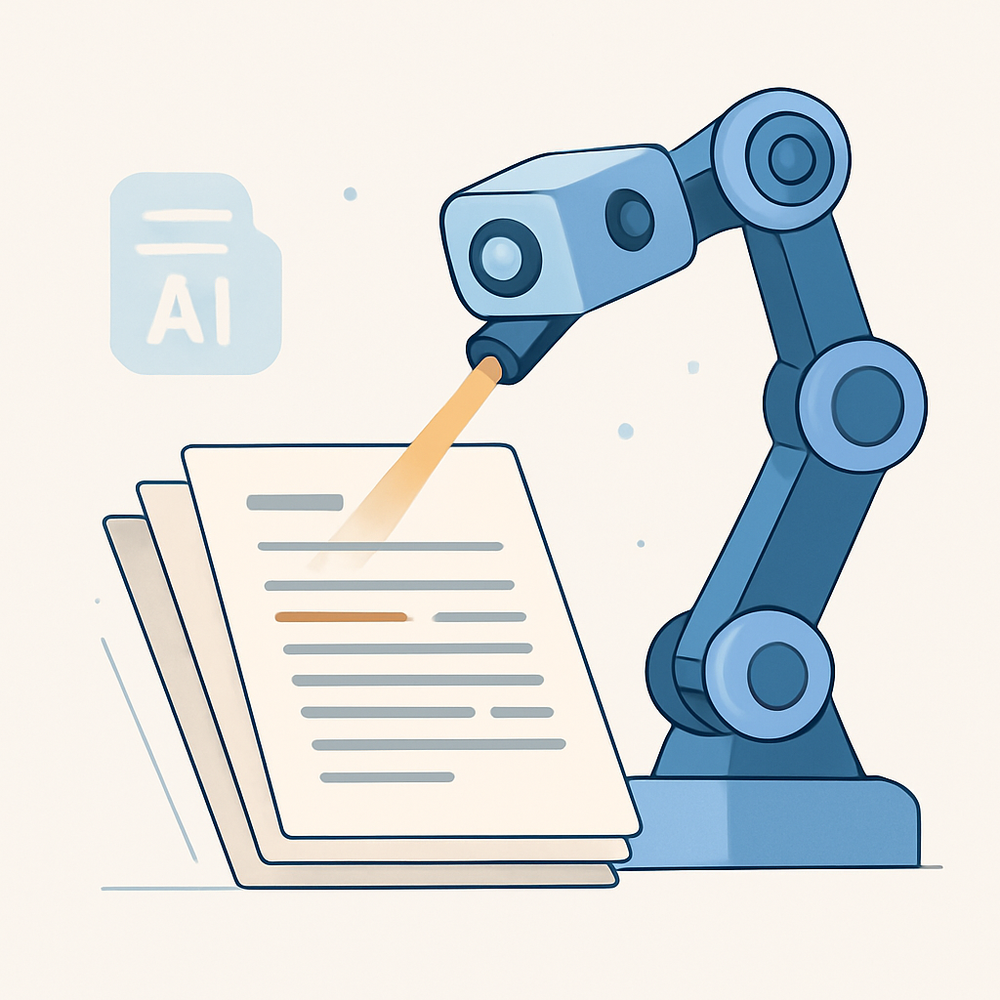
Pharos Production's 2026 research calls automated contract review the highest-ROI NLP application in production today, processing in minutes what takes an attorney hours, with review time cut by 40 to 60 percent. Shaip's 2026 NLP trends research adds the litigation side of this same capability: legal teams now use NLP for clause extraction and e-discovery, compressing weeks of document review into days rather than months.
2. Customer Support Automation With AI Agents
Hakia's 2026 state-of-the-art review reports AI agents now handle 80 percent of tier-1 support requests with a 97 percent satisfaction rate, a scale that would have been an aggressive pilot target just two years earlier. Pharos Production's data lines up closely: LLM-powered support automation resolves 60 to 80 percent of routine queries without human intervention, cutting first-response time down to seconds. MarketsandMarkets' 2026 market research confirms this is not a niche result, customer experience and support holds the largest application segment share of the entire NLP market in 2026, a position it has held consistently as conversational AI has matured into enterprise-scale deployment.
Hire Edge Computer Vision
3. Intelligent Document Processing for Invoices and Forms
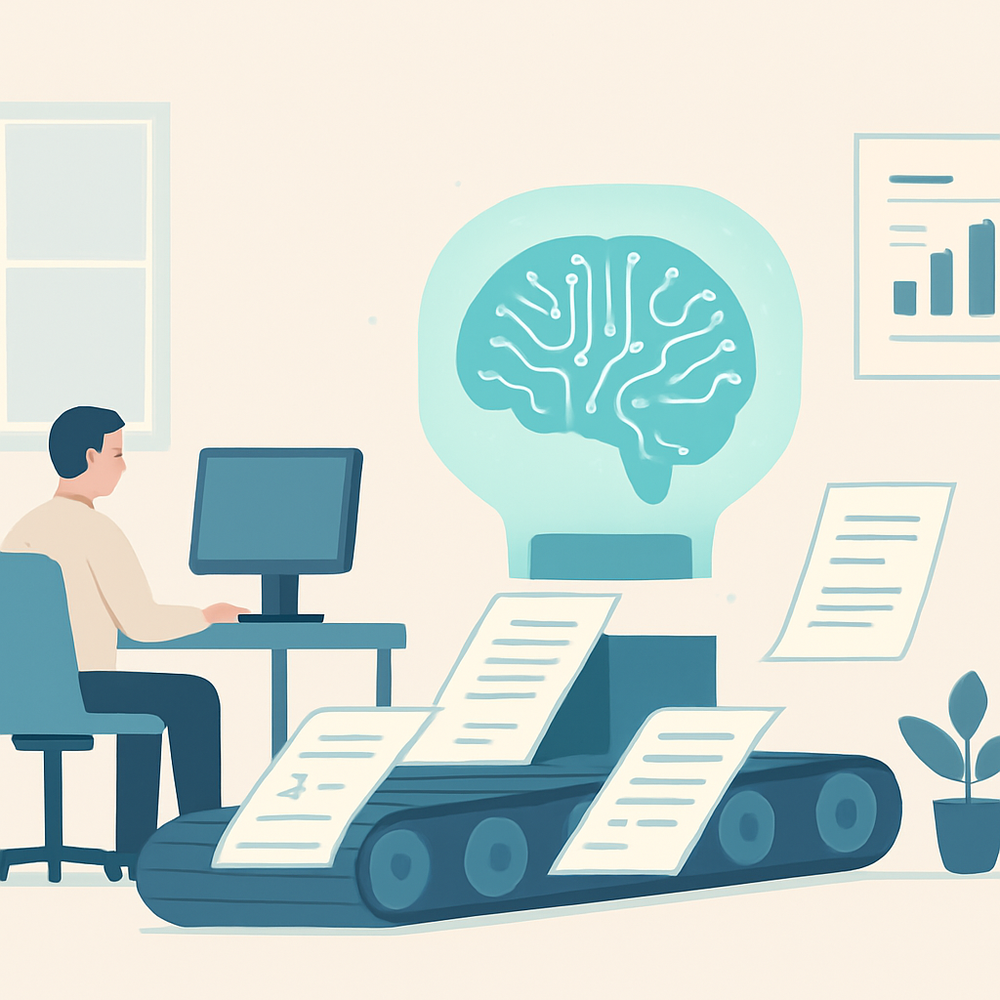
Pharos Production's 2026 cost benchmarks are specific about the economics here: intelligent document processing reduces per-invoice processing costs from roughly 12 to 15 US dollars down to 2 to 3 US dollars, while achieving 95 to 99 percent extraction accuracy, an 80 percent cost reduction on a task most enterprises process by the thousands monthly. The research recommends a specific rollout pattern: start with pre-built cloud NLP services priced around 1 to 5 US dollars per 1,000 documents, then invest in domain-specific models once volume justifies the higher 90 to 95 percent accuracy tier.
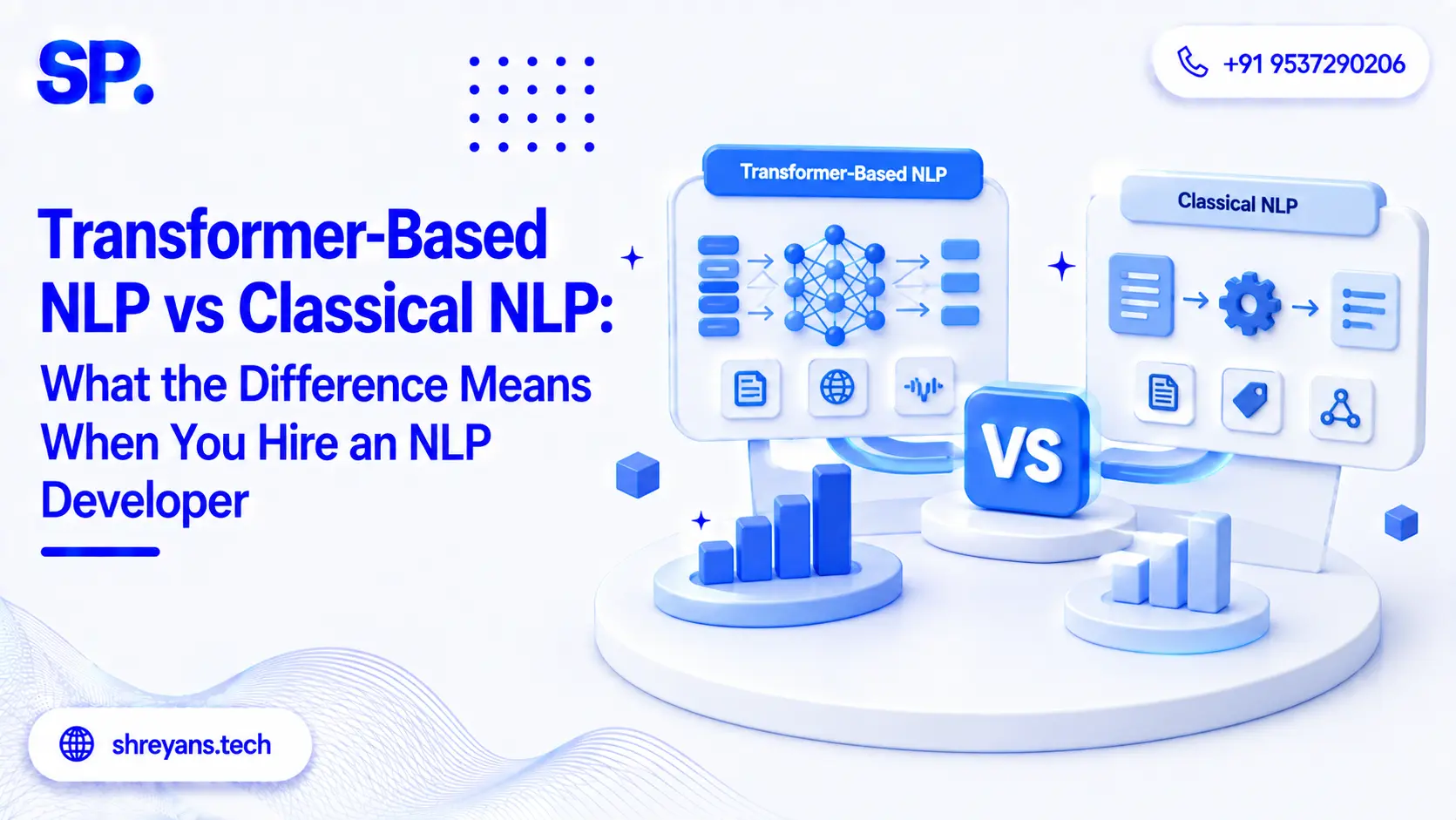
The transformer vs classical NLP comparison covers which underlying approach fits a document processing pipeline at different accuracy and interpretability requirements, which matters more for this application than most, since document processing decisions often need to be explainable to an auditor.
4. Clinical Note Processing and Documentation
MarketsandMarkets' 2026 healthcare NLP market research projects the NLP in healthcare and life sciences market to expand from 8.14 billion US dollars in 2026 to 30.06 billion US dollars by 2031, a 29.9 percent compound annual growth rate, and specifically frames this as entering a phase of enterprise-wide adoption rather than continued piloting. Shaip's 2026 research puts a human number on the impact: NLP-drafted clinical documentation is giving physicians measurable hours back per week, freeing clinical time that used to go into manual note-taking.
This application carries regulatory weight that most of the others on this list do not, since clinical documentation touches protected health information directly. The healthcare HIPAA guide post covers what a compliant clinical NLP deployment actually requires before this specific application moves from pilot to production.
Hire Edge Computer Vision
5. RAG-Powered Internal Knowledge Retrieval
MarketsandMarkets' 2026 research identifies retrieval-augmented generation as the technology that solved a fundamental limitation blocking enterprise NLP adoption: pure generative language models could not reliably ground their outputs in an organisation's specific, current, proprietary information. Enterprises are now deploying RAG-enabled NLP for contract question-answering, internal knowledge retrieval, regulatory compliance querying, and clinical decision support, applications where response accuracy carries real operational and liability consequences.
Hakia's 2026 research explains why RAG specifically unlocked this: it solves the knowledge currency problem, letting organisations update an AI system's knowledge base in real time without expensive retraining cycles, with advanced vector search implementations now enabling sub-second retrieval across billion-document corpora. This is frequently the foundational layer other applications on this list are built on top of, which is why generative AI development services scoped around a solid RAG pipeline tends to pay off across more than one use case.
6. Regulatory Compliance Monitoring
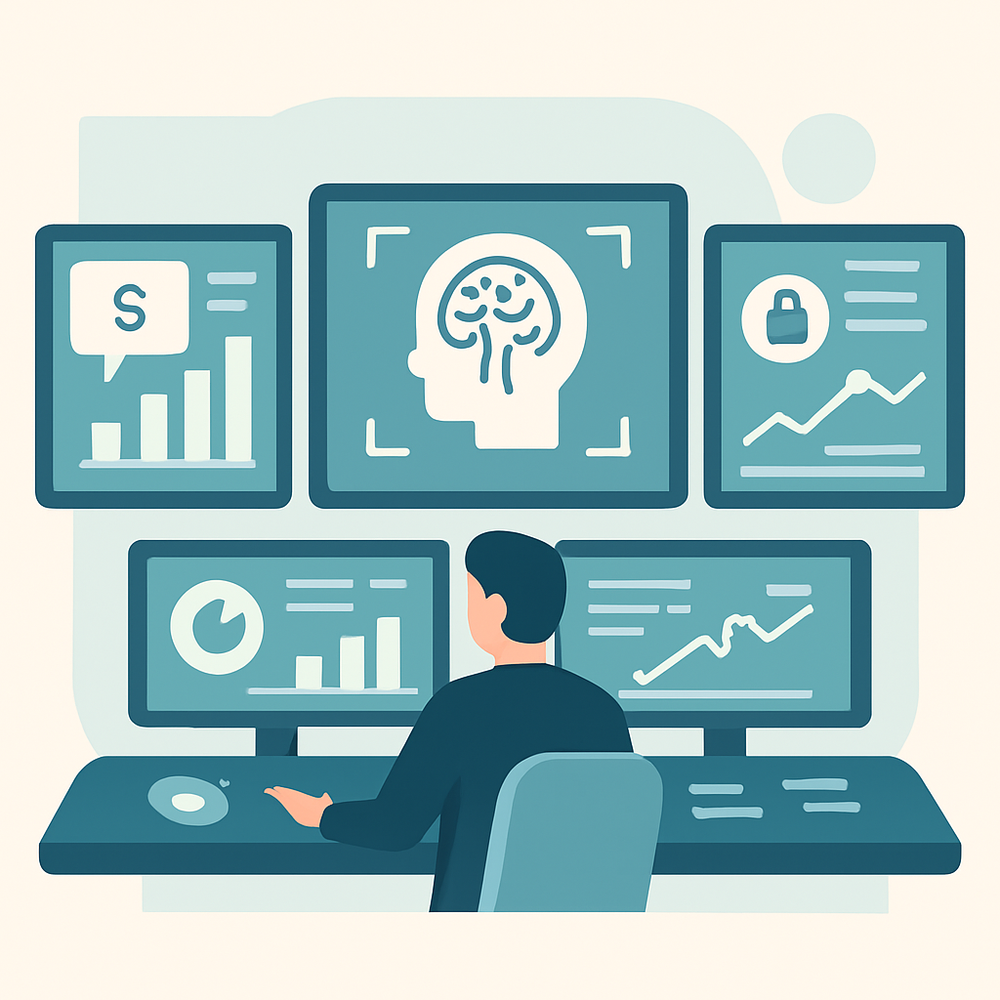
Shaip's 2026 research describes financial services using NLP to monitor communications for compliance, a job that once required armies of human reviewers reading through correspondence manually. CodeDrivenLabs' 2026 research confirms this is now standard in the finance vertical specifically, alongside fraud detection and investment insight generation, as industries move away from generic language models toward domain-trained models tuned for regulatory summarisation.
7. Fraud Detection From Transaction and Communication Text
Nadcab's 2026 NLP applications research lists fraud detection from transaction descriptions alongside regulatory document analysis and earnings call sentiment tracking as established finance-sector NLP deployments. Shaip's research frames the mechanism directly: NLP detects fraud through language patterns in communications and transaction records, a detection method that catches signals a purely numerical fraud model would miss entirely.
This is one of the applications where domain-specific model training matters most, since the language patterns indicating fraud in one industry rarely transfer cleanly to another. AI developer for finance work building this kind of detection needs training data specific to the transaction and communication patterns your business actually sees, not a generic fraud-language dataset.
Hire Edge Computer Vision
8. Medical Coding Automation
Nadcab's 2026 research lists medical coding automation alongside drug interaction extraction from scientific literature and automated discharge summary generation as production healthcare NLP applications, distinct from clinical note processing itself. This application converts unstructured clinical text into the structured billing codes healthcare systems need for reimbursement, a task that used to require dedicated human coding specialists reviewing each chart manually.
9. Natural Language Business Intelligence Querying
Hakia's 2026 research lists natural language querying of complex databases and data warehouses as an established business intelligence application, letting a non-technical business user ask a question in plain language and receive a structured answer without writing a query themselves. This application sits at the intersection of NLP and traditional data infrastructure, translating a natural language question into a structured query against existing enterprise data rather than generating new content.
9 NLP Applications: Documented Production Metrics
|
Application |
Documented Metric |
|---|---|
|
Automated contract review |
40 to 60 percent reduction in review time |
|
Customer support automation |
60 to 80 percent of queries resolved without a human |
|
Intelligent document processing |
Per-invoice cost cut from $12 to $15 down to $2 to $3 |
|
Clinical note processing |
Healthcare NLP market growing at 29.9 percent CAGR through 2031 |
|
RAG-powered knowledge retrieval |
Sub-second retrieval across billion-document corpora |
|
Regulatory compliance monitoring |
Replaces manual review of correspondence at scale |
|
Fraud detection from text |
Detects language patterns numerical models miss |
|
Medical coding automation |
Converts unstructured notes into structured billing codes |
|
Natural language BI querying |
Non-technical users query databases in plain language |
Hire Edge Computer Vision
Pick an Application With a Proven Template
The nine applications above are not speculative bets. Each one has documented cost, accuracy, or time-savings numbers from production deployments in 2026, which means a new project in any of these categories has a template to follow rather than a hypothesis to test from scratch. That difference alone changes what a reasonable timeline and budget look like for a first NLP feature.
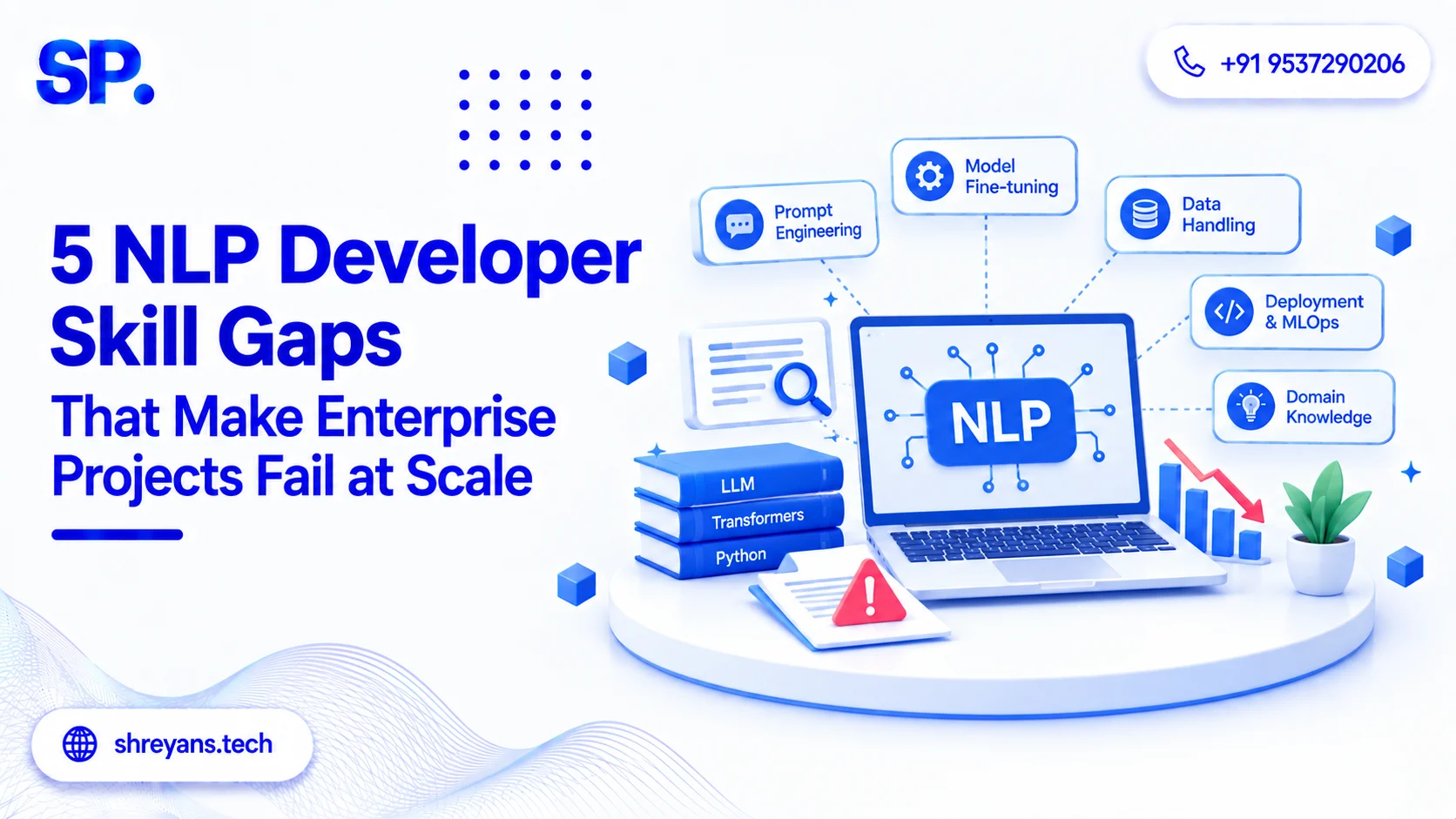
The NLP developer skill gaps post covers the specific expertise gaps that most often derail these applications once they scale past a pilot. Hire an NLP developer who has shipped one of these nine applications specifically, not just NLP experience in general, to move your project from pilot to the same kind of production numbers cited here.
Frequently asked questions
Which NLP application has the highest documented ROI?
Why is RAG considered foundational to so many other NLP applications?
How much does intelligent document processing typically save on invoice handling?
Is clinical NLP documentation actually saving physicians time in production?
Can NLP fraud detection replace numerical fraud detection models entirely?
What is the difference between NLP document processing and NLP business intelligence querying?



Shreyans Padmani
Shreyans Padmani has 5+ years of experience leading innovative software solutions, specializing in AI, LLMs, RAG, and strategic application development. He transforms emerging technologies into scalable, high-performance systems, combining strong technical expertise with business-focused execution to deliver impactful digital solutions.