KORE1's 2026 NLP staffing research is specific about where the hiring gap actually shows up: most candidates list "NLP" on a resume because they followed a tutorial, and few have actually run a transformer in production, debugged tokenization drift, or owned an evaluation set that was not simply a generic academic benchmark borrowed from someone else's domain. The same research cites McKinsey's State of AI report showing organisational AI adoption nearly doubled in two years while production-grade NLP talent stayed scarce, a gap that widens specifically at enterprise scale rather than in a single small chatbot project.
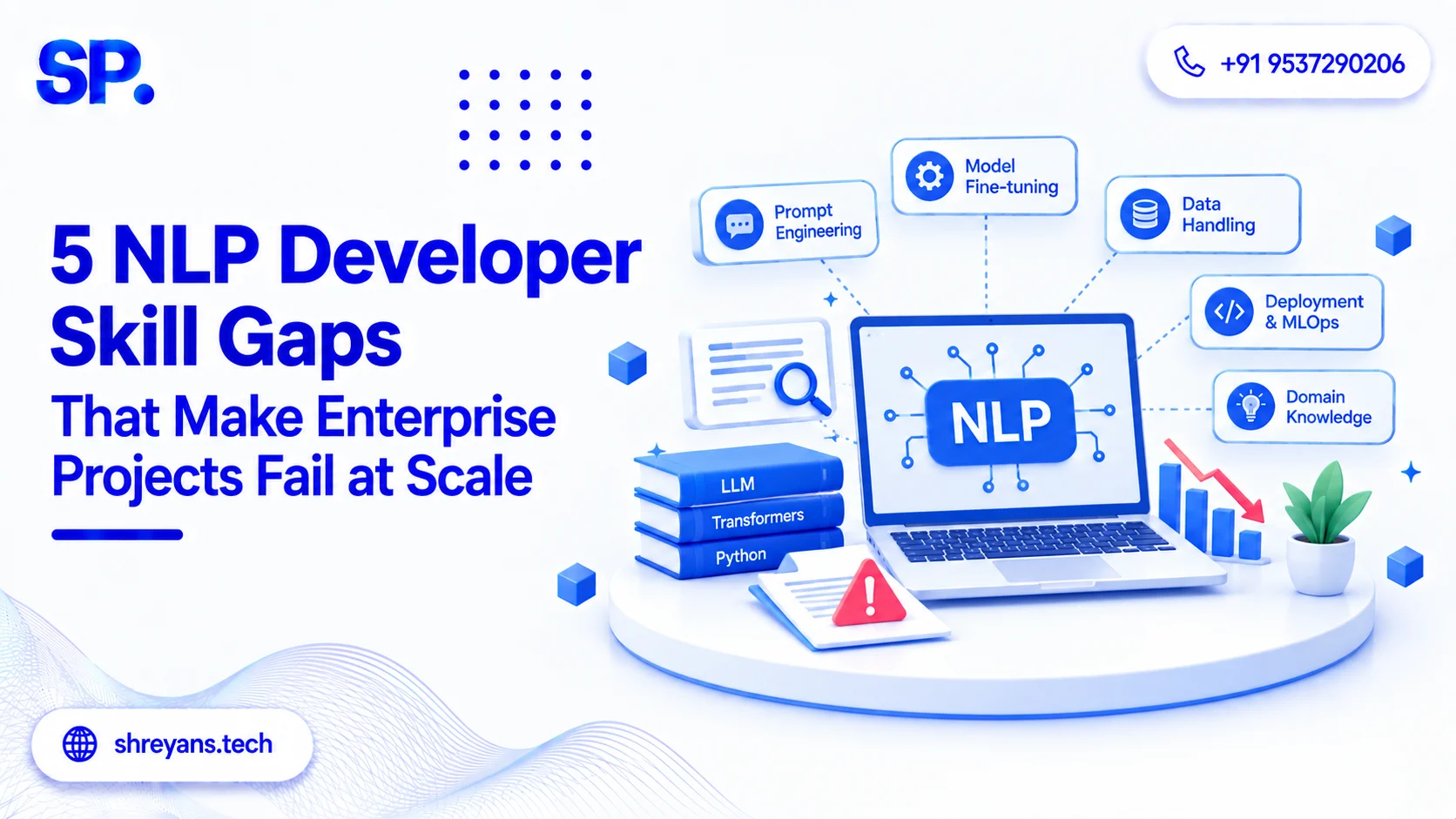
Writers' 2026 research on enterprise NLP challenges names the operational reality behind that scarcity directly: human language is inherently ambiguous, the same phrase means something different across healthcare, legal, and customer support contexts, and domain adaptation is no longer optional once a system moves past a narrow, well-defined use case. The five skill gaps below are where enterprise NLP projects most often fail once they scale past a proof of concept, and where genuine NLP development services scoped correctly from the start actually earn their cost.
1. Tokenizer Literacy for Multilingual Systems
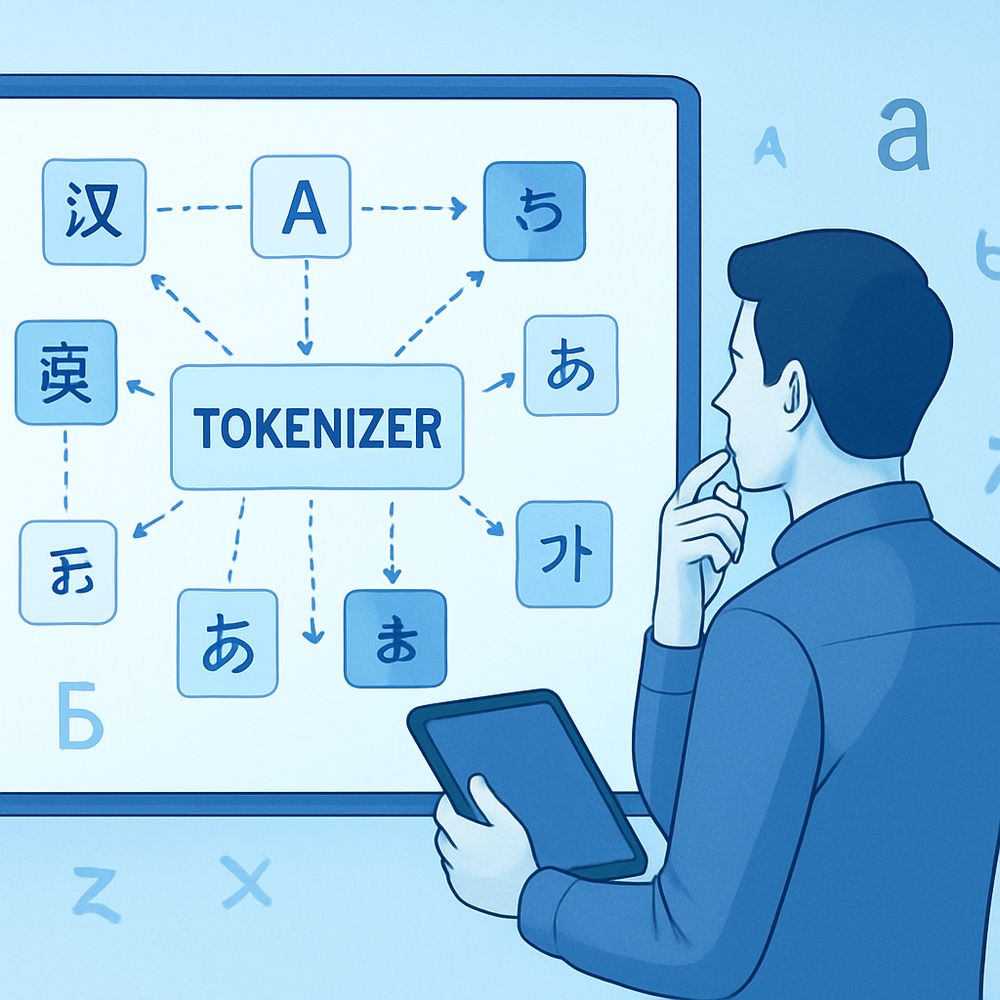
KORE1's 2026 hiring research states this gap plainly: multilingual systems require tokenizer literacy that most LLM-first engineers simply do not have, since building fluently against a provider's API is a different skill from understanding how that tokenizer actually splits and represents text across languages with different scripts, character sets, and morphology. Writers' 2026 enterprise NLP research adds the scaling consequence directly: even strong multilingual models underperform in low-resource languages, and organisations scaling internationally must budget for genuine localisation engineering, not just a translation API call bolted onto an English-first pipeline.
This gap surfaces quietly, since a system can look fully functional in English-language testing and degrade specifically in the languages that were never part of the evaluation. A developer working on multilingual generative AI development services should be able to explain tokenizer behaviour across the specific languages your product needs, not just confirm the provider claims multilingual support.
2. Diagnosing Tokenization Drift in Production
Tokenization drift is what happens when a tokenizer's behaviour shifts unexpectedly across model versions or across input distributions the original testing never covered, causing quiet quality degradation that does not show up as an obvious error. KORE1's staffing research names this specifically as one of the rare, genuine signals of hands-on production experience: few candidates have actually debugged tokenization drift, as opposed to having read about it or encountered it once in a tutorial environment.
This gap matters most at enterprise scale precisely because the failure mode is silent. A system processing millions of documents a month can develop a slow accuracy decline traced back to a tokenizer edge case, and a developer who has never diagnosed this before is unlikely to know where to start looking when it happens, let alone catch it before a customer notices.
3. Building an Evaluation Set Beyond Generic Benchmarks
KORE1's research draws a sharp distinction worth using directly in an interview: has this candidate owned an evaluation set that was not simply ROUGE scored against a generic academic dataset, or have they only ever validated a model against a benchmark built for someone else's task and someone else's data. A generic benchmark tells you how a model performs on a dataset it was never going to see in production; it tells you almost nothing about how it will perform on your actual documents, your actual edge cases, and your actual failure modes.
Building a genuine evaluation set requires domain expertise as much as engineering skill, since someone needs to define what a correct output actually looks like for your specific use case before a model's performance against it means anything. The ML interview questions post covers how to probe for this kind of hands-on evaluation experience directly rather than taking a resume line at face value.
4. Domain Adaptation for Ambiguous, Context-Dependent Language
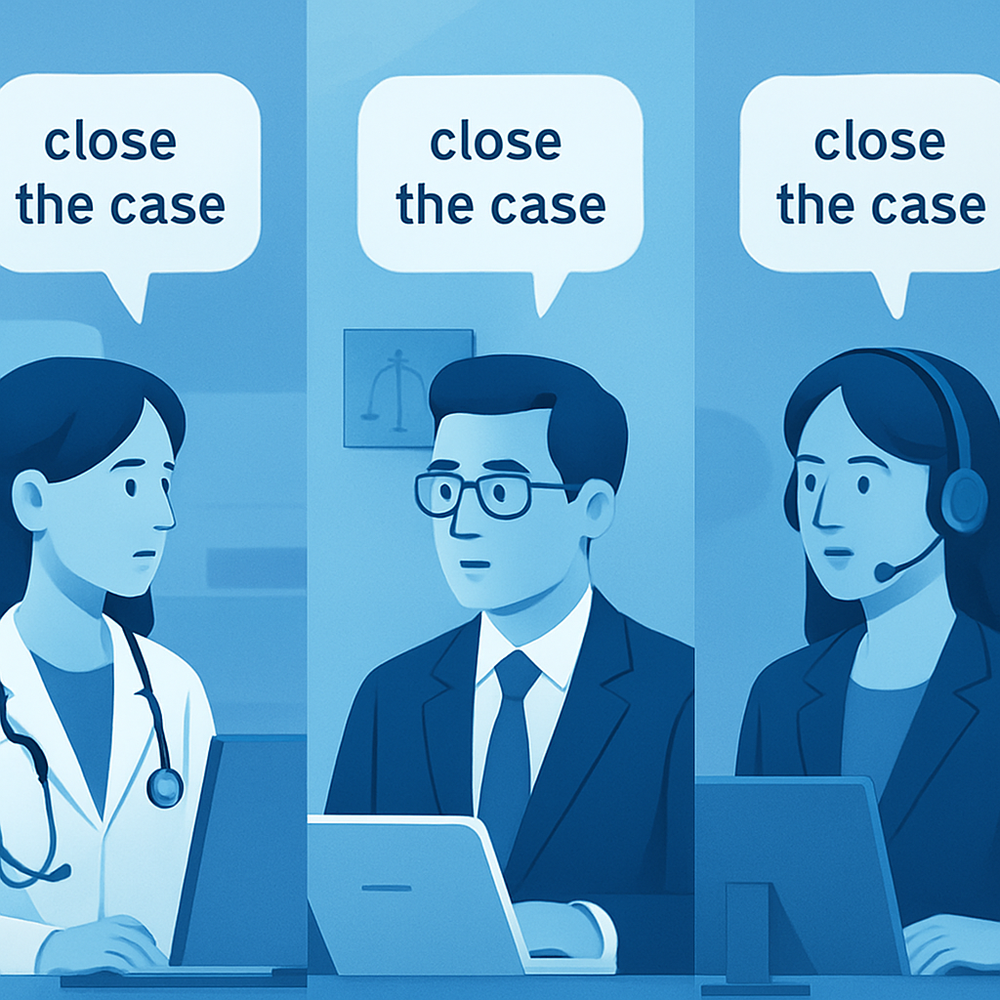
Writers' 2026 enterprise NLP research gives a specific, memorable example of why this matters: the phrase "close the case" means something entirely different in healthcare, legal, and customer support contexts, and a general-purpose model trained on broad internet data has no inherent way to know which meaning applies without domain-specific adaptation. The research is direct about the implication: domain adaptation is no longer optional for enterprise NLP, it is a baseline requirement once a system handles more than one narrow, well-defined task.
This is also where the distinction between classical and transformer-based approaches, covered in the transformer vs classical NLP comparison, becomes practically relevant, since domain adaptation techniques and the amount of labelled data they require differ meaningfully between the two approaches. A developer who cannot describe how they would adapt a model to your specific domain's ambiguous terminology is not yet solving the problem your enterprise project actually has.
5. Explainability for Regulated, Black-Box Systems
Writers' research names explainability as one of the most difficult technical and regulatory barriers in applied NLP, and the stakes are concrete: if a model flags a transaction as fraudulent or denies an insurance claim, the organisation deploying it must be able to explain why, not just report a confidence score. Black-box NLP systems create genuine trust problems for enterprises, particularly in regulated sectors where an unexplainable decision is a compliance risk as much as a product quality issue.
This skill gap shows up most acutely wherever NLP touches a consequential decision about a person, a claim, an application, a flagged transaction. A developer building AI developer for finance work involving NLP over financial documents or fraud signals should be able to describe a specific approach to explainability, not treat it as a feature to bolt on if a regulator eventually asks for it.
5 Skill Gaps and How to Test for Them
|
Skill Gap |
How to Test for It in an Interview |
|---|---|
|
Tokenizer literacy for multilingual systems |
Ask them to explain tokenizer behaviour across your specific target languages |
|
Diagnosing tokenization drift |
Ask for a specific story of a silent quality regression they traced and fixed |
|
Building a real evaluation set |
Ask what their eval set was built from, not just what benchmark they cite |
|
Domain adaptation for ambiguous language |
Ask how they would adapt a model to your industry's specific terminology |
|
Explainability for regulated systems |
Ask for a specific explainability approach, not a general compliance statement |
Match the Skill Gap to Your Actual Project Scope
Not every NLP project needs a specialist who has debugged tokenization drift or built a custom evaluation harness from scratch. A narrow, single-language, low-stakes chatbot project can often be handled well by a strong generalist AI developer. But the moment a project involves multiple languages, ambiguous domain-specific terminology, or a regulated, consequential decision, these five gaps are exactly where an underqualified hire quietly turns into a failed enterprise rollout.
The why startups hire freelance post covers how to match project scope to the right kind of specialist rather than over- or under-hiring for the work in front of you. Hire an NLP developer who can speak to all five of these gaps specifically for your project's actual languages, domain, and regulatory requirements, not just NLP experience in general.
Frequently asked questions
Why do enterprise NLP projects fail more often than small chatbot projects?
What is tokenization drift and why does it matter?
Why is a generic benchmark like ROUGE not enough to evaluate an NLP system?
What does domain adaptation actually mean for enterprise NLP?
Why does explainability matter so much for regulated NLP systems?
Do I always need a dedicated NLP specialist, or is a general AI developer enough?



Shreyans Padmani
Shreyans Padmani has 5+ years of experience leading innovative software solutions, specializing in AI, LLMs, RAG, and strategic application development. He transforms emerging technologies into scalable, high-performance systems, combining strong technical expertise with business-focused execution to deliver impactful digital solutions.