Introduction
Artificial Intelligence (AI) is rapidly transforming modern living, and Australia is no exception. Smart homes powered by AI are no longer just futuristic concepts—they are becoming a standard in urban housing, real estate, and property management.
In Australia, where sustainability, energy efficiency, and smart infrastructure are key priorities, AI-driven smart homes are gaining massive popularity. These intelligent homes go beyond simple automation by learning user behavior, predicting needs, and optimizing resources in real-time.
A smart home allows devices and systems to operate automatically, adjust based on environmental conditions, and reduce energy consumption while improving comfort and security .
This blog explores use cases, cost, and real-world impact of AI in smart homes in Australia in a simple and easy-to-understand way.
What is AI in Smart Homes?
AI in smart homes refers to the use of intelligent algorithms and machine learning systems that:
Learn User Habits:
-
AI systems analyze daily routines, preferences, and behavior patterns to create a personalized living experience. Over time, the system becomes smarter and can predict user needs without manual input.
Automate Daily Tasks:
-
From turning lights on/off to managing appliances and scheduling routines, AI automates repetitive household tasks, saving time and reducing manual effort.
Optimize Energy Usage:
AI monitors electricity consumption and adjusts devices accordingly to reduce waste. It can automatically switch off unused appliances and optimize energy usage based on peak and off-peak hours.
Improve Safety and Convenience:
-
AI enhances home security with intelligent monitoring, real-time alerts, and smart surveillance. At the same time, it improves convenience by enabling voice control and seamless device integration.
Unlike traditional automation, AI-enabled homes adapt and make decisions on their own, creating a fully personalized living experience.
Top Use Cases of AI in Smart Homes (Australia)
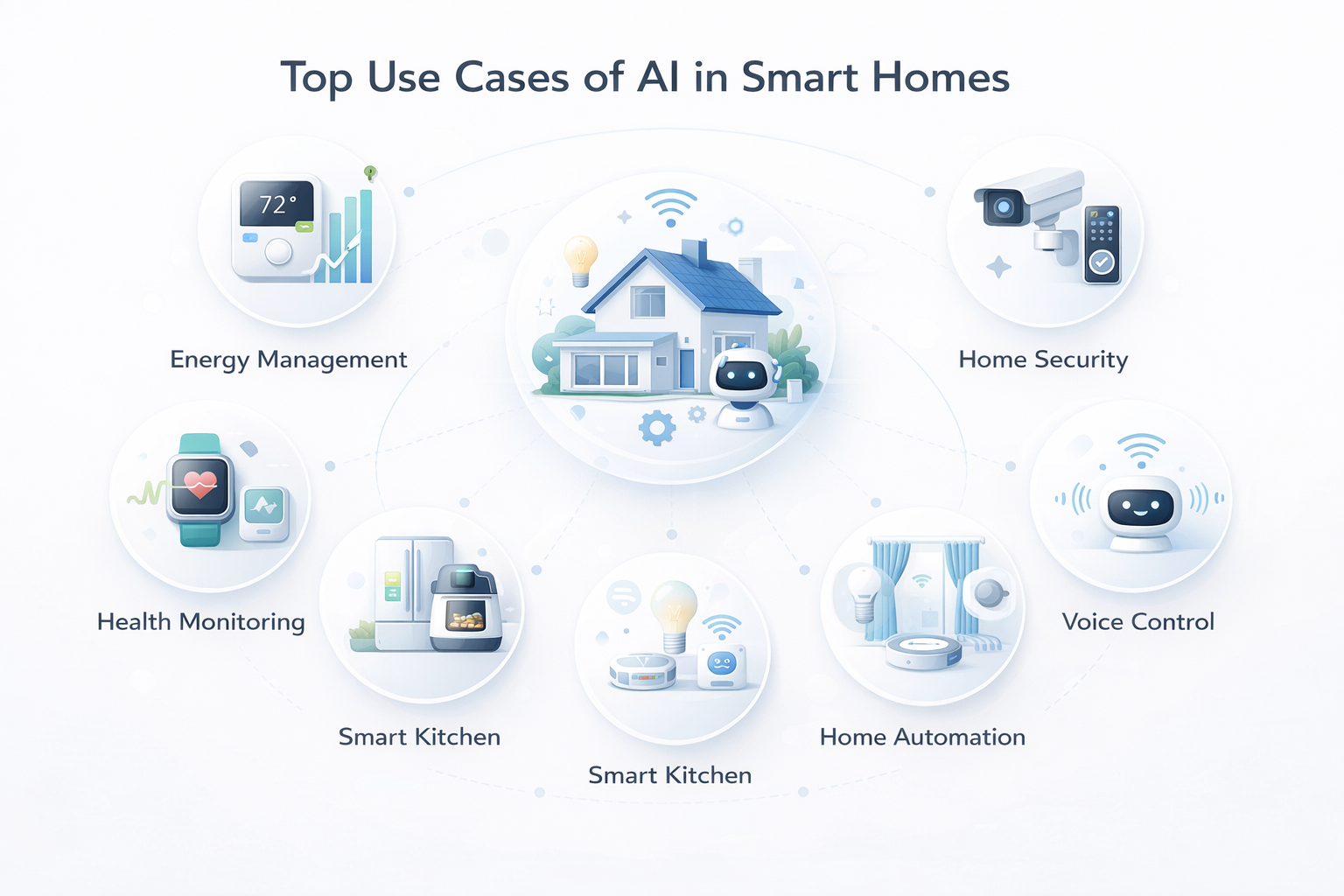
1. Smart Energy Management
AI systems monitor electricity usage and optimize it automatically.
Features:
-
Adjust Lighting Based on Daylight:
AI systems automatically control indoor lighting by detecting natural light levels. Lights dim or turn off during the day and brighten in the evening, ensuring comfort while saving electricity. -
Schedule Appliances During Off-Peak Hours:
Smart systems run appliances like washing machines, dishwashers, or water heaters during low electricity tariff hours, helping reduce overall energy costs. -
Reduce Energy Waste:
AI continuously monitors device usage and turns off unused appliances, preventing unnecessary power consumption and improving overall energy efficiency.
This is especially important in Australia due to high electricity costs.
AI can significantly reduce energy consumption by shifting loads and optimizing usage patterns .
2. AI-Based Security Systems
Modern smart homes use AI-powered cameras and sensors.
Features:
-
Face Recognition:
AI-powered cameras can identify known individuals such as family members or frequent visitors. This ensures only authorized people are granted access while keeping unwanted visitors out. -
Suspicious Activity Detection:
The system analyzes movement patterns and behavior to detect unusual or potentially dangerous activities, rather than just basic motion detection. -
Smart Alerts (Not False Alarms):
AI filters out irrelevant triggers like pets or normal movements and sends accurate, real-time alerts only when genuine threats are detected, reducing false alarms.
AI security systems focus on behavior instead of simple motion detection, making homes much safer.
3. Voice Assistants & Smart Control
AI assistants allow full control of the home using voice commands.
Examples:
-
Turn Lights On/Off:
AI-enabled systems allow users to control lighting through voice commands or mobile apps, making it easy to manage lights without manual switches. -
Control Temperature:
Smart thermostats automatically adjust room temperature based on user preferences, weather conditions, and time of day, ensuring comfort and energy efficiency. -
Play Music:
AI assistants can play music on command, create personalized playlists, and adjust volume or songs based on user mood and preferences.
These assistants are now more advanced and understand natural language and context.
4. Predictive Maintenance
AI detects problems before devices fail.
Features:
-
Detect Faulty Appliances:
AI continuously monitors the performance of home devices and identifies unusual behavior or early signs of malfunction before a breakdown occurs. -
Suggest Maintenance:
Based on usage patterns and system data, AI provides timely maintenance recommendations, helping homeowners take preventive action. -
Reduce Repair Costs:
By detecting issues early and ensuring regular maintenance, AI helps avoid major damages and expensive repairs, saving money in the long run.
This prevents unexpected breakdowns and improves device lifespan .
5. Personalized Comfort Automation
AI learns daily routines and adjusts the environment automatically.
Examples:
-
Adjust Temperature at Night:
AI automatically lowers or optimizes the temperature during nighttime to create a comfortable sleeping environment while saving energy. -
Dim Lights During Sleep:
Smart lighting systems gradually dim or turn off lights based on sleep schedules, promoting better rest and reducing unnecessary power usage. -
Open Blinds in the Morning:
AI-controlled blinds open automatically in the morning to let in natural light, helping users wake up naturally and start their day refreshed.
This creates a fully automated lifestyle experience.
6. Smart Health & Elderly Care
AI helps monitor health and supports independent living.
Features:
-
Activity Tracking:
AI systems monitor daily movements and routines, helping track physical activity levels and detect any unusual behavior patterns. -
Emergency Alerts:
In case of emergencies like falls, sudden inactivity, or health issues, AI can instantly send alerts to family members or caregivers for quick response. -
Remote Health Monitoring:
Smart devices collect health data such as heart rate or activity levels and allow doctors or family members to monitor the user’s condition remotely.
This is very useful for Australia’s aging population.
7. Smart Kitchens & Appliances
AI-powered kitchens make cooking and food management easier.
Features:
-
Smart Refrigerators Track Food:
AI-powered refrigerators monitor stored items, track expiry dates, and notify users when groceries are running low or about to expire. -
AI Suggests Recipes:
Based on available ingredients and user preferences, AI can recommend personalized recipes, making meal planning easier and reducing food waste. -
Automated Cooking Systems:
Smart kitchen appliances can automate cooking processes by controlling temperature, timing, and settings, ensuring consistent and hassle-free meal preparation.
8. Air Quality & Climate Control
AI systems monitor indoor air quality.
Features:
-
Detect Pollution Levels:
AI-powered sensors continuously monitor indoor air quality, detecting pollutants, dust, and harmful gases to maintain a healthy living environment. -
Control Humidity:
Smart systems automatically adjust humidity levels based on weather conditions and indoor needs, preventing dryness or excess moisture. -
Improve Ventilation:
AI optimizes airflow by controlling fans, windows, and HVAC systems to ensure proper ventilation and fresh air circulation throughout the home.
This ensures a healthier living environment.
Cost of AI Smart Homes in Australia
The cost of implementing AI in smart homes depends on features and scale.
Estimated Cost Breakdown
|
Level |
Cost Range |
Features |
|
Basic Smart Home |
$40,000 – $100,000 |
Basic automation, device control |
|
Mid-Level AI Home |
$100,000 – $200,000 |
AI personalization, predictive features |
|
Advanced AI Home |
$200,000+ |
Full automation, security, analytics |
Costs vary based on:
-
Number of Devices:
The more smart devices installed (lights, sensors, cameras, appliances), the higher the overall cost, as each device adds to hardware and setup expenses. -
AI Complexity:
Basic automation systems are cheaper, while advanced AI with predictive learning, personalization, and analytics increases development and implementation costs. -
Cloud vs Edge Systems:
Cloud-based systems are generally more affordable initially but may involve ongoing subscription costs, whereas edge systems (local processing) offer faster performance and better privacy but come at a higher upfront cost. -
Integration Level:
Fully integrated systems that connect multiple devices and platforms seamlessly are more expensive compared to standalone or partially connected solutions.
AI smart home platforms are more expensive than traditional automation because they require advanced intelligence layers and data infrastructure.
Real-World Impact of AI Smart Homes in Australia
1. Energy Savings & Sustainability
Smart homes help:
-
Reduce Electricity Bills:
AI optimizes energy usage by automatically controlling devices and avoiding unnecessary power consumption, helping homeowners significantly lower their monthly electricity costs. -
Lower Carbon Emissions:
By improving energy efficiency and reducing waste, AI smart homes contribute to a decrease in carbon footprint, supporting environmental sustainability. -
Support Green Living:
AI enables eco-friendly practices by integrating renewable energy sources, managing energy efficiently, and promoting a more sustainable and responsible lifestyle.
Automated systems optimize energy usage and avoid peak tariffs.
2. Improved Security
AI reduces:
-
False Alarms:
AI minimizes false alarms by accurately distinguishing between normal activities and real threats, ensuring alerts are only triggered when necessary. -
Security Risks:
Advanced AI systems continuously monitor and analyze data to identify potential vulnerabilities and prevent security breaches. -
Unauthorized Access:
AI enhances access control through features like facial recognition and smart authentication, ensuring that only authorized individuals can enter the home.
Homes become safer with intelligent monitoring.
3. Better Lifestyle & Comfort
AI enhances daily living by:
-
Automating Routines:
AI handles daily activities automatically, such as lighting, temperature control, and appliance management, making everyday life more efficient and hassle-free. -
Reducing Manual Work:
By minimizing the need for manual intervention, AI saves time and effort, allowing users to focus on more important tasks. -
Providing Personalized Experiences:
AI learns user preferences and habits to deliver customized settings, creating a comfortable and tailored living environment.
4. Higher Property Value
Smart homes are becoming a premium feature in Australian real estate.
-
Faster Property Sales:
Smart homes with AI features attract more buyers, helping properties sell quicker compared to traditional homes. -
Higher Market Demand:
Modern buyers prefer technologically advanced homes, increasing demand for properties equipped with AI and automation systems. -
Increased Resale Value:
AI-enabled smart homes offer added value, allowing homeowners to sell their property at a higher price in the future.
5. Reduced Maintenance Costs
Predictive AI reduces:
-
Repair Expenses:
AI helps minimize repair costs by detecting issues early and preventing major damage through timely maintenance. -
System Failures:
Continuous monitoring allows AI systems to identify potential failures in advance, reducing the chances of sudden breakdowns. -
Downtime:
With predictive maintenance and quick issue detection, AI ensures systems run smoothly with minimal interruptions or downtime.
6. Smart Urban Living
AI smart homes contribute to:
-
Smart Cities:
AI-powered smart homes contribute to the development of smart cities by connecting with urban systems like energy grids, transportation, and public services for better coordination and efficiency. -
Efficient Infrastructure:
Integration of AI in housing improves the overall infrastructure by optimizing resource usage, reducing waste, and enhancing system performance. -
Digital Transformation in Housing:
AI drives innovation in the housing sector by enabling advanced technologies, automation, and data-driven decision-making, transforming traditional homes into intelligent living spaces.
Challenges of AI in Smart Homes
Even with many benefits, there are some challenges:
1. High Initial Cost
-
Expensive Setup and Installation:
Setting up an AI-powered smart home requires a significant initial investment, including the cost of devices, installation, and system integration, making it less affordable for some users.
2. Privacy Concerns
-
Data Collection and Monitoring:
AI smart homes continuously collect and analyze user data such as behavior patterns, device usage, and preferences. While this improves functionality and personalization, it also raises concerns about data privacy and security if not properly managed.
3. Device Compatibility
-
Different Brands May Not Integrate Easily:
Smart home devices from different manufacturers may use different technologies or standards, making integration difficult. This can lead to compatibility issues and limit seamless communication between devices.
4. Internet Dependency
-
AI smart home systems depend on a reliable internet connection to function smoothly. Poor or unstable connectivity can affect device performance, delay responses, and limit access to remote control and real-time features.
Future of AI Smart Homes in Australia
The future looks very promising with:
AI-Powered Autonomous Homes
-
Future homes will operate with minimal human intervention, where AI systems automatically manage lighting, security, appliances, and overall home operations based on real-time data and user behavior.
Integration with Renewable Energy (Solar + AI)
AI will optimize the use of solar energy by managing power generation, storage, and consumption, reducing dependency on traditional electricity sources and promoting sustainability.
Smart City Ecosystems
-
AI-enabled homes will be connected to broader smart city networks, allowing seamless interaction with public infrastructure like energy grids, transportation systems, and urban services.
Advanced Voice and Gesture Controls
-
Next-generation AI interfaces will go beyond voice commands, enabling gesture-based controls and more natural human interaction with smart home systems.
AI will make homes more independent, intelligent, and efficient.
FAQs
Q1. What is AI in smart homes?
Ans: AI in smart homes refers to intelligent systems that learn user behavior and automate home operations like lighting, security, and temperature control.
Q2. How much does an AI smart home cost in Australia?
Ans: It typically ranges from $40,000 to $200,000+, depending on features and complexity.
Q3. What are the main benefits of AI smart homes?
Ans:
-
Energy Efficiency:
Smart home systems help reduce energy consumption by automatically controlling lighting, heating, and cooling. Devices like smart thermostats and energy-efficient appliances ensure that energy is used only when needed, which lowers electricity bills and supports environmental sustainability. -
Better Security:
AI-powered security systems improve home safety through features like smart cameras, motion sensors, and real-time alerts. Homeowners can monitor their property remotely and receive instant notifications about any suspicious activity, ensuring better protection. -
Comfort and Automation:
Smart homes enhance comfort by automating daily tasks such as adjusting room temperature, controlling lights, and managing appliances. Voice assistants and automation routines make living more convenient and save time by reducing manual effort. -
Higher Property Value:
Homes equipped with smart technology are more attractive to buyers. Features like automation, security, and energy efficiency increase the market value of the property and can lead to faster sales and higher returns on investment.
Q4. Is AI in smart homes safe?
Ans: Yes, but proper security and privacy measures are required to protect user data.
Q5. Are smart homes worth it in Australia?
Ans: Yes, especially due to energy savings, improved lifestyle, and long-term cost benefits.
Conclusion
AI in smart homes is revolutionizing the way people live in Australia. From energy efficiency and security to personalized comfort and smart living, AI is turning traditional houses into intelligent ecosystems.
Although the initial investment may be high, the long-term benefits—such as reduced costs, improved lifestyle, and increased property value—make AI-powered smart homes a smart investment.
As technology continues to evolve, AI will play an even bigger role in shaping the future of housing, making homes more sustainable, efficient, and truly intelligent.



Shreyans Padmani
Shreyans Padmani has 5+ years of experience leading innovative software solutions, specializing in AI, LLMs, RAG, and strategic application development. He transforms emerging technologies into scalable, high-performance systems, combining strong technical expertise with business-focused execution to deliver impactful digital solutions.