Salesforce's State of IT report for 2025 found that 86 percent of organisations surveyed expected AI agents to be autonomous actors in their workflows within eighteen months. Deloitte's 2025 AI survey found that 35 percent of enterprise respondents had already deployed agents that completed end-to-end processes without human initiation on individual transactions. The distinction that matters in 2026 is not between AI-assisted and AI-augmented work but between AI-assisted and AI-replaced: processes that previously required human initiation, judgment, and completion at every step are now operating autonomously from trigger to outcome.
The nine processes below are not candidates for replacement. They are, in documented production deployments, already replaced. Each entry describes the architecture, the residual human role (which does not disappear but changes), and what the transition requires technically. If you are evaluating AI agent development services for your organisation, this is what genuine process replacement looks like versus a chatbot that routes tickets.
1. Sales Lead Qualification and Outreach Sequencing
The process of qualifying an inbound lead, enriching contact data, scoring the opportunity against ICP criteria, drafting a personalised outreach sequence, and scheduling a follow-up call took the average inside sales representative 45 to 90 minutes per lead according to a 2024 Forrester analysis. AI agent systems built on LangChain or LlamaIndex with CRM tool-use integrations (HubSpot API, Salesforce API) now complete the same sequence in under four minutes per lead with no human initiation.
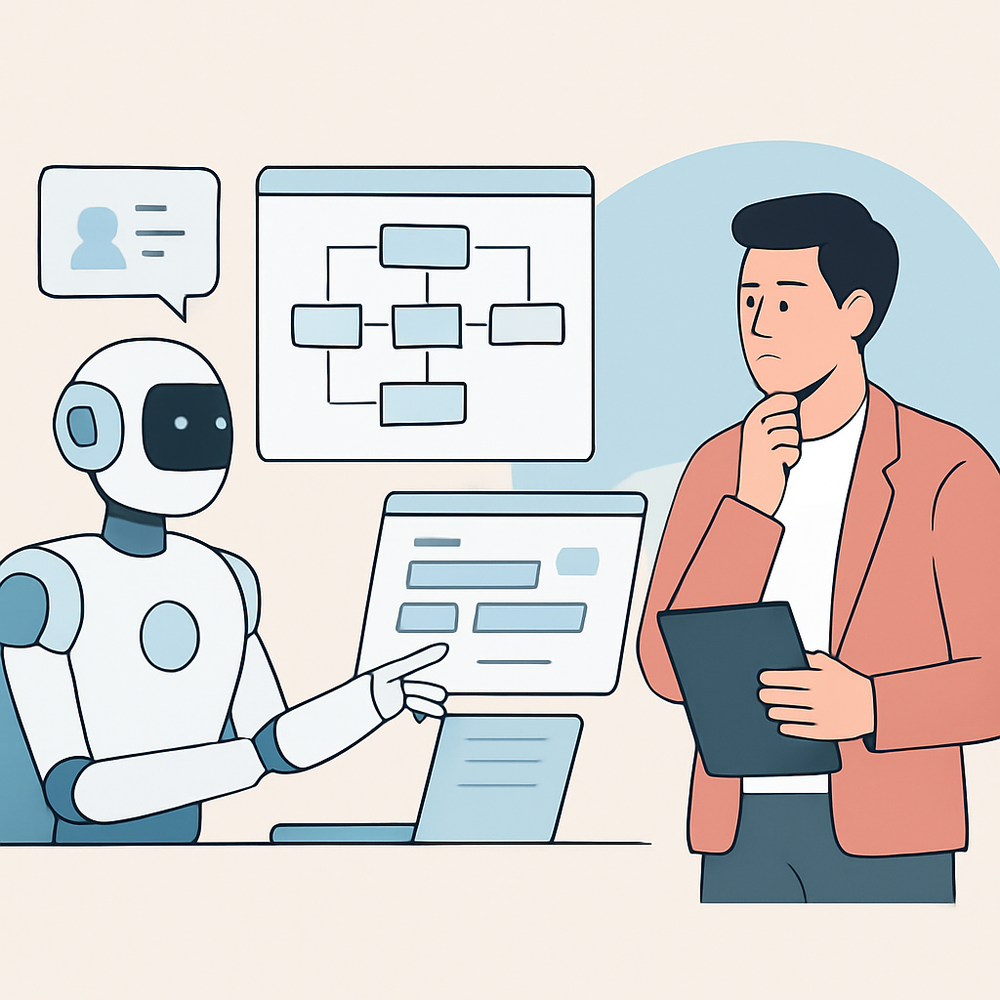
The architecture is a multi-step reasoning agent: it queries a lead enrichment tool (Clearbit, Apollo), scores the output against stored ICP criteria, generates a personalised outreach sequence using a fine-tuned or prompted LLM, and writes the sequence directly to the CRM with scheduling instructions. The human sales representative receives a queue of qualified, enriched, sequenced leads with outreach already initiated. Their role shifts from process executor to exception reviewer and relationship manager on engaged prospects.
The most common failure mode in early deployments is over-automation of the outreach tone: agents that produce technically accurate but impersonal messages at scale. Organisations that have solved this add a post-generation review step for high-value accounts and use fine-tuned language models on successful historical outreach rather than generic instruction-following models.
2. Accounts Payable and Invoice Processing
Invoice processing is one of the highest-volume document intelligence use cases in enterprise operations. PayStream Advisors estimated in 2024 that the average cost to process a single invoice manually is USD 15 to USD 40, with a processing cycle of five to twelve days. Autonomous AP agents, deployed at organisations including Siemens and Unilever's shared services operations (documented in their 2024 annual automation reports), process standard invoices in under sixty seconds with end-to-end ERP write completion.
The production architecture combines a document intelligence layer (fine-tuned LayoutLM or Azure Form Recogniser) with a rules engine for three-way matching (purchase order, goods receipt, invoice), an exception classifier for flagging anomalies, and an ERP integration (SAP, Oracle, NetSuite) for automated posting. The NLP development services layer handles extraction from unstructured invoice formats; the ERP integration handles the write-back.
Invoices that trigger exception rules (amount discrepancies, missing PO references, new vendor accounts) route to human reviewers. Human AP staff in post-deployment organisations handle a fraction of their previous volume, focused on dispute resolution, vendor communication, and audit preparation, which are exactly the tasks that require human judgment rather than pattern matching.
3. Tier-1 Customer Support Resolution
The customer service agent category is the most widely deployed form of agentic AI in 2026. What has shifted since 2023 is the resolution depth. Early chatbots answered FAQs and routed tickets. Production agents in 2026 resolve them: they query account systems, process refunds, update records, issue replacements, and close tickets without any human involvement in the transaction path.
Klarna's widely reported 2024 deployment of an Anthropic-powered support agent handled the equivalent workload of 700 full-time customer service agents in its first month, resolving 78 percent of enquiries without escalation. The residual 22 percent included emotionally complex situations, account security issues, and regulatory edge cases. Those cases routed to human agents who, by that point, were handling only the situations that genuinely required human empathy and judgment.
The technical architecture for a production support agent requires more than an LLM with a system prompt. It requires a knowledge base with retrieval-augmented generation to ground responses in current product and policy information, a tool-use layer with write permissions to relevant systems, an escalation classifier trained on historical escalation patterns, and a conversation management layer that maintains context across multi-turn interactions. The generative AI development services and agent development work here overlaps significantly; separating them is an artificial boundary.
4. Procurement Research and Supplier Shortlisting
Procurement research sits at the intersection of web browsing, document analysis, and structured comparison, which makes it a natural fit for multi-tool agent architectures. An agent that can browse supplier websites, extract product specifications, retrieve and parse datasheet PDFs, compare specifications against a requirements matrix, and generate a shortlist with a scoring rationale is performing work that previously required two to four hours from a procurement analyst per category.
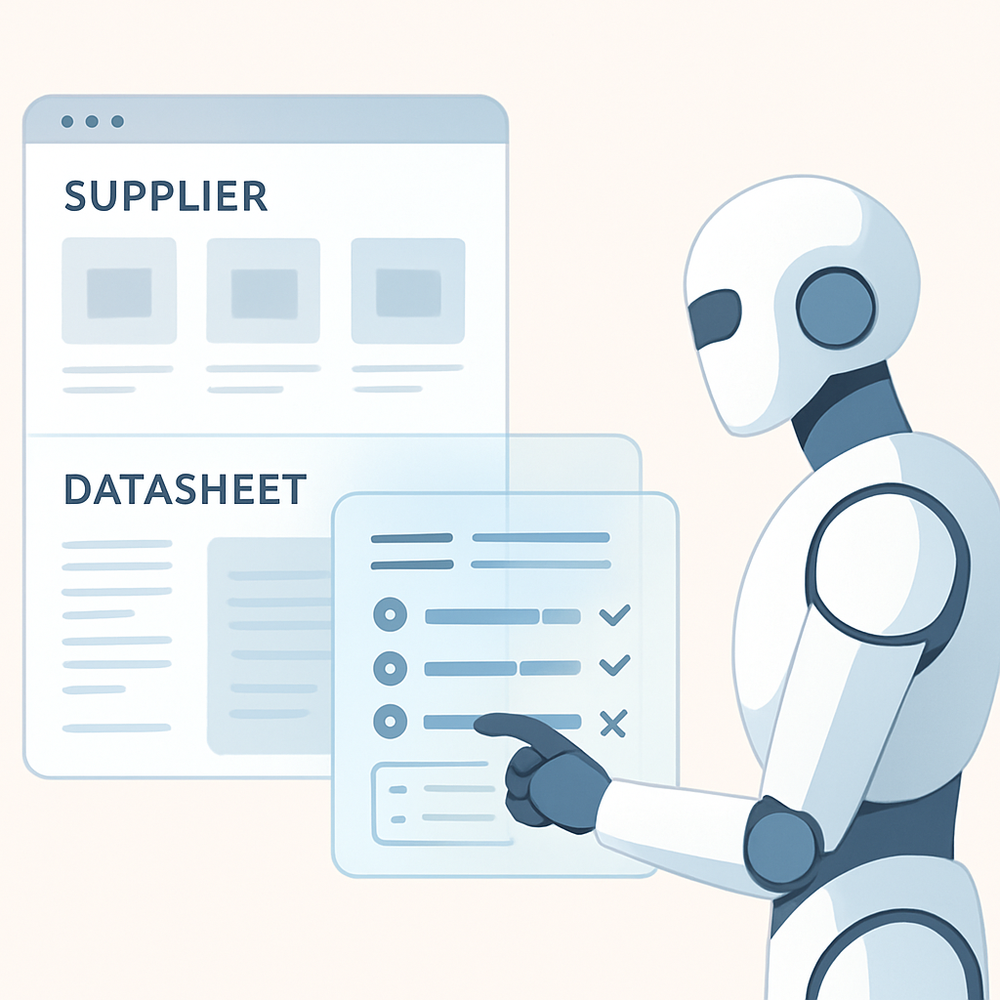
Pharmaceutical and manufacturing companies have led deployment in this area, driven by supply chain resilience mandates following 2020 to 2022 shortages. The agent does not make the final vendor decision: commercial terms, relationship history, and risk assessment remain human decisions. But the information-gathering and preliminary evaluation process, which historically consumed the majority of procurement cycle time, is now fully automated in production deployments at multiple Fortune 500 organisations.
5. Regulatory Compliance Monitoring
Compliance monitoring at its core is a pattern-matching problem: compare current organisational state against a set of rules, identify gaps, and route alerts. That is a task well-suited to agent architectures that combine document parsing, structured rule engines, and communication tools. In financial services, where regulatory updates from bodies such as the SEC, FCA, and ESMA require continuous re-assessment of internal policy documents, production compliance agents are now monitoring regulatory feeds, parsing new guidance, mapping it to internal policy libraries, and generating gap reports without human initiation.
The limitation is in the remediation step. An agent can identify that a new regulatory requirement conflicts with current internal policy and route the finding to the appropriate compliance officer. It cannot make the policy decision, communicate with regulators, or manage the remediation project. Those remain human responsibilities. But in organisations processing thousands of regulatory touchpoints per month, removing the monitoring and classification burden frees compliance professionals for the interpretive and strategic work that actually requires their expertise.
6. Candidate Screening and Interview Scheduling
Recruiting operations at scale involve substantial process overhead that maps directly onto agent capabilities: parsing job descriptions to extract requirements, comparing those requirements against incoming CVs, scoring candidates against a rubric, sending acknowledgements, scheduling screening interviews with calendar API integration, and sending reminders. Large-volume recruiting functions at companies including Amazon and Unilever have documented reductions of 60 to 75 percent in recruiter time per open role through agent automation of the screening and scheduling layers.
The ethical dimensions of automated candidate scoring are real and actively regulated. The EU AI Act's requirements for high-risk AI systems include AI-assisted hiring, and the New York City Local Law 144 requires bias audits for automated employment decision tools. A production deployment in this domain cannot treat compliance as an afterthought. It requires a developer who understands fairness-aware ML and can implement, document, and audit the scoring logic to regulatory standards.
7. Internal Report Generation and Data Narratives
Weekly and monthly reporting consumes, according to a 2024 McKinsey productivity study, an average of 3.6 hours per knowledge worker per week. Report generation agents that connect to data warehouses (Snowflake, BigQuery, Redshift) via SQL tool-use, retrieve the relevant metrics, identify period-over-period changes, and generate a structured narrative summary are among the fastest-payback agent deployments organisations can make.
The output quality depends heavily on the prompting and retrieval architecture. Agents that pull raw numbers and describe them mechanically produce outputs that analysts do not trust. Agents built with a structured analysis template (compare against plan, compare against prior period, identify drivers, flag anomalies, suggest interpretation) produce reports that analysts can act on directly. The difference is in the engineering of the agent's reasoning structure, not the capability of the underlying model. For a full picture of what these projects cost to commission, the AI agent development cost breakdown covers the variables in detail.
8. IT Helpdesk Tier 1 and Tier 2 Resolution
IT service desk tickets follow predictable patterns. Password resets, access provisioning, software installation requests, VPN configuration, and standard troubleshooting steps account for 50 to 70 percent of helpdesk volume in most enterprise environments, according to HDI's 2024 Technical Support Practices and Salary Report. Agent systems with tool-use integrations to Active Directory, Okta, JAMF, and standard ITSM platforms (ServiceNow, Jira Service Management) resolve these categories end-to-end in production.
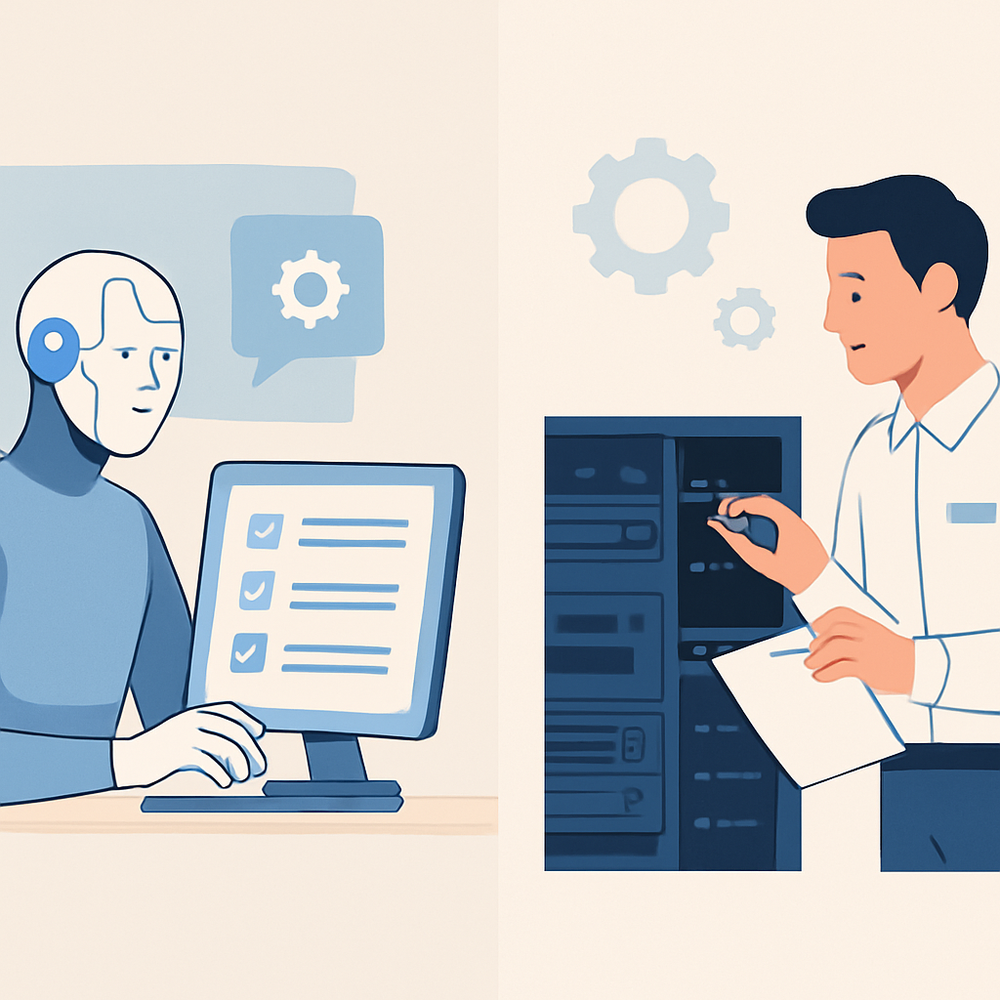
The residual human role is hardware issues, physical office requests, policy exceptions, and escalations involving data access decisions that require human authorisation. The agent handles classification, routing, standard execution, and status communication. Organisations that have deployed this pattern report first-contact resolution rate improvements of 30 to 50 percentage points and average handle time reductions of 60 to 80 percent on automated categories. The hidden AI agent costs article is worth reading before scoping this type of deployment, as integration complexity is consistently the largest cost variable in enterprise IT environments.
9. Content Moderation at Scale
Content moderation is a process that major platforms have wrestled with for a decade. The fundamental tension is between scale (billions of items per day across large platforms) and accuracy (false positives harm legitimate users, false negatives allow harmful content). Agentic moderation systems that combine multimodal classifiers (text, image, video), policy rule engines, context enrichment (account history, behavioural signals), and escalation routing are operating at production scale at companies including Meta, YouTube, and TikTok.
The architecture is not a single model but a pipeline: a fast first-pass classifier operates at full volume, flagging items that exceed a confidence threshold. A second-pass agent with access to account context, previous policy decisions, and regulatory jurisdiction rules makes a more considered determination on flagged items. Items that reach the human moderation queue are genuinely ambiguous cases requiring judgment that the current generation of models cannot reliably provide. Human moderators in this model are no longer reviewing every piece of content; they are resolving the genuine edge cases that the agent pipeline escalates.
The Nine Processes at a Glance
|
Process |
Agent Architecture |
Human Role Post-Deploy |
Payback Window |
|
Sales lead qualification |
RAG + CRM tool use |
Exception review, deal strategy |
4 to 8 weeks |
|
Invoice and AP processing |
Document extraction + ERP write |
Dispute resolution, audit |
6 to 12 weeks |
|
Tier-1 customer support |
LLM + knowledge base + escalation logic |
Complex/emotional cases |
4 to 10 weeks |
|
Procurement research |
Web browsing + comparison + summary |
Final vendor decision |
3 to 6 weeks |
|
Compliance monitoring |
Regulation parsing + alert routing |
Remediation decisions |
8 to 16 weeks |
|
Candidate screening |
JD parsing + CV scoring + scheduling |
Final interviews, offers |
4 to 8 weeks |
|
Report generation |
Data query + narrative synthesis |
Stakeholder communication |
2 to 4 weeks |
|
IT helpdesk (Tier 1 and 2) |
Ticket classification + tool execution |
Hardware, policy, escalation |
4 to 10 weeks |
|
Content moderation |
Classifier + policy rule engine |
Appeals, edge cases |
6 to 12 weeks |
From Assistance to Autonomy: What the Transition Requires
The nine processes above share a common trajectory: they moved from human-executed to AI-assisted to AI-replaced over a two to three year period, and in each case the transition required engineering investment, process documentation, and change management rather than simply plugging in a commercial AI tool. The organisations that are extracting value from agent-based process replacement in 2026 made deliberate technical decisions twelve to eighteen months ago.
If you are evaluating which of your processes sits at the threshold of replacement-readiness, or which requires more maturity before autonomous operation is viable, the right conversation is a technical one scoped to your specific process, data environment, and integration landscape. To work with a developer who has shipped production process-replacement agents rather than demos, and can assess readiness honestly rather than optimistically, you can hire an AI developer with documented agentic deployment experience.
Frequently asked questions
What distinguishes a process that AI agents can replace from one they can only assist?
How long does it take to deploy an AI agent that replaces a business process?
What happens to the employees whose processes are replaced?
Are AI agents reliable enough for financial and regulated processes?
What type of developer do I need to build a process-replacing AI agent?
How do I calculate the ROI of deploying an AI agent to replace a process?



Shreyans Padmani
Shreyans Padmani has 5+ years of experience leading innovative software solutions, specializing in AI, LLMs, RAG, and strategic application development. He transforms emerging technologies into scalable, high-performance systems, combining strong technical expertise with business-focused execution to deliver impactful digital solutions.